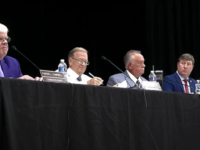
At a Democratic candidate forum in Shreveport Tuesday night, the biggest question was not simply who could win votes in Louisiana’s new closed primary system. It was whether the candidates could explain how they would protect ordinary families from being handed the bill for the state’s next round of big promises.
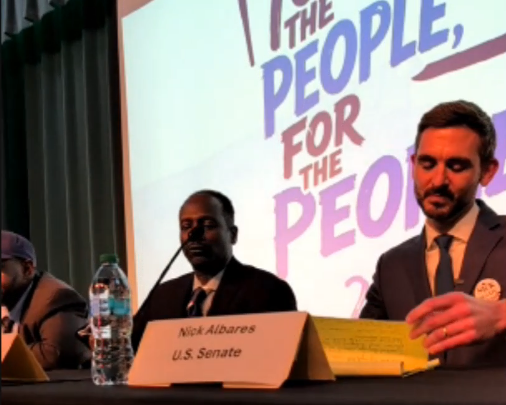
The forum, moderated by KTBS’ Jeff Biemfohr and part of the “To The People, For The People” Democratic Roadshow organized by a coalition of progressive and Democratic groups, brought together candidates for U.S. Senate, Louisiana’s Fourth Congressional District and the Public Service Commission. The event came with early voting approaching and Louisiana’s May 16 primary still struggling for public attention, even as the state’s new closed primary system has changed the rules for Democratic and Republican voters alike. Louisiana’s Democratic Senate primary is scheduled for May 16, with the general election set for November 3.
Melissa Flournoy of 10,000 Women Louisiana opened the forum by warning that too many voters still do not know an election is coming. She also urged voters to make sure they understand the closed primary rules and check their mail ballot if they requested one.
“There’s not enough attention on the May 16 primary,” Flournoy told the audience, noting that the roadshow had already held events in Lafayette and Baton Rouge before coming to Shreveport.
But the night’s substance quickly turned from voter education to the economic anxiety now shaping politics across Northwest Louisiana: utility bills, data centers, health care cuts, gun violence, tariffs, rural infrastructure and whether powerful corporations are once again being promised favorable treatment while communities are told to wait for the benefits.
That concern was not theoretical. Louisiana has become a major target for artificial intelligence and data center development, including massive projects tied to Amazon and Meta. Amazon has announced a $12 billion investment in Louisiana data center campuses, saying the project would create 540 full-time data center jobs. Meta’s Louisiana plans have also expanded dramatically, with Entergy planning major new power infrastructure to serve the company’s operations.
For the candidates on stage, the question was whether those projects would strengthen local communities — or become another example of Louisiana offering corporate giants public benefits while families absorb the risk.
Senate candidates split tone, but not concern, over data centers
The U.S. Senate panel featured Nick Albares, Gary Crockett and Jamie Davis, the three Democrats competing for the party’s nomination.
Albares, a former policy adviser in Gov. John Bel Edwards’ administration who was endorsed by the former governor hours earlier, framed his campaign around health care, housing and making government work for families. He opened by warning that health coverage would be at stake in the fall election, pointing to Medicaid cuts scheduled to take effect in 2027.
“I’m running for Senate to protect health coverage for the 300,000 Louisianans who would lose coverage if the cuts from the big, ugly bill go into effect,” Albares said. “We got to remind people health care is on the ballot this fall.”
Crockett, a 24-year retired Navy veteran and entrepreneur from Tallulah now living in New Orleans, introduced himself as a political outsider frustrated with leadership in both parties.
“I believe that Louisiana should be more affordable than it has been,” Crockett said. “I believe that we should have better jobs. I also believe that we should have health care, and I believe that the health care that we should have is the same health care that the senators and representatives have.”
Davis, a farmer from Tensas Parish and the Louisiana Democratic Party-endorsed candidate, leaned into his rural background and working-class appeal.
“Washington keeps spending millions trying to find out how to talk to rural and working people,” Davis said. “I don’t have to figure that out. I am one of them.”
The first major policy exchange focused on data centers and whether Louisiana families could end up subsidizing private expansion through higher utility bills, weaker environmental safeguards or disappointing job returns.
Albares said federal safeguards should require communities to have a voice before projects move forward.
“Corporations should not be able to come into communities and ravage natural resources, send utility prices through the roof and waste natural resources,” Albares said.
He said companies should pay “not just their fair share, but a fair share plus,” including the full cost of their energy use.
Crockett argued that data centers should be regulated with the seriousness of major industrial infrastructure.
“Just like we have regulations for nuclear power plants, we can do the same thing for data centers,” Crockett said. “Nuclear power plants are not put in our backyards. The same should be true for data centers.”
He added that data centers often create relatively few permanent jobs compared with the burden they place on communities.
Davis was more blunt.
“I feel that data centers prey on impoverished people,” Davis said. “They need a boost to their economy, and you hear all of the bells and whistles of what this data center is going to do for your community.”
But, he said, the jobs often fall short of the promise.
“The bright shiny deal comes along with companies that bring all of their people with them,” Davis said. “We don’t get that many jobs out of a data center.”
Candidates criticize Louisiana’s subsidy model
The candidates were also asked about Louisiana’s long-running reliance on corporate tax incentives, including the Industrial Tax Exemption Program, and Gov. Jeff Landry’s move to weaken job creation requirements and reduce local control.
Davis said companies that come to Louisiana should not be allowed to enjoy the benefits of the state without contributing to it.
“You want to come to work in Louisiana and want to eat the fruit of Louisiana, you need to pay your fair share,” Davis said. “It is ridiculous for companies to come to our state and pay less taxes than we do.”
Crockett criticized what he called “corporate welfare,” contrasting it with the way programs like Social Security are often attacked as entitlements.
“It’s time for the system to start working for the people that work,” Crockett said.
He said tax breaks should be tied directly to whether companies deliver the jobs they promised.
Albares described the current system as a “race to the bottom,” with states competing against each other to offer giveaways to corporations.
“What we have right now too often is a race to the bottom, because states have to compete to have as many giveaways as possible to get industry to come into place,” Albares said.
He pointed to changes made during the Edwards administration to restore local control and job creation standards in ITEP and said federal policy should push states toward real public return on investment.
Gun violence and juvenile justice shape public safety debate
The forum came just days after the Cedar Grove mass shooting in Shreveport, where eight children were killed on April 19, and shortly after a deadly shooting at the Mall of Louisiana in Baton Rouge that left a high school senior dead and five others wounded.
Asked what the federal government should do on guns and public safety, Crockett said gun ownership must come with responsibility and called for stronger background checks, including more attention to mental health.
“I believe that every citizen has a right to own a gun, but it must be done in a very responsible way,” Crockett said.
Albares shared that he and his wife had personally been shot at in their home after someone fired into his neighbor’s car and then toward his house.
“Seven rounds came through the house, missing me and my wife by three feet,” Albares said.
He called for closing background check loopholes, passing red flag laws and creating federal incentives for safe gun storage.
Davis also emphasized mental health care, saying the country treats the brain differently from the rest of the body despite its central role in public safety.
“You break an arm or a leg, somebody think you really hurt,” Davis said. “Well, your brain is an organ, just like your legs and arms are.”
On juvenile justice, Albares called for ending the school-to-prison pipeline and pointed to Shreveport’s Communities in Schools program as an example of the kind of wraparound support that should receive federal funding.
Davis said politicians cannot cut resources from families and then express surprise when children fall through the cracks.
“How do you expect the child to thrive when you legislate to cut everything away from their homes?” Davis asked.
Crockett said Louisiana’s incarceration rate sends a damaging message to young people and argued for youth programs tied to trades and other practical opportunities.
War powers and health care draw sharper contrasts
The Senate candidates were also asked about war powers and when the United States should use military force.
Davis gave the shortest answer of the night: “Get the congressional consent from Congress. That’s it. We’re just basically following the Constitution.”
Albares said Congress must reclaim its role under the War Powers Act and end what he called “military adventurism abroad.”
Crockett, leaning on his Navy background, said the United States needs to get out of “the war business” and back into “the defense business.”
On health care, Albares returned to Medicaid expansion, saying the program had saved lives in Louisiana and must be protected from federal cuts.
“Number one, I will work to reverse the trillion dollars of cuts to Medicaid that they put in place that are slated to go into effect January 1 of next year,” Albares said.
Davis said rural hospitals are a personal issue for him, warning that cuts could leave families in his part of the state traveling roughly 70 miles in an emergency.
“You shouldn’t have to live in a certain zip code to get health care,” Davis said.
Crockett called for using data to identify where clinics, hospitals and trauma centers are needed, while also attacking waste and fraud in the health care system.
On affordability, the candidates all supported raising the minimum wage, but differed in emphasis. Albares called for more than doubling the $7.25 federal minimum wage and indexing it to inflation. Crockett backed a $15 minimum wage and called for new nonpolluting industries in Louisiana. Davis said he would support a $17.50 minimum wage and proposed returning tariff revenue to the people who effectively paid it through higher prices.
Conrad Cable turns CD-4 forum into indictment of Mike Johnson
The congressional portion featured Conrad Cable, a farmer from Farmerville running against House Speaker Mike Johnson in Louisiana’s Fourth Congressional District. Matt Gromlich, another Democratic candidate in the race, was not in attendance.
Cable used his solo appearance to argue that Johnson’s national power has not translated into better outcomes for Northwest Louisiana.
“We deserve better representation than what we’ve been getting from Speaker Mike Johnson,” Cable said.
Asked for his assessment of Johnson’s performance, Cable said he asks voters across party lines what Johnson has done for the district.
“And nobody has given me a good answer,” Cable said.
Cable accused Johnson of serving special interests rather than the district and attacked him over Medicaid, SNAP, tariffs and foreign policy.
“He has forgotten about this district because he serves the special interests who fund his campaign,” Cable said.
He also framed the race around class, saying the district deserves to be represented by “a member of the working class, not the Epstein class.”
Cable said infrastructure should be one of the main drivers of Louisiana’s future economy, citing roads, clean drinking water and internet access. He said 70% of the water districts in the Fourth Congressional District have a C grade or lower and that many households still lack access to home internet.
“How can we expect our children to compete in a digital economy if they can’t access the internet?” Cable asked.
On gun violence, Cable called for a moment of silence for the children killed in Shreveport and said the country needs stronger gun safety policy, mental health care and community investment.
“We have to pass real legislation that not just addresses gun safety and individual responsibility when it comes to owning firearms, but we have to provide our people with the mental health care that they need,” Cable said.
Cable also called for reversing Trump’s tariffs, holding the executive branch accountable on military action and passing Medicare for All. He closed by naming anti-corruption measures as one of the most bipartisan parts of his platform, including repealing Citizens United, banning members of Congress from trading stocks and preventing former members from becoming lobbyists.
“You cannot serve two masters,” Cable said. “You cannot serve policy positions that make working people and regular folks’ lives better and serve the special interests who fund your campaigns.”
PSC candidates clash over data centers, rates and experience
The final panel featured Public Service Commission District 5 candidates Reverend James Green and Austin Lawson. If the Senate panel showed how Democrats are talking about national issues, the PSC panel showed how those same concerns are already hitting households through utility bills.
Green, a Shreveport city councilman and pastor of Union Mission Baptist Church, emphasized his experience and said his campaign is centered on lowering utility bills and protecting ratepayers.
“I don’t believe that people should have to decide whether you’re going to pay your grocery bill or whether you’re going to pay your utility bills,” Green said.
Lawson, a younger candidate and activist from the Shreveport-Bossier area, framed his campaign around the lived experience of struggling to afford utilities.
“When I was growing up in Coushatta, we were very poor,” Lawson said. “The utilities constantly went off.”
Lawson said he supports tying electric rates to income, regulating data centers and creating a public advocate to represent ratepayers before the PSC.
Asked whether the PSC’s first duty is to maximize industrial growth or protect ordinary ratepayers, Green said “people should come first,” but also defended the need to hold companies accountable to their promises.
“If, in fact, they don’t do what they say, then we need to take the tax breaks that they have away from them,” Green said.
Lawson answered more aggressively, saying he had been among the activists raising concerns about data centers before local officials.
“We were there telling them in the first place,” Lawson said.
He said data centers should have their own utility rate that adjusts based on electricity use, pay for their own infrastructure upgrades and rely on green-generated electricity.
On who should bear the risk if data center projects fail to deliver as promised, Lawson was direct.
“The last person is the ratepayer,” he said.
Green agreed that data centers should pay their own costs, but argued that the public needs accurate information about existing grids, water use and where projects are located.
On environmental and community impact standards, Lawson returned to his proposal for a public advocate, arguing that PSC meetings are often dominated by lawyers for utilities and corporations.
“The SWEPCO and Entergy lawyers are not there fighting for you,” Lawson said. “They’re there fighting for the companies they represent.”
Green said environmental groups and community standards should be connected to the application process before projects are approved.
The clearest contrast came over experience. Lawson said his policy ideas have been well received by voters, policy experts and elected officials, and argued that his lack of elected experience should not be disqualifying.
Green countered that the PSC is a political body where good intentions are not enough. With five commissioners — currently three Republicans and two Democrats — Green said the job requires knowing how to negotiate and count votes.
“We make it real simple, like we can just go there and snap our fingers,” Green said. “It takes the process of negotiation. It takes the process of politics as to who gets what, when, where and how.”
Then he made the point even more plainly.
“You got to learn how to count,” Green said. “You got to count your votes.”
A forum about whether Louisiana will keep repeating itself
The Shreveport forum was not structured as a debate, and candidates rarely directly confronted one another. But the evening still revealed meaningful differences in tone, emphasis and political theory.
Albares presented himself as the policy practitioner ready to defend Medicaid, labor, housing and federal safeguards. Crockett positioned himself as a practical outsider and veteran focused on accountability, safety and affordability. Davis leaned into rural populism and a critique of corporate giveaways. Cable delivered the night’s sharpest ideological attack on Republican leadership and tied Johnson directly to the district’s material struggles. Green argued that experience and relationships matter in utility regulation. Lawson argued that the PSC needs a more confrontational advocate willing to challenge corporations and utilities directly.
But across the panels, the dominant theme was the same: Louisiana communities have heard big promises before.
Data centers will bring jobs. Tax breaks will bring growth. Utility investments will pay off later. Cuts will somehow spare the people who rely on public services. National power will trickle down into district-level results.
In Shreveport, the candidates were asked whether they believe those promises — and what they would do when they do not come true.
For voters heading into the May 16 primary, that may be the question that matters most.
The Bayou Progressive is an independent media outlet based in Baton Rouge, dedicated to in-depth political reporting and accountability journalism for Louisiana’s capital region and beyond.
The Bayou Progressive is an independent media outlet based in Baton Rouge, dedicated to in-depth political reporting and accountability journalism for Louisiana’s capital region and beyond.