
Louisiana’s congressional election chaos is no longer theoretical. It is now moving through the Legislature.
The Louisiana Senate voted Thursday to advance a Republican-backed congressional map that would likely return the state to a 5-1 Republican congressional delegation, eliminating one of Louisiana’s two majority-Black congressional districts after the U.S. Supreme Court struck down the current map in Louisiana v. Callais.
The vote came after a long, contentious Senate and Governmental Affairs Committee hearing, where hundreds of voting rights advocates packed the Capitol to oppose the plan. It also came after Gov. Jeff Landry suspended the state’s U.S. House primaries, after absentee ballots had already gone out and some voters had already cast ballots.
Now the state has a new map moving forward, a new election calendar, and — for congressional races — a sudden return to Louisiana’s old open primary system.
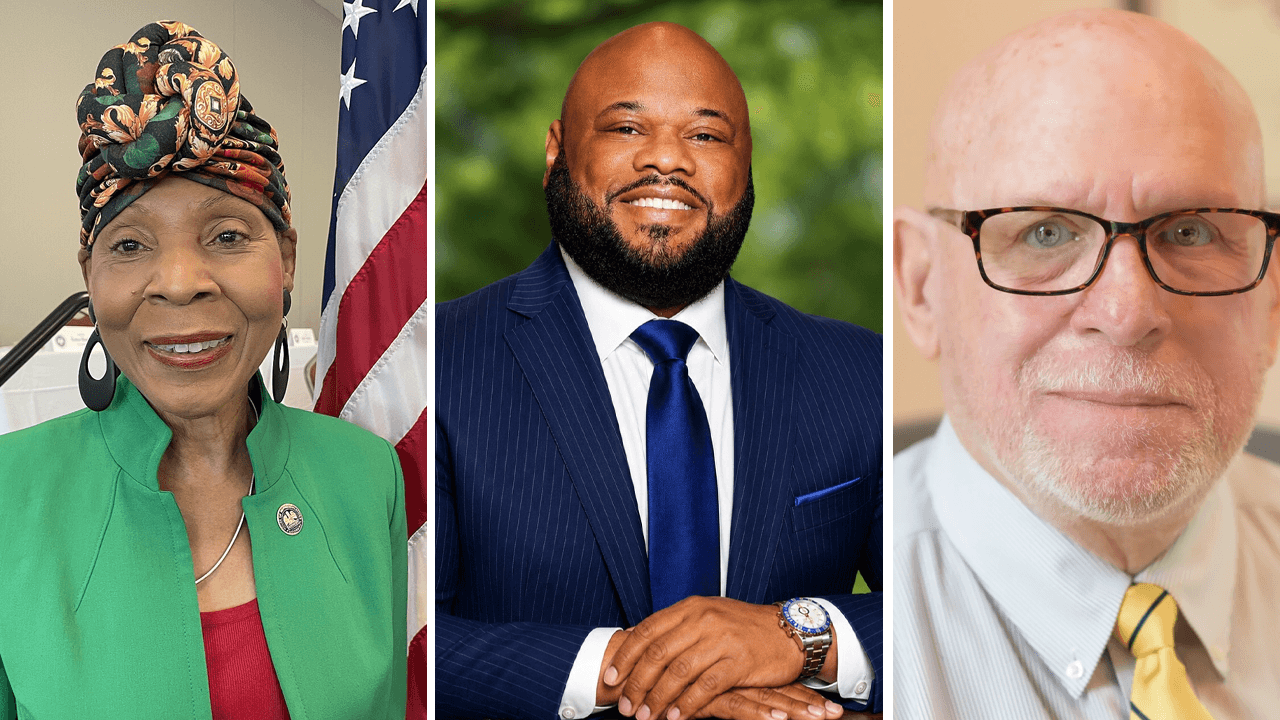
The map, Senate Bill 121 by Sen. Jay Morris, R-West Monroe, would preserve only one majority-Black congressional district. The latest version pairs New Orleans and Baton Rouge into a single Democratic-leaning district, effectively placing the state’s two Black Democratic members of Congress, Rep. Troy Carter and Rep. Cleo Fields, into the same political space.
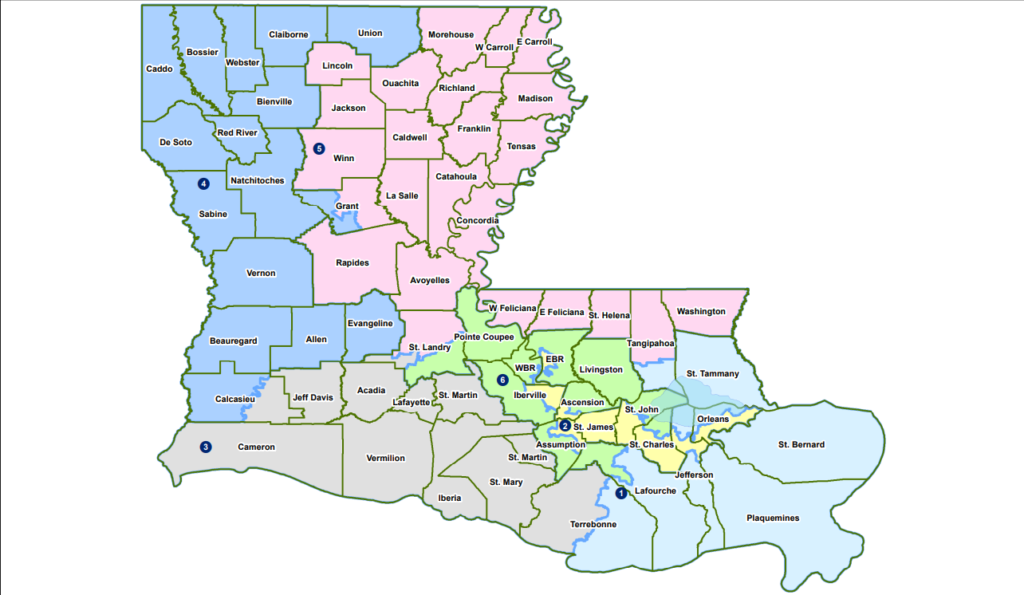
The likely result is obvious: one Democratic seat and five Republican seats.
That is not speculation. That is the purpose.
Morris and Republican leaders have framed the map as a partisan redraw, not a racial one. That distinction matters legally after Callais, but it does not change the effect. In Louisiana, where Black voters overwhelmingly support Democrats and white voters outside the state’s urban centers heavily power Republican victories, a map drawn to maximize Republican advantage will almost inevitably weaken Black voting power.
That is the loophole the Supreme Court just handed them. Louisiana Republicans are now walking straight through it.
The Senate and Governmental Affairs Committee advanced the bill after a hearing that stretched nearly 10 hours. Democrats criticized the map as a racial gerrymander designed to serve President Donald Trump and national Republican efforts to pad the GOP’s narrow U.S. House majority. Republicans defended it as a lawful partisan map.
That is the post-Callais playbook in one sentence: call it politics, not race, and proceed.
The Senate later advanced the bill on a 27-10 party-line vote. Democrats proposed an alternative that would have made a Baton Rouge-based district more competitive for Democrats without making it majority-Black, but Senate Republicans rejected it.
The bill now heads to the House.
The legislation follows the Supreme Court’s 6-3 ruling in Louisiana v. Callais, which struck down Louisiana’s existing congressional map. That map created a second majority-Black district after years of litigation over whether Louisiana’s prior map illegally diluted Black voting power by packing Black voters into one district while splitting others across five majority-white districts.
The ruling gave Louisiana Republicans the opening they needed to redraw before the 2026 midterms. Landry then suspended the U.S. House primaries that had been scheduled for May 16, with a second primary set for June 27.
That suspension has now turned into a full election reset for congressional races.
Louisiana Secretary of State Nancy Landry announced Thursday that all races and propositions scheduled for the May 16 election will continue as planned except the U.S. House races, which have been canceled and moved to Louisiana’s fall open primary election cycle.
That means voters will still have something on the May 16 ballot, including the U.S. Senate race and five constitutional amendments. But the congressional races are effectively void – still on the ballot, but state officials have repeatedly said they will not count those votes.
Under Act 7 of the 2026 Regular Session, signed by Gov. Landry, candidates who want to run for U.S. House must qualify again in August. Qualifying opens Aug. 5 and closes at 4:30 p.m. on Aug. 7.
The U.S. House races will now be held on the Nov. 3 open primary ballot. If no candidate wins outright, the general election will be held Dec. 12.
That is a major change.
Louisiana’s congressional races were supposed to be held under the state’s new closed party primary system. Instead, after the Supreme Court ruling and Landry’s suspension, those races are suddenly back under Louisiana’s traditional “jungle primary” format, where all candidates run on the same ballot regardless of party.
That shift deserves scrutiny.
The closed primary system was widely understood as a Republican maneuver aimed at shaping the 2026 U.S. Senate race, especially as Sen. Bill Cassidy faced conservative pressure and a challenge from Rep. Julia Letlow and Louisiana state treasurer John Fleming. The system remains in place for the Senate race.
But for Congress, the closed primary has now vanished.
The House races most directly affected by the Supreme Court ruling and the Republican redraw will move back to the open primary structure. And that means the highest-turnout election day — Nov. 3, the federal general election — may only be the first round.
The actual deciding election could come Dec. 12.
That is the same old Louisiana problem. November brings broader turnout. December runoff elections historically draw fewer voters. Lower-turnout runoffs favor candidates with money, organization, name recognition, and reliable partisan bases. In Louisiana, that has generally helped Republicans and entrenched political interests.
So the state has not merely changed the map. It has changed the battlefield.
Congressional candidates qualified under one system. Voters began participating under that system. Then the state canceled the races, voided any votes already cast, reopened qualifying, changed the primary structure, moved the election to November, and pushed any decisive runoff into December.
The Secretary of State’s announcement makes clear that any votes cast in the canceled May 16 or June 27 U.S. House races are void and will not be counted. Some voters will still see the canceled House races on Saturday’s ballot, but election officials are prohibited from releasing or disclosing the results.
That is an extraordinary outcome.
Voters may see congressional races on their ballots, but those votes will legally mean nothing. Candidates who already qualified must qualify again. Nominating petitions previously submitted for House races have been canceled. The state will refund its portion of qualifying fees paid by U.S. House candidates for the canceled elections.
The new law also reduces the petition requirement for fall U.S. House candidates to 250 qualified voters from anywhere in the state, with petitions due by July 9.
The procedural details are complicated. The political effect is not.
Louisiana Republicans used the Supreme Court’s ruling to halt House primaries already in motion, erase votes already cast, move congressional races to a different election system, and advance a map that likely gives their party another seat in Congress.
The new map’s defenders will continue to insist this is about partisanship, not race. But in Louisiana, that distinction is doing a lot of convenient work.
The state is roughly one-third Black. Under the current map, Black voters had two districts where they could elect candidates of their choice. Under the Republican map moving through the Legislature, they would have one.
Republicans can call that partisan strategy. The result is still the reduction of Black political power.
That is the real story.
After Callais, the Supreme Court made it easier for states to defend racially unequal outcomes by invoking partisan motives. Louisiana is now providing the case study. The state is not hiding the goal of adding a Republican seat. It is relying on that goal as legal cover.
The map is not the only power play. The election calendar is part of it too.
A closed congressional primary was canceled. Votes were voided. A new qualifying period was created. The races were moved to the fall open primary. The first round will coincide with the federal election. The real fight may be pushed into December.
That sequence is not normal governance. It is a political reset after voters and candidates had already begun operating under the rules the state previously set.
Now the House will decide whether to complete the job.
If the bill passes and Landry signs it, Louisiana will head into the 2026 midterms with a new map, a new congressional election system, and one fewer district where Black voters have a meaningful chance to elect their preferred candidate.
The Supreme Court opened the door.
Louisiana Republicans are now trying to lock it behind them.