As early voting opened Saturday for Louisiana’s May 16 Democratic primaries, Democratic candidates for Congress and U.S. Senate gathered at Stellar Beans Coffee House in Lake Charles for the latest stop on the To The People, For The People 2026 Democratic Roadshow.
The timing gave the forum an added urgency. The event came days after Gov. Jeff Landry moved to disrupt Louisiana’s U.S. House elections following the latest legal fight over the state’s congressional map. For candidates running in Congressional District 3, that meant campaigning before voters while the future of their own primary remained under a cloud of uncertainty.
Louisiana Democratic Party Treasurer Dustin Granger, who opened the forum, urged voters not to wait for clarity from Baton Rouge or the courts.
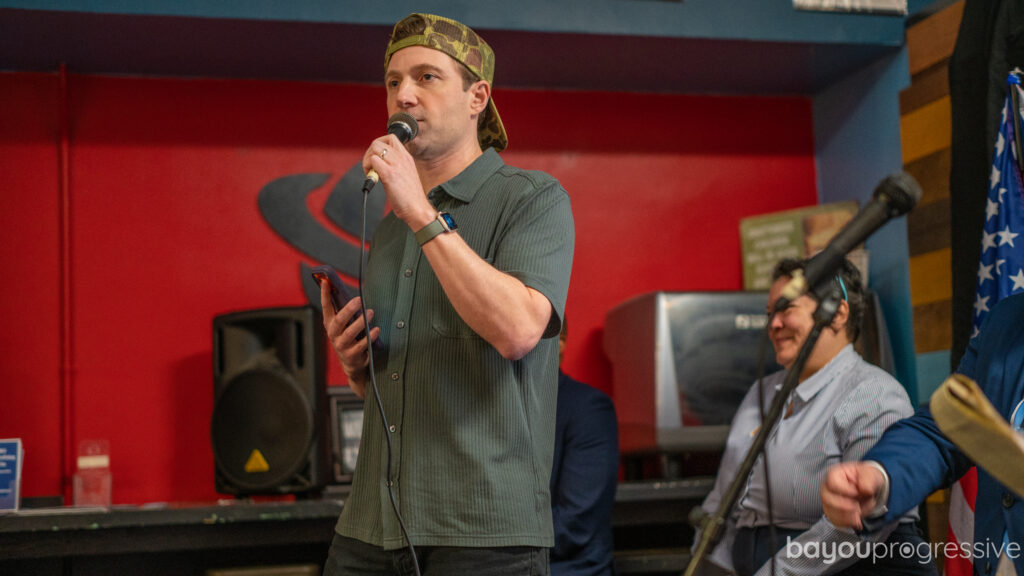
“If it’s on the ballot, vote,” Granger told the crowd. “Make sure and get out there.”
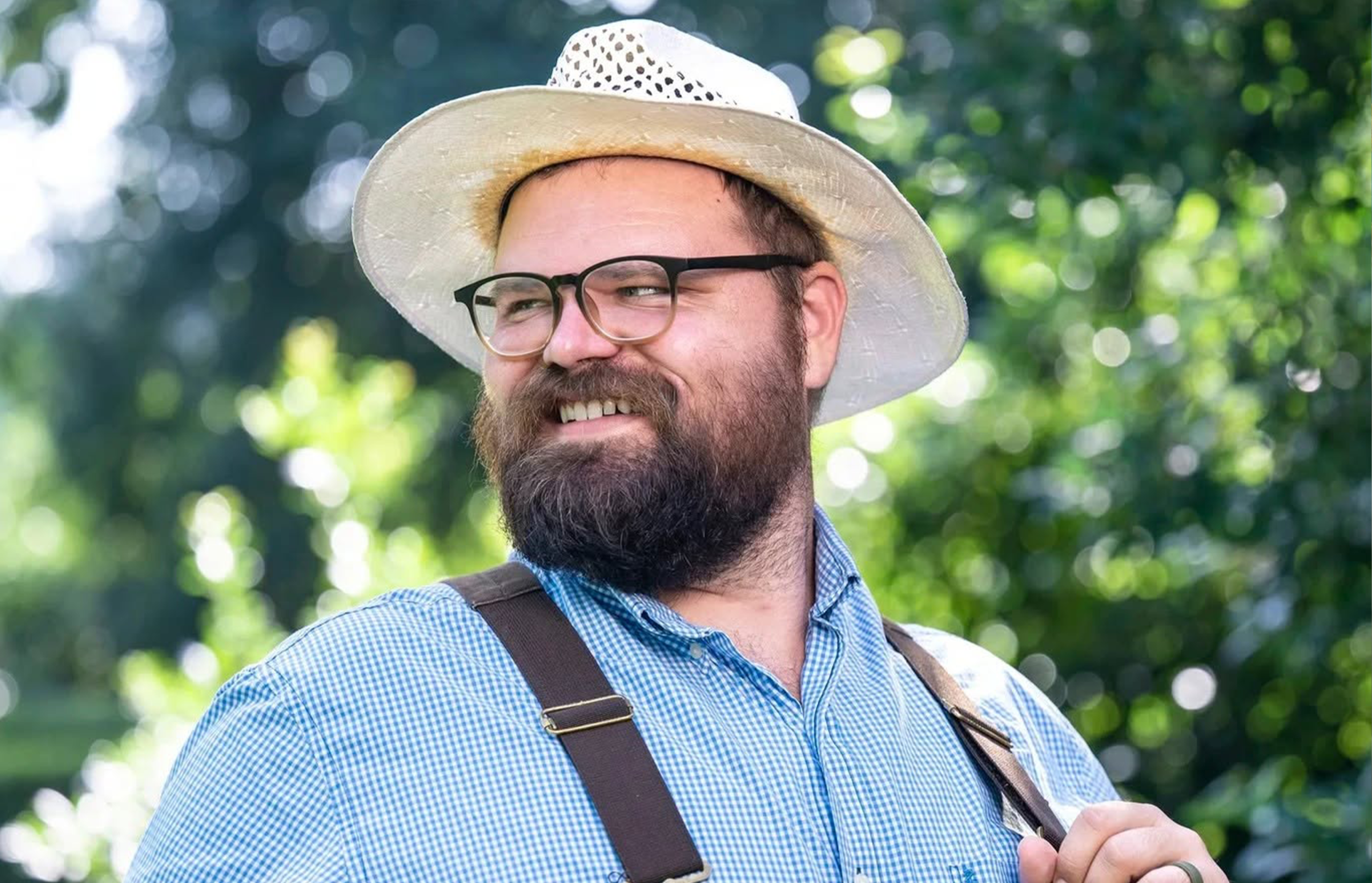
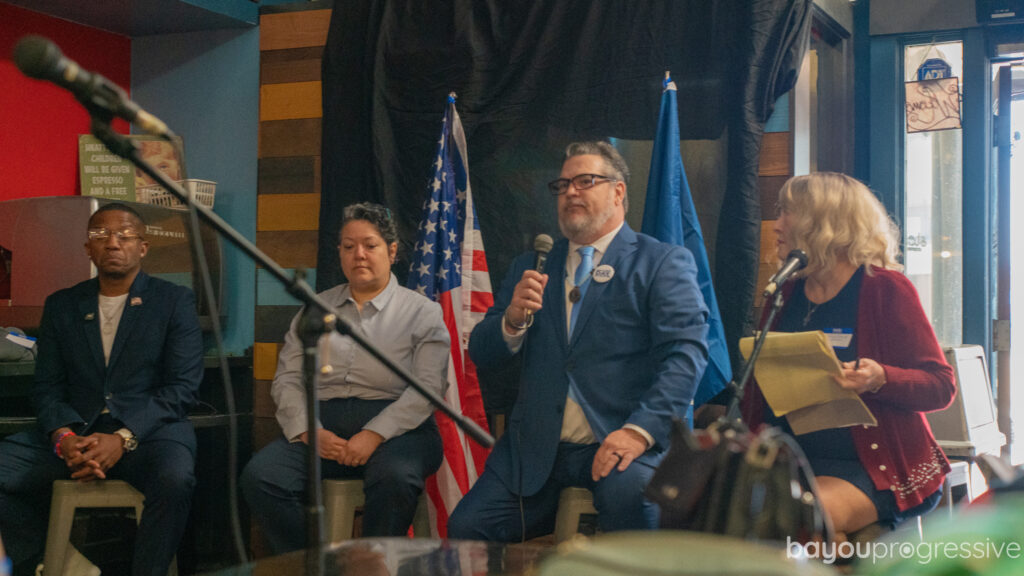
The forum featured Congressional District 3 candidates John Day, Tia LeBrun and Caleb Walker, all running for the seat currently held by Republican U.S. Rep. Clay Higgins. Longtime Lake Charles journalist Theresa Schmidt moderated the event. Later, U.S. Senate candidates Gary Crockett and Nick Albares took the stage. Jamie Davis, the third Democratic candidate in the Senate race, did not attend.
Smith opened the congressional portion by asking candidates about the congressional map fight and how Black citizens and other minority voters can be fairly represented.
Day did not pretend to have a neat answer.
“I’m scared today. I’m angry today,” Day said. “I’m trying to understand what our pathways are.”
But he said the immediate responsibility was clear: voters still needed to participate.
“What can be done is we can hope together. We can fight together. We can vote together,” Day said.
LeBrun said the new map was one reason she entered the race again, noting that the district includes coastal communities tied to her own history, including Terrebonne Parish and the United Houma Nation.
“I was really counting on having every opportunity for this coastal district to have their voices heard,” LeBrun said.
Walker framed the uncertainty as a reason for Democrats to organize harder, not retreat.
“We’re not going to allow this to get us down,” Walker said. “We’re going to unify as a party.”
The House candidates also addressed the obvious political challenge in the district: how to defeat Higgins in a red-leaning area.
Day argued Democrats should not concede values like faith, family or patriotism to Republicans.
“The Republican Party does not have a monopoly on faith,” Day said. “They do not have a monopoly on what family means.”
LeBrun said some voters still like Higgins’ public persona, but argued those conversations can shift when candidates talk about real costs facing families.
“They are pissed off that it’s taking $50 to fill up their gas tank,” LeBrun said. “They are pissed off that all of our groceries have not gone down in price as promised.”
Walker leaned on unity, saying he was willing to work across party lines if it meant improving people’s lives.
“We have to get our country back,” Walker said. “We have to work on our future.”
In Lake Charles, the discussion around insurance, storms and coastal protection landed with particular weight. The region has lived through repeated hurricanes, rising insurance costs and long recovery fights.
Day, who said he previously worked in insurance, criticized companies for aggressive marketing while delaying or denying claims.
“What we need is federal oversight,” Day said, arguing that insurance companies are allowed to “predatorily market” to consumers and then design systems that deny or delay help when people need it.
LeBrun called for a national disaster insurance program and said Louisiana must also reduce risk by investing in coastal protection and holding industries accountable.
“If we mitigate the risk, the cost will naturally go down over time,” LeBrun said.
Walker said FEMA resources should be staged before storms, not simply after communities are already damaged.
“We need to have people ready, not after the storm, before the storm,” Walker said.
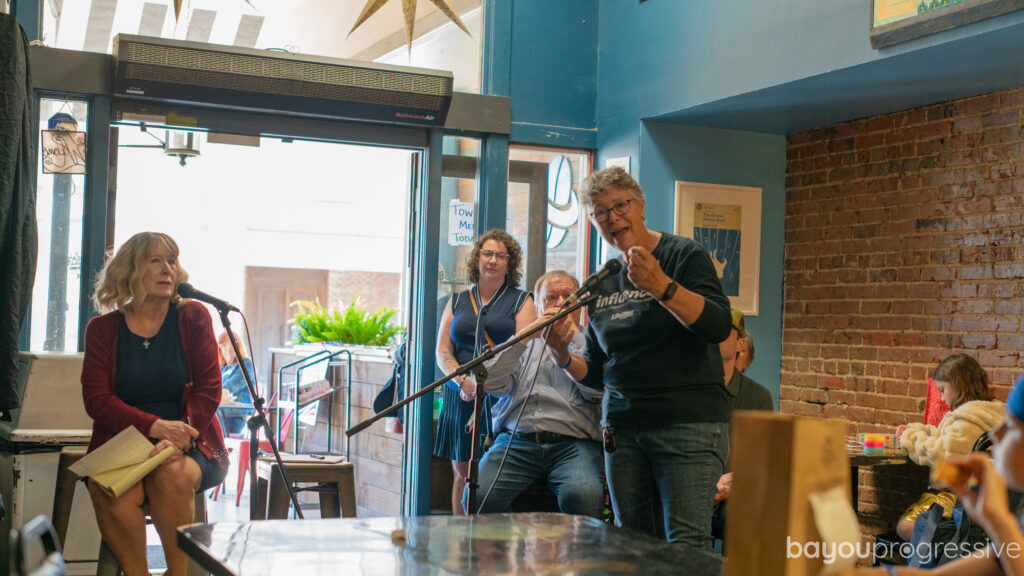
Audience questions pushed the candidates beyond policy and into campaign mechanics. One attendee noted Higgins’ financial advantage and asked how Democrats planned to reach voters outside the room, including fence-sitters, Never Trump Republicans and people who are not attending candidate forums.
Day said many voters who may lean Republican are still tired of Higgins. LeBrun said the candidates are balancing campaigning with regular work and limited resources. Walker said he has been making his own flyers and shirts.
Another audience member pressed the candidates on online organizing and streaming platforms, arguing that many younger voters are getting political information outside traditional civic spaces. Walker said he had a podcast in development. Day said his campaign was looking to engage Twitch and TikTok audiences. LeBrun pointed to her activity on TikTok, Substack, Bluesky, Facebook and Instagram.
The exchange underscored a central Democratic challenge in Louisiana: it is not enough to have a message. Candidates have to build ways to get that message to people who are not already in the room.
During the Senate portion, Albares and Crockett both said they are plaintiffs in litigation challenging the latest actions around Louisiana’s congressional map. Albares said Congress also needs to pass the John Lewis Voting Rights Advancement Act.
“Here in Louisiana, one-third of this state is made up of Black voters, and we need equal representation,” Albares said.
Crockett said Democrats must organize locally in all 64 parishes so communities are better prepared to fight unfair district lines before they are finalized.
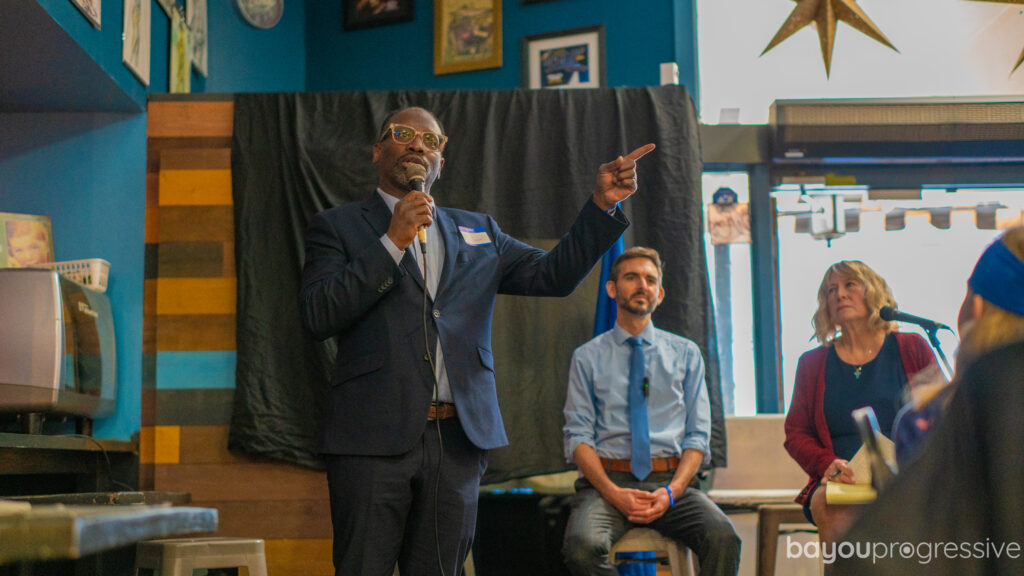
“We need to make sure that we represent and that we fight for each of the 64 parishes,” Crockett said.
On campaign finance, Crockett said he would introduce legislation preventing anyone who cannot vote in a particular election from donating to that campaign. Albares called for overturning Citizens United and said billionaires should pay more in taxes to fund education, health care and paid family leave.
The Senate candidates also addressed immigration, abortion rights and education. Albares said immigration enforcement funding should be conditioned on due process protections and called for ending private detention facilities. Crockett said immigration policy is being applied unfairly against Black and brown immigrants.
On abortion, Crockett said women have a right to make reproductive choices, while supporting guardrails late in pregnancy except when medically necessary. Albares said Congress should codify Roe v. Wade.
“We can’t criminalize health care,” Albares said. “We can’t criminalize health care providers.”
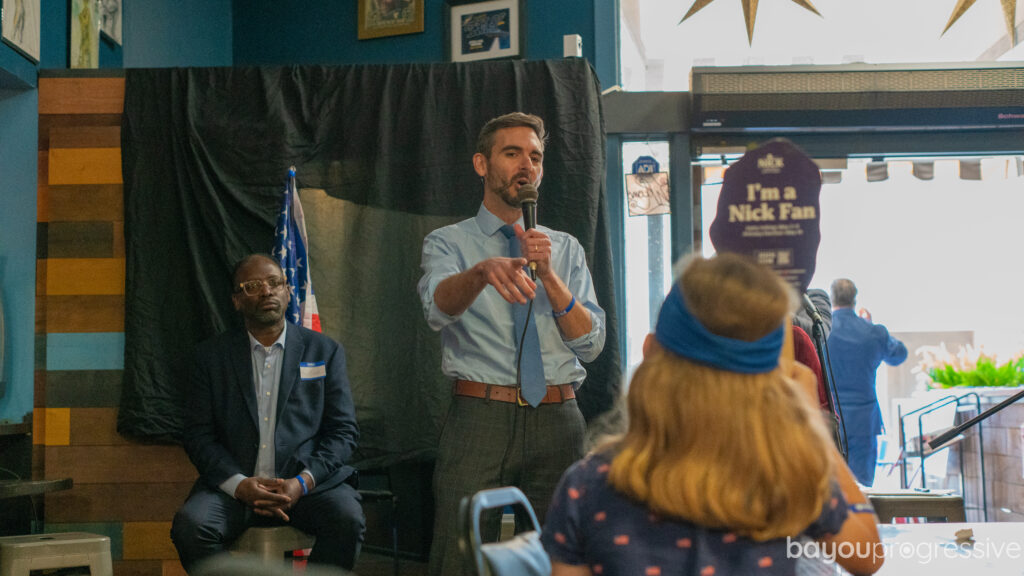
One of the most Louisiana-specific exchanges came when candidates were asked about St. George’s effort to create its own school district. Albares said he voted against the breakaway effort when he lived in Baton Rouge and plans to vote against the related constitutional amendment.
“When we try to break away funding and say, ‘Well, we’re going to put all these resources into this school district,’ it is discriminatory,” Albares said.
Crockett said breakaway communities should not be allowed to separate while still relying on shared public resources.
“You don’t get to remain on our sewer, you don’t get to remain on our water or any of our other services, and that includes the schools as well,” Crockett said.
The forum ended with the same message it began with: vote.
Granger urged attendees to leave Stellar Beans and head to the courthouse. Day said he was going to cast his ballot and invited others to follow him.
For Louisiana Democrats, the Lake Charles forum did not offer a single theory of victory. It offered several: litigation, turnout, digital organizing, health care, disaster recovery, education equity and frustration with Republican incumbents.
But with early voting already underway, the immediate ask was simpler. The candidates wanted Democrats to act like the election had already started — because it had.