Nearly seven years after Ronald Greene died in the custody of Louisiana State Police, the state has agreed to pay millions of dollars to settle the wrongful death lawsuit brought by his family.
The tentative settlement, first reported Tuesday, would require Louisiana State Police to pay $4.8 million to resolve claims tied to troopers John Clary, Dakota DeMoss, Kory York and Chris Hollingsworth, who has since died. Former Union Parish Sheriff’s Office deputy Christopher Harpin is also named in the settlement and would be responsible for $50,000. The agreement still requires approval from the Louisiana Legislature’s joint budget committee before it is finalized.
But the settlement is not just another legal resolution. It is the closest thing Louisiana has produced to institutional accountability in a case that exposed not only the violence of one deadly arrest, but the machinery of delay, secrecy and self-protection that followed it.
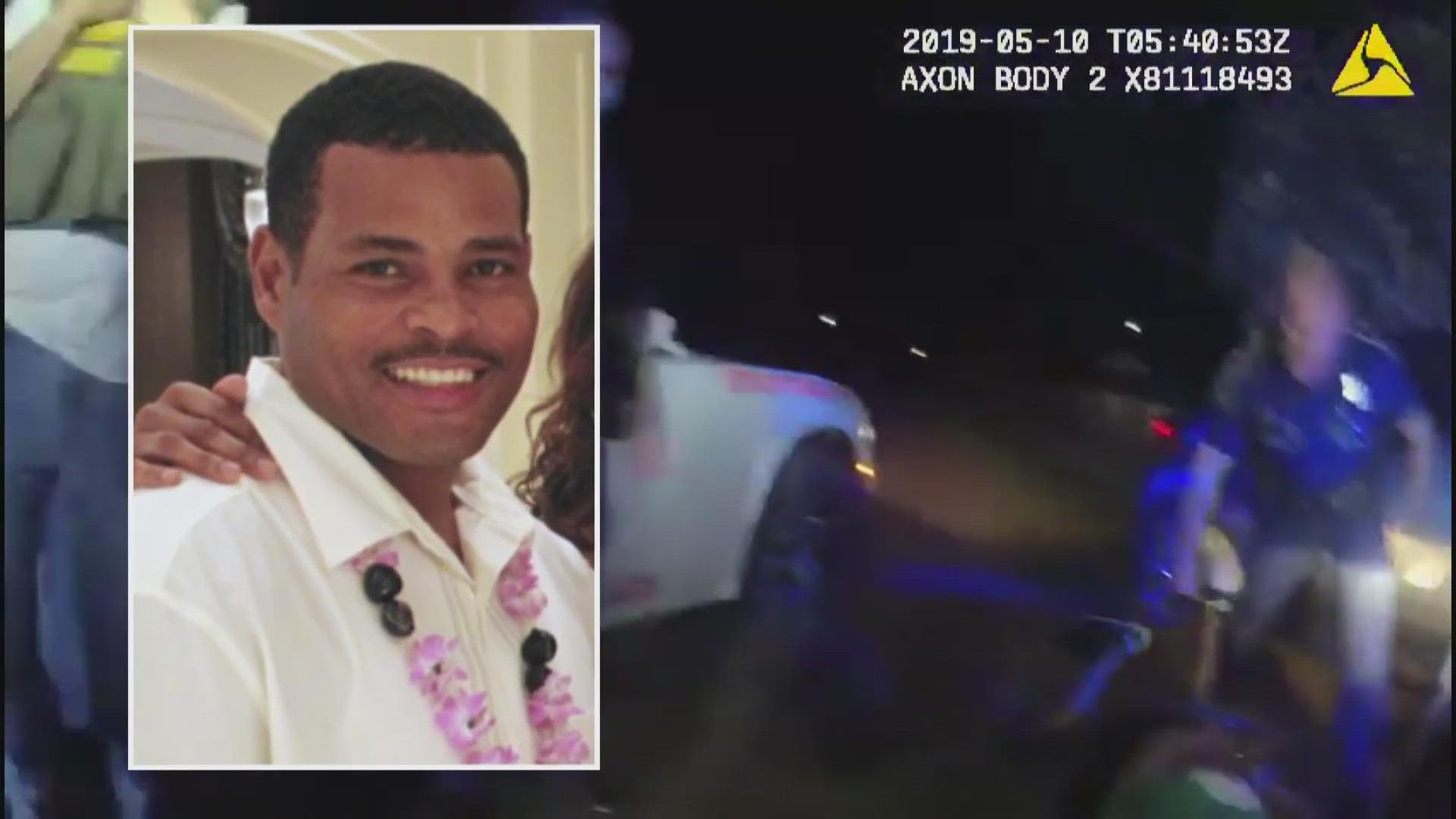
Greene, a 49-year-old Black man, died on May 10, 2019, after a high-speed chase that ended outside Monroe. For years, the official story was that Greene died after crashing into a tree. That story did not survive the body camera footage.
The video, eventually obtained and published by the Associated Press in 2021, showed white Louisiana State Police troopers stunning, punching, dragging and restraining Greene as he apologized and cried out that he was scared. The footage showed Greene handcuffed, shackled, dragged facedown and left on the roadside without immediate aid.
That is why this case has always belonged in a larger historical frame. Ronald Greene did not simply die during a police encounter. He died in a state where the public was asked to accept a false narrative, where video evidence was withheld for years, where disciplinary and criminal processes moved slowly enough to become their own kind of injustice, and where the most serious consequences eventually came not through prosecution, but through a civil settlement paid with public dollars.
The settlement comes after the criminal side of the case largely collapsed.
York, the former master trooper who faced the most serious charges, pleaded no contest in 2024 to misdemeanor battery, avoiding jail time after initially being charged with negligent homicide and malfeasance. His plea included probation and an agreement to testify, despite objections from Greene’s family.
Harpin, the former Union Parish deputy, later pleaded no contest to a misdemeanor simple battery charge. Prosecutors had previously alleged that he pepper-sprayed Greene while Greene was handcuffed, but the district attorney said the evidence did not meet the standard needed for a conviction on the more serious charge.
Charges against other officers were reduced, dismissed or dropped. Federal prosecutors announced in January 2025 that they would not bring criminal civil rights charges against the troopers involved.
So the public record now reflects a grim imbalance: a Black man died after a violent roadside arrest captured on video, Louisiana State Police is prepared to pay millions to settle the case, but none of the officers involved received prison time.
That gap is the story.
The Greene case also became a referendum on Louisiana State Police itself. In January 2025, the U.S. Department of Justice released findings from a years-long pattern-or-practice investigation, concluding that Louisiana State Police engaged in a statewide pattern of excessive force in violation of the Fourth Amendment. The report said Greene’s death and its aftermath demonstrated “serious failures” involving excessive force, supervision, training and accountability, and found those failures were not isolated.
The report also placed Greene’s death in the context of other incidents, including cases where troopers allegedly slammed a Black man’s head into a car hood, hit a handcuffed Black man with a flashlight 18 times, and beat another Black man in 2020 in an incident troopers themselves reportedly described in brutal text messages.
That federal finding should have marked a turning point. Instead, it became another example of how fragile official accountability can be when it depends on politics. Months later, under President Donald Trump’s administration, the Justice Department retracted or abandoned several police reform findings and investigations, including the Louisiana State Police findings.
Even Louisiana’s own legislative inquiry failed to produce the kind of reckoning many expected. A bipartisan committee pressed for answers about what then-Gov. John Bel Edwards and top State Police officials knew, and when they knew it. But by mid-2023, the inquiry had fizzled without hearing from Edwards or issuing findings.
That is the history this settlement enters.
It is not merely a check. It is an admission, in the language government institutions prefer, that something went catastrophically wrong. But it is also a reminder that civil settlements can end lawsuits without fully answering the public’s questions. They can compensate families without transforming agencies. They can close files without closing wounds.
For Greene’s family, the settlement may bring some measure of recognition after years of being forced to fight the state for the truth. But for Louisiana, the harder question remains: Why did it take leaked footage, national reporting, federal intervention, legislative hearings, criminal indictments, dismissed charges, abandoned reforms and nearly seven years for the state to reach this point?
The answer is not flattering.
Ronald Greene’s death became one of Louisiana’s clearest modern examples of how police violence is often compounded by institutional protection. The beating was one act of violence. The false crash narrative was another. The withheld video was another. The delayed internal investigation was another. The failure to secure meaningful criminal accountability was another.
The settlement may be the end of the civil lawsuit, pending legislative approval. It should not be treated as the end of the public story.
Because the historical significance of Ronald Greene’s case is not only that a Black man died after being beaten by state troopers. It is that Louisiana’s institutions had chance after chance to tell the truth, act with urgency and prove that accountability meant more than damage control.
They did not.