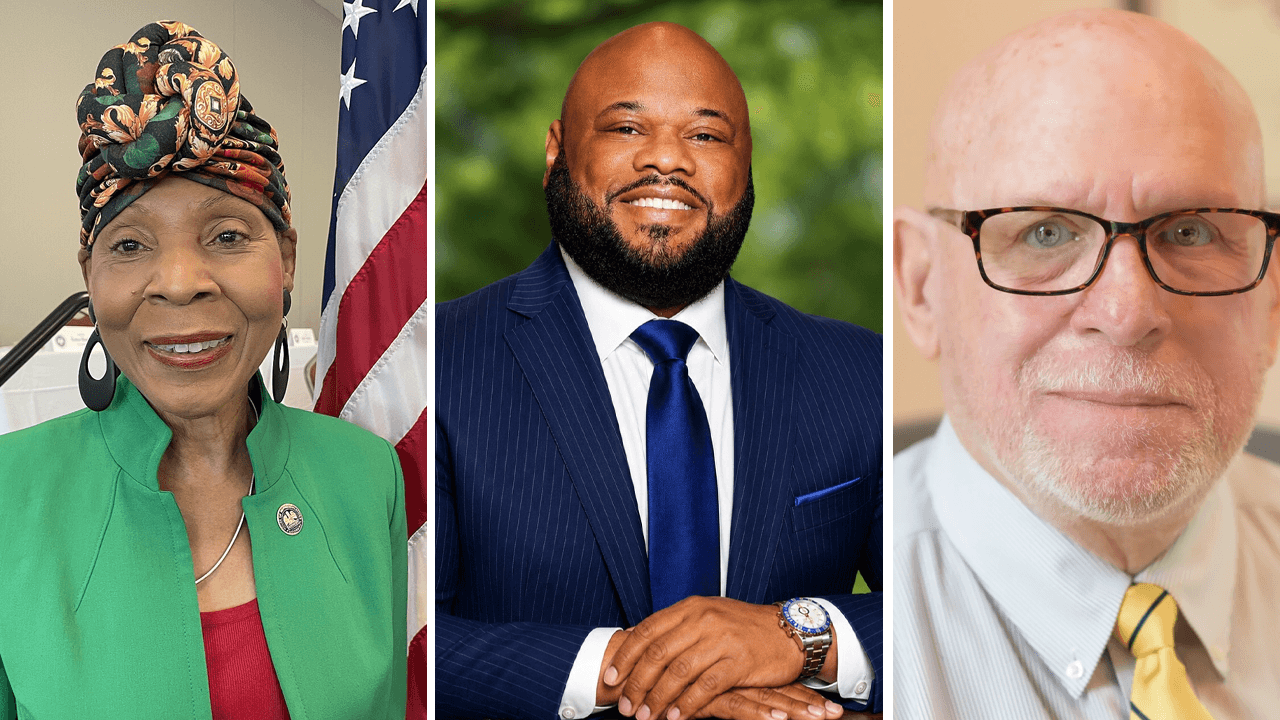
At Southern University on Tuesday night, Louisiana’s three Democratic U.S. Senate candidates offered less of an ideological clash than three different arguments about what kind of Democrat can still compete statewide in a deeply red state.
Nick Albares, Gary Crockett and Jamie Davis shared broad agreement on much of the Democratic policy baseline – protecting Medicaid, expanding voting rights, opposing abusive immigration enforcement and demanding greater accountability from corporations and polluters. But over the course of the debate, clear differences emerged in tone, emphasis and political identity. Albares made the most disciplined case for himself as a policy-focused fighter for working families. Davis leaned hardest into an electability pitch rooted in his identity as a farmer and businessman. Crockett cast himself as an outsider candidate skeptical of both political extremes.
The event, held at Southern University’s Leon R. Tarver II Cultural and Heritage Center, came as Democratic-aligned groups try to generate more energy around Louisiana’s May 16 closed primary. Melissa Flournoy, board chair of 10,000 Women Louisiana, said the forum grew out of a belief that “there’s not enough energy around the May 16 elections.”
Albares established the clearest throughline of the night almost immediately: healthcare. In his opening statement, he framed his candidacy around protecting Medicaid, warning that hundreds of thousands of Louisianans stand to lose coverage under the cuts Republicans have queued up to take effect after the midterms. Drawing on his work in Gov. John Bel Edwards’ administration, Albares cast himself as someone who has already fought that battle once and knows how to fight it again.
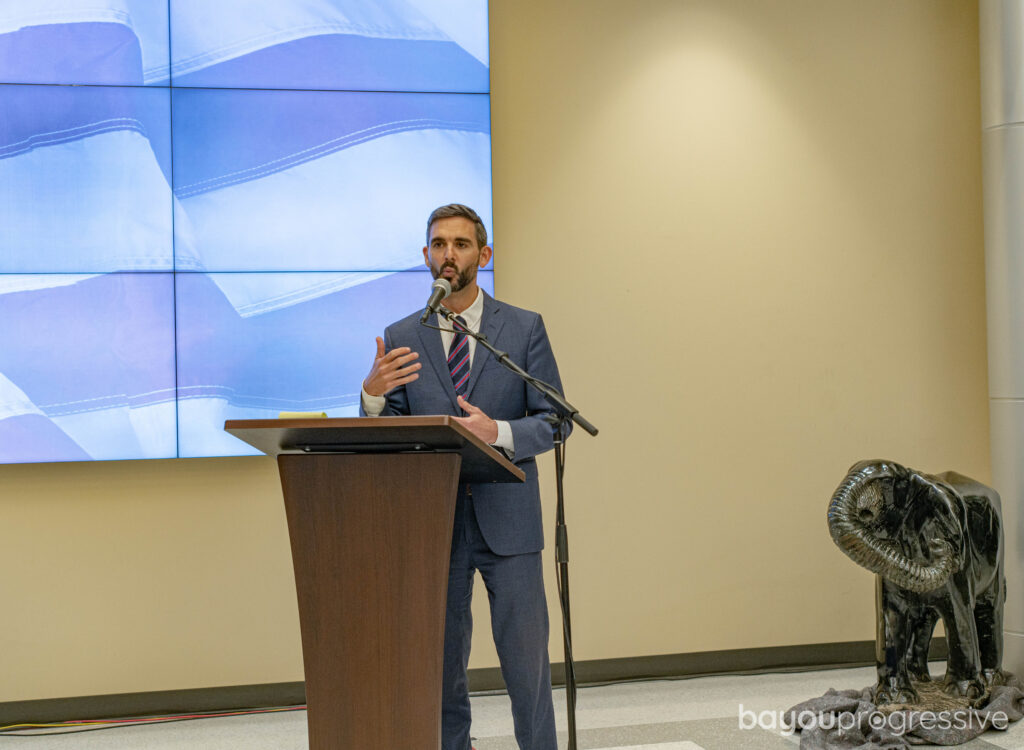
That message stayed at the center of his performance. Asked what he would prioritize in his first year in the Senate, Albares said the immediate task would be reversing the coming Medicaid cuts, which he noted were timed to hit after the election cycle. He also called for extending Affordable Care Act subsidies, expanding Medicaid and Medicare and moving toward universal coverage, arguing that “healthcare is a human right.” On the economy, he tied affordability back to a familiar class-based message, saying Louisiana is being failed by leaders who are “out of touch with people’s real needs” and calling for higher wages, cheaper housing, more childcare assistance and steeper demands on the wealthy and on corporations.
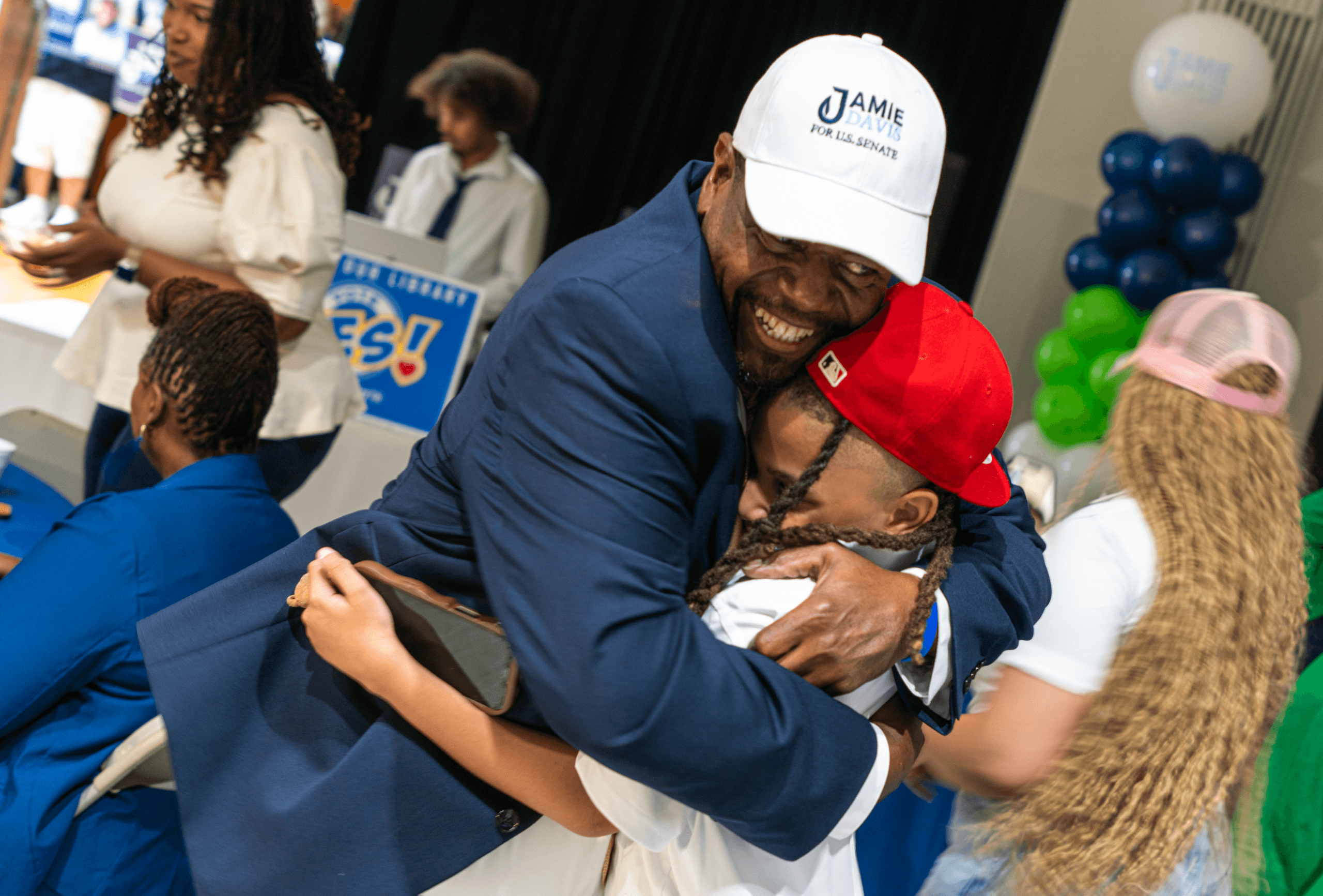
Davis, by contrast, seemed less interested in building a single policy argument than in making the case that he is the kind of candidate who can reach voters Democrats too often lose. A farmer from northeast Louisiana, he used his opening remarks to ground himself in agriculture, local government and civic service, and he returned repeatedly to the idea that his background gives him credibility across parts of the state where Democrats have been bleeding support for years.
That argument came into focus most clearly in his closing statement, when he used his time not to recap the debate so much as to explain “how the farmer standing before you wins this race.” Davis said Democrats win by “meeting the urban hubs in the middle,” appealing to suburban voters who see him as a business owner and returning to rural Louisiana with a message strong enough to bring disengaged voters back into the process.
On policy, Davis leaned into affordability and kitchen-table economics. He backed restoring Affordable Care Act subsidies, capping prescription drug costs for lower-income families, raising the minimum wage to around $17.50, providing tax relief to lower- and middle-income earners and cracking down on corporate price gouging. At one point, he illustrated the point with a story about buying fuel for his farm and watching the price jump almost immediately after the first bomb dropped overseas – his way of arguing that too many corporations treat crisis as a business opportunity.
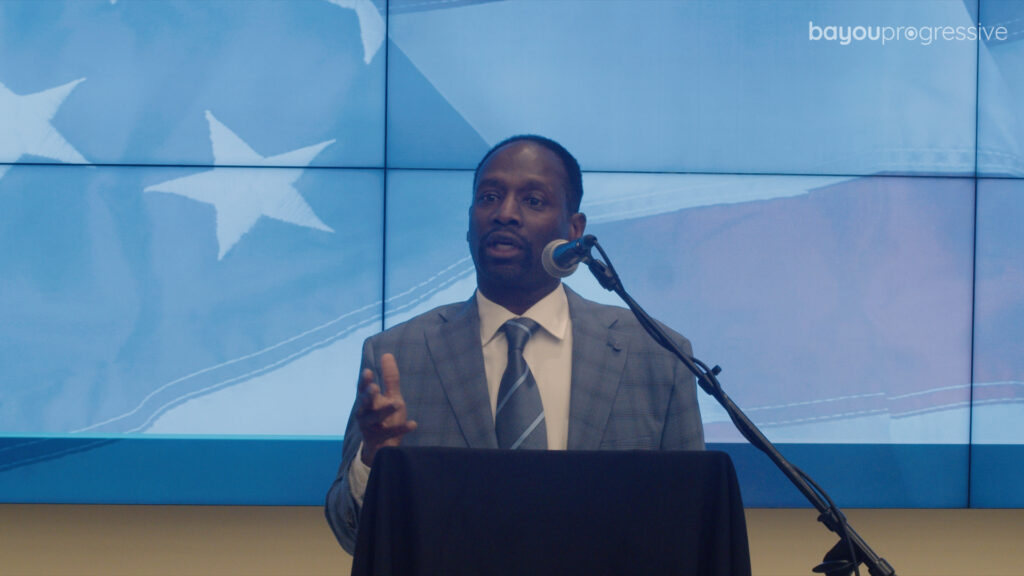
Crockett offered the most unconventional presentation of the night. A retired Navy veteran and business owner, he leaned into executive experience and impatience with conventional partisan language. His most revealing moment came late in the debate, when he described himself as “politically homeless” because, in his view, both sides too often drift toward rhetoric instead of results. “I think the middle is where the people are,” Crockett said, summarizing a message that ran through much of his performance.
That instinct showed up in his policy answers as well. Crockett called the healthcare system broken, endorsed a public option, argued that working people are overtaxed while corporations escape responsibility and presented himself as someone more interested in making the system work than in rehearsing familiar ideological lines.
There were several issues where the candidates were closer to one another than they were apart. On environmental justice, all three called for stronger oversight, though with different emphasis. Davis said he would more aggressively enforce existing rules. Crockett called for “regulations with teeth.” Albares argued Louisiana should be positioned at the front of the clean energy transition while ensuring the Environmental Protection Agency is actually allowed to do its job.
On immigration, all three criticized the current direction of federal enforcement. Davis said ICE has “terrorized this country” in recent months. Crockett said the deeper issue is that immigration enforcement is no longer being carried out with dignity. Albares delivered the sharpest line of the night, condemning private detention profits and saying “there should not be a profit motive that is tied with keeping people in cages.”
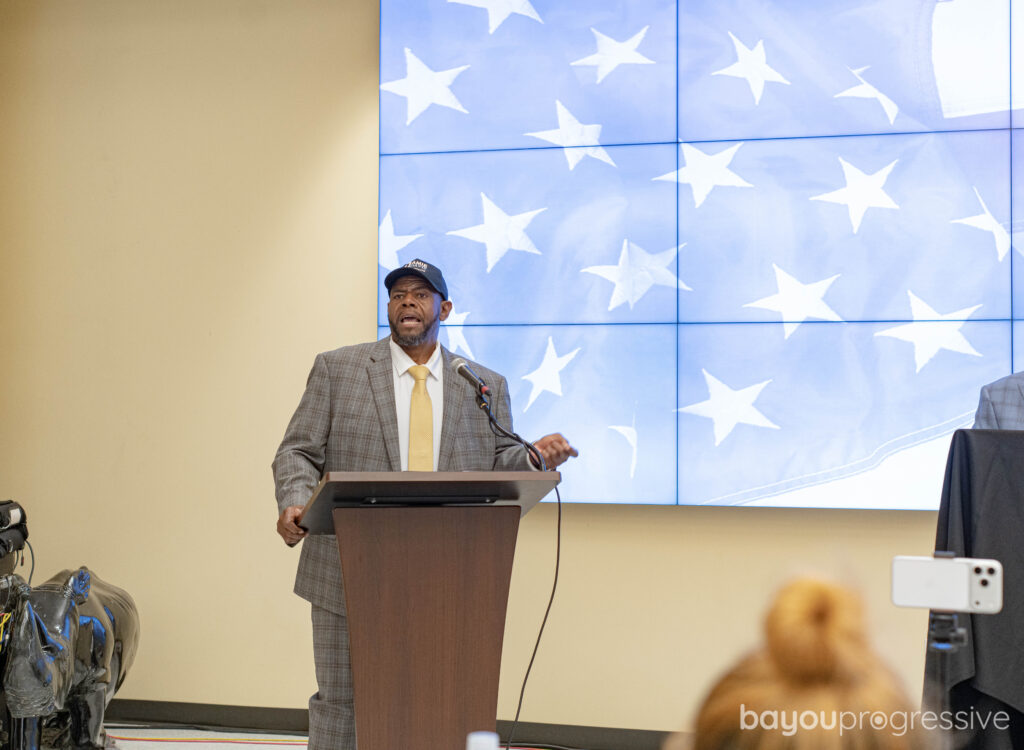
Voting rights produced similar consensus. Albares called for defeating the SAVE Act and expanding access to early voting and mail voting. Crockett said campaign donations should be limited to people who can actually vote. Davis argued that registration should effectively become automatic at voting age. The details varied, but the broader point did not: all three candidates cast voting access as central to the health of democracy.
In the end, the debate did not expose a major ideological rupture within Louisiana’s Democratic field. What it did reveal was three different theories of candidacy. Albares made the strongest case for himself as the policy-and-governance candidate, focused on healthcare and economic fairness. Davis made the clearest case as the rural coalition-builder who believes he can reconnect Democrats with voters across the state. Crockett presented himself as the outsider executive who sees both parties as too often trapped in performance.
Albares captured that contrast most succinctly in his closing statement, saying Republican candidates are competing to be closest to Donald Trump, while he would be “fighting to be closest to the people.” In a state where Democrats are still trying to figure out not just what to say, but who can say it credibly, that was probably the clearest summary of the night.