The legal fight over Louisiana’s suspended congressional primaries changed Monday night, but it did not end.
The U.S. Supreme Court issued an order allowing its ruling in Louisiana v. Callais to take effect immediately, giving Gov. Jeff Landry and Republican lawmakers a stronger procedural argument as they rush to redraw Louisiana’s congressional districts before this year’s elections. The order bypassed the Court’s usual waiting period before formally sending its judgment back to the lower court.
But here is what that order does not do: it does not say Landry had the power to cancel congressional primaries after ballots had already gone out. It does not bless Secretary of State Nancy Landry’s instruction that voters skip congressional races still appearing on their ballots. And it does not decide what happens to voters who already cast ballots before the state tried to stop counting part of them.
That question is now at the center of a growing federal lawsuit led by 5th District congressional candidate Lindsay “Rubia” Garcia and voter Eugene Collins, joined by Congressman Cleo Fields and a growing list of Democratic candidates across Louisiana’s congressional and U.S. Senate races.
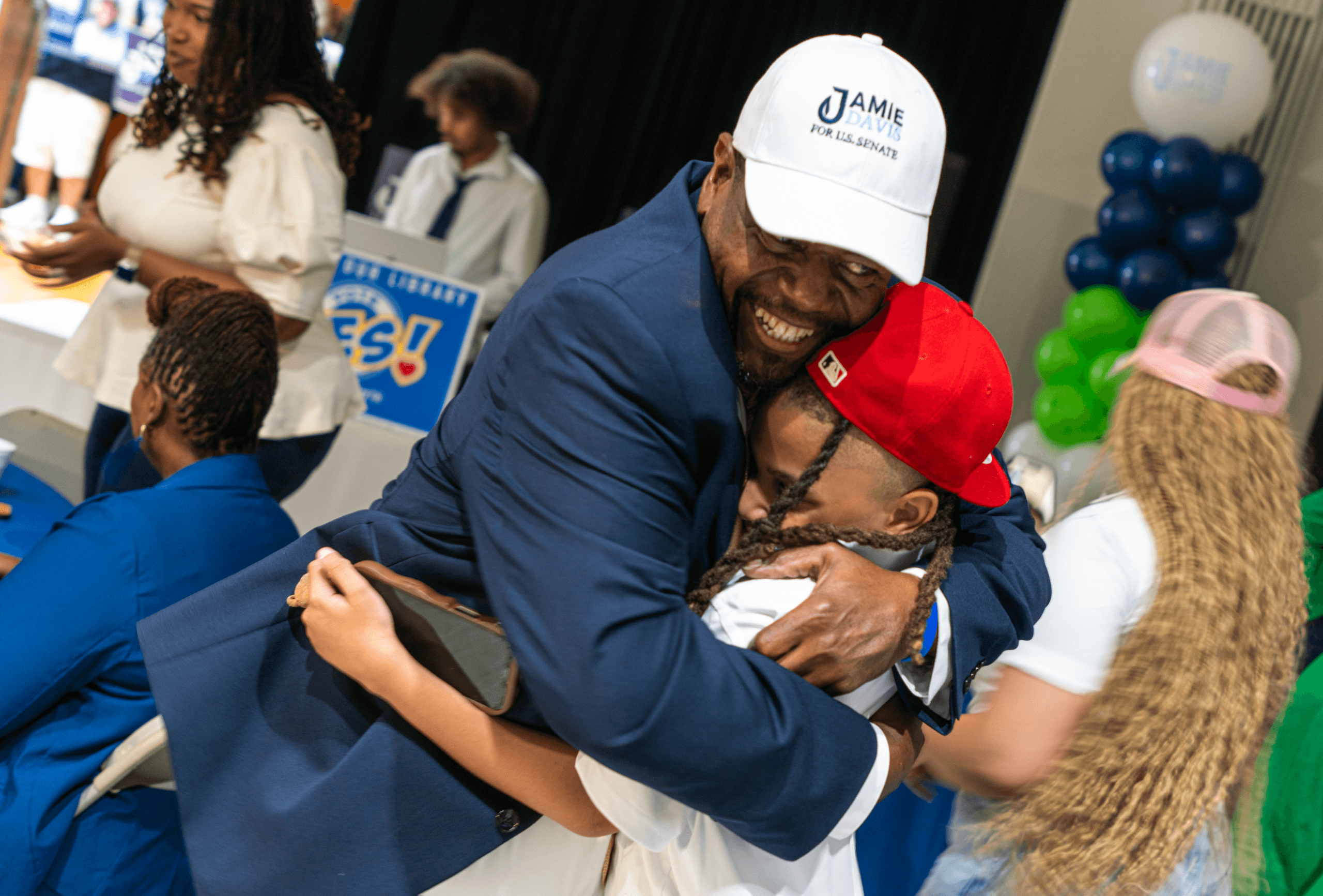
The lawsuit, filed in the U.S. District Court for the Middle District of Louisiana, challenges the state’s decision to suspend the May 16 and June 27 congressional elections after voting had already begun. WAFB reported that Fields has joined the case along with Jessee Fleenor, Dan McKay, Larry Foy, Matt Gromlich, Conrad Cable, John Day, Lauren Jewett, Jamie Davis, Nick Albares and Gary Crockett. The plaintiffs allege violations of the First, Fourteenth and Fifteenth Amendments, particularly because voters had already begun casting ballots.
The lawsuit seeks immediate relief, including restoring the full May 16 ballot, ensuring properly cast ballots are counted, protecting candidates’ ballot access and preventing further disruption to the election process. A hearing is set for Thursday, May 14.
In an interview with The Bayou Progressive before the Supreme Court’s latest order, Garcia said the lawsuit is not about asking the court to relitigate the congressional maps. Its focus is narrower, and arguably more basic: whether Landry had the authority to stop an election already in motion.
“We are leaving the maps alone,” Garcia said. “But we are challenging the separation of powers issue on whether or not Governor Jeff Landry has the authority in order to suspend elections.”
Garcia said Louisiana’s emergency election powers were meant for actual emergencies that affect voters’ ability to safely cast ballots, such as hurricanes, power failures or public health crises. A redistricting dispute, she argued, is different.
“This is an unprecedented action,” Garcia said. “Normally elections would not fall under the emergency type powers.”
That remains the core of the case even after the Supreme Court’s Monday order.
What changed is that one procedural argument became harder for the plaintiffs. Before Monday, Landry acted while the Supreme Court’s ruling had not formally taken effect. Now, the state can argue that the invalidation of Louisiana’s current congressional map is immediate and operative.
That matters. It gives the state a cleaner argument that Louisiana cannot simply proceed under the current map indefinitely.
But it does not answer the more explosive question: Can the governor and secretary of state suspend only the congressional portion of a live election, after absentee ballots had already been sent, early voting had begun and voters were being told to skip races still printed on their ballots?
The plaintiffs argue they cannot.
Garcia said the state created confusion that cannot be easily undone. She pointed to voters who may have walked into polling places, seen notices saying congressional votes would not count, and skipped those races entirely.
“What about the individuals who went in there and saw those signs that were posted and said that your vote for House of Representatives will not count?” Garcia said. “So they decided to skip over that section, and they did not vote.”
Collins framed the issue as bigger than one campaign, one district or one election cycle.
“When you look at voters’ rights, and you look at vote dilution, I think it falls in all those categories, especially voter suppression,” Collins said. “What you’ve offered is mass confusion.”
He warned that the long-term damage could be especially severe among voters already skeptical that voting matters.
“You’ll get the folks that look like me to say, ‘Voting doesn’t matter because my vote doesn’t count anyway,’” Collins said. “I just saw Calvin removed. They stopped the vote after I voted early.”
That is the practical problem behind the legal fight. Once voters are voting, the state is no longer dealing with an abstract election calendar. It is dealing with real ballots, real voters and real campaigns built around rules the state itself announced.
Fields made the same point in his statement joining the case.
“The election is already underway,” Fields said. “The Governor and the Secretary of State are attempting to disenfranchise voters in the 6th Congressional District and across Louisiana mid-election. Louisianans are casting ballots right now. This election must continue as scheduled, with every candidate and every race intact.”
Civil rights groups are also challenging the suspension. The ACLU, ACLU of Louisiana, Legal Defense Fund and other groups filed emergency litigation arguing that the governor’s executive order goes beyond his authority under Louisiana law, creates chaos in an already-confusing election and puts already-cast absentee ballots at risk.
So what happens next?
The Supreme Court’s order means Louisiana’s map problem is now moving faster. The Legislature and lower courts are under pressure to produce a new congressional plan before the election calendar collapses entirely. That helps Landry politically and procedurally.
But the Garcia-Collins lawsuit is about the method, not just the map. It asks whether Landry can use emergency powers to override an election already underway, whether voters’ ballots can be selectively disregarded and whether candidates can be stripped of ballot access after qualifying, campaigning and spending money under the state’s own rules.
That is still very much alive.
For voters, the cleanest takeaway is simple: the Supreme Court did not order Louisiana to cancel its May 16 congressional primaries. It did not say already-cast congressional votes can be thrown away. And it did not resolve whether Landry and Nancy Landry exceeded their authority.
Monday’s order changed the legal terrain. It did not erase the democratic damage.
Now Garcia, Collins, Fields and a growing coalition of candidates are asking a federal court to draw a line Louisiana’s leaders were apparently willing to cross: once voters are voting, politicians do not get to stop counting because the election became inconvenient.