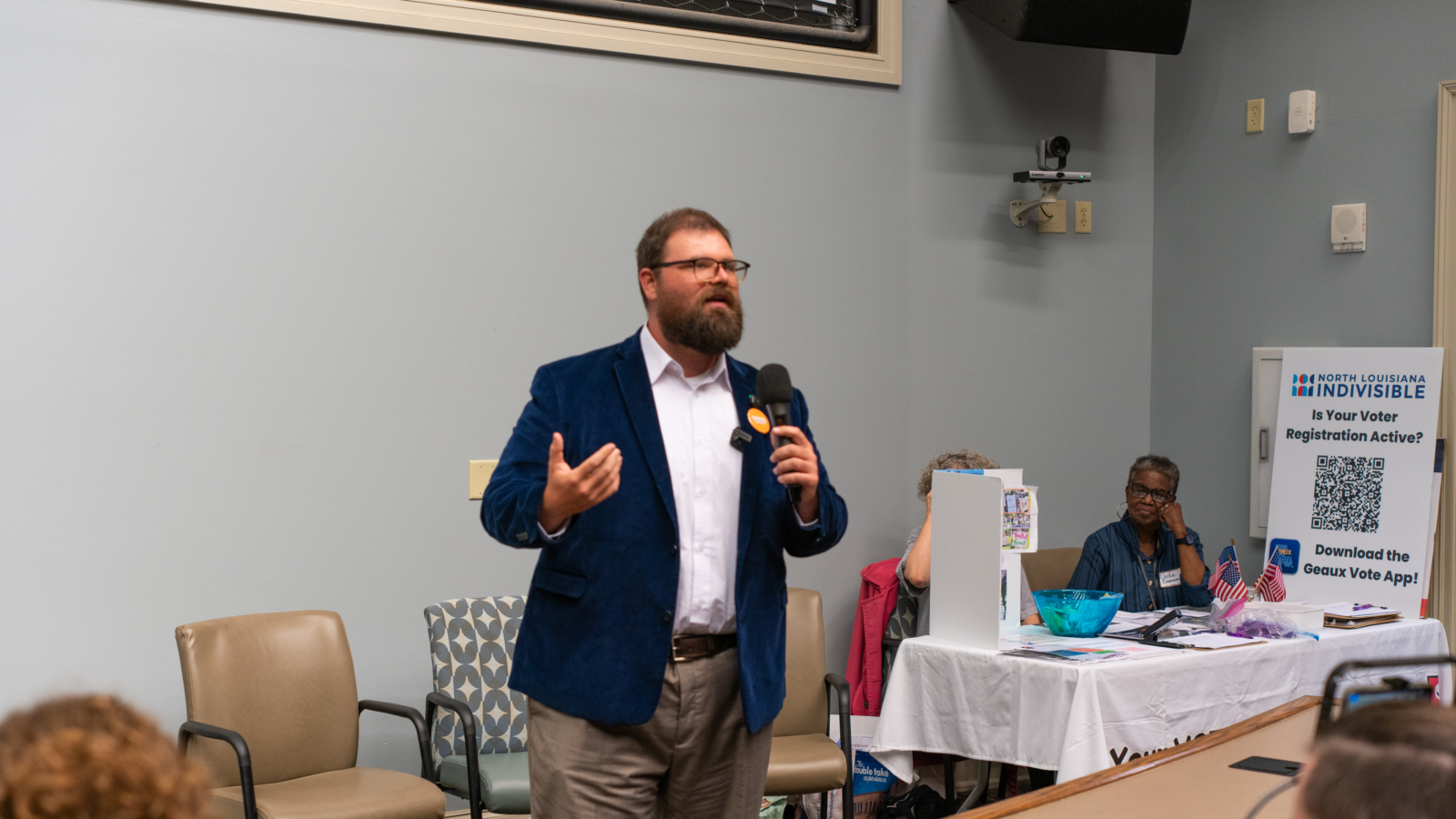



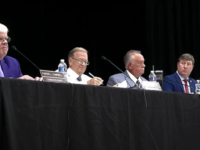




The Democratic candidates who showed up Wednesday night at Louisiana Tech University did not treat the May 16 primary as a sleepy intraparty contest. They framed it as a test of whether Louisiana voters are ready to demand more on health care, utility bills, rural jobs, public education, infrastructure and public accountability.
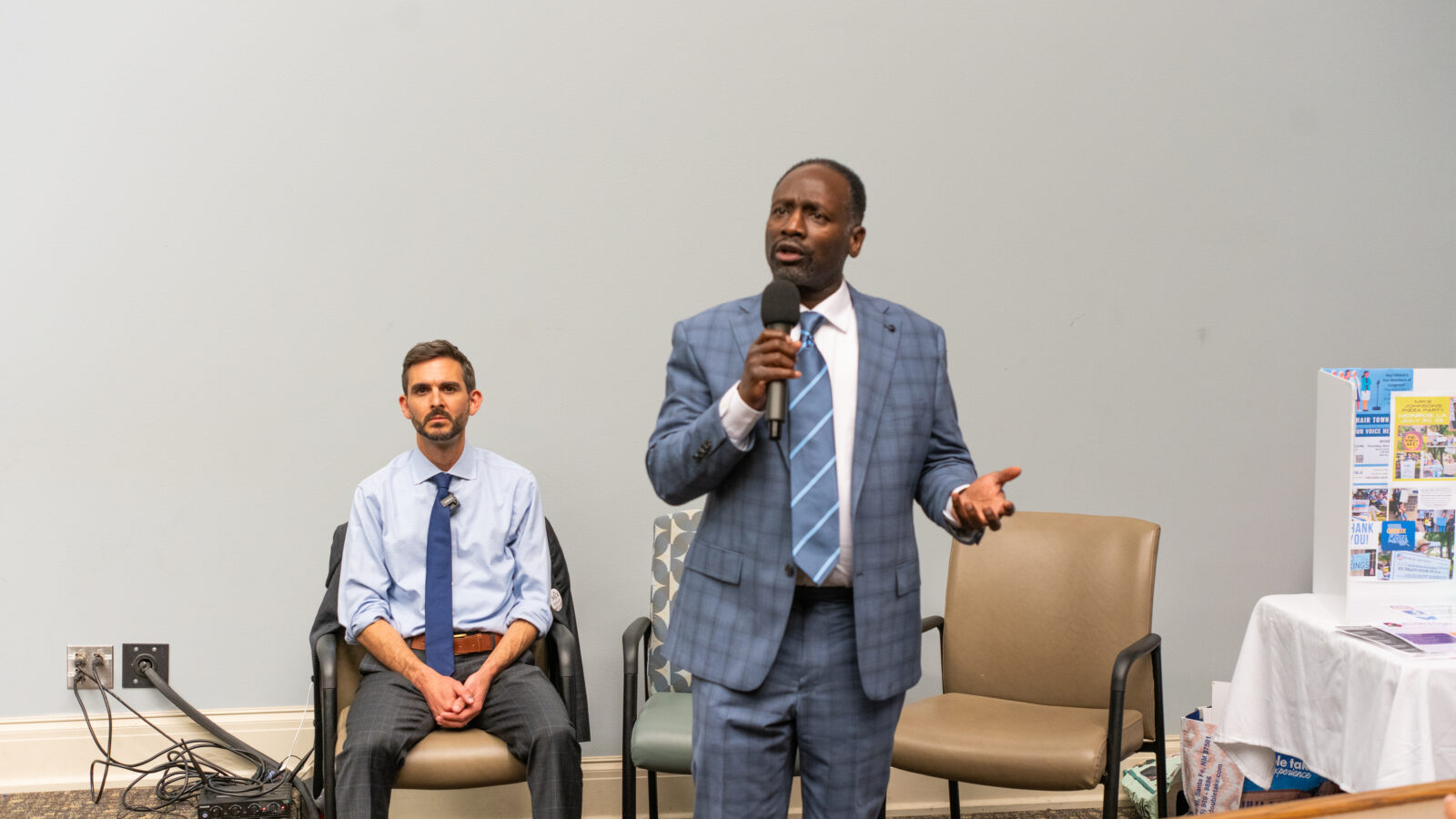
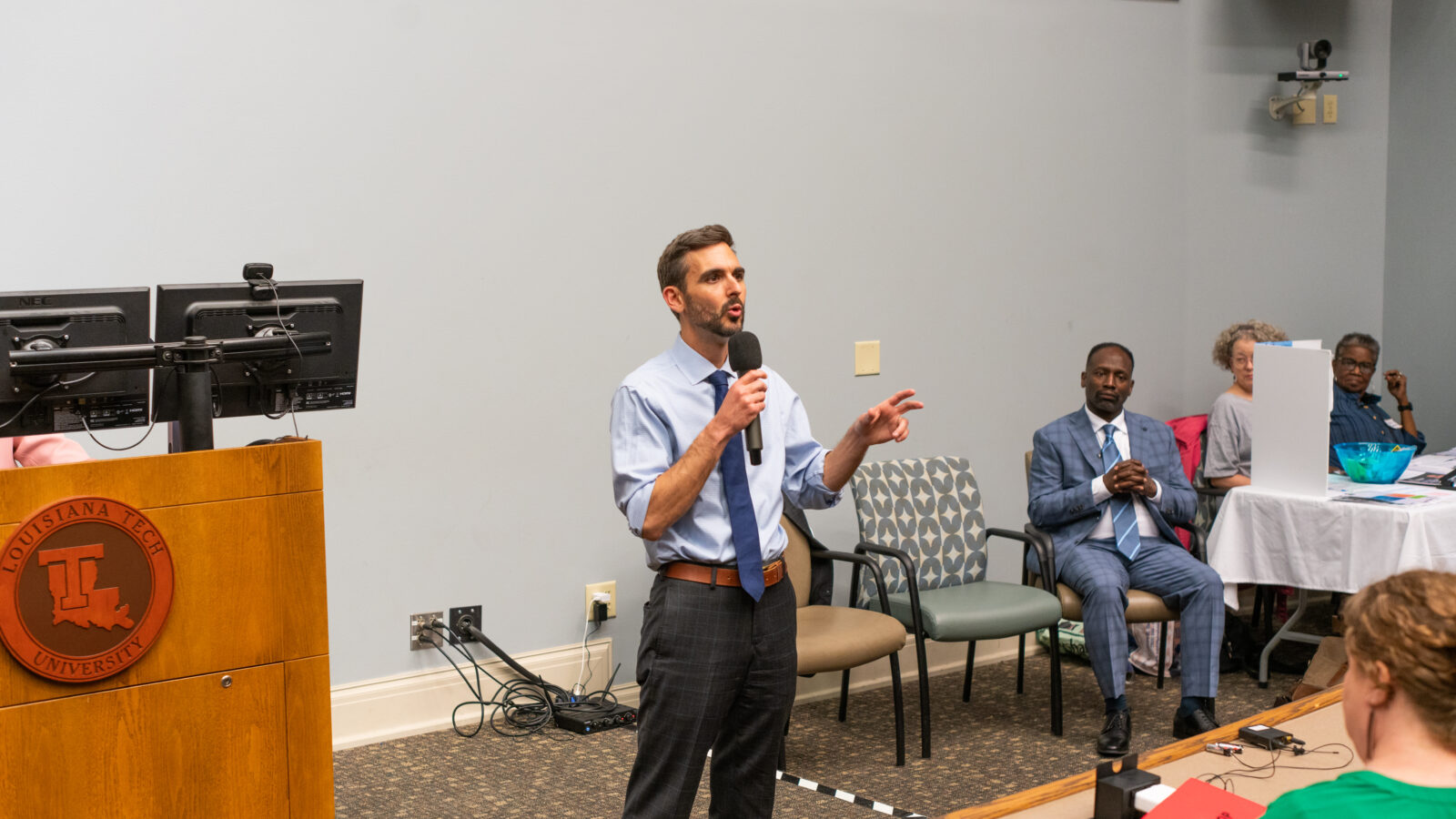
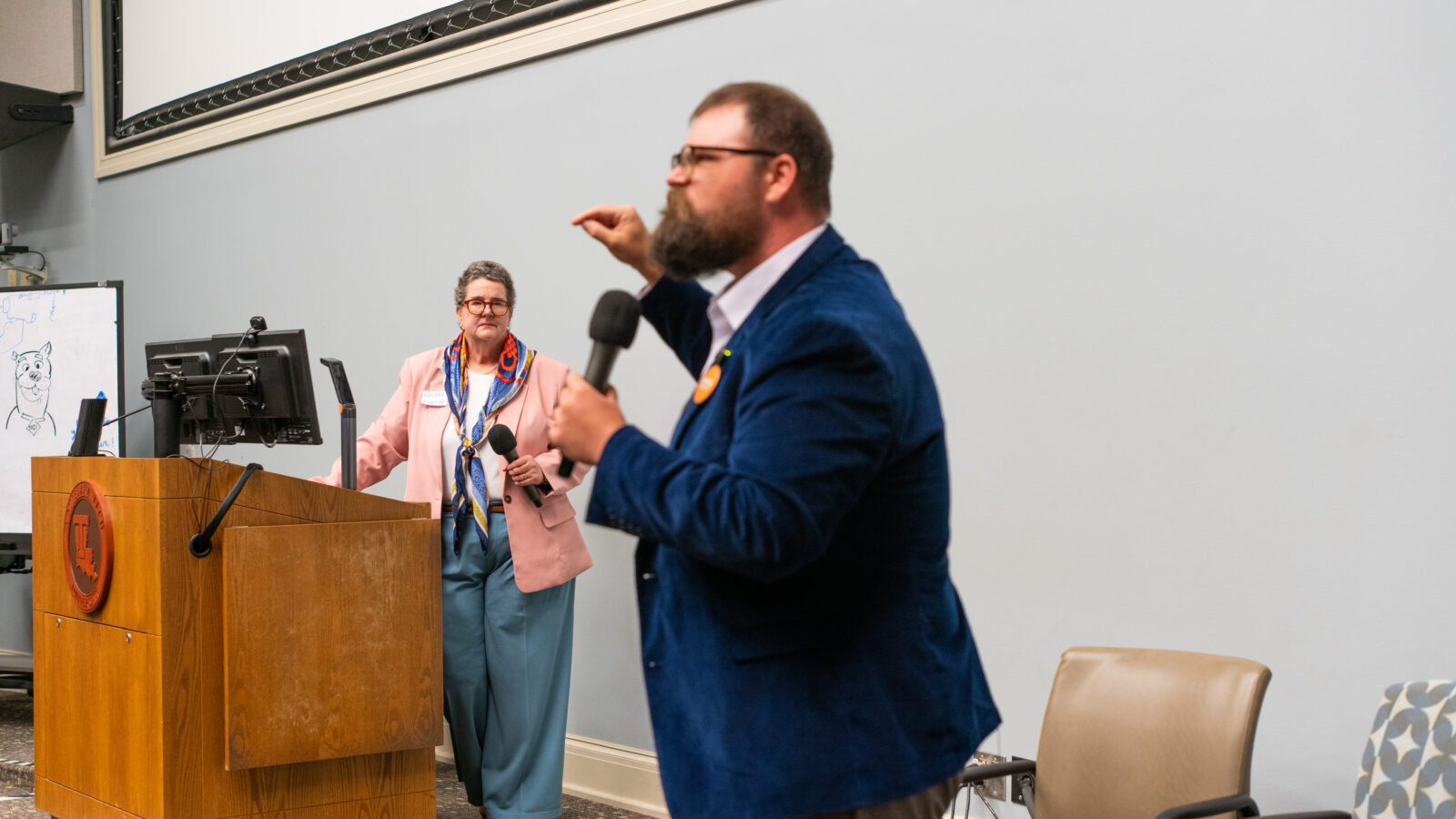
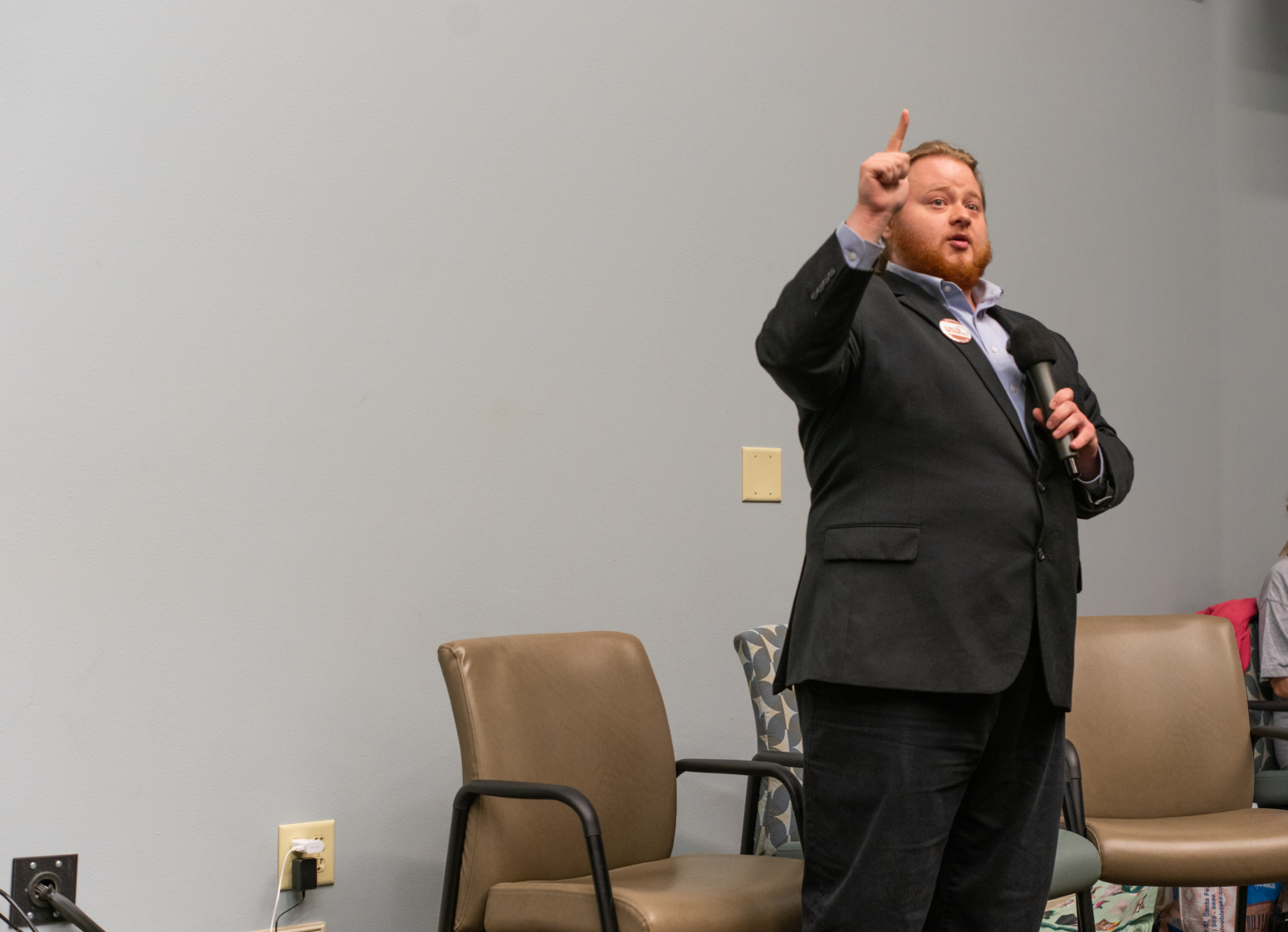
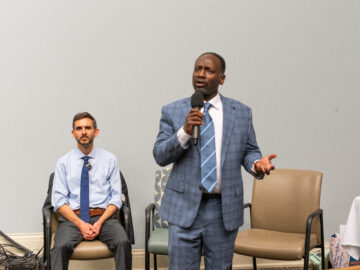
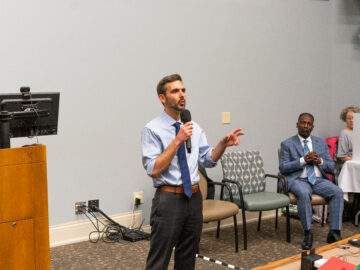
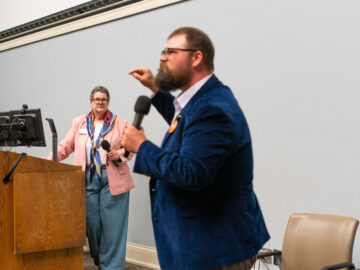
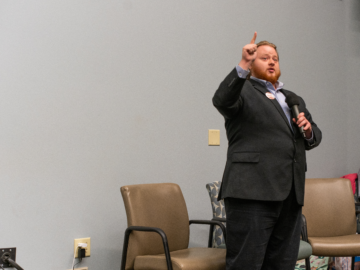
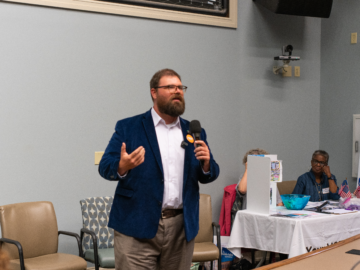
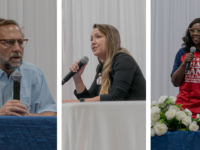
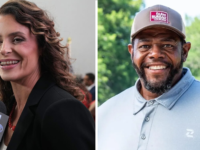
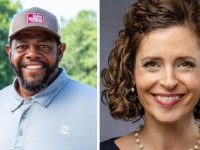
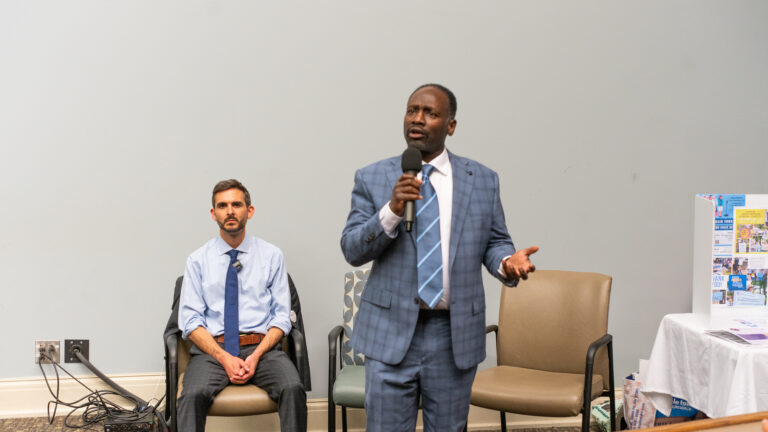
The Ruston stop of the To The People, For The People 2026 Democratic Roadshow, moderated by Melissa Flournoy of 10,000 Women Louisiana, featured U.S. Senate candidates Nick Albares and Gary Crockett, 4th Congressional District candidate Conrad Cable, and Public Service Commission candidate Austin Lawson.
Several invited candidates were not in attendance. U.S. Senate candidate Jamie Davis, 4th Congressional District candidate Matt Gromlich, and Public Service Commission candidate Rev. James Green did not participate in the Ruston forum.
That left the candidates who did attend with more room to make their case directly to North Louisiana voters, in a forum that moved from Medicaid and rural hospitals to data centers, broadband, gun violence, tariffs, veterans’ services, private prisons, voting rights and the future of the state’s energy grid.
Flournoy opened the evening by describing the roadshow as an effort to bring Democratic candidates directly to voters before early voting begins. She also acknowledged the political isolation many Democrats feel in Louisiana, telling the room that “being a Democrat in Louisiana can be lonely,” but arguing that this year’s races give voters a chance to rebuild the party’s bench and demand more from candidates seeking their support.
Senate Candidates Focus on Health Care, Jobs and Trust
The Senate portion opened with Crockett, a Tallulah native, Navy veteran and business owner now living in New Orleans, presenting himself as a practical candidate shaped by service and private-sector experience.
“I spent 24 years in the U.S. Navy, and during that time, I was fighting for America, and now I’m back to fight for Louisiana,” Crockett said.
Albares, a former policy adviser to Gov. John Bel Edwards who has worked with nonprofit organizations, used his opening statement to draw a direct contrast with Republicans running for Senate.
“What I saw on the Republican side was everyone fighting each other to be closest to the president,” Albares said. “And my promise to you Democrats is that I am fighting to be closest to the people.”
Albares also used the forum to note Edwards’ endorsement, telling the audience he was “proud to announce tonight that Governor Edwards has endorsed me in the United States Senate race.”
On trust and transparency, Crockett proposed a public-facing legislative website explaining bills in plain language and letting constituents weigh in through surveys before votes.
“I’m not trying to go to Washington to be part of Washington rhetoric,” Crockett said. “I’m going there to be the voice of the people.”
Albares answered by focusing on constituent services, saying his office would be built around a “results orientation,” with staff expected to help people find answers whether their concern was technically federal, state or local.
That difference in style carried through much of the Senate discussion. Crockett leaned on his military and business background, emphasizing job pathways in cybersecurity, construction, HVAC, electrical work and plumbing. Albares leaned more heavily on public investment, workforce development, health care expansion and reversing federal cuts.
Asked how to keep young people from Louisiana Tech and Grambling in the region, Albares said Louisiana needs to “invest in the skills of the 21st century” and ensure universities, community colleges and technical colleges have the resources to train people for in-demand jobs.
Crockett argued that Democrats should be more direct about practical job creation.
“First of all, I’m not a politician, I’m a problem solver,” Crockett said. “I’m a creator of jobs.”
He pointed to cybersecurity training as one example, saying students who leave high school could be trained for federal government or contractor jobs “making at least about $80,000 per year.”
Data Centers Emerge as a North Louisiana Flashpoint
One of the sharpest policy threads of the evening centered on data centers, including the large Meta project in Richland Parish and the possibility of additional facilities across North Louisiana.
Albares warned that artificial intelligence data centers require massive amounts of energy and water, and said poorer communities should not be left to absorb the costs.
“We need a robust regulatory regime around data centers, so that they’re created in such a way that centers community,” Albares said.
He said large technology companies and billionaires should be responsible for investing in the power needed for the facilities “so that rates aren’t going up for everyone.”
Crockett was more blunt.
“Data centers, they shouldn’t be in our backyard,” Crockett said.
He argued that data centers should have their own power sources and should not be allowed to shift their energy costs onto ordinary ratepayers. He also questioned the long-term economic benefit, saying data centers may generate construction work on the front end but only “50 to 100 jobs at the end of the day.”
“So despite the fact that they tell you about the billions that are invested, it’s a fallacy,” Crockett said.
The issue came back later in the Public Service Commission portion, where Lawson made utility regulation and corporate accountability the center of his campaign.
Health Care Becomes the Through Line
Health care was the clearest through line of the night, especially in the Senate and congressional portions. The candidates repeatedly connected Medicaid cuts, rural hospital closures, veterans’ services and affordability to the broader question of whether rural Louisiana can remain livable.
Crockett said Louisiana needs better health care in Northwest and Central Louisiana, arguing that too much of the state’s medical infrastructure is concentrated elsewhere.
“What I want for the people of Louisiana is the same health care that the senators and representatives receive right now,” Crockett said. “There’s no reason for you to represent me, but have a different level of health care.”
Albares returned often to the Medicaid expansion under Edwards, arguing that it helped stabilize rural hospitals and expanded care to people who had long gone without it.
“When I worked with Governor Edwards and we expanded Medicaid during his two terms in office, does anyone want to guess how many rural hospitals closed?” Albares asked. “Zero. The number was zero.”
He said Medicaid expansion gave people access to cancer screenings, primary care and mental and behavioral health services, often for the first time.
“That’s what this is about, folks,” Albares said. “This is life and death when we talk about these policies.”
Albares called for reversing federal Medicaid cuts, restoring enhanced premium tax credits and strengthening the Affordable Care Act.
The discussion of gun violence also turned personal. Albares described being asleep at home with his wife when someone fired multiple rounds into a neighbor’s vehicle, then turned the weapon toward his house.
“I rushed to the door, and in so doing seemed to startle the gunman who then turned the weapon from the street towards me, firing seven rounds into my home, at me and my wife, luckily missing me,” Albares said.
He called for investment in mental health care, red flag laws, background checks and safe storage laws.
Crockett said he supports the right of people to own guns if they have the mental capacity and can pass a background check, but argued Louisiana’s open carry policy has not made communities safer.
“With all the guns that we have in Louisiana, crime has not gone down,” Crockett said. “With all the prisons — and we imprison more people than any other place on this globe — crime has not gone down.”
Cable Goes Directly at Mike Johnson
After the Senate candidates finished, Cable, a farmer from Union Parish running in the 4th Congressional District, took the stage alone. His Democratic primary opponent, Gromlich, was not present.
Cable used his opening statement to take direct aim at House Speaker Mike Johnson, whose district stretches across much of North Louisiana.
“First, he betrayed our real Louisiana values by acting like a bad neighbor whenever he cut our health care and he ripped food out of hungry kids’ mouths,” Cable said. “And now he has betrayed our real American values by throwing away his oath to the Constitution and licking Donald Trump’s boots at every opportunity that he has.”
Then came one of the night’s sharper lines.
“I’d rather be a bootlegger than a boot licker,” Cable said.
Cable argued that the 4th District is more politically competitive than its voting history suggests if Democrats can reach people who have stopped participating.
“Louisiana’s fourth district, it’s not red, it is rigged,” Cable said. “There are more disenfranchised voters who don’t vote than there are Mike Johnson voters.”
His answers leaned hard into economic populism. He called for Medicare for All, clean water investment, broadband access, red flag laws, gun locks, reversing Medicaid cuts and treating poverty as a core driver of crime and instability.
On infrastructure, Cable said Congress should pass “another New Deal,” with a focus on clean water and internet access.
“If we want our kids to compete in a digital economy, that is how we do it,” Cable said, “by providing them with internet, by making it a public utility.”
On health care, Cable warned that Medicaid cuts could devastate rural hospitals in the district, including Union General Hospital in Union Parish.
“If that hospital closes, that means that people that I love, my friends, my neighbors and my family are going to die because they can’t access the health care that they need in an emergency situation,” Cable said. “And if that’s not a reason to run for Congress, then I don’t know what the hell is.”
Cable also rejected the idea that private prisons and ICE detention centers should be treated as economic development.
“I believe that private prisons are a modern-day form of slavery,” Cable said.
He argued that rural communities need investment in education, health care and anti-poverty programs, not prisons as a substitute for economic policy.
“Poverty is violence,” Cable said. “And hungry, desperate people commit crimes when they have no other option.”
Lawson Centers PSC Race on Utility Bills and Corporate Power
The final candidate portion belonged to Lawson, who is running for the District 5 seat on the Louisiana Public Service Commission. His opponent, Green, did not attend.
Lawson opened with a personal story about growing up in a trailer in Coushatta with his mother, grandmother and great-grandmother, where utility service was inconsistent and bills were a constant source of stress.
“When I grew up, that’s when I really learned what utilities mean,” Lawson said. “I had to drop out of college to pick up more shifts bartending because I wasn’t able to afford my bills.”
For Lawson, that experience shaped the central policy argument of his campaign: electricity rates should be tied to income so households are not crushed by basic utility costs.
“It is tying electricity rates to people’s income so that every home can function,” Lawson said.
Lawson also called for stronger regulation of data centers, rejecting corporate money from regulated industries and creating a public advocate program within the PSC to represent ratepayers and communities in regulatory proceedings.
On campaign finance, Lawson said the Legislature should prohibit PSC candidates from accepting money from corporations and industries they would be responsible for regulating.
“Who gives you money is who you are accountable to,” Lawson said. “When you are taking money from SWEPCO, from Entergy, from any of these utility monopolies, they are going to want that back.”
On data centers, Lawson said residents are worried about electricity rates, water use, noise and environmental impact.
“They’re concerned about the price of electricity going up because they’re sucking up all the electricity in the area,” Lawson said. “They’re concerned they’re not going to be able to fish on the lake they go fish on because the data center is going to suck up all the water.”
Lawson called for custom utility rates for data centers so residential ratepayers are not forced to subsidize them, stronger water recycling standards and requirements that new energy generation tied to data centers move toward cleaner sources.
The broader energy question gave Lawson one of his clearest contrasts.
“A lot of people will go and tell you, and a lot of people have told me on this race, that Louisiana is an oil and gas state,” Lawson said. “That is not how it has to be.”
He argued Louisiana should think of itself not simply as an oil and gas state, but as an energy state.
“Why can’t we invest in wind? Why can’t we invest in solar?” Lawson asked. “We need to think of new ways that we are going to move our state into the future.”
Lawson also criticized the sale of Cleco to a hedge fund, saying utilities are necessities and should not be treated like ordinary assets for private equity to strip down.
“When we are talking about our utility providers, the absolute necessities that we need to live, it should be out of the question that we are selling it to a hedge fund,” Lawson said.
He called instead for “cooperatization of our electricity grid” so Louisiana residents can own the power they depend on.
A Roadshow Built Around Turnout
The Ruston forum was not only about candidate answers. Organizers also reminded voters about mail-in ballot postage, party participation rules under closed primaries and the need to check ballots carefully.
But the larger message was simpler: Democratic voters cannot afford to ignore a low-turnout primary and then complain about the choices left in November.
The Ruston stop did not include every candidate on the flyer. But the candidates who came gave voters a clear look at the campaign Democrats are trying to build across Louisiana: one centered on health care, affordability, infrastructure, public education, utility accountability, voting rights and the argument that Louisiana’s current political direction is not inevitable.
For a party still trying to rebuild confidence, infrastructure and turnout in a state dominated by Republicans, that may be the larger point of the roadshow.
The candidates are making their case. The harder question is whether enough voters will hear it before May 16.