








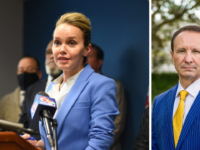
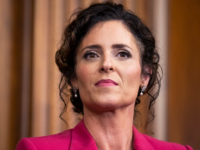







A new Emerson College Polling/KLFY News 10 survey, sponsored by KLFY/Nexstar Media, shows Louisiana’s Republican U.S. Senate primary locked in a tight three-way fight, with state Treasurer John Fleming narrowly leading U.S. Rep. Julia Letlow and incumbent U.S. Sen. Bill Cassidy running third. The survey was conducted April 24-26 among 500 likely Republican primary voters.
According to the poll, Fleming leads with 28 percent, Letlow follows with 27 percent, Cassidy trails at 21 percent, and 22 percent of Republican primary voters remain undecided.
That is not a dominant position for Fleming. It is barely a lead. But for Cassidy, the number is more troubling: a sitting two-term Republican senator is running third in his own party’s primary, with less than a quarter of likely GOP voters behind him.
Still, the topline number may not tell the whole story.
In a normal political environment, Cassidy’s 21 percent would look close to catastrophic. But Louisiana’s Republican primary is not taking place in a normal environment. It is taking place under the state’s new closed-party primary system, in what is likely to be a lower-turnout and potentially confusing election for voters accustomed to Louisiana’s traditional jungle primary format.
That may matter more for Cassidy than the poll itself suggests.
Cassidy remains strongest with establishment Republicans, a faction that has lost influence in the Trump-era GOP and especially after Gov. Jeff Landry’s insurgent rise in 2023. But establishment Republicans have not disappeared from Louisiana politics. They still have donor networks, local relationships, institutional memory, and enough influence to matter in a low-turnout primary.
Cassidy’s challenge is that those advantages may be enough to get him to a runoff, but not enough to save him once he gets there.
The poll shows none of the three major candidates anywhere close to the 50 percent needed to avoid a runoff. On paper, that means all three remain viable. In practical terms, it suggests Cassidy’s clearest path is to survive the first round while Fleming and Letlow continue splitting the anti-Cassidy vote.
The real question may not be whether Cassidy makes the runoff. It may be who makes it with him.
That is where the race gets more complicated for Letlow.
The poll found that 41 percent of Republican primary voters see Letlow as the candidate most supportive of President Donald Trump’s agenda, compared with 26 percent for Fleming and 21 percent for Cassidy. That should be Letlow’s strongest asset. She has Trump’s endorsement, and in a Republican primary, that still carries obvious weight.
But Fleming has done a much better job visually branding himself as the MAGA candidate statewide. His billboards across Louisiana feature a smiling photo of Fleming beside Trump, both giving a thumbs-up. For many voters driving past those signs, the message is simple: Fleming equals Trump.
Letlow has the actual endorsement. Fleming has arguably done more to make himself look like the Trump candidate.
That matters because Letlow is already operating from a structural disadvantage. Unlike Cassidy and Fleming, she has not run statewide before. Cassidy has won statewide twice. Fleming, as state treasurer, has already appeared on ballots across Louisiana. Letlow is well-known in her congressional district and respected in Republican circles, but a statewide Senate primary is a different animal.
Her campaign’s apparent hesitation to aggressively leverage the Trump endorsement has left room for Fleming to occupy the MAGA lane visually and emotionally, even if Letlow holds the formal backing of the president.
Fleming also has deep credibility with conservative activists in Louisiana. He is not a fresh face trying to introduce himself to the Republican base. He has been around. He has relationships. He has a clear ideological profile. And in this race, he has given voters a simple visual argument: he is the conservative fighter standing with Trump.
That does not mean Fleming is certain to make the runoff. The poll shows Letlow essentially tied with him, and her Trump endorsement remains a major advantage if her campaign fully activates it in the final stretch.
But it does mean Letlow’s path is not as automatic as it may appear from Washington.
It would be stunning if a Trump-backed sitting congresswoman failed to make the runoff in a Louisiana Republican Senate primary. But it would not be unprecedented for a Trump endorsee to fall short of securing a nomination. Louisiana politics has its own institutional habits, local loyalties, parish-level networks, and turnout quirks. A national endorsement matters here, but it does not always override the machinery of a state-level campaign.
The deeper poll numbers show why Cassidy is in trouble, even if he remains well-positioned to survive the first round.
Cassidy’s favorability among likely Republican primary voters is underwater. The poll found him at 30 percent favorable and 49 percent unfavorable. Fleming, by comparison, sits at 42 percent favorable and just 15 percent unfavorable. Letlow is at 40 percent favorable and 31 percent unfavorable.
That is the real danger sign for Cassidy. His problem is not simply that voters do not know him. It is that many Republican primary voters know him and do not like what they see.
Some of that is almost certainly rooted in Cassidy’s long-running break with Trump-aligned Republicans after his vote to convict Trump in the former president’s second impeachment trial. Cassidy has tried to occupy a more traditional conservative lane, emphasizing his record, seniority, and policy work. But by 2026 Republican standards, that makes him something closer to a centrist figure inside his own party.
That positioning may help him with business-minded Republicans, older institutional conservatives, and voters who want a senator who can work the system. It may also be enough to make him one of the final two candidates.
But if Cassidy lands in a runoff against either Letlow or Fleming, the math gets much harder.
A one-on-one runoff would likely consolidate much of the anti-Cassidy Republican vote behind the remaining challenger. If that challenger is Letlow, Cassidy would be facing a Trump-endorsed opponent with the president’s support and likely the full weight of Louisiana’s statewide Republican leadership against him. If it is Fleming, Cassidy would be facing a conservative activist favorite who has already spent months branding himself as the Trump-aligned alternative.
Either way, Cassidy’s best hope may be to somehow win outright in May.
That looks difficult from where the poll stands. But for Cassidy, clearing 50 percent in the first round may be easier than trying to win a runoff inside a Republican electorate where nearly half of likely voters already view him unfavorably.
The poll also included a revealing question on carbon capture, one of the biggest energy and environmental fights in Louisiana. Asked whether carbon capture is a good thing or a bad thing for the state, 17 percent said it was a good thing, 34 percent said it was a bad thing, and 49 percent were unsure.
That result should worry industry boosters and state officials who have tried to sell carbon capture as an economic development win. Nearly half of Republican primary voters are unsure, and among those with an opinion, opposition runs ahead of support by a two-to-one margin.
For now, though, the Senate race is the headline.
Fleming has a narrow lead. Letlow has the Trump endorsement but has not fully turned it into dominance. Cassidy has the power of incumbency but a damaged brand inside his own party.
The race is not settled. It is a three-way Republican brawl in which the incumbent is weak, the Trump-backed candidate has not closed the deal, and the candidate doing the clearest MAGA branding may be the one currently sitting in front.