


















The Recreation and Park Commission for the Parish of East Baton Rouge (or “BREC”)’s effort to declare multiple Baton Rouge parks “obsolete” and move them toward sale hit serious resistance this week after residents and local officials blasted the process as rushed, opaque, and disconnected from the communities most affected.
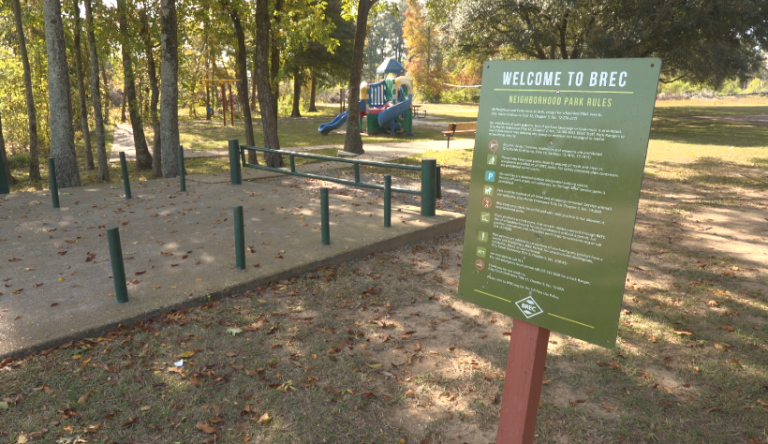
The controversy centers on a proposal involving eight parks, many of them in north Baton Rouge, that BREC says are underused, no longer needed for public purposes, or better folded into a broader consolidation strategy. Before Tuesday’s Planning and Park Resources Advisory Committee meeting, the list included Alexander Street Park, Belfair Park, Blueberry Street Park, Fortune Addition Park, Wenonah Street Park, Dover Street Park, Lanier Drive Park, and an outparcel of Sharon Hills Park. The properties were discussed as potential surplus sites that could be sold, with proceeds reinvested into nearby parks and recreation improvements.
But what may have looked to BREC like a technical land-use question quickly became a political and community flashpoint.
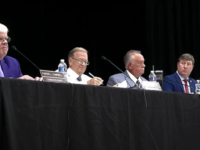
After more than two hours of public comment and debate Tuesday, the advisory committee delayed action on five of the eight parks, citing the need for more public input. The committee still voted to move forward with recommending that three parks — Alexander Street Park, Belfair Park, and Blueberry Street Park — be declared obsolete and sold, sending those items to the BREC Commission for the next stage of the process.
That partial retreat came only after a wave of criticism from community members and elected officials who argued BREC had failed to properly engage residents before putting neighborhood parks on the chopping block.
Metro Councilman Darryl Hurst was among the most outspoken critics during the meeting, accusing the agency of making decisions about communities it had not meaningfully consulted.
“You sit here and make decisions for communities, for people you haven’t even spoken with,” Hurst said.
East Baton Rouge Parish School Board member Dadrius Lanus was similarly blunt, calling the proposal “a bad plan” and warning that selling parks in already underserved areas would deepen long-standing inequities rather than solve them. He argued that the parks remain important assets for children and families, especially in neighborhoods where safe recreational space is already limited.
BREC officials, for their part, defended the proposal as part of a larger systemwide strategy. According to reporting from The Advocate, BREC has identified 43 properties out of its 175 parks for possible sale under a broader effort to reduce the number of properties it maintains and redirect resources into parks with stronger usage and greater long-term viability. Assistant planning and development director Brett Wallace said the sites were identified using criteria such as proximity to other parks and public usage, including aggregated cellphone data.
BREC officials also pointed to declining attendance at some facilities. At Fortune Addition Park, for example, the agency said visitor counts had fallen significantly in recent years, and officials argued that consolidating resources could allow BREC to improve nearby parks rather than continue spreading money thinly across lightly used properties.
That rationale did not do much to calm concerns in the room.
The deeper problem for BREC is not just whether some parks are underused. It is whether the agency can credibly claim a public mandate to shrink recreational assets in Black neighborhoods without first having a direct, visible, and neighborhood-specific conversation with the people who live there. Residents and elected officials made clear Tuesday that, in their view, BREC had not cleared that bar.
The agency also found itself facing criticism in a broader political context. As The Advocate noted, the balance of power on the BREC Commission shifted last year after changes in state law altered the board’s composition. That change reduced Black representation on the commission and increased representation from areas outside the city limits, a reality that adds even more tension to decisions involving public assets in north Baton Rouge.
Even some on the BREC side acknowledged the process needed to slow down. Interim Superintendent Janet Simmons said community concerns warranted more discussion before any final decisions are made.
“I think listening to the people here, we need an opportunity to hear their concerns,” Simmons said.
She added that BREC still has to balance community needs against the financial and operational realities of maintaining park facilities.
That may be true. But if BREC wants to make the case that consolidation is about strengthening neighborhood recreation rather than stripping it away, the agency is going to have to do more than point to spreadsheets, attendance estimates, and internal planning documents. It is going to have to show residents exactly what they are getting in return, where that investment will go, and why communities should trust that promises of reinvestment will actually materialize.
For now, that trust clearly is not there.
BREC is expected to hold a community meeting before the commission takes up final action on the remaining deferred sites, though a date has not yet been announced. The three parks already advanced by the advisory committee could next go before the BREC Commission, where an ordinance may be introduced ahead of a later public hearing and final vote.
The immediate takeaway is simple: BREC tried to move a sensitive plan through what looked like an administrative process, and the public reminded them that neighborhood parks are not just line items on a balance sheet. In Baton Rouge, especially in communities that already feel neglected, they are also symbols of who gets heard, who gets invested in, and who gets left behind.