















John Day is making an unusually direct case for his candidacy in Louisiana’s 3rd Congressional District: Democrats, he argues, do not need a symbolic opponent for U.S. Representative Clay Higgins. They need someone willing to campaign aggressively, talk plainly, and treat the race like it can actually be won.
In an interview with The Bayou Progressive, Day, a Lake Charles Democrat and veteran, described himself as a political newcomer with decades of experience in healthcare, insurance and the private sector. He said that background shaped both his message and his view of government — less as a stage for ideology than as a place where someone ought to be able to “translate the fine print” and explain how policy decisions actually affect people’s lives.
“I’ve spent 30 years in healthcare, insurance, and the private sector,” Day said. “I’ve spent those sections of my life translating fine print. It’s the fine print. It’s where they hide the devil in the details.”
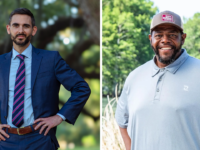
Day is running in a Democratic primary field that also includes Tia LeBrun of Sulphur and Caleb “With A C” Walker of Lafayette. The winner will advance to face Higgins, the Republican incumbent, in a district that remains one of the tougher federal battlegrounds in the state for Democrats.
For Day, the race is not just about partisan contrast. It is also about making the case that Higgins has grown politically complacent in a district long designed to keep Republicans comfortable. During the interview, Day repeatedly framed Higgins as both an embarrassment and an ineffective member of Congress, arguing that Democrats have too often allowed Republicans in red seats to operate as though there will never be consequences back home.
“We’re better than that and we deserve better than that,” Day said after rattling off his criticisms of Higgins’s record and conduct in office.
That argument is central to Day’s pitch. He insists he is not running simply to carry the Democratic banner, but to build an actual coalition broad enough to make Higgins vulnerable. He said his early campaigning has convinced him there are more persuadable voters in the district than many Democrats assume, particularly among frustrated or embarrassed Republicans open to an alternative.
“I think people just want to know there’s an option,” Day said. “I think people are caught in this rut.”
His theory of the race depends on a mix of Democratic turnout, new voter registration and enough crossover support — or enough complacency on the Republican side — to make the math competitive. Day said he would not have entered the race if he believed it was only performative.
“I wouldn’t have signed my name if I didn’t think we had a real chance,” he said.
Much of the interview centered on affordability and what he sees as the practical failures of government. He spoke at length about insurance costs, healthcare access, wages and the broader strain many Louisiana families are under. Drawing on his experience in insurance, Day argued that too many working families are effectively “insurance poor” — paying steep premiums and deductibles for coverage they still cannot realistically use.
“All they want to understand is how do I get a better paying job? How do I move myself forward and be a good American, work hard, and be a part of the American dream?” Day said. “How do I give that opportunity to my children?”
That kitchen-table framing is a major part of his campaign. Asked what he would actually fight for in Congress, Day pointed to traditional Democratic priorities like raising the minimum wage, but also broadened the affordability conversation into federal spending choices, arguing that wasteful priorities in Washington eventually show up in the bills people pay in Louisiana.
At the same time, Day pushed back on the idea that his emphasis on plain language and slogans like “Americans first, party second” means he is trying to distance himself from Democratic values. Asked directly what kind of Democrat he is, Day described himself as firmly aligned with the party’s core positions on reproductive freedom, LGBTQ rights and equal dignity.
“A plank-for-plank Democrat,” Day said. “My ‘Americans First’ platform was handwritten by me, pulled straight off the DNC platform.”
That answer was one of the more revealing moments of the conversation. While Day markets himself as a moderate, he made clear that he does not see questions of bodily autonomy or civil rights as negotiable. He argued instead that Democrats should be more confident in defending those positions while also doing a better job talking to working-class voters in language that feels grounded and accessible.
“Being a Democrat means that we’re not about just what affects most of us,” he said. “We’re about what affects all of us.”
Day also spent part of the conversation trying to reconcile one of Louisiana politics’ oldest tensions: the need to respect the state’s deep ties to the oil and gas economy while arguing for a more diversified and forward-looking energy future. He said Democrats cannot realistically campaign in Louisiana by treating energy workers as the enemy, but he also argued that the state has for too long let major industries extract wealth without adequately reinvesting in the communities that make those profits possible.
“We need to be leaders in the field,” Day said. “You’re not going to win elections here in Louisiana campaigning against energy jobs. You’re just not.”
If elected, Day said he would seek assignments on committees tied to agriculture, energy and oversight. That last choice fits neatly with one of the clearest throughlines of his candidacy: a belief that Congress has lost the public’s trust because too few people seem to know, or care, what is being done with public money and public power.
“The last thing I’m running for that’s a major pillar is oversight,” Day said. “What the hell are these people doing with our money? What are they doing with our future?”
Whether that message is enough to break through in a district Higgins has held comfortably is another question. But Day is clearly trying to run a different kind of Democratic race than the kind Louisiana voters are used to seeing in districts like this: less resigned, less symbolic, and more willing to test whether anti-establishment frustration can be turned against an incumbent Republican rather than merely absorbed back into the culture war.
For now, that is Day’s basic argument to Democratic primary voters. He is asking them to believe that a serious challenger in a difficult district is still worth investing in — and that one of the surest ways to keep losing seats like this is to act as though they were never contestable in the first place.