


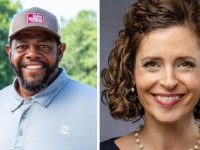



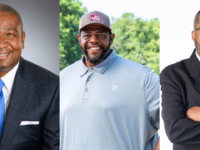

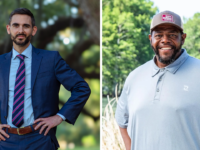



Gary Crockett is running for the U.S. Senate as a political outsider with a blunt argument: Louisiana does not need another talking head in Washington. It needs someone focused on bringing results home.
In an interview with The Bayou Progressive, Crockett, a Democrat, framed his campaign around a mix of personal biography, economic frustration and a deeply transactional view of representation. A retired Navy veteran and business owner who grew up in Tallulah and now lives in New Orleans, Crockett said his life experience across both north and south Louisiana gives him a broad understanding of the state’s needs.
“Because I’m from North Louisiana and now live in South Louisiana, I have a great understanding of this state, what the state needs in each of its parishes,” Crockett said.
Crockett said his upbringing in poverty is not just campaign biography, but the reason he is running. He spoke about returning home and still seeing the same hardship in places like Tallulah and surrounding communities, arguing that too many parts of Louisiana remain neglected while political leaders focus more on rhetoric than tangible outcomes.
“It’s important because it’s true,” Crockett said of his background. “I actually feel what people are going through.”
That message flows directly into his critique of Louisiana’s representation in Washington. Crockett argued that elected officials too often treat office as a platform for ideological performance instead of using it to write legislation and direct resources back to the state.
“I’m going there for three reasons,” Crockett said. “I’m going there to write legislation, to fight for my community, and to bring those back home.”
Asked why he is running for Senate rather than another office, Crockett said he never planned to run for office at all, but came to see it as necessary after returning to Louisiana and growing increasingly frustrated with the state’s condition.
“When I look at Louisiana, 50th of all states, that’s a problem,” he said. “That can’t continue.”
Forced to narrow his priorities, Crockett said the three issues he most wants voters to associate with his campaign are jobs, healthcare and education.
On jobs, he argued that Louisiana has missed too many opportunities to recruit industries and build training pipelines that connect residents to stable work, particularly in manufacturing, cybersecurity and the skilled trades. He repeatedly stressed the need for practical education and workforce development tied to real jobs rather than abstract promises.
“We have to be very intentional about it,” Crockett said.
He also pushed back on the idea that artificial intelligence will eliminate the need for human labor in many of the fields Louisiana should be investing in, pointing especially to trade and technical work.
“You will never have a robot who’s going to come and install an HVAC unit,” Crockett said. “Those blue-collar jobs … are the recession-proof jobs.”
On healthcare, Crockett said his most urgent priority would be protecting access to Medicaid and expanding affordable coverage. He argued that every American should have access to the same level of healthcare enjoyed by elected officials and said Democrats should have gone further when they passed the Affordable Care Act.
“Lobby companies don’t vote,” Crockett said. “Only people vote.”
On education, Crockett criticized the continued undermining of public schools through voucher programs and charter expansion, particularly in New Orleans. He called for more investment in teachers, stronger public school systems and more skills-based pathways for students who may be better served by technical and vocational training than a one-size-fits-all college track.
“Teachers should be one of the highest paid professions in America,” Crockett said.
Pressed to describe his politics, Crockett called himself “conservatively progressive,” a phrase he used to suggest that he supports change, but wants it grounded in practical outcomes rather than ideology alone.
“Even being progressive, I think it’s important to be practical,” he said.
That pragmatism extended to some of his issue positions. On abortion, Crockett said he supports abortion rights and would back a constitutional amendment protecting the right to choose, even while describing himself as personally uncomfortable with abortion in some circumstances.
“I think abortion is absolutely needed and absolutely should be available,” he said.
On foreign policy, Crockett said he would oppose further military action in Iran based on the information currently available, arguing that the public has not been given enough clarity and that national priorities are badly misplaced.
“What we’re doing over there has nothing to do with America,” he said.
The central challenge for Crockett, though, is not explaining why he is running. It is proving he has a viable path in a statewide race that remains difficult terrain for Democrats.
Crockett said his coalition is centered on working-class voters across race and geography, especially in smaller communities that he believes have been ignored by both parties. He said he has personally loaned his campaign $350,000 for the primary period and estimated he would need at least $4 million to be competitive in a general election.
“The working people are my path to victory,” Crockett said.
Whether that message can break through remains to be seen. But Crockett made clear he does not see himself as running a symbolic campaign.
“I’m not running for second place,” he said. “I’m running for first because I have a path to victory.”