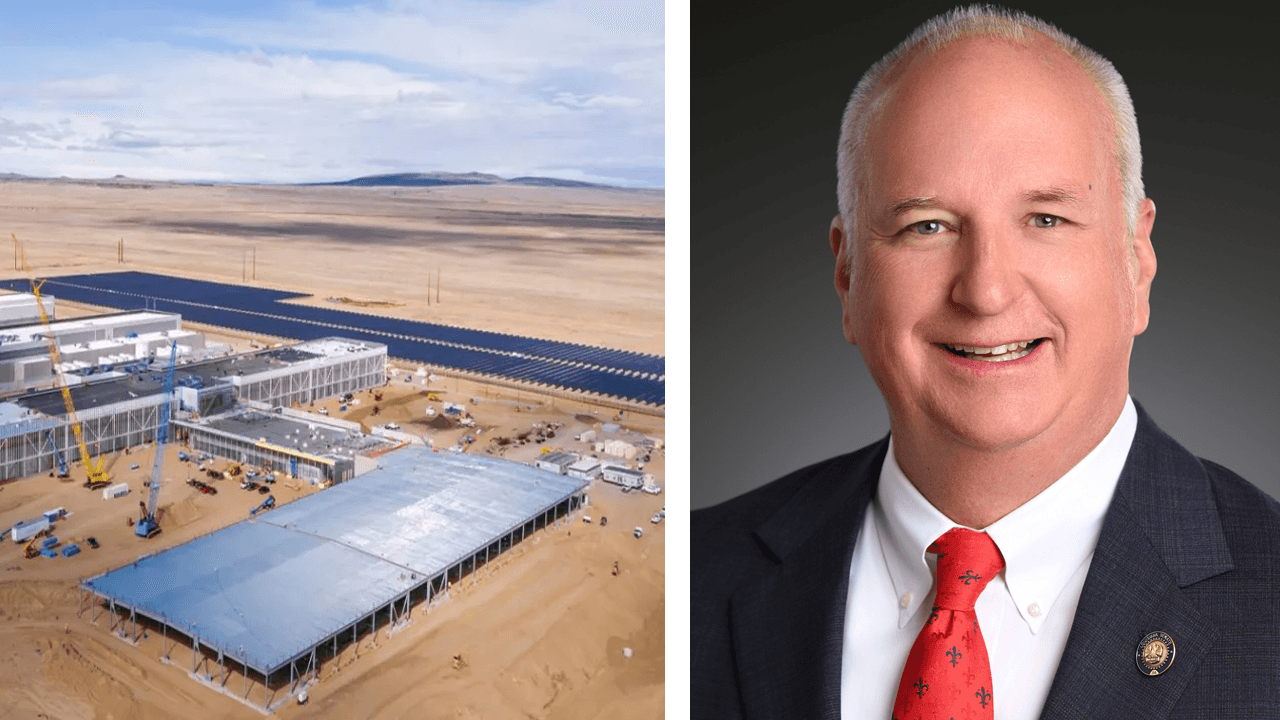
State Sen. Jay Morris (R-West Monroe) helped move one of the biggest corporate development projects in Louisiana history.
Then he and his business partners sold land tied to the power infrastructure needed to make it work.
That is the core finding of a new Floodlight investigation published by The Guardian, and it is not some minor “bad optics” issue. It is a blunt question about whether a Louisiana lawmaker helped advance a public deal while privately positioned to benefit from the land boom around it.
Morris is already a central figure in Louisiana politics because of the current redistricting fight. But this story is not about congressional maps. It is about Meta, Entergy, land, power plants, tax breaks and the familiar Louisiana problem of public office sitting a little too comfortably beside private gain.
Meta’s Hyperion data center in Richland Parish is enormous. The company announced in December 2024 that it would invest $10 billion in the northeast Louisiana facility, which Meta described as its largest AI data center to date. The project is expected to create 500 permanent operational jobs and 5,000 temporary construction jobs, with completion expected around 2030.
But Hyperion is not just a building project. It is an energy project. Reuters reported that Entergy Louisiana won approval from the Louisiana Public Service Commission in August 2025 for infrastructure tied to Meta’s facility, including three combined-cycle combustion turbine generation facilities and new transmission infrastructure.
That approval matters because Morris reportedly personally lobbied a utility regulator for a key approval, co-sponsored two bills that helped enable the land deal between Meta and the state, and voted for two additional bills that gave data centers tax breaks worth an estimated $3.3 billion. While all of that was happening, Morris and his business partners were buying and selling land around Hyperion.
According to Floodlight, Morris owns or co-owns two dozen properties totaling more than 2,000 acres around the Hyperion site, including at least three properties that border the complex. Some of those properties had been held for years. But Floodlight found that since Meta’s announcement in December 2024, Morris bought seven properties within five miles of the data center, along with a 165-acre tract roughly 10 miles away.
The timeline is the part that should make every Louisiana taxpayer stop and stare.
Four months after Meta signed its lease, Morris and the Franklin family, his longtime business partners, paid $1.2 million cash for an 80-acre plot across the street from the project site. Less than two months later, one of the Senate committees Morris served on began considering legislation to give Louisiana Economic Development authority to sell state-owned land. Morris later co-sponsored and voted for that bill. By early May, according to Floodlight, Morris and the Franklins had begun using the 80-acre property as a dirt quarry for the Meta job site.
That is not complicated. A senator helped expand state authority over land deals connected to Hyperion, while he and his partners held nearby property and began monetizing land across the street from the project.
Floodlight also reported that Morris and his partners sold hundreds of acres to Entergy for a methane-burning power plant meant to provide electricity to the data center. The public does not know how much Morris made from those transactions because Louisiana law does not require buyers and sellers to publicly disclose land sale prices.
The Public Service Commission angle makes the story even harder to dismiss.
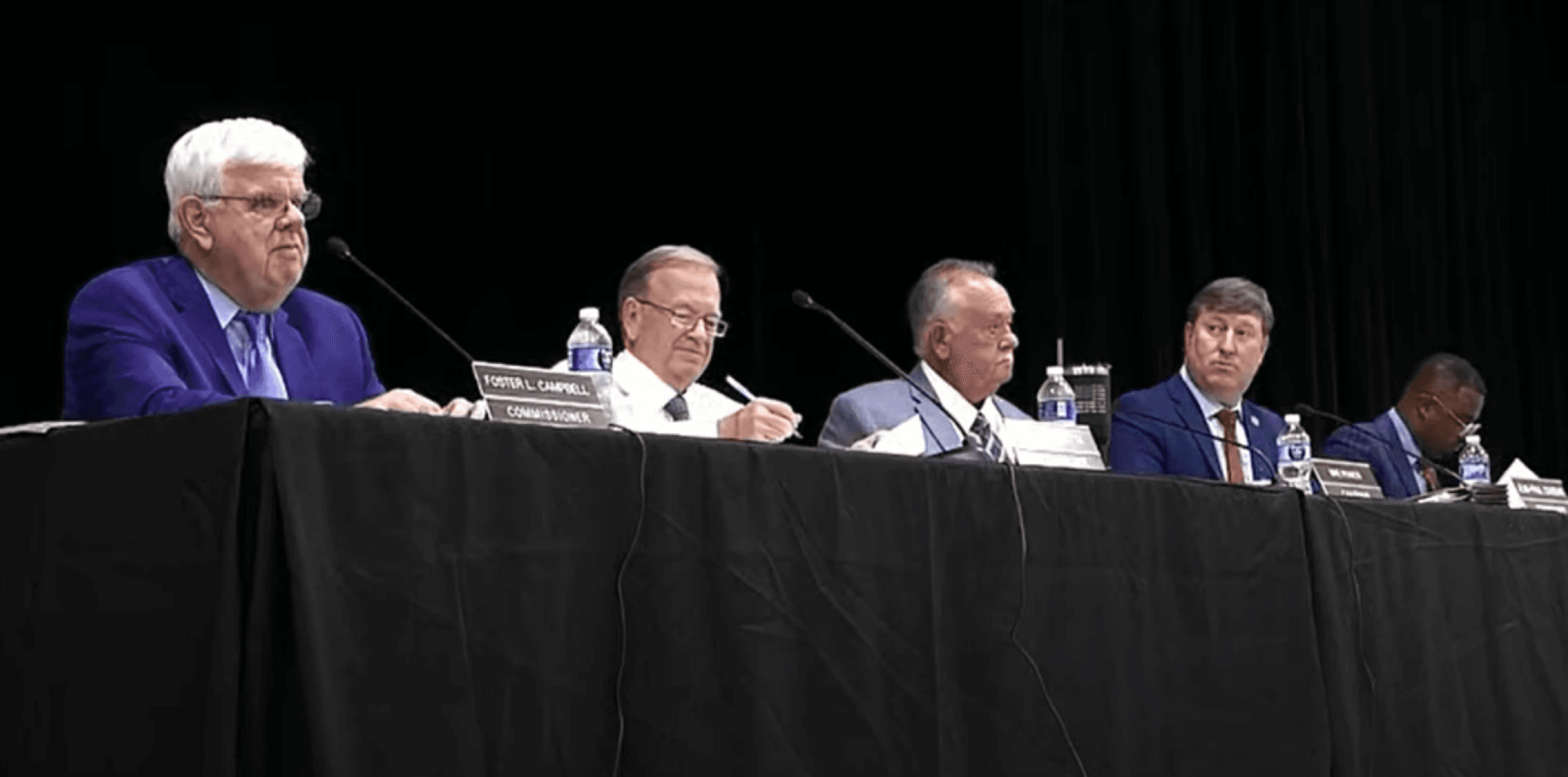
Entergy needed approval to build three gas-fired power plants and roughly 100 miles of high-voltage transmission lines for Hyperion. Before the commission voted 4-1 to approve Entergy’s $3.2 billion plan, Commissioner Jean-Paul Coussan disclosed that Morris had contacted him in support of the issue. Four weeks after that vote, Morris and the Franklins signed agreements to sell nearly 300 acres to Entergy for one of the power stations.
Morris has denied wrongdoing. He told Floodlight his land holdings were public record, that the data center tax breaks applied broadly, and that the Louisiana Economic Development bills were part of a broader restructuring rather than legislation targeted specifically at Meta.
That is his defense. But ethics experts say the defense does not end the matter.
Dane Ciolino, a Loyola University governmental ethics expert, said the broader nature of the bills matters, but the real question is whether Morris had a financial interest greater than the general public. According to Ciolino, Sen. Morris was not just a random citizen or ordinary landowner. He owned nearby parcels, co-owned adjoining land, sold dirt for the project and later sold land to Entergy for a Hyperion power plant.
La Koshia Roberts, a former chair and longtime member of the Louisiana Board of Ethics, said that Morris voting without recusing himself was a major concern. She said it was problematic for an elected official to support legislation they know could personally benefit them without disclosing that interest to the legislative body or committee.
Morris did not put his specific interest on the record during those proceedings. He told reporters that many of his colleagues knew he had land in Richland Parish, including land near the Meta site, but he did not formally announce it because he did not believe he had to.
Louisiana’s own ethics code says public office should not be used for private gain and that democratic government depends on public officials being independent and impartial. It also says public confidence is impaired when conflicts exist between an official’s private interests and public duties.
That is the point here.
This is not about whether Richland Parish needs jobs. It does. This is not about whether economic development is inherently bad. It is not. And this is not about pretending every rural landowner near a major project has done something wrong simply because land values rose.
This is about a sitting senator who helped advance the project, supported the public incentives, contacted a utility regulator, held and bought land around the site, used nearby land for the project, and then sold land to the utility building power infrastructure for the same project.
Morris says he did nothing wrong.
But the public does not have to accept Louisiana’s lowest possible standard for government ethics as the standard for public trust.
The question is not whether Morris can lawyer his way through the fine print. The question is whether any elected official should be allowed to help steer a massive public-private development deal while standing close enough to the private side of that deal to benefit from the land rush it created.
In Louisiana, that may be business as usual.
That is exactly the problem.