
















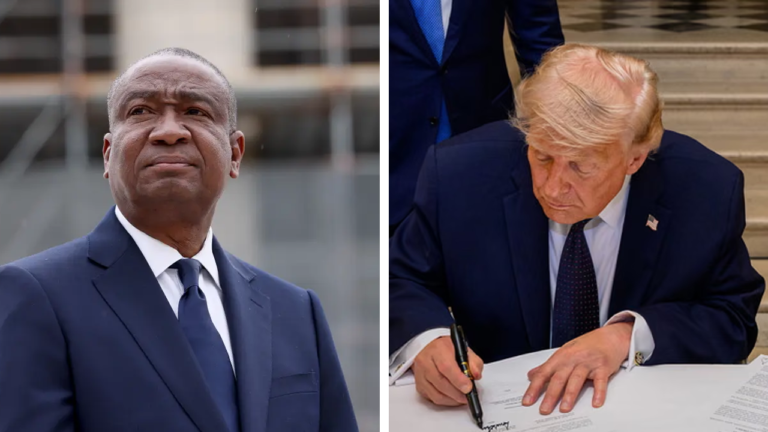
Rep. Cleo Fields is raising concerns over a pending U.S.-Iran framework agreement, arguing that President Donald Trump is trying to turn an unnecessary war into a political victory while leaving Congress and taxpayers with unanswered questions about the cost.
The preliminary framework, announced last week, is not a final agreement. It sets up a 60-day negotiating period between the United States and Iran over nuclear issues, sanctions relief, regional security and the reopening of the Strait of Hormuz. The agreement has been framed by the Trump administration as an offramp from the conflict with Iran, but major details remain unsettled.
Fields, a Democrat representing Louisiana’s 6th Congressional District, released a statement Thursday sharply criticizing the agreement and the war that preceded it.
“After dragging the country into a conflict that was never a war of necessity,” Fields said, Trump is now “searching for an offramp from a war of his own choosing.”
At the center of Fields’ concern is a reported $300 billion reconstruction and development fund connected to the framework. Multiple outlets have reported that the fund is part of the broader deal, though key questions remain about who will administer it, who will pay into it and how it would be structured.
Fields said the administration has not provided enough clarity to justify public confidence in the arrangement.
“The administration wants Americans to believe this is a costless win,” Fields said, but he argued that a figure that large cannot be waved away through political messaging.
The framework appears designed to pause active hostilities while opening negotiations on Iran’s nuclear program and broader regional issues. The agreement as a framework includes a 60-day ceasefire, a reopening of the Strait of Hormuz and future talks over Iran’s nuclear ambitions. But many details remain unclear, with both sides expected to try to shape the public narrative around the deal.
That uncertainty has only deepened in recent days. Trump has claimed Iran agreed to long-term nuclear inspections, while Iranian officials have denied that such an agreement has been reached. Reuters reported Tuesday that Washington has agreed to waive some sanctions for 60 days, allowing Iran to resume oil sales during the negotiating window, while Iranian officials said working groups would address sanctions relief and nuclear activities.
Fields said Louisianans and Americans across the country have already absorbed the consequences of the conflict. Now, he argues, they deserve a clear explanation of what the United States is agreeing to, what it will cost and what the country is receiving in return.
“I will be pressing for full transparency,” Fields said, specifically calling for answers about the use of the $300 billion.
This article was last updated on June 23, 2026.