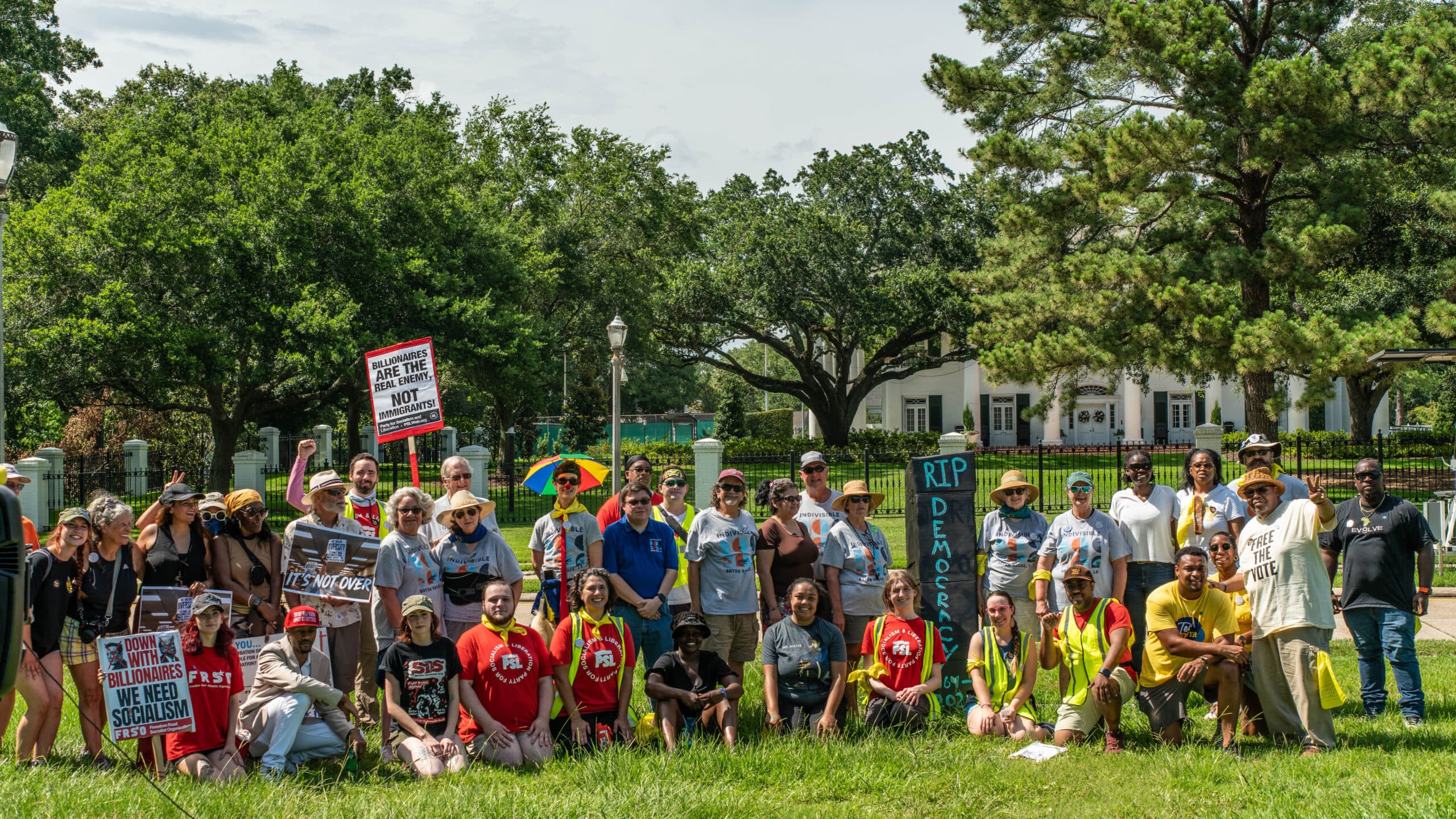
Hosted by the Louisiana Mobilization Collective and Indivisible Baton Rouge, the Sunday rally connected redistricting, immigration, recall organizing and the June 27 election under one message: show up.
Outside the Governor’s Mansion on Sunday afternoon, a coalition of Baton Rouge organizers, students, faith leaders and voting rights advocates gathered with a message that was aimed as much at Louisiana voters as it was at Gov. Jeff Landry:
Protest alone is not enough.
Hosted by the Louisiana Mobilization Collective along with Indivisible Baton Rouge, the rally included a voter registration drive and an opportunity for attendees to sign the ongoing Louisiana Deserves Better recall petition. The event brought together organizers who connected Louisiana’s redistricting fight, immigration enforcement, voting rights, civil rights and the recall effort into one broader pro-democracy argument: people frustrated with the state’s political direction have to turn that frustration into votes.
The rally came as Louisiana voters were in the middle of the early-voting window for the June 27 election, following a chaotic spring in which Landry suspended Louisiana’s U.S. House primaries after the U.S. Supreme Court’s ruling in Louisiana v. Callais. Lawmakers later approved a new congressional map, SB 121, now Act 2, which reshaped Louisiana’s congressional districts ahead of the fall elections.
But Sunday’s rally was not only about congressional lines. It was about power.
The event opened with chants against deportation and in defense of voting rights, democracy and representation. Standing across from the Governor’s Mansion, attendees shouted “whose house,” “whose state” and “whose rights,” framing the mansion not as a symbol of one elected official’s authority, but as a public space tied to the people Landry governs.
Lisa King of Indivisible Baton Rouge opened the program by grounding the rally in the long tradition of nonviolent protest and civic action.
“Progress has never come because people remained silent,” King told the crowd. “Progress came because ordinary citizens stood together, spoke out, organized, marched, voted, and demanded that the promises of democracy is extended to everyone.”
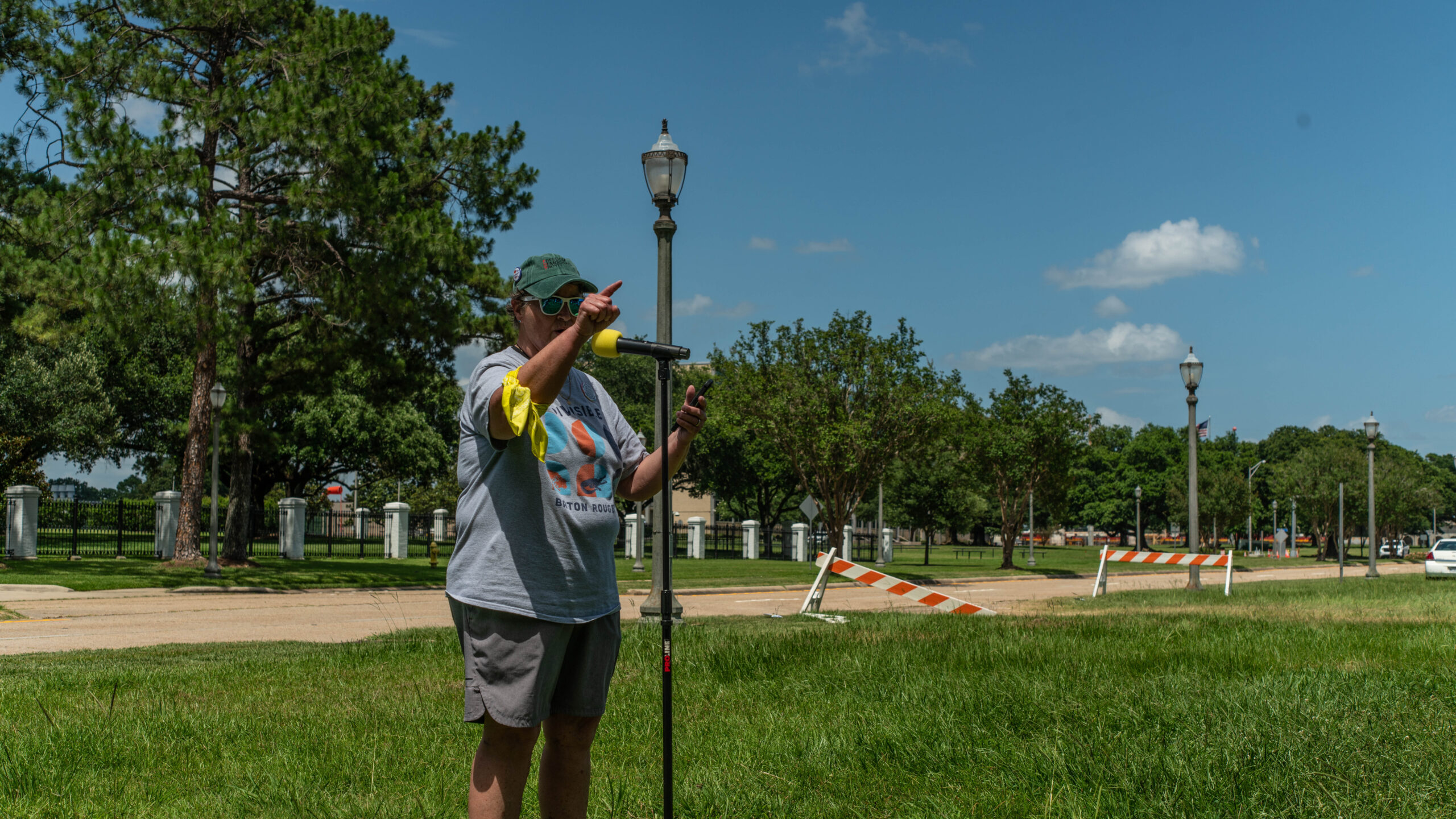
King said the message to those trying to silence or discourage voters was simple: “You have not seen the last of us.”
“We are not disappearing,” she said. “We are not surrendering. We are not backing down from participating in our democracy.”
That theme carried throughout the rally. Speakers were not simply calling people to be angry. They were calling them to register voters, sign petitions, attend meetings, organize neighbors and vote in every election, not just the ones that attract national attention.
Pastor David Ozuna of Voice of Pentecost Church opened with a prayer and later spoke about the human cost of immigration enforcement. Ozuna described a friend with Louisiana license plates who, he said, was stopped while traveling with his family to Florida and later deported. His family, Ozuna said, was left devastated.
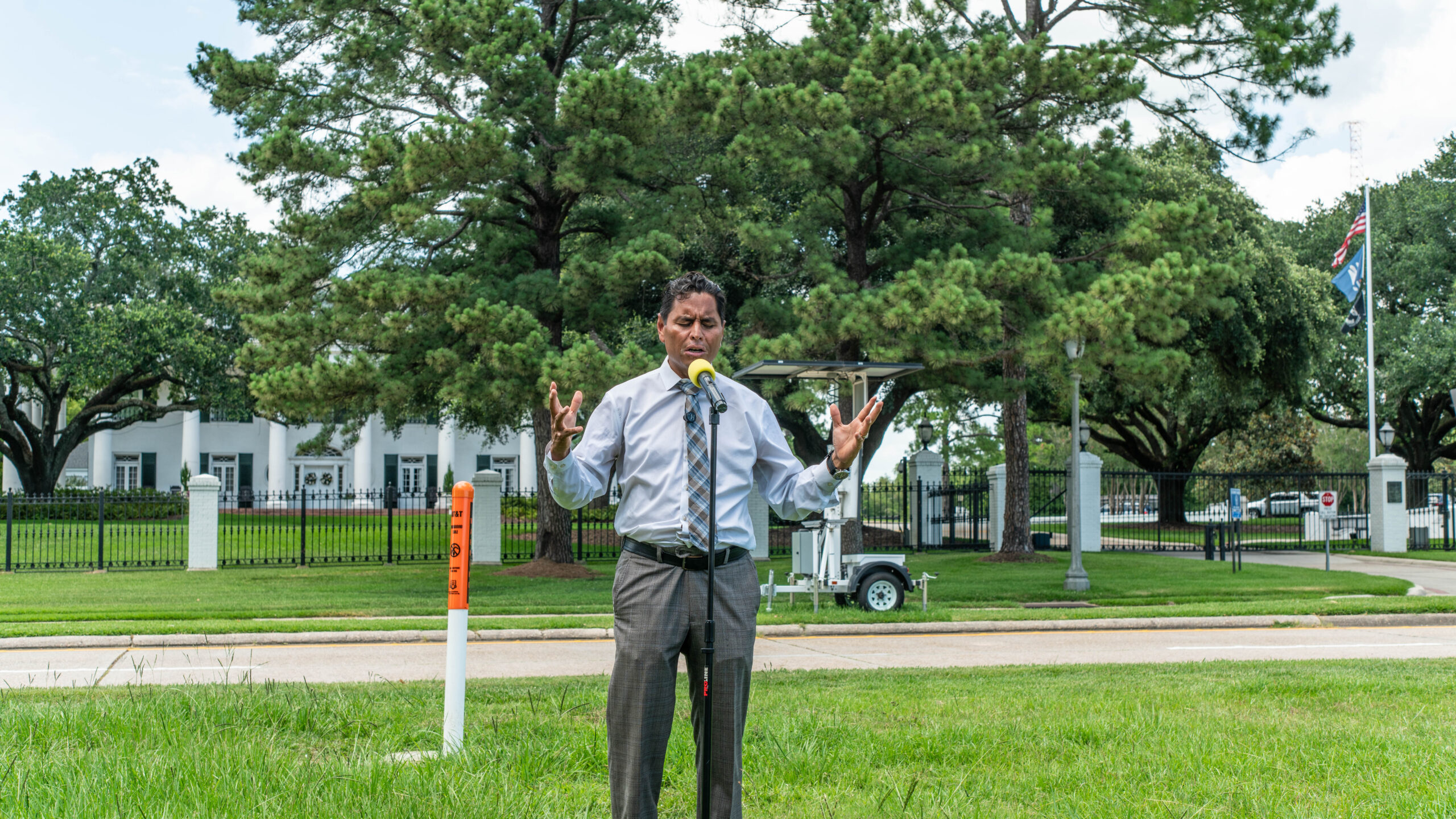
“This is a story like this, that is many, many, many stories like this, that is happening every day,” Ozuna said.
For Ozuna, the rally was about speaking for people who could not safely stand outside the mansion themselves.
“We’re here, being that voice for those that they’re not able to be here,” he said.
Jade Woods, who helped lead chants and emceed much of the program, explicitly tied immigration enforcement to the broader attack on democracy and voting rights.
“We know that what’s happening with deportation in this country is inextricably linked to what is going on with the attack on our voting rights and on our democracy,” Jade said.
That connection became one of the rally’s central arguments. The speakers repeatedly framed attacks on immigrants, Black voters, working-class people and other marginalized communities as part of the same political project: narrowing who gets represented and who gets heard.
Josiah Hardy, founder and director of Project 2028, brought the youth perspective to the rally. Though not yet a voter himself, Hardy spoke about the political future young people are being handed by the adults currently in power.
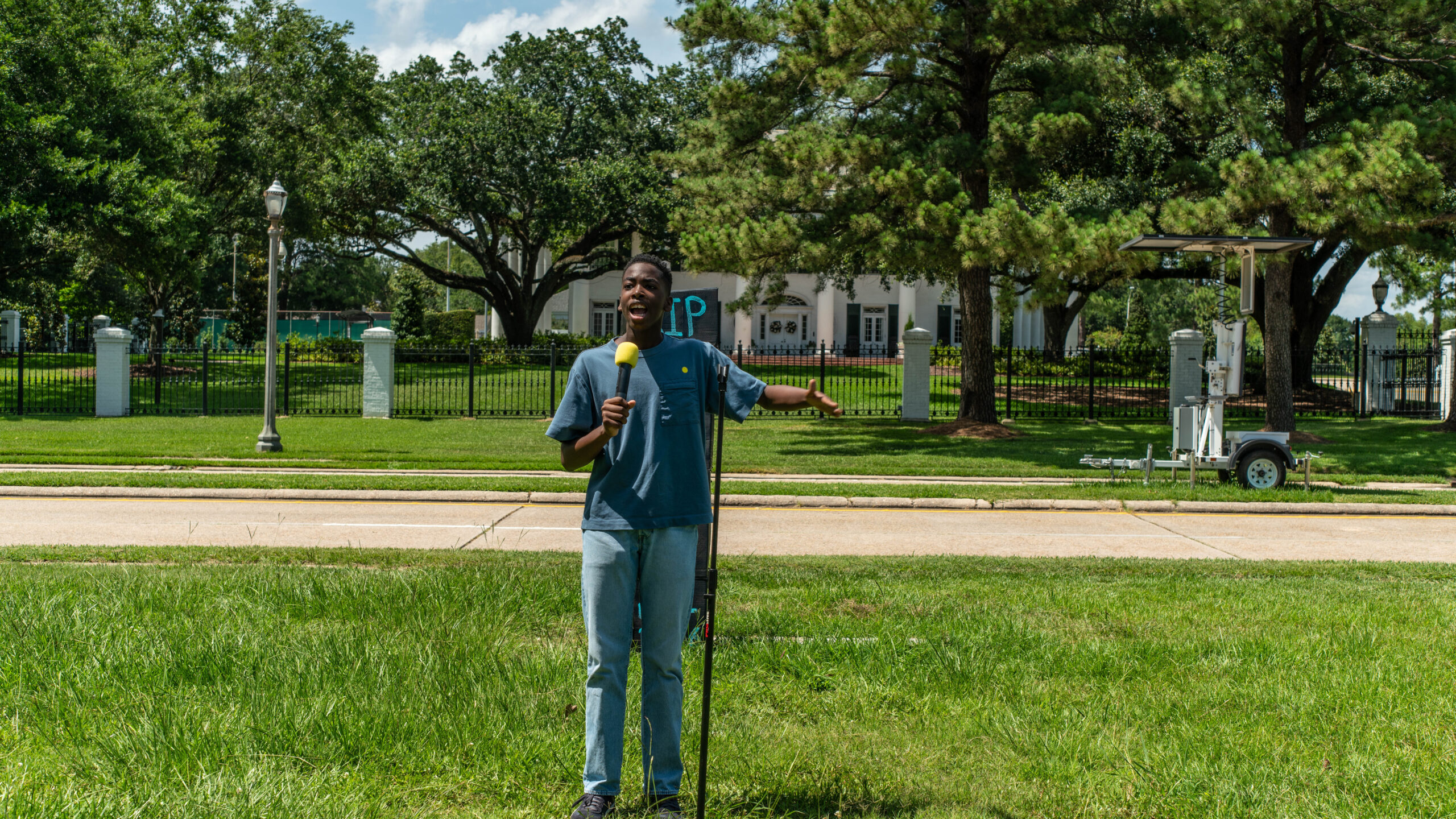
“Keep the future at the forefront of your mind when you go out to vote,” Hardy said.
Hardy said he is inheriting a congressional map that gives him less representation, and he criticized elected officials who make decisions affecting young people without being honest about the long-term consequences.
“I want to remind him that we are watching him,” Hardy said of Landry. “We are watching the decisions that the Legislature makes, the decisions that our governor makes. We will not stand for it.”
Gabriella Dejean of Students for Democratic Society delivered one of the rally’s sharper critiques of Louisiana’s redistricting fight. Dejean pointed to Louisiana’s Black population and Baton Rouge’s majority-Black population while arguing that Black voters have had to fight for representation that should already be guaranteed.
“For years, Black voters in Louisiana have fought for a simple constitutional right that they should already be guaranteed: equal constitutional right and representation under the law,” Dejean said.
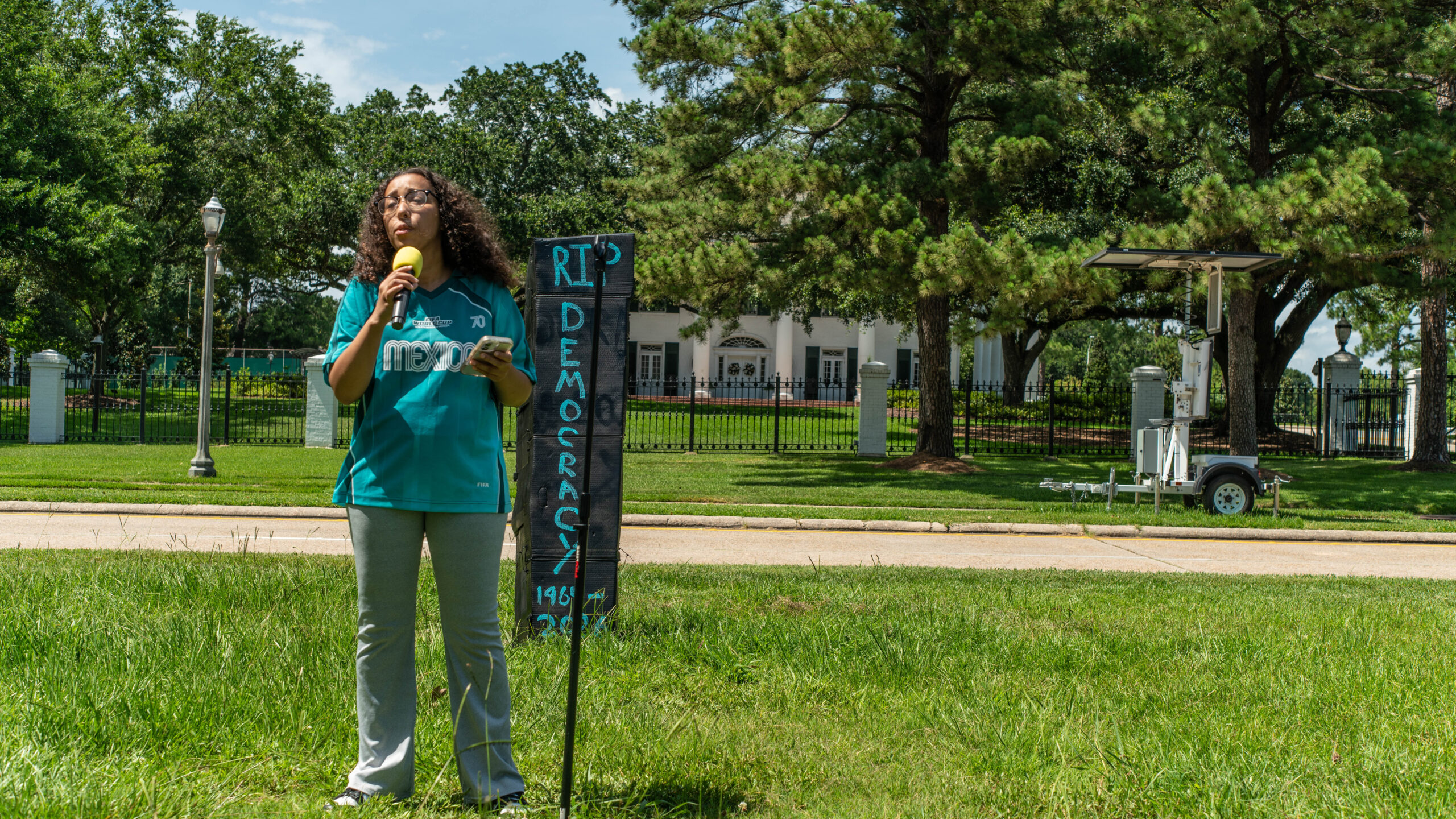
Dejean described the Supreme Court’s Callais ruling as a national warning, arguing that Louisiana’s fight over congressional districts could give other states a blueprint for weakening Black voting power.
“They can redraw the lines on a map, but they cannot erase the people living inside those lines,” Dejean said.
Kaitlyn Joshua, a longtime Louisiana organizer and prominent reproductive rights advocate, gave the rally one of its clearest civic engagement messages. She said her years organizing with faith leaders, parents, educators, workers and everyday people taught her one central lesson.
“Democracy only works when people participate,” Joshua said.
Joshua warned against the idea that politics only matters during presidential elections or that one vote does not matter. The decisions that shape people’s daily lives, she said, often happen in school board meetings, city councils, legislative committees and local elections that rarely make headlines.
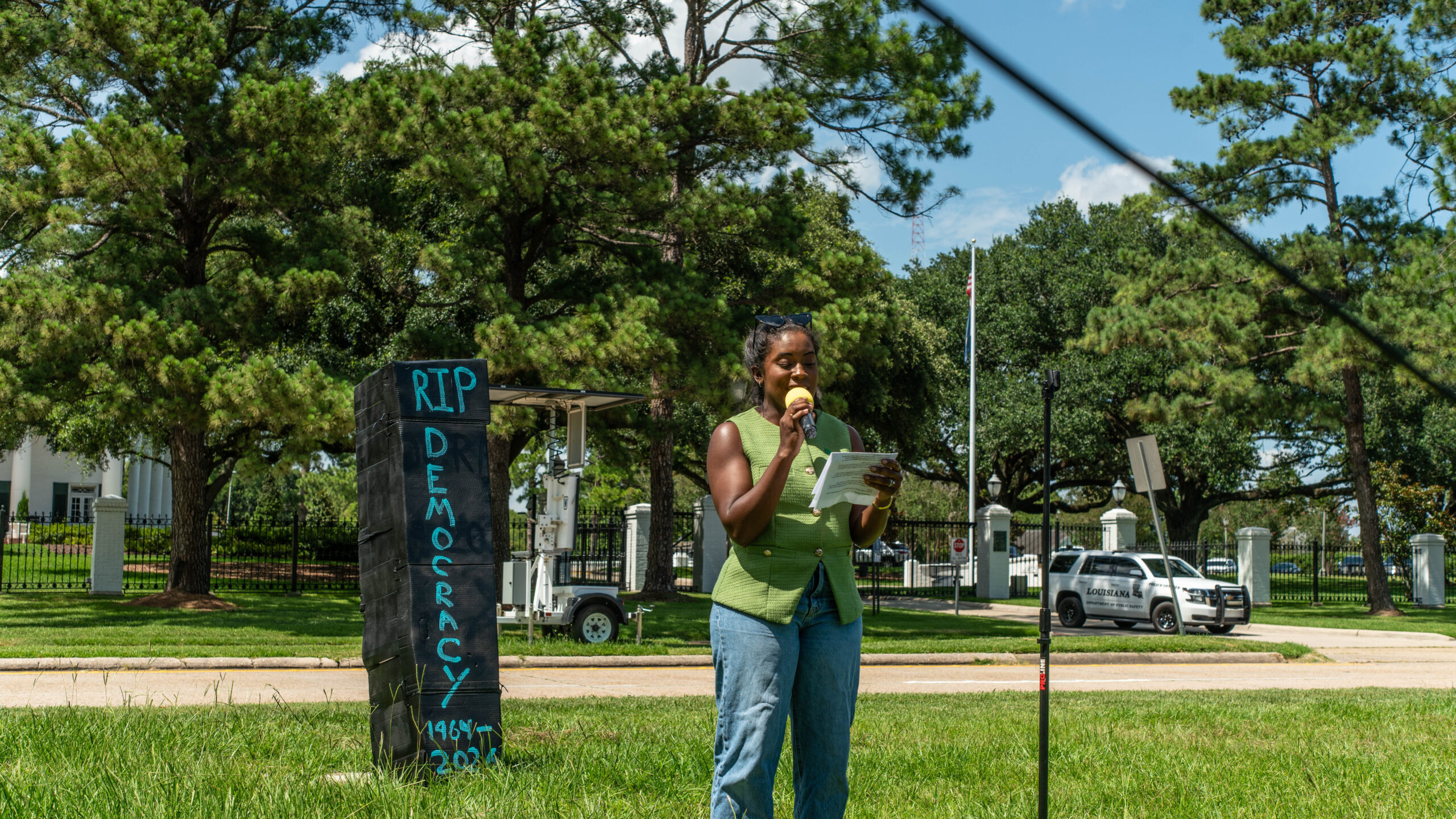
“Voting is only the beginning,” Joshua said. “Civic engagement means showing up. It means staying informed. It means asking questions, attending meetings, volunteering, organizing, and helping our neighbors understand what’s at stake.”
That message became even more direct when Quentin Anthony Anderson addressed the crowd. Anderson argued that Louisiana’s elected officials are not ignoring activists because they doubt the sincerity of protests, but because the energy seen at rallies has too often failed to show up in election results.
“No matter how loud we’ve gotten in the past, it has not reflected in our elections,” Anderson said. “And that’s really where our power is.”
Anderson urged attendees to sign the recall petition, but warned that the recall effort itself would eventually lead back to the same question: whether people will vote.
“If there are more signatures on that recall petition than there are voters on June 27, that only reinforces to the elected officials, to the people in power, that while we are loud, we are not effective,” Anderson said.
He argued that voting may not feel as immediate as protest, social media or direct confrontation, but it is the tool that forces elected officials to respond.
“Voting is where our power is,” Anderson said. “Voting is what brings these elected officials to their knees. Voting is what brings them out here. Voting is what makes them treat you like you’re important.”
Anderson also pushed back against the idea that the fight for fair maps should be reduced to a fight for Democratic advantage. He said democracy demands fair representation, not simply a different party using the same tactics.
“We are fighting for our democracy,” Anderson said. “We are fighting for representation. We are fighting for real freedom.”
Marshan Camese, who recently went viral with his impassioned testimony during the recent redistricting fight in the legislature, widened the frame to national politics, arguing that the country is facing a broader crisis of rights, corruption and democratic accountability. Camese criticized the Trump administration, defended voting rights, called for money to be removed from politics and argued that Democrats have offered the clearest path toward protecting democratic institutions.
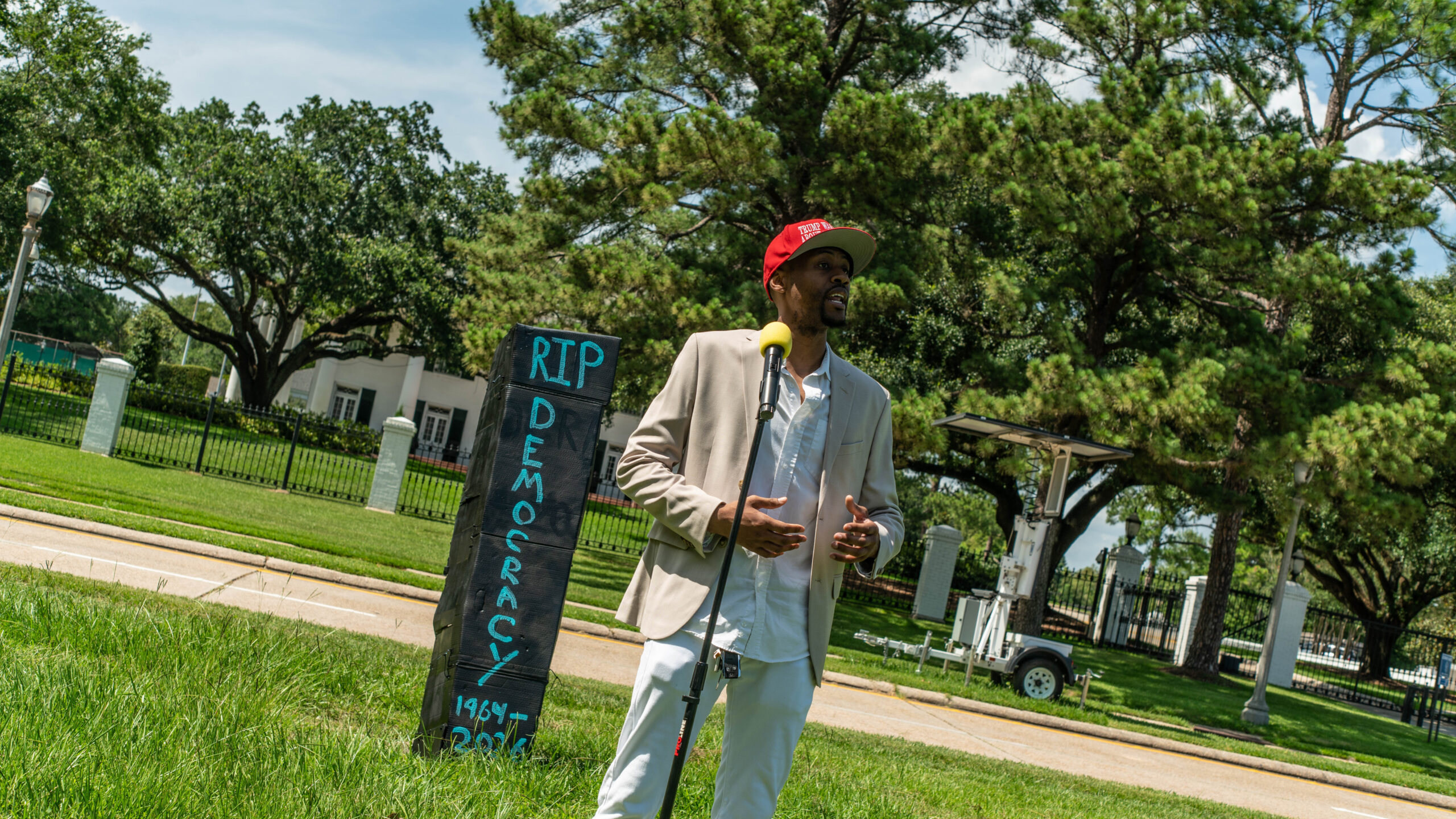
Camese said the country will not simply return to what existed before Trump.
“What we do have the ability to do through the 2026 midterms and every election past that is elect people that we can trust to rebuild the America that we know we deserve,” Camese said.
Near the end of the rally, organizers read the rally’s five demands: They called for fair, transparent and equitable redistricting processes that put communities before politics; an end to racial and partisan gerrymandering; democracy over hierarchy; an end to ICE, Department of Homeland Security and HSI attacks on Black and brown immigrant communities; and representation that is not limited by political party, race or zip code.
San Pope, of the Louisiana Mobilization Collective, closed by saying the rally was part of a move away from performative politics and toward sustained action.
“We felt like sometimes going to the Capitol can be performative,” she said. “And we felt like that we can no longer be performative, because they showed us that they have the power.”
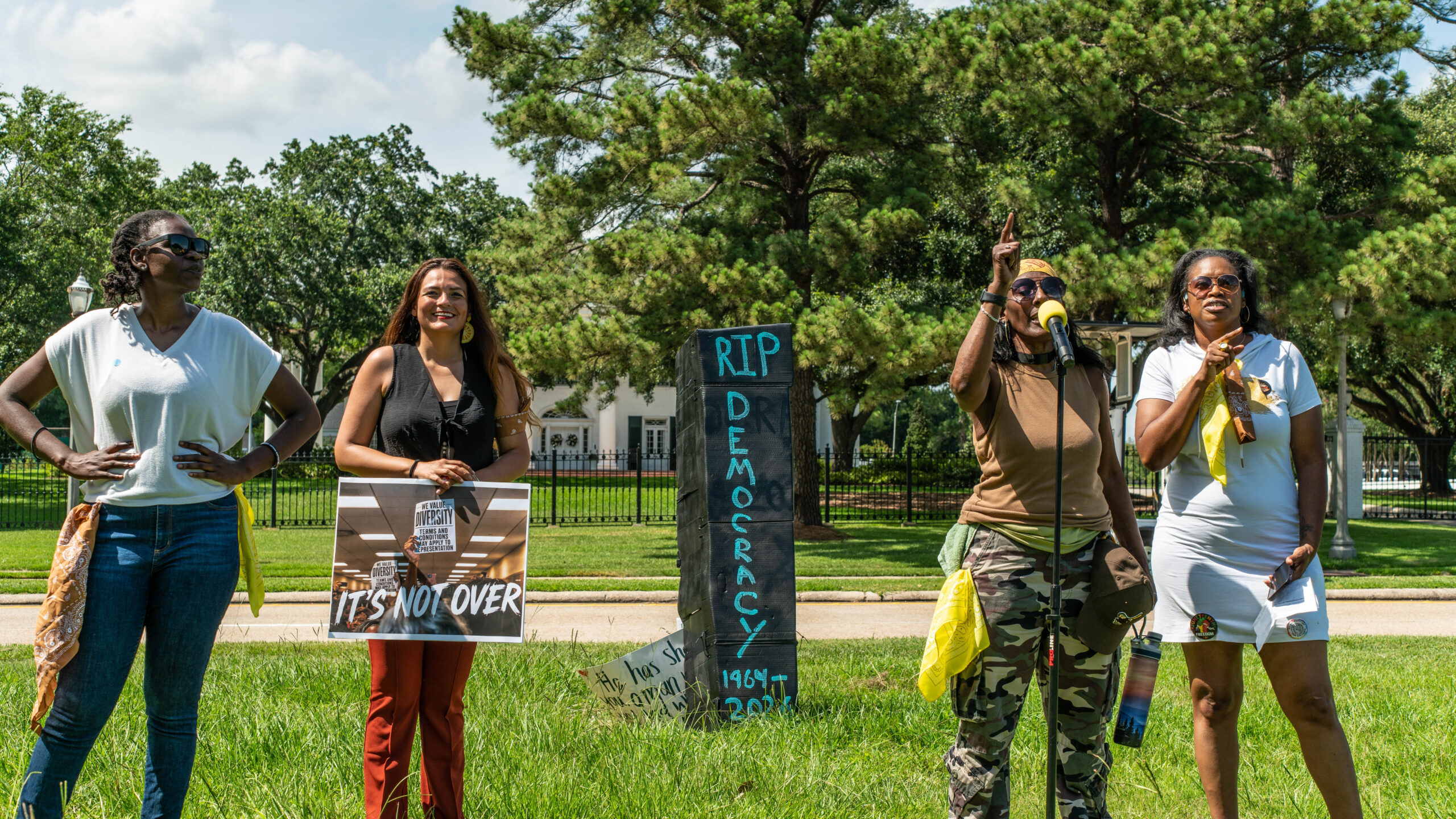
But Pope said that power is not fixed if people continue organizing together.
“They do not believe that we have a voice,” Pope said. “They do not believe that we have a power. They do not believe that we believe in democracy. But I come to let you know that it’s not over.”
Sunday’s rally ended where its message began: with a call for people to do the practical work of democracy. Register to vote. Sign the petition. Organize your neighbors. Show up on June 27.
The backdrop was the Governor’s Mansion, but the real focus was the ballot box.