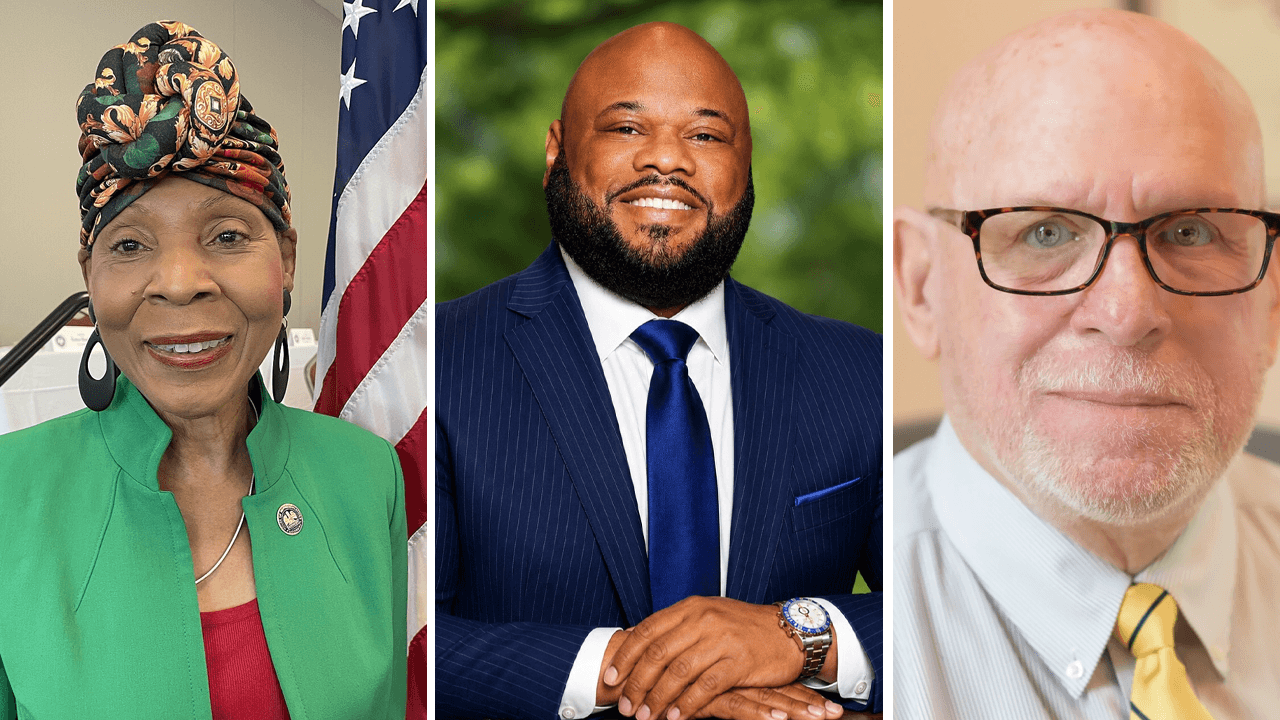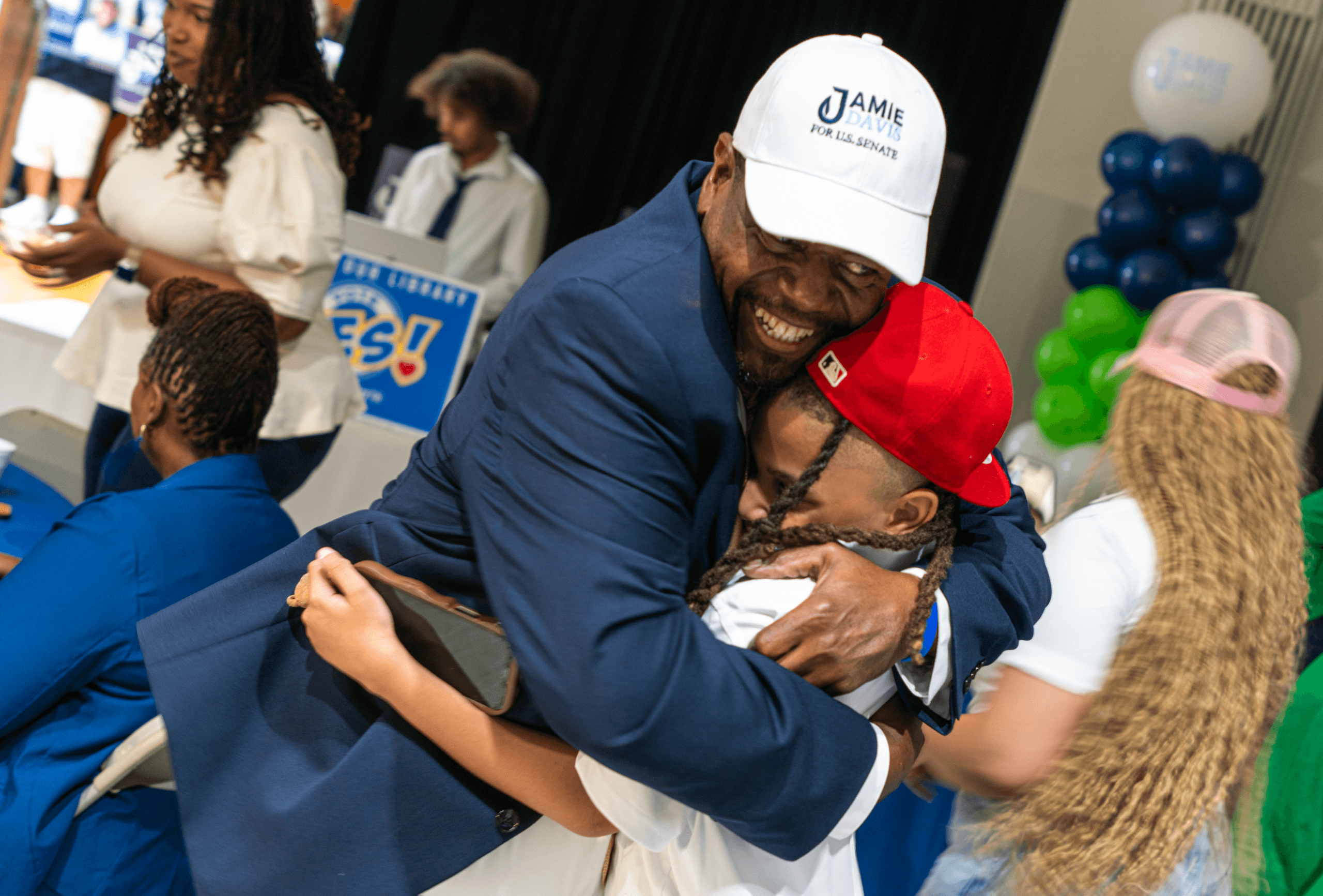
Jamie Davis knows some voters do not see him as the polished, consultant-built version of a U.S. Senate candidate.
He does not sound like one. He does not dress like one. He does not pretend to be a Washington policy technician waiting for his close-up.
And as Davis tells it, some of the sharpest criticism has not come from Republicans. It has come from Democrats.
“I was told that I don’t have the right look,” Davis said in an interview with The Bayou Progressive. “I was told by Democrats, ‘you overweight.’ I was told, ‘I’m afraid you’re gonna fall down on the campaign trail.’ You know, ‘you don’t even dress right.’”
His answer was blunt.
“I didn’t realize there was a damn dress code to serve the people,” Davis said.
Davis, a farmer from Tensas Parish and former police juror, faces Gary Crockett in the June 27 Democratic runoff for U.S. Senate. Early voting ends Saturday, June 20. Davis led the first round of voting and carried all 64 parishes, but still fell short of the majority needed to avoid a runoff.
Now he is making a closing argument that goes beyond the runoff itself. Davis is asking Democratic voters to reconsider what they mean when they talk about viability, readiness and leadership in a state where the party has spent years waiting for the “right” kind of statewide candidate.
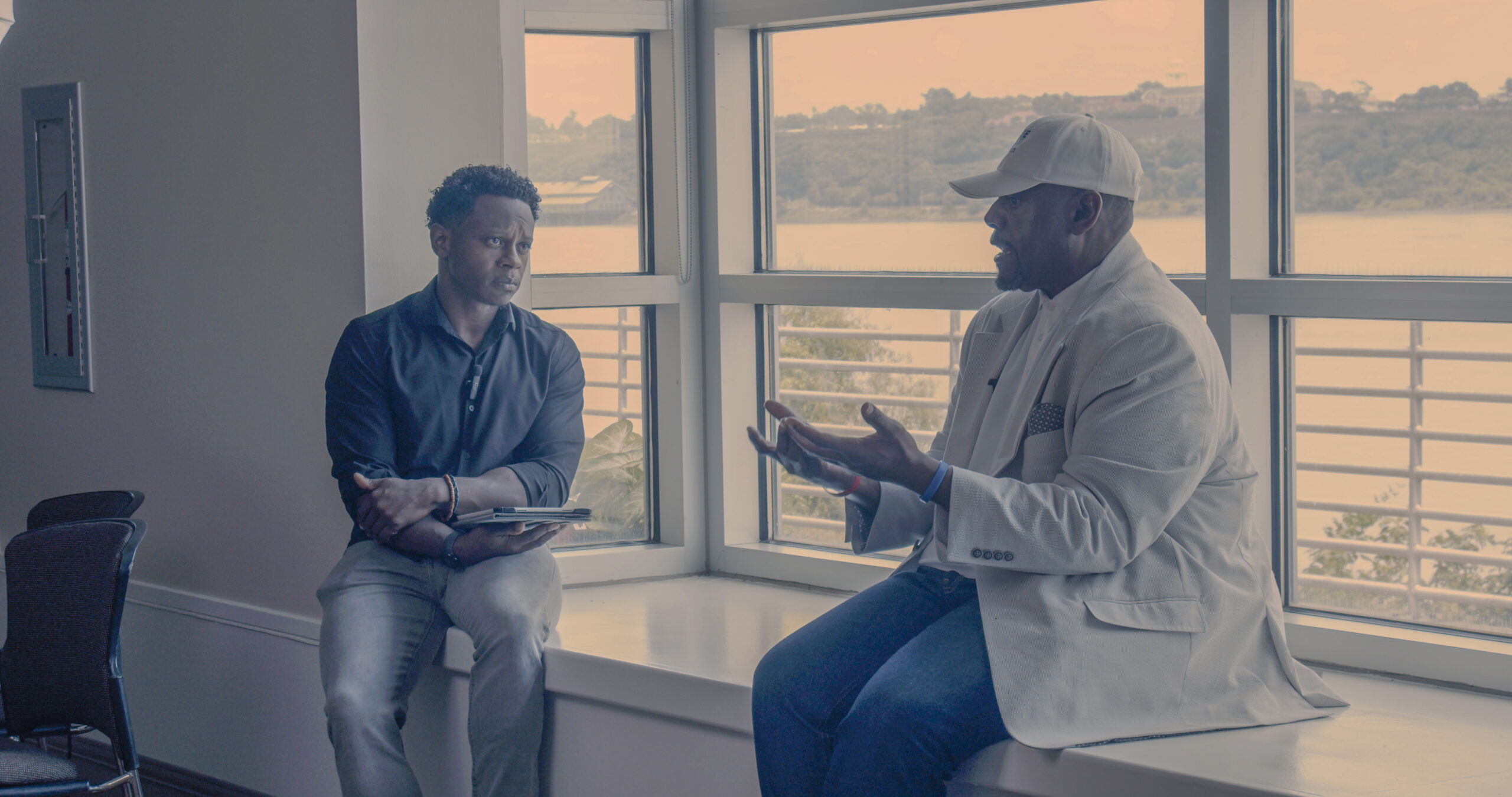
The interview took place in Vidalia, where Davis was attending the National Black Growers Council Field Day and being recognized as the event’s showcase farmer. Days of bad weather from Tropical Storm Arthur forced the event indoors, keeping attendees at the convention center instead of touring area farms.
The setting still fit the campaign Davis has been running: rural, agriculture-focused and rooted outside the usual centers of Louisiana Democratic politics.
Davis said his campaign began with skepticism from some of the people typically expected to help Democrats navigate statewide campaigns. He recalled being advised not to run and encouraged instead to consider a future race for state representative or state senate.
“Don’t take losses on your record for nothing,” Davis said he was told. “Let them have that.”
Davis said he originally considered running in the 5th Congressional District, but the geography of the district helped push him toward a statewide campaign. If he was already going to spend hours driving across a sprawling rural map, he said, he might as well run for the whole state.
“Instead of being gerrymandered the hell out of in the fifth, let’s run for statewide,” Davis said. “Because it’s the same travel.”
That rural focus is central to Davis’ pitch. His campaign began, he said, with four major priorities: health care, education, affordability and upholding the Constitution. After the state’s recent election and redistricting fights, he added voting rights as a fifth priority.
But in Vidalia, Davis kept returning to rural health care.
He described what hospital closures can mean in communities where distance, bridges and geography can turn a medical emergency into a regional crisis. If a nearby hospital closes, he said, some residents could be forced to travel 70 miles or more within Louisiana to reach care.
“This is Louisiana, one of the richest states when it comes to assets in the country, but we got to live like this,” Davis said. “We are better than that.”
Davis connected those concerns to proposed federal cuts affecting Medicaid, Medicare and Affordable Care Act coverage. He argued that the consequences would not fall neatly along partisan lines. In rural Louisiana, he said, white Republicans, Black Democrats and voters with no party label may all depend on the same hospitals, clinics and insurance programs.
That is part of Davis’ general-election theory. He believes his background as a farmer gives him a chance to reach voters who would not normally consider supporting a Democrat, especially in agriculture communities where federal policy is not abstract.
“Who better to represent ag than a farmer?” Davis said.
Davis said farmers have voted against their own interests in recent elections and argued that the pressures facing agriculture are becoming harder to ignore. He pointed to farm bankruptcies, farmer suicides and the federal policies that shape crop insurance, markets and rural economies.
“If the ag industry votes with the farmer, we win this election, easy,” Davis said.
That is an ambitious claim in a state where Republican voting habits are deeply entrenched, especially among white rural voters. But Davis is not arguing that party labels have stopped mattering. He is arguing that material conditions still have the power to break through when voters can connect policy decisions to their own hospitals, farms, schools and household budgets.
Asked directly whether authenticity and hard work are enough for the scale of a U.S. Senate race, Davis did not claim to know everything. Instead, he compared public service to farming.
“I’m a farmer, through and through, but I am not a bug specialist,” Davis said. “I am not a soil pathologist.”
When something is wrong in one of his fields, Davis said, he brings in an expert. He said the Senate works the same way. Senators have staff who specialize in budgets, foreign affairs, legislation and policy. The job, in his view, is not to walk into Washington pretending to be an expert on every subject, but to choose the right people and stay accountable to the voters who sent him.
“You’re just not sending a farmer to Washington to all of a sudden be Einstein,” Davis said.
For voters looking for a more polished, policy-heavy candidate, that answer may not close the question. Davis does not pretend otherwise. He said he knows where he is weak.
“I’m not the perfect guy on the camera with speech and all of that,” Davis said. “I talk country. I don’t have fluent words. I don’t speak with big vocabularies. I’m just a plain guy.”
But Davis said that plainness is part of how he connects.
“They don’t want to be talked over,” Davis said. “They want to be talked to.”
Pressed further on what his “North Star” would be if elected, Davis said his staff would need to understand that every decision starts with Louisiana.
“It starts and stops with the people of Louisiana,” Davis said.
He described a future where children in rural parishes can grow up, get educated, build careers and stay in their own communities if they choose. Davis said rural Louisiana should be able to produce doctors, teachers, business owners and leaders who do not feel forced to leave home to find opportunity.
“They’re not coming to save us,” Davis said. “We have to save ourselves.”
That message carries both promise and risk for Louisiana Democrats.
Davis is not the kind of candidate the party’s insiders usually imagine when they talk about statewide viability. He is not running as a technocrat. He is not running as a polished television candidate. He is not trying to sand down the fact that he is a rural Black farmer from one of the most overlooked corners of the state.
He is asking Democrats to stop treating those facts as liabilities.
Louisiana Democrats have spent years imagining the kind of candidate who could compete statewide. They have not spent many years winning statewide races. Davis’ campaign is now testing whether the party is willing to consolidate behind a candidate who does not fit its usual expectations, but who has already done something many doubted he could do: finish first in the primary and carry every parish in Louisiana.
Whether that can carry him through the runoff, and into a much harder general election, remains to be seen.
But Davis has made clear he will not be measured by someone else’s dress code.