















On March 21, the Louisiana Democratic State Central Committee is scheduled to convene at the state capitol in Baton Rouge and vote on endorsing candidates in this year’s congressional races.
Under normal circumstances, that might not raise many eyebrows (though the process has been historically messy). But this year is not normal. For the first time in decades, Louisiana Democrats will actually have competitive primaries.
And yet the party apparatus appears ready to pre-empt the entire process.
That decision is more than just premature. It is fundamentally misguided, strategically short-sighted, and—perhaps most troubling of all — deeply disrespectful to the very voters the Democratic Party claims to represent.
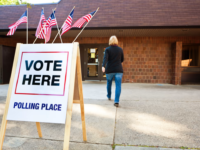
A primary election has a clear purpose. It exists to allow Democratic voters — not party insiders — to decide who best represents the party’s values and who is most capable of winning in November. It is the mechanism by which candidates prove they can earn support, build coalitions, and withstand scrutiny.
In other words, the primary is supposed to be the endorsement.
When the Louisiana Democratic Party attempts to issue its own endorsement before a single vote has been cast, they are effectively declaring that the voters’ judgment is secondary to their own. It sends an unmistakable message: the outcome has already been decided behind closed doors.
That is not how a healthy political party operates. And it is certainly not how a party that calls itself “Democratic” should behave.
Supporters of early endorsements often frame them as pragmatic. They argue the party must consolidate resources, avoid internal division, and present a unified front against Republicans.
But unity imposed from the top rarely produces strength. More often, it produces resentment, disengagement, and the perception that the process is rigged. Voters are not inspired by outcomes that feel predetermined. They are energized when they believe their participation matters.
That is the real value of a primary. It forces candidates to show up in communities, articulate their vision, and compete for the trust of voters who may otherwise feel ignored. It forces candidates to actually win the support of the important blocs of our party that make up the base – the very base the party relies on to win even in its safest districts. And as a veteran of the 2008 Democratic presidential primary between Barack Obama and Hillary Clinton, I can personally attest to the primary process strengthening the eventual nominee by testing their campaign infrastructure, sharpening their message, and demonstrating that they can build genuine grassroots support.
Short-circuiting that process does the opposite. It signals that relationships with party insiders matter more than relationships with voters.
Even worse, it creates an obvious contradiction: If the party endorses a candidate before the primary and that candidate ultimately loses, what exactly does the party’s endorsement represent? A guess? A preference? A failed attempt at kingmaking?
An endorsement issued before the voters speak undermines the legitimacy of whichever candidate ultimately emerges from the primary — whether that candidate was the endorsed one or not.
And it reinforces one of the most persistent criticisms facing the Democratic Party nationwide: that it often appears uncomfortable with the very democratic processes it claims to champion.
Democrats regularly warn – correctly – that democratic institutions are under threat. We argue that protecting free and fair elections is essential to the health of the republic.
But those arguments ring hollow if our own internal processes suggest that voters should only be trusted when they produce the outcome party leaders prefer. I often hear from party leaders that they know better what looks good for the party. They genuinely believe that voters simply don’t know what they want and will fall in line no matter how they feel about the party’s choices.
Louisiana Democrats already face an uphill battle in a state where the party has struggled for years to build durable infrastructure and regain competitiveness. Rebuilding that trust requires expanding participation, encouraging new candidates, and proving to voters that their voices actually matter.
Endorsing candidates before a competitive primary does the opposite.
It shrinks the democratic space inside the party. It discourages grassroots engagement. And it reinforces the perception that decisions are made by a small group of insiders rather than the broader coalition the party claims to represent.
There is a simple solution.
Let the voters decide.
Allow candidates to make their case. Let Democratic voters evaluate their ideas, their records, and their ability to win. Trust the electorate the party will eventually ask to show up in November.
If Democrats truly believe in democracy, then we should start by practicing it within our own house.
The purpose of a primary is not to ratify the preferences of party leadership.
The purpose of a primary is to let the people speak.