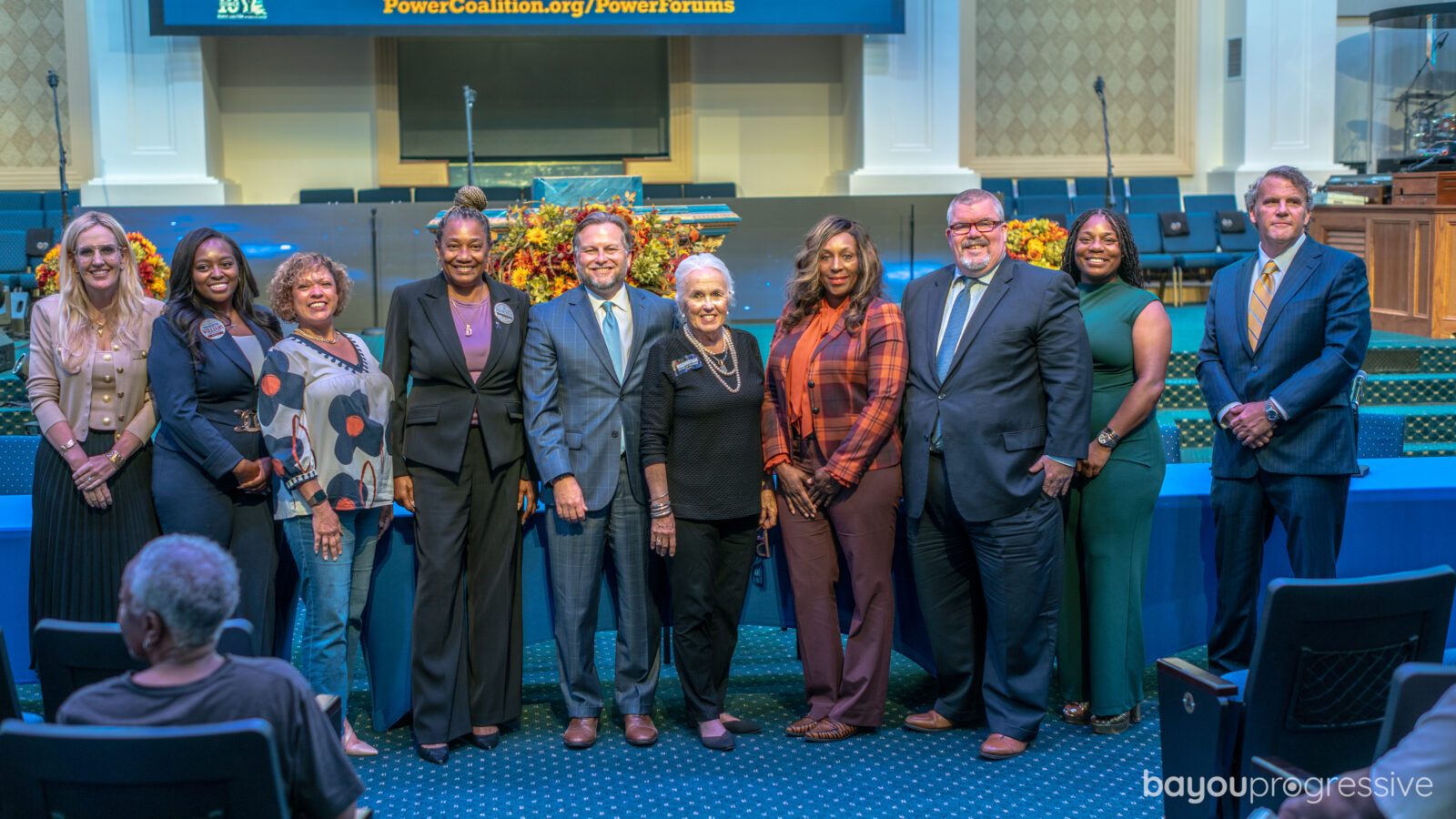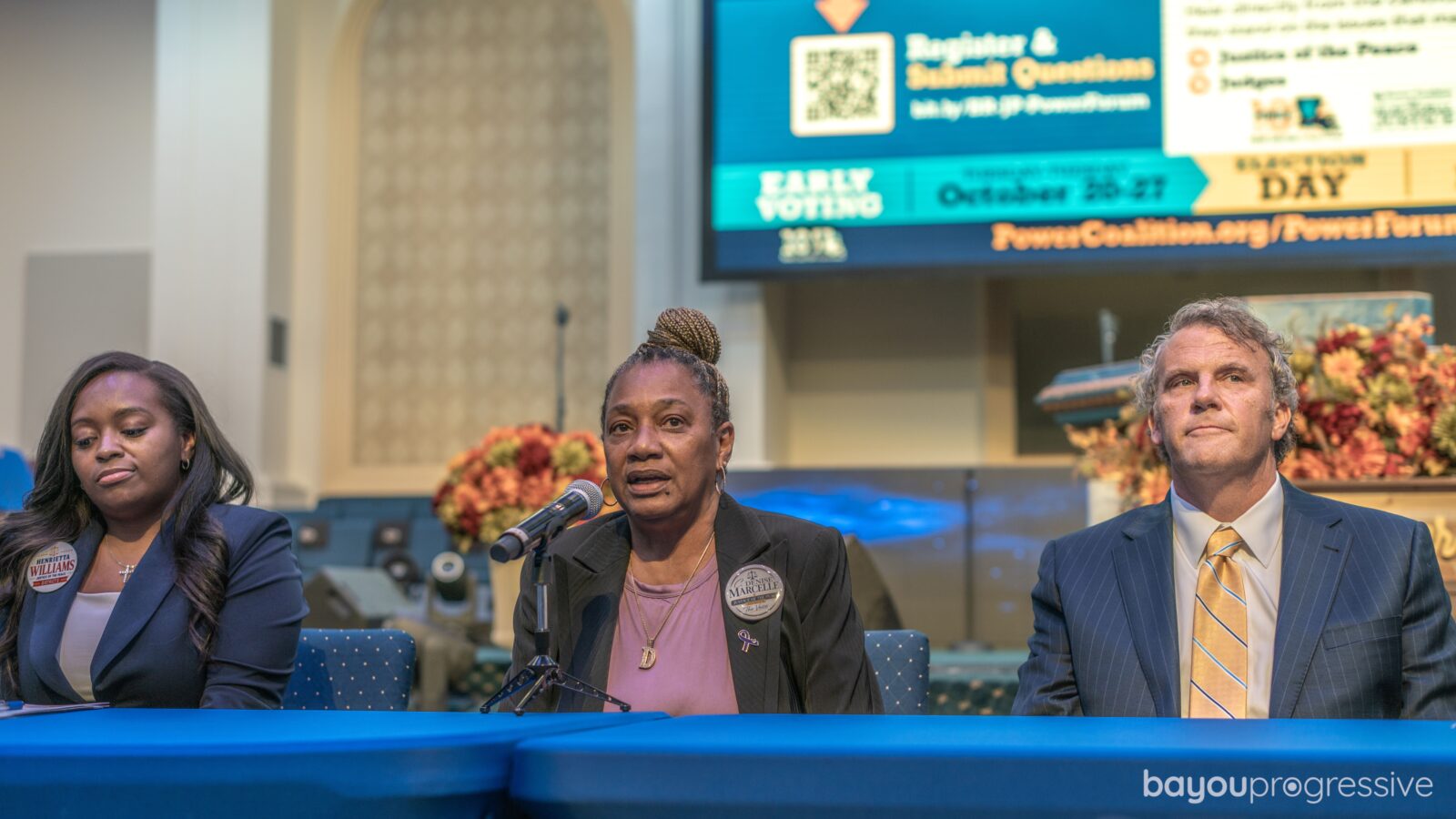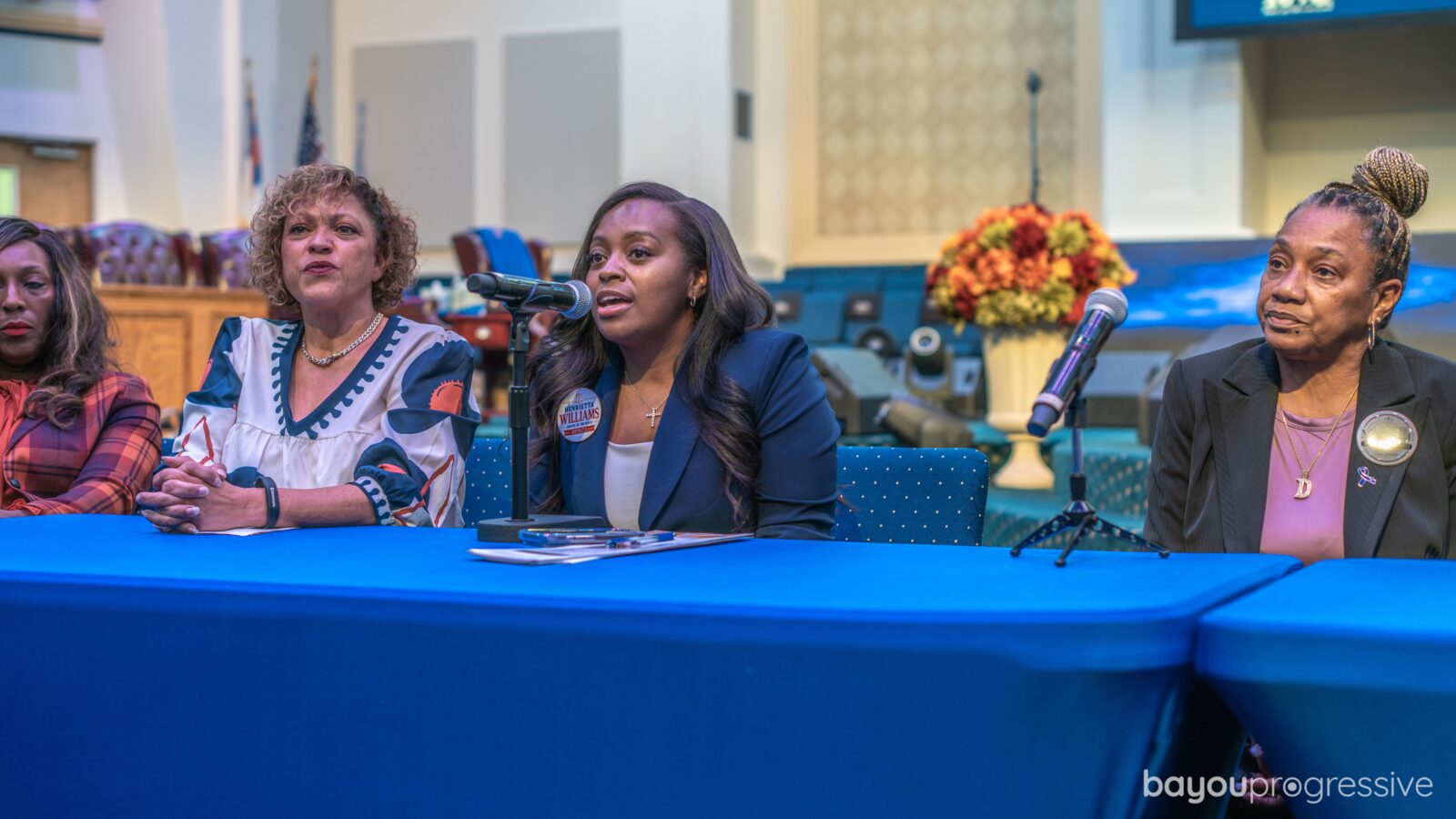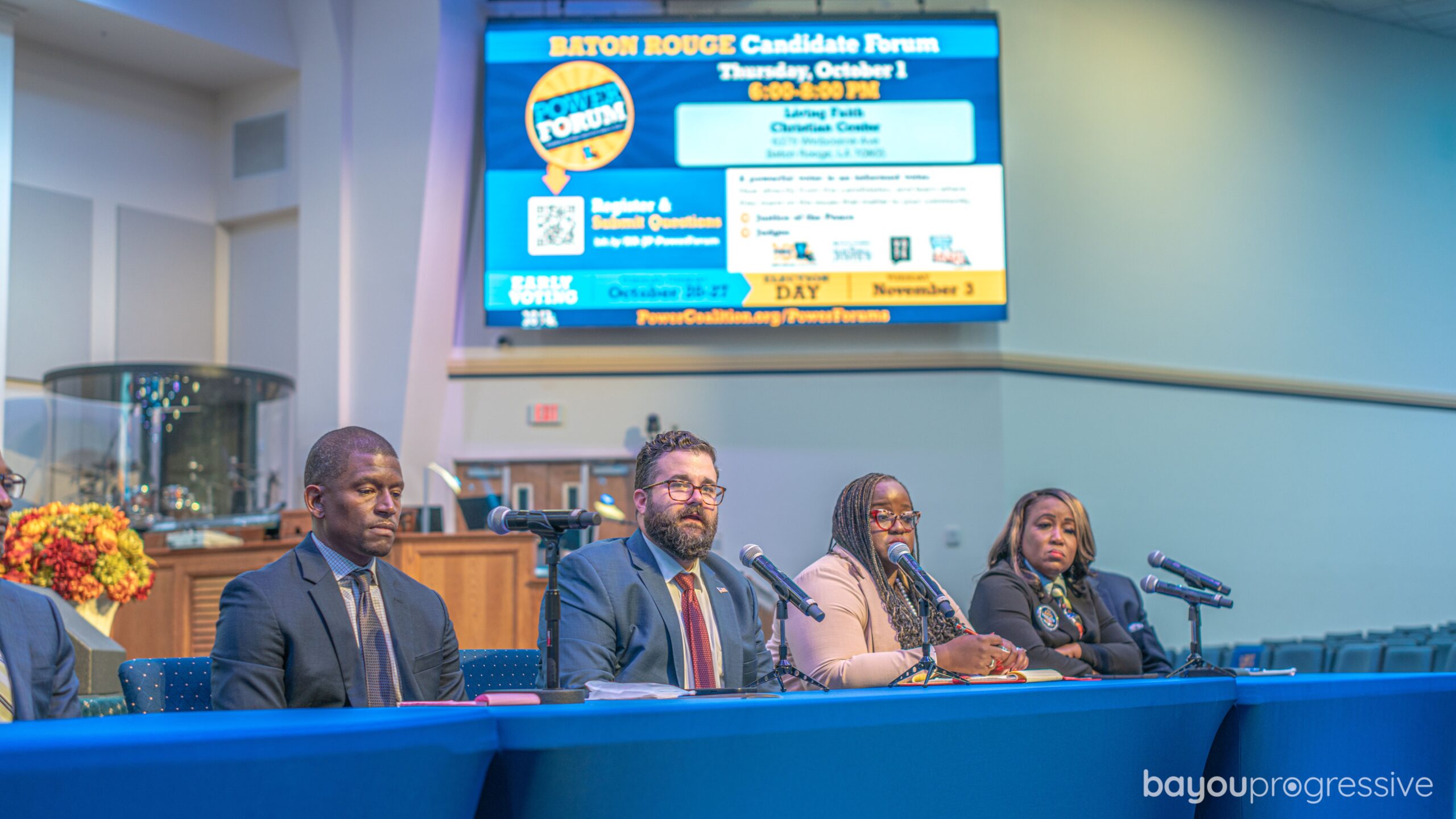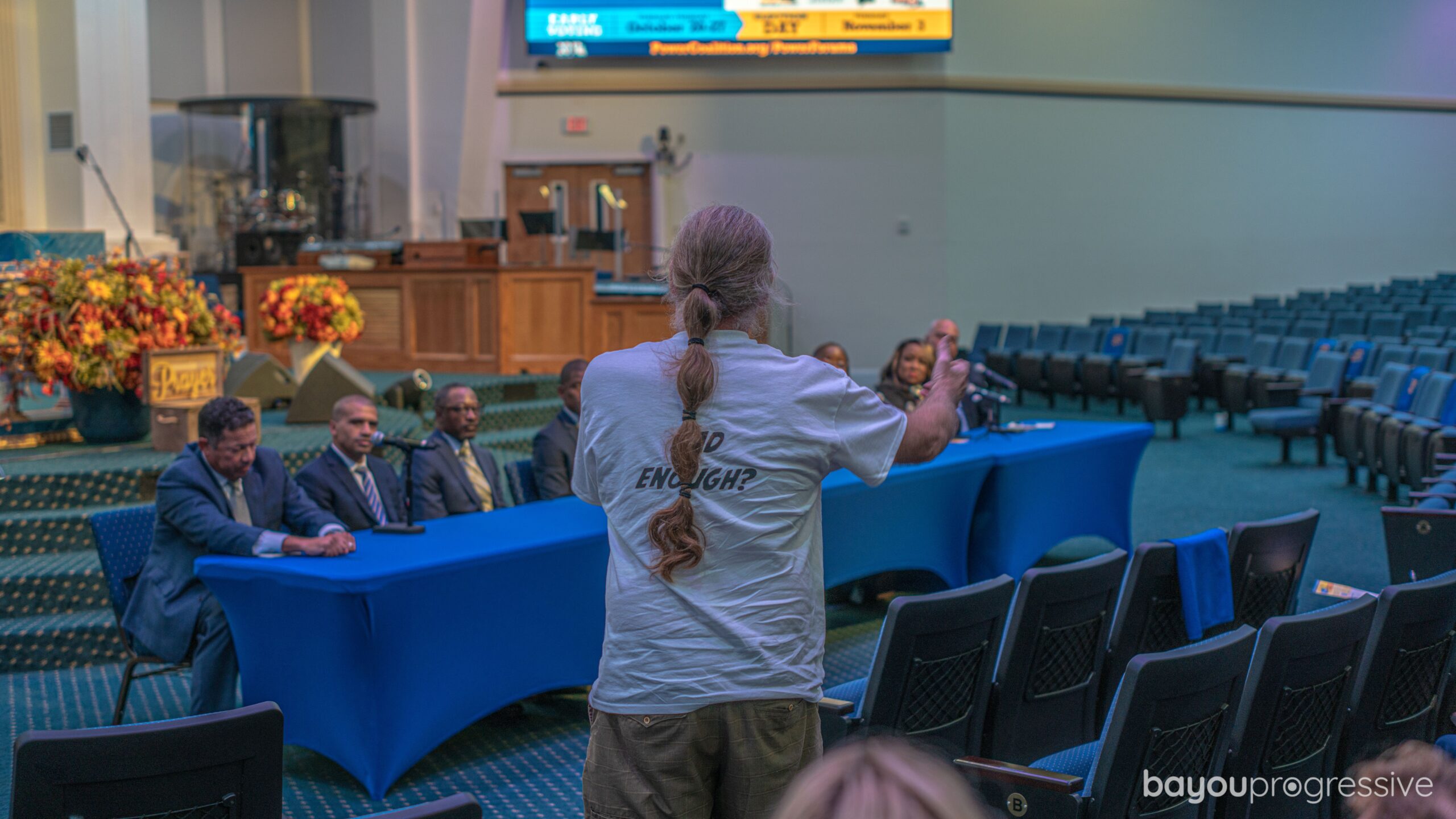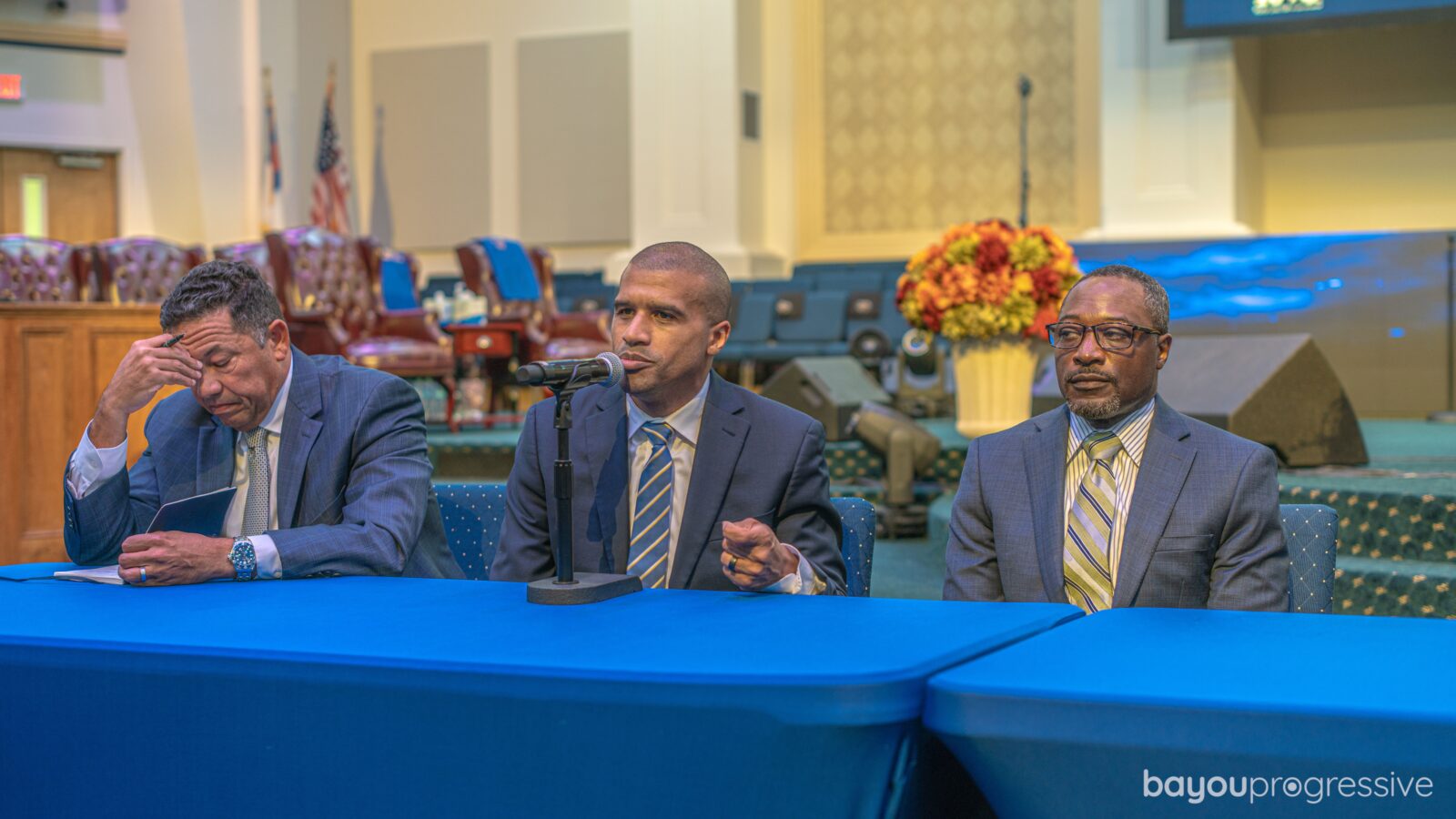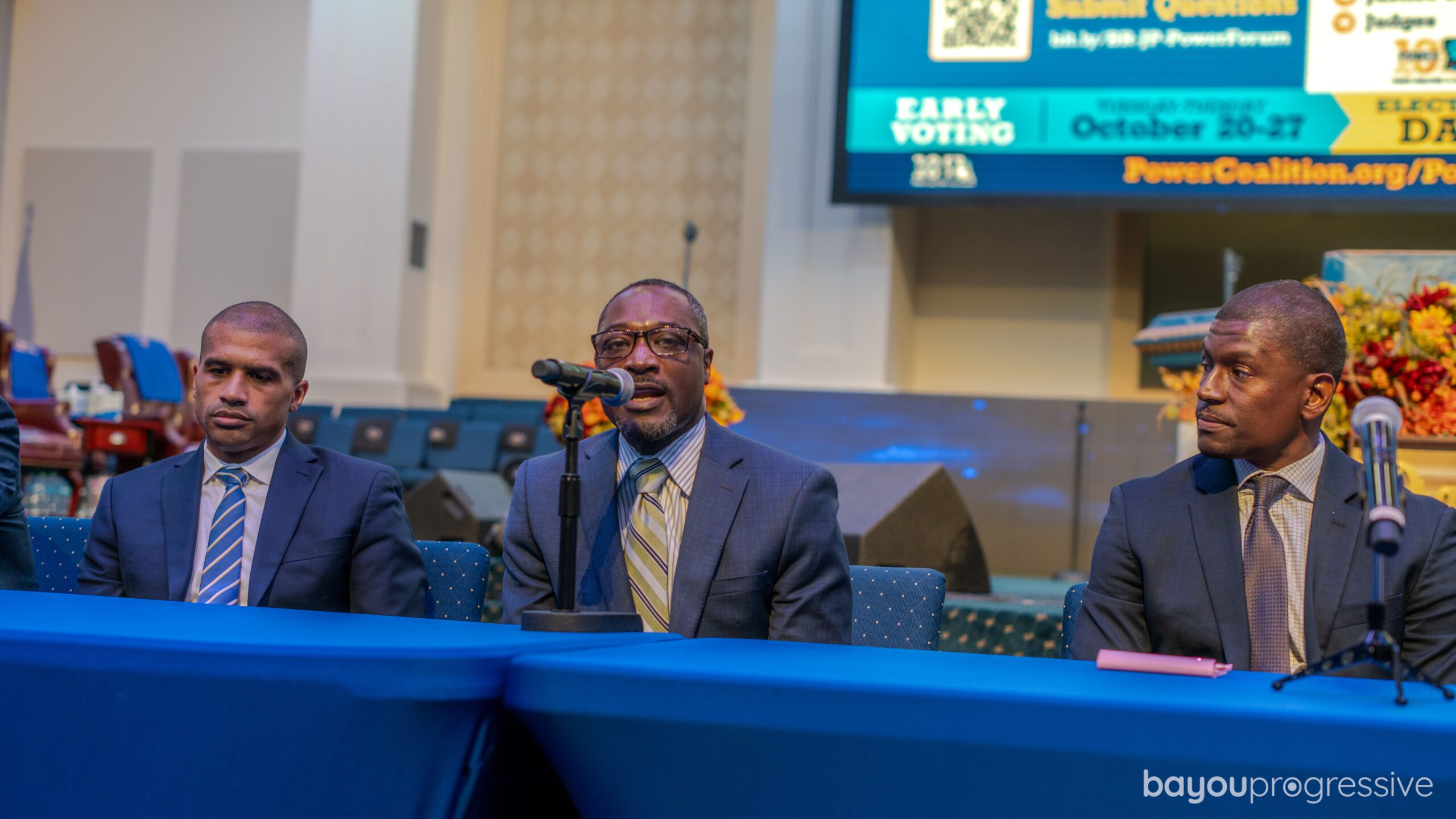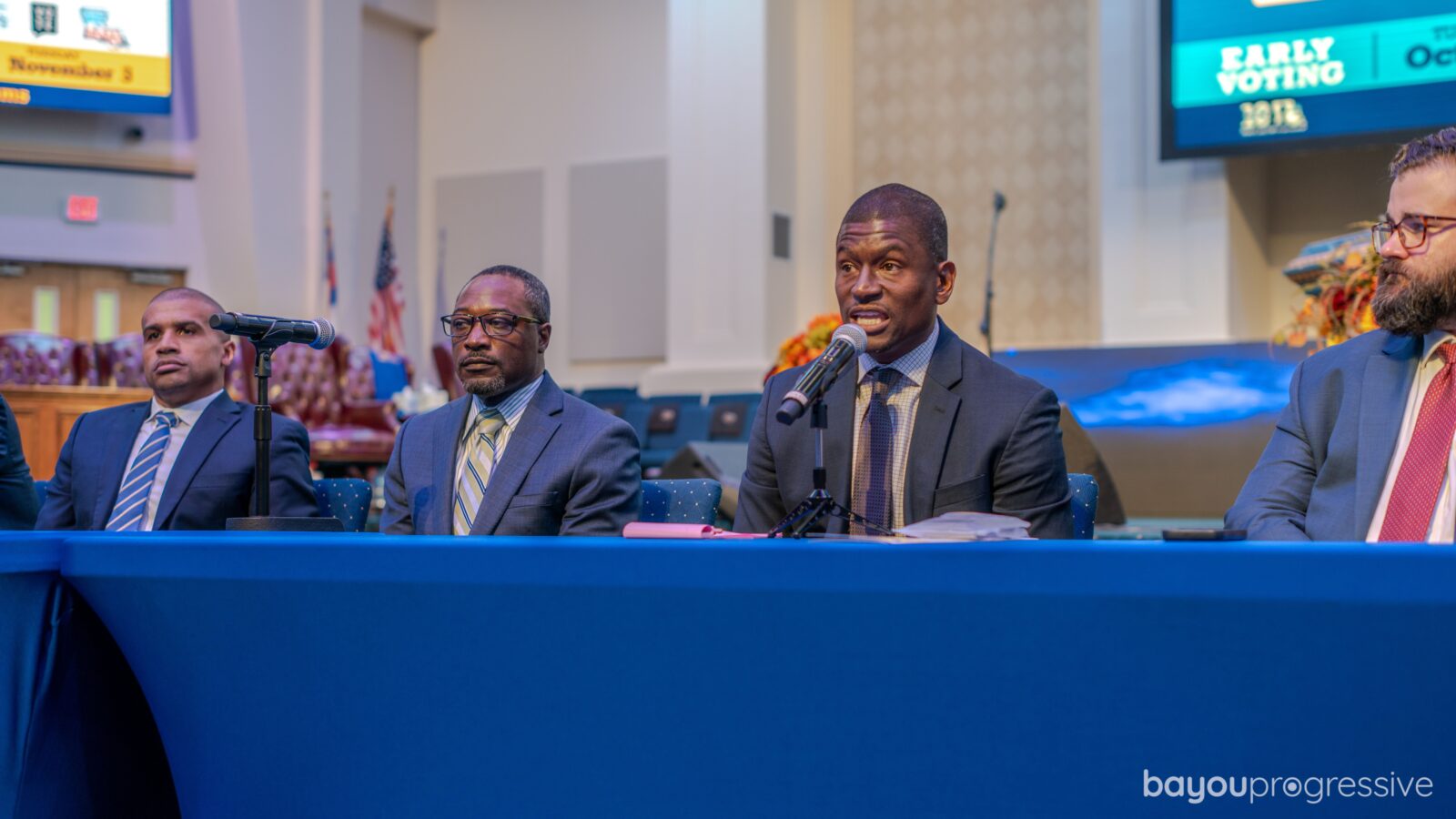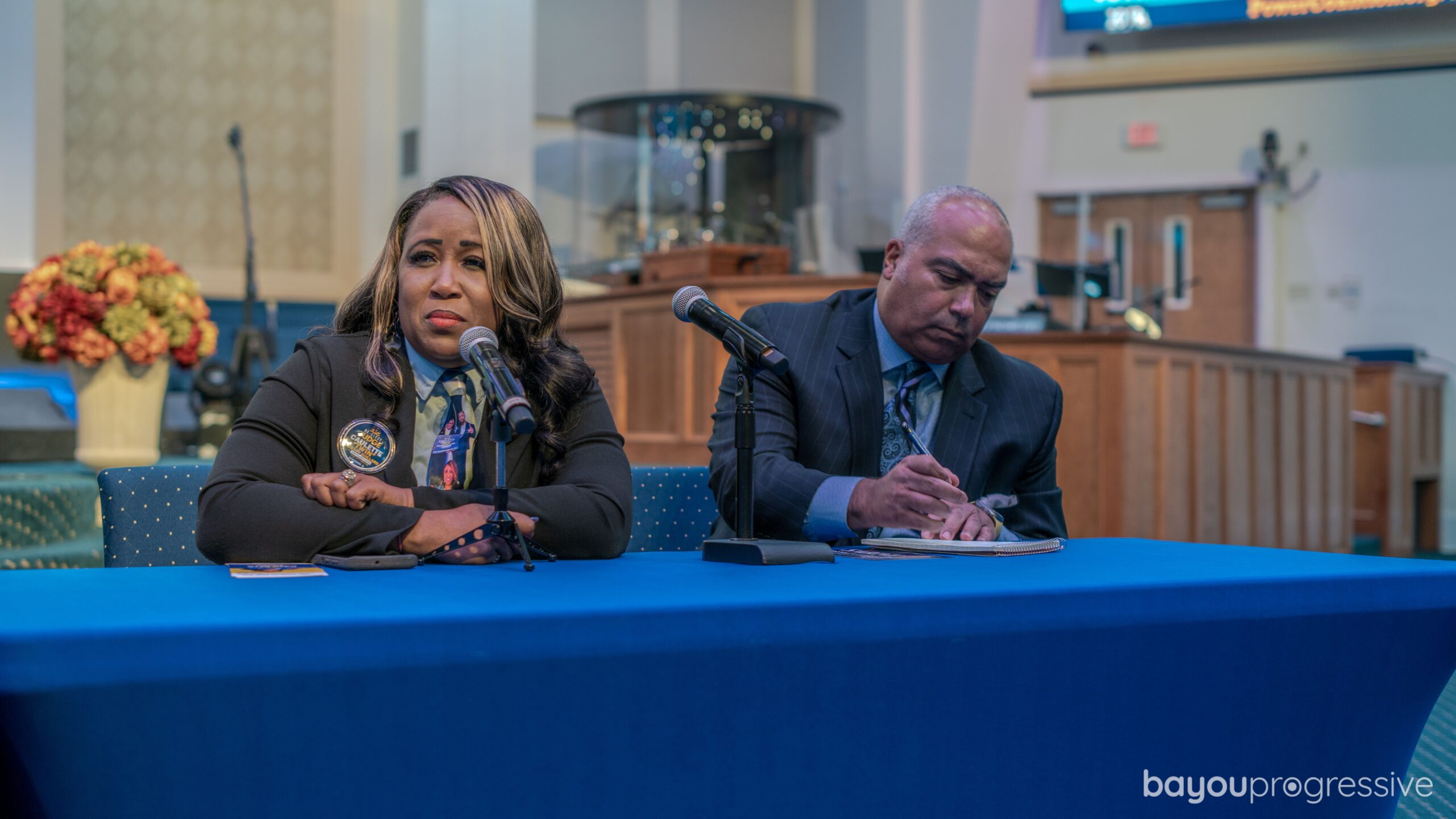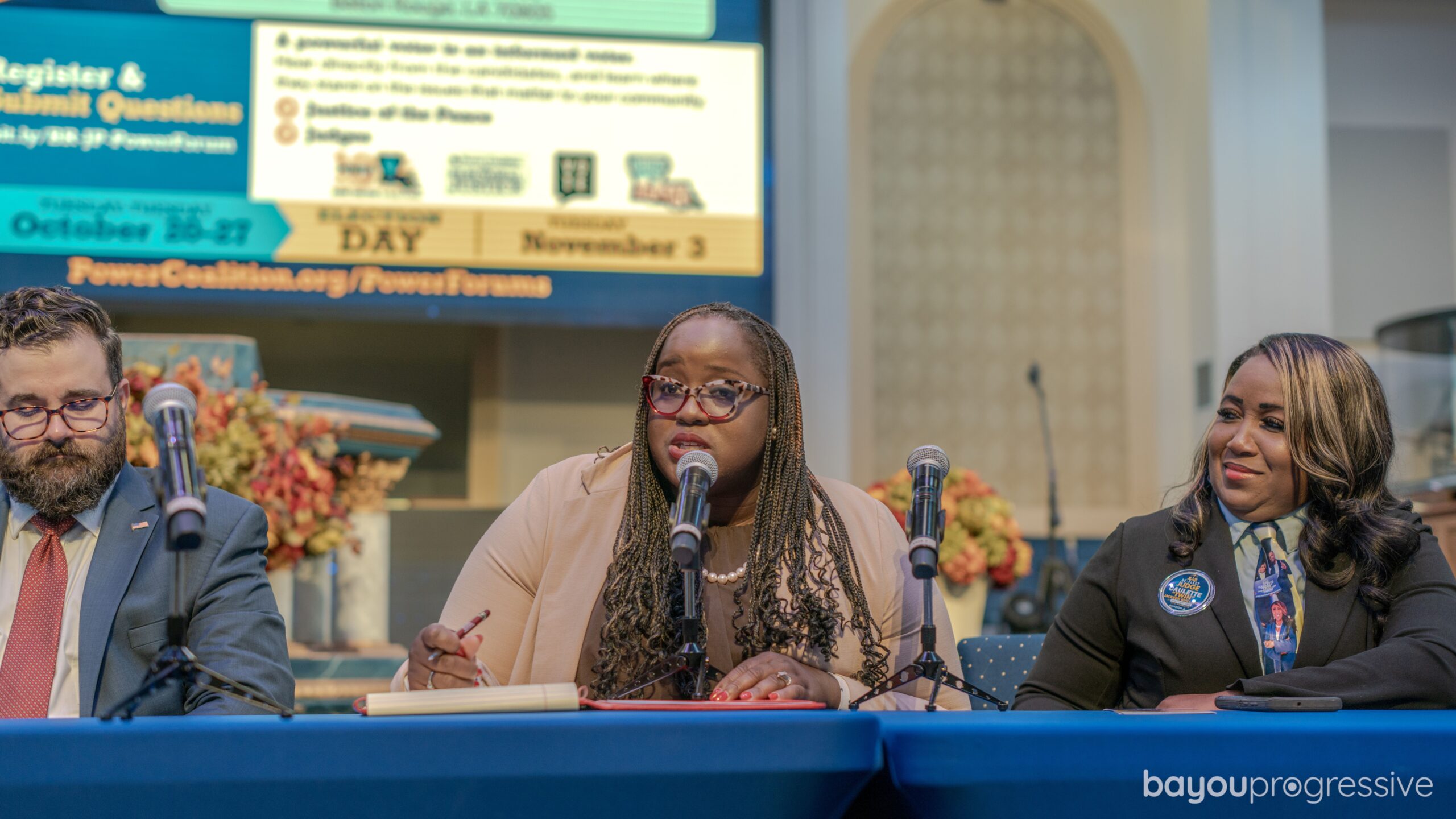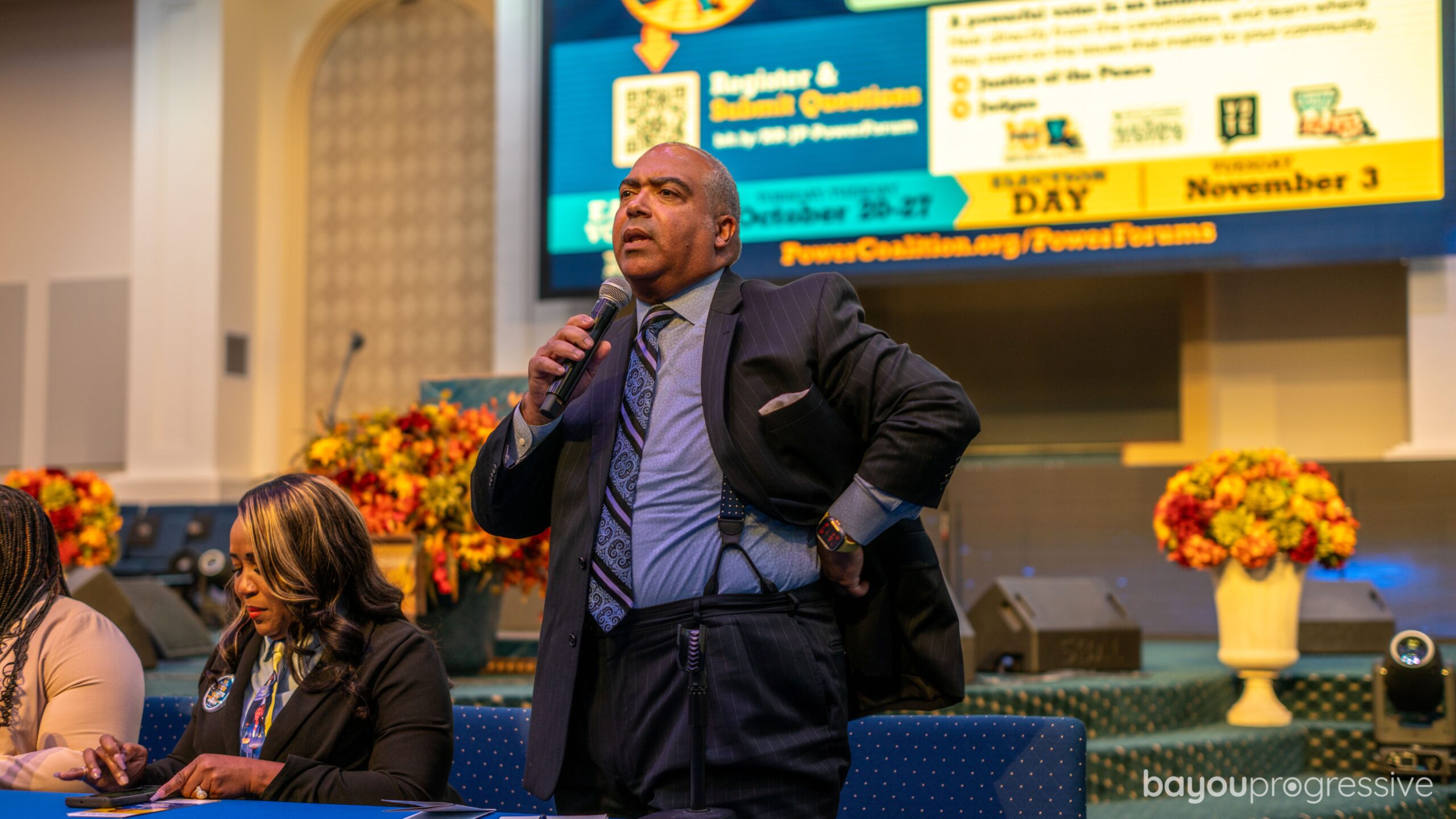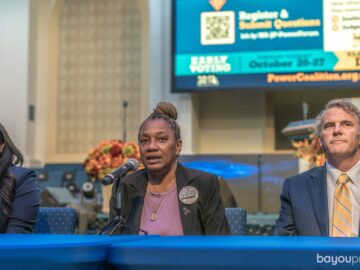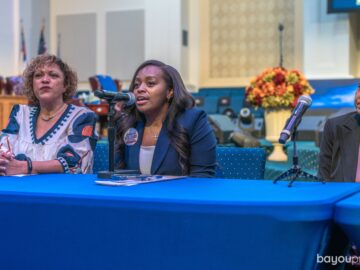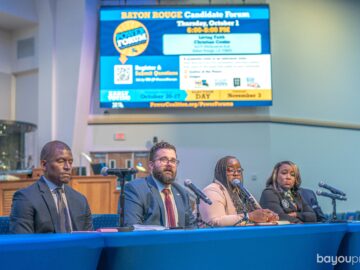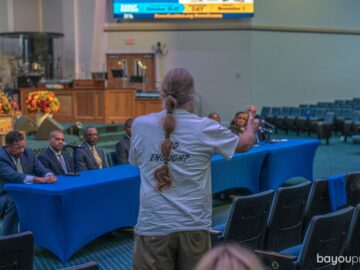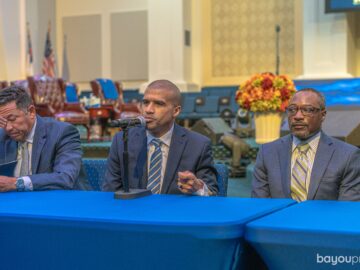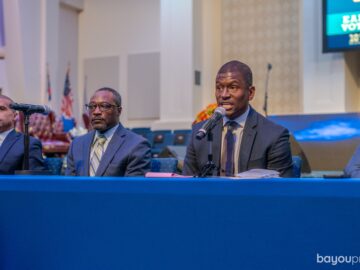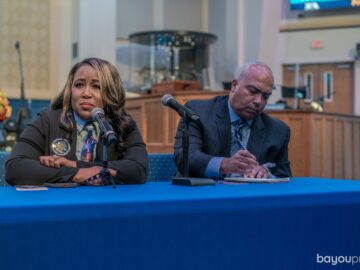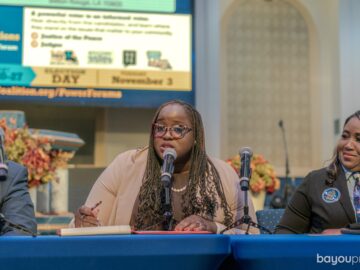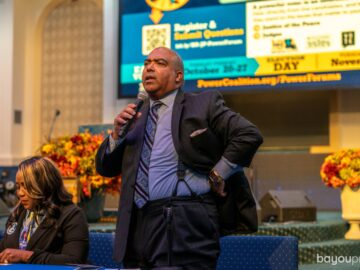
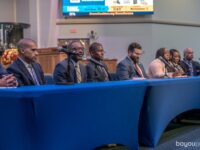
















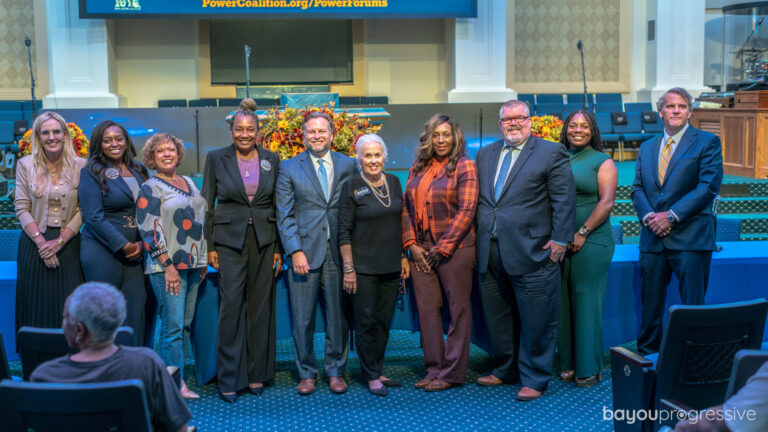
Candidates for district judge, Family Court and Justice of the Peace seats made their pitches to Baton Rouge voters Thursday night at a candidate forum hosted by the Power Coalition for Equity and Justice at Living Faith Christian Center.
The Oct. 1 event unfolded in two panels, beginning with judicial candidates before turning to candidates for four Justice of the Peace districts. Power Coalition said every candidate on the ballot for the featured seats had been invited and that participating candidates would receive the same questions and speaking time.
The judicial panel included Democrat Winston DeCuir Jr. and Republican Justin DeLaune, candidates for 19th Judicial District Court Division B; Democrats Elzie Alford Jr. and Jermaine Guillory for Division L; Democrats ReAzalia Allen, Allison “AJ” Sabine and Vernon Thomas for Division M; and Democratic Family Court Judge Caulette “Twin” Jackson Guillard.
Much of the first panel centered on a fundamental problem facing courts: whether people who enter them believe they are actually being treated fairly.
Asked what they would do to earn public trust across differences in race, income and neighborhood, DeCuir argued that judges must be concerned not only with actual impartiality but with how their conduct appears to the public.
“You have to have both,” DeCuir said, arguing that a judge’s responsibility to avoid favoritism extends beyond the courtroom and into his or her public life.
Guillory, a current commissioner in the 19th JDC, began from a somewhat different premise.
“For a lot of people, they aren’t treated fairly,” Guillory said.
He proposed publishing a dashboard that would allow the public to see the work of his court, explaining rulings in plain language and seeking feedback from the people who interact with the system — including victims, defendants, witnesses and their families.
Thomas framed his response around what he called “fairness, accountability, compassion and efficiency,” arguing that accessibility also requires judges to respect the time of the people ordered to appear before them. Allen emphasized treating litigants with dignity regardless of race, religion, sexuality or political affiliation, while DeLaune said maintaining trust requires listening carefully and applying the same law regardless of a person’s status.
Guillard, the lone Family Court judge on the panel, emphasized that family cases come with a different set of concerns.
“People come into the family court, they want to know that they’re being heard,” Guillard said, adding that judges must explain their rulings even when litigants do not get the result they wanted. “The children’s best interest” must remain the priority, she said.
Candidates were also asked to describe a time they made an unpopular decision because they believed it was right.
Guillory recounted making a bail decision as a court commissioner that he said produced hostile headlines and threats serious enough that police were stationed outside his home. He said he ultimately had to explain the police presence to his 8-year-old son.
DeCuir offered another example, telling the audience that he was being vetted by the Biden administration for a possible appointment to the U.S. Fifth Circuit Court of Appeals while representing LSU during its 2021 sexual misconduct investigation, and that he was later told the controversy made him too risky a potential nominee.
Across the panel, the answers repeatedly returned to the same underlying question: what should voters expect from a judge beyond knowledge of the law? Candidates emphasized temperament, transparency, accessibility and the willingness to make difficult decisions even when those decisions are unpopular.
The second half of the evening shifted from those broader questions of judicial philosophy to a different kind of court — one that many voters may know far less about, despite how directly it can affect their daily lives.
What exactly does a Justice of the Peace do?
A Louisiana Justice of the Peace is an elected judge who presides over a court with limited jurisdiction. In everyday terms, JP courts function much like local small-claims courts: they resolve relatively low-dollar civil disputes and, importantly, hear many eviction cases.
Louisiana law generally allows a Justice of the Peace court to decide civil disputes involving no more than $5,000. The courts also have jurisdiction over residential evictions and certain commercial and agricultural evictions. They cannot handle cases such as successions or disputes over ownership of real estate.
The courts are intentionally less formal than district court. People frequently represent themselves, making the Justice of the Peace court one of the portions of Louisiana’s judicial system most likely to be encountered by someone without an attorney.
And unlike Louisiana district court judges, a Justice of the Peace does not have to be a lawyer. State law requires candidates to be qualified electors, live in the district they seek to represent and possess at least a high school diploma or equivalent, but it does not require a law degree. Once elected, JPs are required to undergo state training, including recurring education administered through the Attorney General’s office.
That context is especially important in East Baton Rouge Parish this year.
A law enacted in 2026 expanded the role of parish Justice of the Peace courts in eviction cases, giving them concurrent jurisdiction with East Baton Rouge city courts within their respective territories over qualifying residential and commercial eviction proceedings. The same law also established new district boundaries for the parish’s Justice of the Peace courts.
That made the forum’s heavy focus on evictions considerably more than an academic exercise.
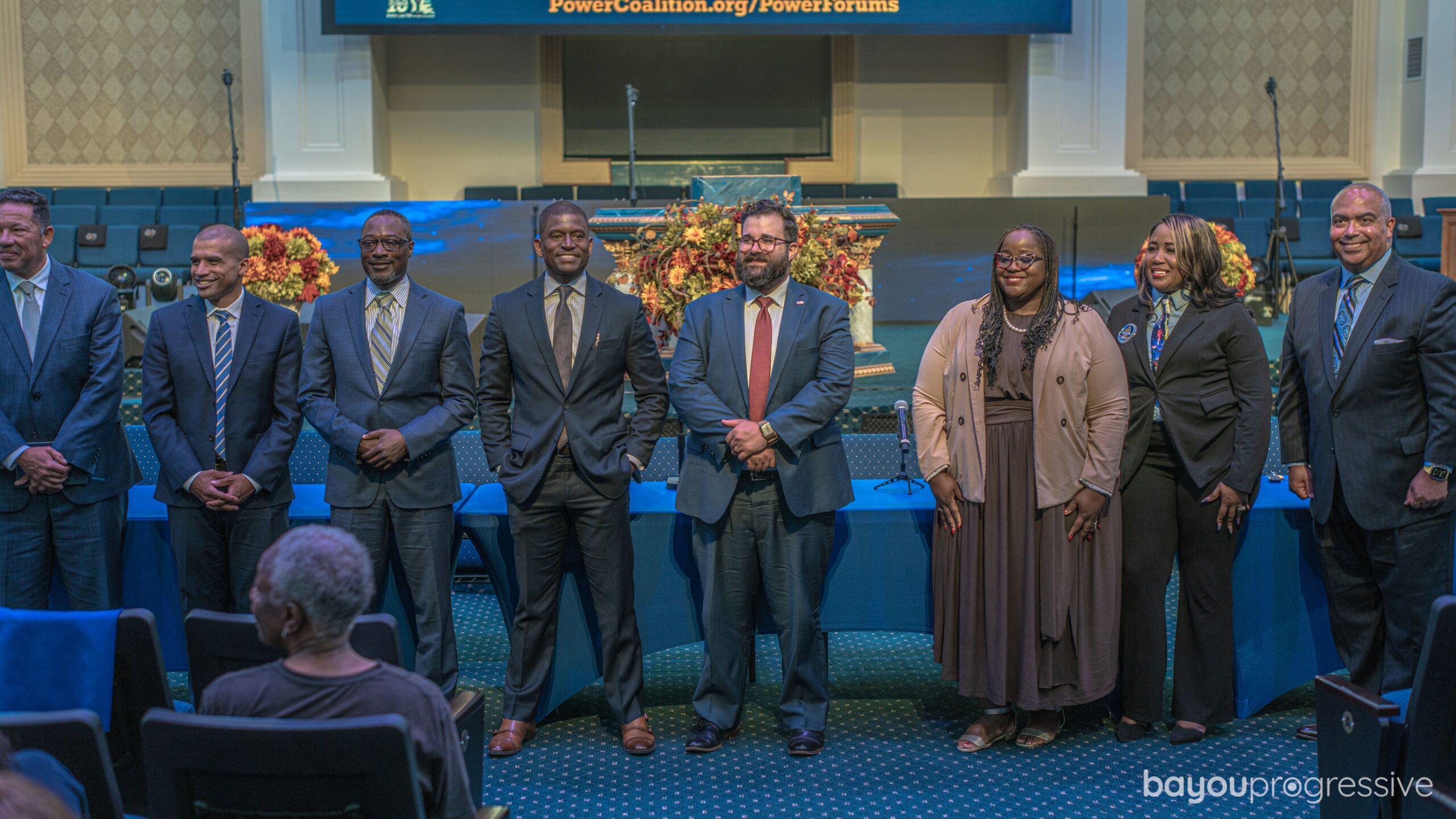
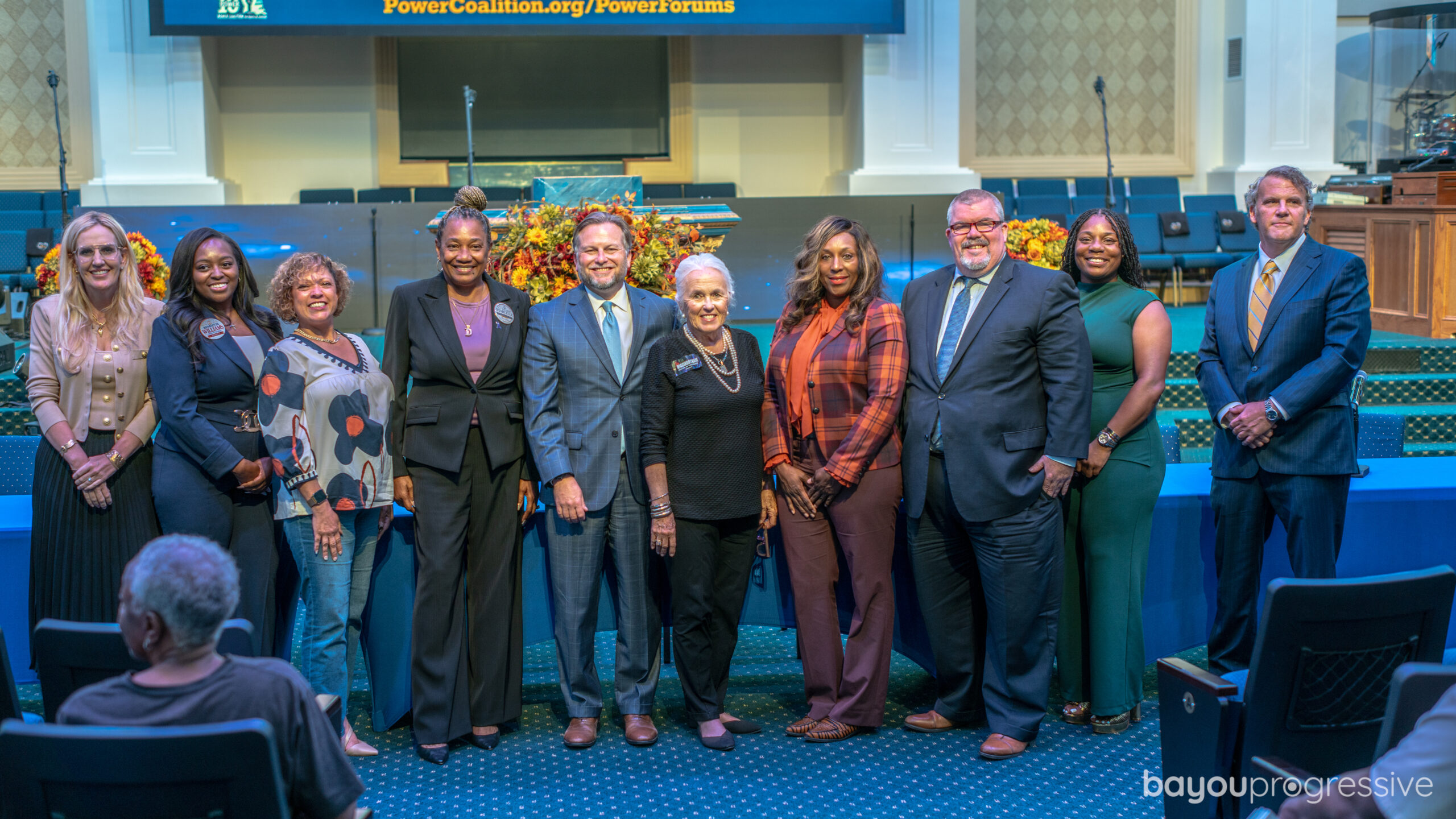
Ten JP candidates participated: Democrat Henrietta Williams and Republican incumbent Mark Miley in District 3; Democrats Antonia Caine, Taneshia Flowers and state Rep. C. Denise Marcelle in District 4; Republican J. Andrew Murrell in District 5; and Republicans Dajuana LeDuff W. Moore, Jen Racca, Robert Ainsworth and Toni Higginbotham in District 6. Not every qualified candidate in those races attended.
Candidates were first asked how they would make sure landlords and tenants — who often appear without lawyers — understand what is happening in an eviction proceeding.
Murrell focused heavily on plain language, arguing that the legal profession’s vocabulary can itself become a barrier to people trying to navigate court without an attorney.
“When you come into my court, what you will get is an understanding of what’s happening,” Murrell said. “If we just talk plainly and we did it in a way that we could all understand the process, a lot of times that misunderstanding might go away.”
Miley, who currently serves as District 3 Justice of the Peace, focused on educating both tenants and landlords about their rights before disputes reach the courtroom. LeDuff Moore similarly emphasized public education and making the court accessible to residents who may have little experience with the legal system. Marcelle and Flowers said JP courts should also connect people facing eviction with outside resources, particularly when housing instability overlaps with domestic violence or financial hardship.
A later question produced clearer differences in how candidates would operate their courts.
Higginbotham, a former Family Court and appellate judge, proposed staggered hearing times so litigants would not all be ordered to arrive at the same hour and spend most of a workday waiting for their cases to be called.
Caine proposed holding Saturday court for people who have difficulty attending during normal business hours. Williams proposed satellite locations within the newly drawn District 3. Flowers said she would explore virtual court proceedings. Ainsworth advocated digitizing filings and offering flexible office hours, while Racca criticized courts where litigants arrive on time but wait for judges to take the bench.
Several candidates also confronted the unusual feature of Louisiana’s JP system that allows people without law degrees to serve as judges.
Higginbotham pointed to her 24 years of prior judicial experience. Murrell emphasized his legal practice in landlord-tenant matters. Miley cited both his legal training and current experience as a JP. LeDuff Moore pointed to eight years working as a clerk and deputy clerk in a Justice of the Peace court, while other candidates said continuing education and reliance on Attorney General training would be central to keeping up with changes in the law.
The answers reflected the unusual nature of the office itself: a court designed to be simpler and more accessible than the larger judicial system, but one still empowered to make decisions that can determine whether someone keeps their home, pays a judgment or leaves court feeling that the system gave them a fair hearing.
Louisiana voters will decide the races in the Nov. 3 election. Early voting runs Oct. 20 through Oct. 27, excluding Sunday, Oct. 25.