For the better part of 30 minutes Sunday evening, the three Democrats running for Louisiana’s newly redrawn 6th Congressional District did something they had not yet done during this campaign: sit beside one another and explain, in the same room, why each of them believes they should be the Democrat voters send forward.
The setting was relatively modest — a candidate forum organized by the Iberville Parish Democratic Parish Executive Committee at the Plaquemine Community Center, with questions posed by a three-member panel of DPEC members.
But the timing made it considerably more revealing.
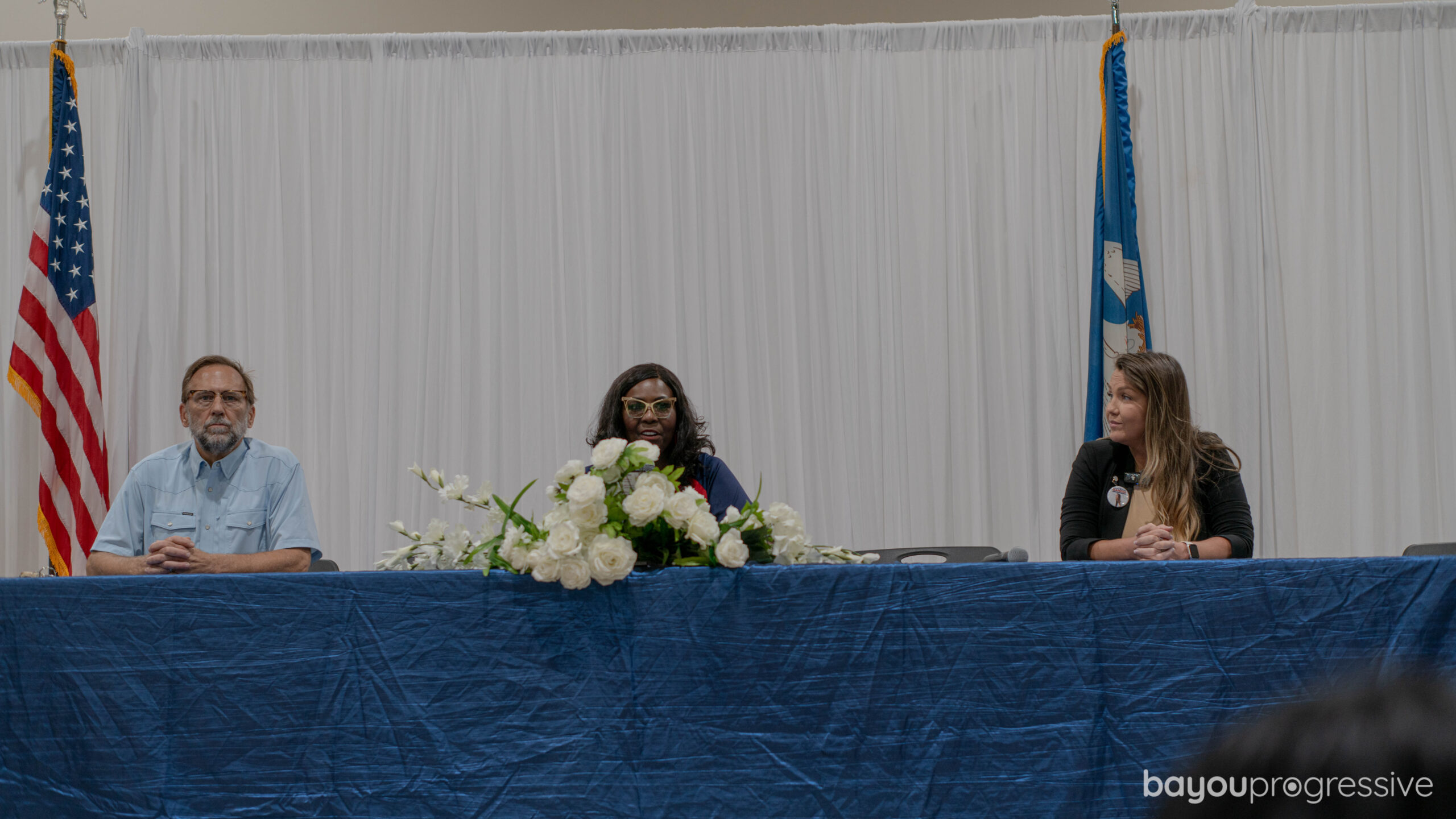
Lindsay “Rubia” Garcia, Chauna Banks and Pat Forbes are running in a district that barely resembles the Democratic seat the party held at the beginning of the year. After the U.S. Supreme Court struck down Louisiana’s previous congressional map, the Republican-controlled Legislature adopted a new one that dismantled the Baton Rouge-to-Shreveport majority-Black 6th District represented by Democrat Cleo Fields. The Cook Political Report moved the seat from Solid Democratic to Solid Republican and calculated that Donald Trump would have carried the new district by more than 30 points in 2024.
The election itself changed too. Louisiana had been preparing to use its new closed-party primary system for congressional races this spring, but those U.S. House primaries were canceled after the Supreme Court ruling. Under the new map passed by Louisiana Republicans in the spring, all congressional candidates instead compete together on Nov. 3, with a Dec. 12 runoff if no one receives a majority.
That reset transformed the Democratic race almost overnight.
Garcia had already been campaigning for Congress before the election was canceled and subsequently became a plaintiff in litigation challenging Gov. Jeff Landry’s suspension of the congressional primaries. Forbes entered after the map changed, qualifying Aug. 6 with the immediate backing of former Gov. John Bel Edwards. Banks entered on the final day of qualifying, Aug. 7.
Their arrivals generated private frustration among some Democrats who already viewed the new map as a steep enough challenge without multiple Democrats competing for overlapping pieces of the same coalition.
Forbes’ candidacy, in particular, has become part of a broader internal argument among Louisiana Democrats about electability. Some Democrats see the Edwards-aligned support around Forbes — a white male former state administrator with a deliberately bipartisan profile — as representative of an establishment instinct to search for culturally moderate white candidates capable of attracting Republican and independent voters, even when doing so risks dividing support that might otherwise consolidate behind Black or female Democratic candidates.
Forbes and his supporters would describe the same theory much differently: in a district drawn this far to the right, winning requires votes Democrats normally do not get.
Banks presents another complication. Her political résumé is rooted in North Baton Rouge, where she represented Metro Council District 2 for 12 years. The current council district is more than 84% Black and includes Scotlandville, Baker and other North Baton Rouge communities. Much of that political base now sits in the 2nd Congressional District rather than the new 6th.
That has left some Democrats questioning what coalition Banks intends to assemble in a district where her most familiar electoral base has been fractured by redistricting — and whether her candidacy could further divide Black Democratic voters already essential to any Democratic effort in the district.
Sunday offered the first real answer from all three candidates.
And, perhaps unintentionally, their answers produced three remarkably distinct theories of the race.
Forbes: The coalition Democrat
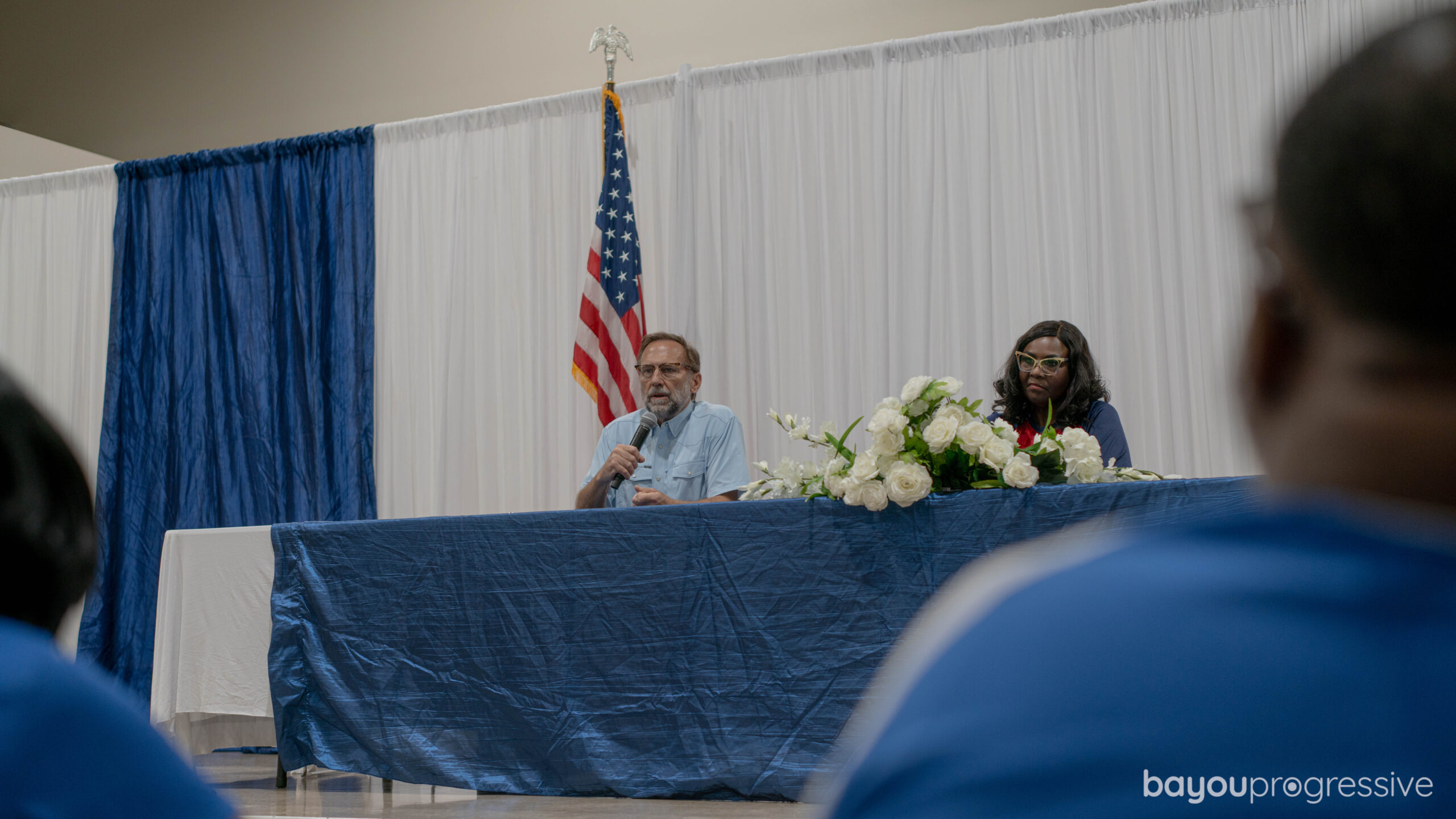
If Forbes has a lane, he made no attempt to hide it.
His argument begins with competence and ends with crossover appeal.
Forbes introduced himself through his 20 years in state government, his federal experience at the Department of Housing and Urban Development and his work securing billions of dollars in federal disaster recovery funding following the 2016 floods. But the important part of his opening was not merely the résumé. It was how he framed the résumé.
He emphasized having worked with “people of every political persuasion” and argued that Congress needed to return to “thinking and talking about how do we work together.”
That theme remained consistent throughout the forum.
Even when Forbes took positions squarely within the Democratic mainstream — restoring Medicaid and Affordable Care Act funding, opposing cuts to SNAP and education, attacking tax cuts for billionaires — he presented them less as ideological commitments than as obvious, practical solutions.
On health care, Forbes argued primarily for restoring the ACA structure and Medicaid funding rather than replacing the existing system. He connected those cuts directly to the survival of rural hospitals, including the hospital serving the Plaquemine area.
His closing statement made the political strategy explicit.
Forbes told the audience that merely putting a Democrat into the runoff was insufficient.
“We have to win this seat, and we cannot be satisfied by getting somebody in the runoff. That’s not enough. We have to win the seat.”
The objective, he argued, was to actually win the Republican-leaning seat — and he pointed directly to endorsements from Edwards and former New Orleans Mayor Mitch Landrieu and former U.S. Sen. Mary Landrieu as evidence that prominent Louisiana Democrats believe he can do it. His campaign has prominently promoted those endorsements and the argument that his bipartisan governing history is an asset.
It is essentially an electability pitch built for the map Republicans drew: Democrats alone are not enough, so nominate someone who can add moderate Republicans and independents to the coalition.
Whether Democratic voters accept that premise is another question. But Forbes left little ambiguity about what his campaign believes its path is.
Banks: Forget the fight. Deliver something.
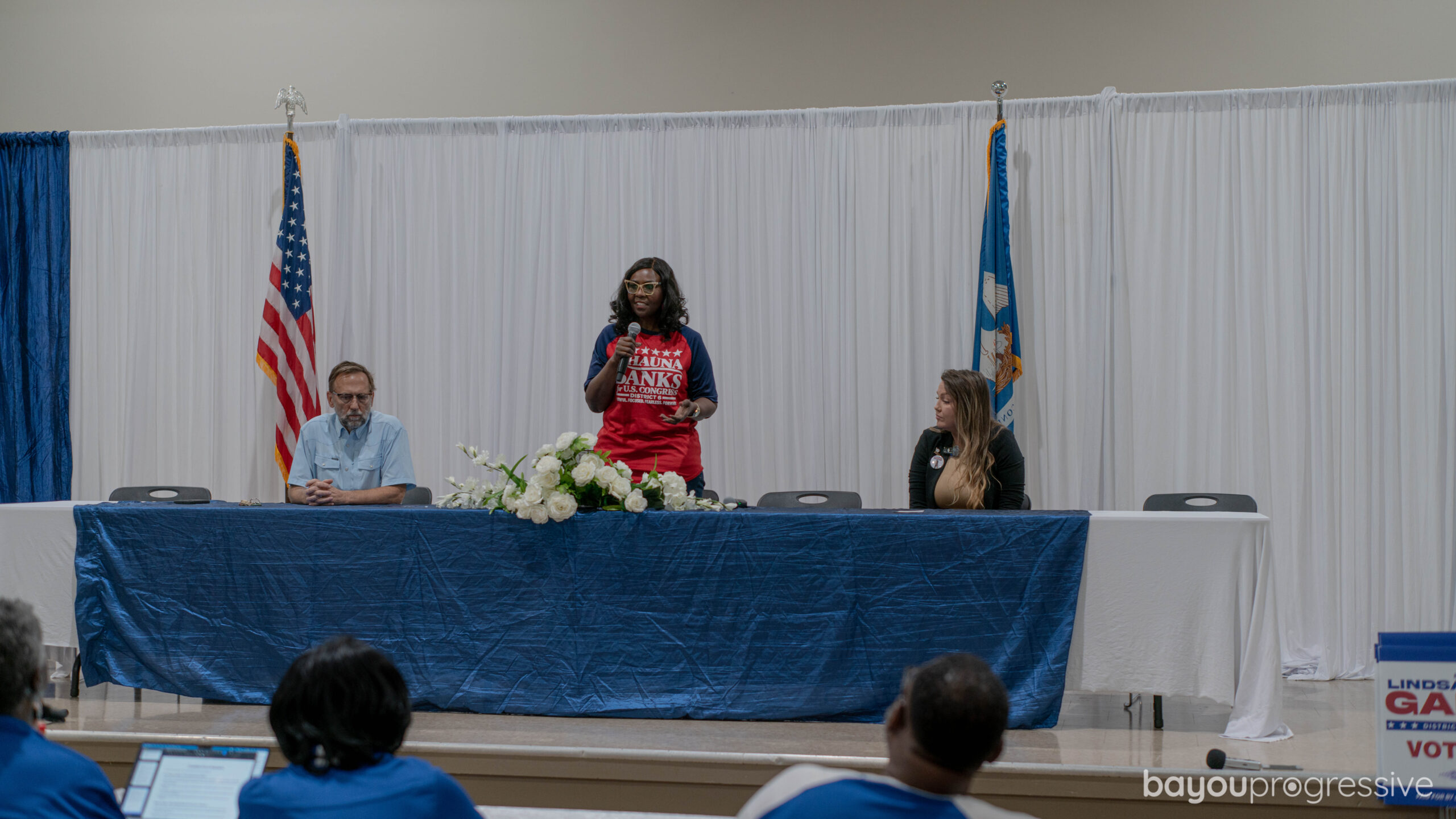
Banks made an argument that initially sounded surprisingly similar to Forbes’, but arrived there from a very different place.
Where Forbes spoke about bipartisan cooperation, Banks repeatedly tried to pull the conversation away from national ideological combat altogether.
Asked for her three top federal priorities, Banks said politicians too often become consumed by whatever issue is dominating the national political conversation rather than asking how government affects people’s daily lives.
Her answer moved through Medicaid, Medicare, Social Security, housing, insurance costs, economic development and education before arriving at the larger point: while other politicians fight, she wants to direct resources back home.
“Let the people fight about whatever it is that they are fighting about,” Banks said, arguing that political warfare does little for a community if federal resources never arrive there.
Her answer on health care followed the same pattern. Rather than beginning with a congressional proposal, Banks recounted what she had already done on the Metro Council: creating a North Baton Rouge Blue Ribbon Commission, responding to clinic and emergency-room closures and helping expand access to medical services in underserved communities.
That was essentially Banks’ argument throughout the evening: judge her less by the national ideological label attached to her campaign and more by the money, facilities and projects she says she delivered while in local government.
Her closing offered the clearest encapsulation.
Banks rejected what she described as fear-based politics and pointed to her experience serving in a minority bloc on the Metro Council while still obtaining millions of dollars for housing and community projects. Then she delivered perhaps the most revealing line of her appearance:
“I don’t fix tables. I build tables.”
The message distinguished her from Garcia more than Forbes.
Banks is not campaigning as the Democrat most eager for confrontation with Donald Trump or Republicans. In fact, she explicitly said she does not view Trump as the central problem her campaign is meant to solve.
Her theory is more transactional: she has operated while politically outnumbered before, she says she still produced tangible results, and she believes that skill can translate to Congress.
There is also an identity argument embedded in her candidacy. Banks opened by saying she hoped to become the first Black woman from Louisiana elected to Congress.
That creates an unusual campaign lane — a Black woman with a long record in local government arguing not for ideological confrontation but for practical dealmaking and resource delivery.
Garcia: Stop negotiating with people who are not negotiating
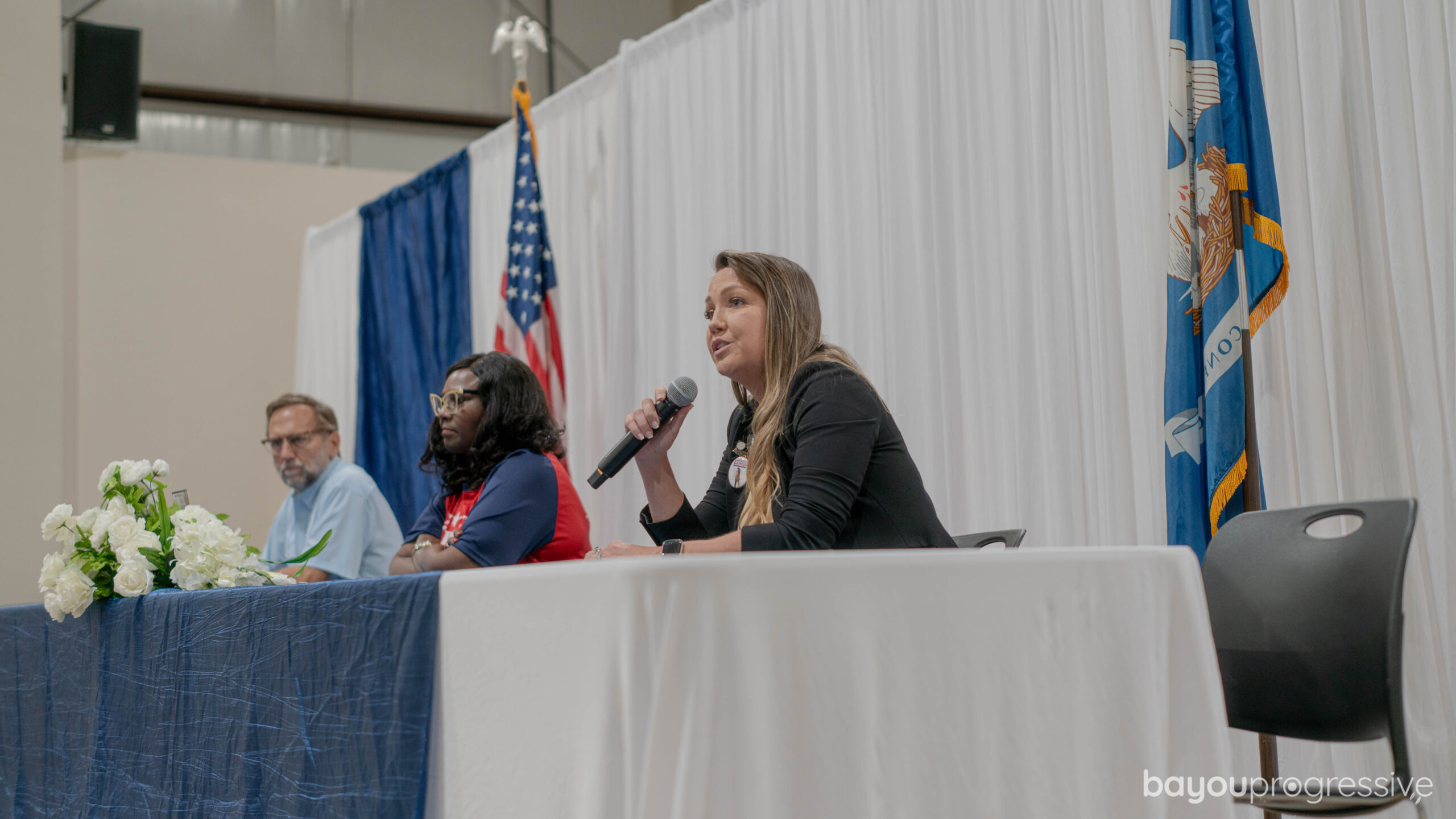
Garcia’s theory of the race could hardly be more different.
If Forbes is arguing that Democrats need a broader coalition and Banks is arguing that they need to focus less on the partisan fight, Garcia is making the case that Democrats have misunderstood the fight itself.
She introduced herself not primarily through elected or administrative experience, but through activism: her years as a teacher, her involvement with the families of workers killed in the Hard Rock Hotel collapse, her participation in protests following George Floyd’s murder, her decision to attend law school and her subsequent involvement in voting-rights litigation.
She then connected that biography directly to her candidacy.
Garcia told the audience she would prefer a political environment in which compromise and negotiation were possible, but argued that the Trump administration and Louisiana’s redistricting battles convinced her that Democrats are dealing with opponents who have no intention of operating that way.
That assumption shaped nearly every answer she gave.
Her policy priorities included affordability, housing, health care, education and protections against eminent domain. But Garcia repeatedly returned to checks and balances, constitutional authority and enforcement of the rule of law, arguing that even a Democratic congressional majority means little if the institutional mechanisms necessary to implement policy have been weakened.
On health care, she also drew the clearest substantive distinction of the forum by explicitly endorsing Medicare for All, while saying she would support restoring ACA subsidies as an interim measure.
Then came the closing statement.
Garcia described herself as “not a polished politician,” invoked her own experiences with SNAP, being uninsured and raising children as a single mother, and argued that Democrats need people prepared to “stand 10 toes down” when they believe the facts and law are on their side.
Her rejection of accommodation culminated in the metaphor likely to define her lane going forward: Democrats should stop trying to negotiate with opponents who are not playing by the same rules and start “flipping the table.”
“The issue is you’re dealing with an administration that has no intention of trying to negotiate. They have no intention, no intention of trying to work across the aisle.”
For a party that has spent years debating whether Louisiana Democrats need to become more moderate to compete or more confrontational to mobilize their existing coalition, Garcia is plainly choosing the latter argument.
She also enters that debate with institutional advantages of her own. The Louisiana Democratic State Executive Committee endorsed Garcia over both Forbes and Banks in August. She had previously been the party-backed candidate in the former 5th District before the spring congressional election was canceled.
That makes her positioning somewhat unusual: the candidate with the official party endorsement is simultaneously presenting the most insurgent rhetorical case of the three.
Three lanes, one very difficult map
None of these arguments can be separated from the arithmetic Democrats are confronting.
The new 6th is not merely marginally more Republican than the district Fields won in 2024. Independent analysts consider it overwhelmingly more favorable to the GOP. And because Louisiana reverted to an open congressional primary for this election, Garcia, Banks and Forbes are not competing for a Democratic nomination before facing a Republican. They are competing against one another and the Republican candidates simultaneously on Nov. 3.
According to WBRZ, a Sept. 19-21 JMC Analytics poll commissioned by the Greater Baton Rouge Economic Foundation underscores how fluid the contest remains. Among 790 likely 6th District voters, Banks received 13.2%, Garcia 7.7% and Forbes 7.6%. Republicans Rick Edmonds and Blake Miguez received 13.8% and 9.7%, respectively, while 35.7% remained undecided. The poll carried a 3.5-point margin of error.
That same poll determined the five candidates invited to WBRZ’s Oct. 9 televised debate at the Manship Theatre — the next, and potentially only, major opportunity for Garcia, Banks and Forbes to make these arguments before a district-wide television audience.
Sunday’s forum did not resolve the Democratic Party’s underlying argument about the race.
It clarified it.
Forbes is asking voters to believe that the way through a Republican district is to expand the coalition beyond Democrats.
Banks is asking them to believe that the answer is a politician accustomed to delivering resources without becoming consumed by the partisan warfare surrounding her.
Garcia is asking them to believe almost the opposite: that the political environment has already moved beyond the point where conventional conciliation is enough, and that Democrats need someone willing to confront that reality directly.
Those are not merely differences in campaign style.
They are three competing theories about what has gone wrong for Louisiana Democrats — and what, if anything, can still work in a congressional district specifically redrawn to make their job harder.