




Jamie Davis, the Tensas Parish farmer who built his campaign around an outsider message and a call for Democrats to reconnect with working people across Louisiana, has won the Democratic nomination for U.S. Senate.
With all 64 parishes and all 3,722 precincts reporting Saturday night, unofficial results from the Louisiana Secretary of State showed Davis defeating Gary Crockett by a commanding margin: 156,776 votes to 39,414, or 80% to 20%.
The result was not close, not regionally limited, and not especially subtle. Davis carried every parish in the state.
In East Baton Rouge Parish, Davis defeated Crockett 32,760 to 6,636. In Orleans Parish, Davis won 22,064 to 6,188. He also posted large wins in Jefferson, Caddo, Lafayette, St. Tammany, Ouachita, Ascension, Calcasieu, Rapides, Tangipahoa, and St. Landry parishes.
The runoff win makes Davis the Democratic nominee for the open U.S. Senate seat and sets up a November general election against Republican Julia Letlow, who defeated John Fleming in the Republican runoff. Unofficial results showed Letlow winning 57% to 43%, with 179,971 votes to Fleming’s 136,567.
That means Davis enters the general election with clear momentum inside the Democratic electorate, but also a very real math problem. Republican turnout in Saturday’s Senate runoff was significantly higher than Democratic turnout, with 316,538 votes cast in the GOP race compared with 196,190 in the Democratic runoff.
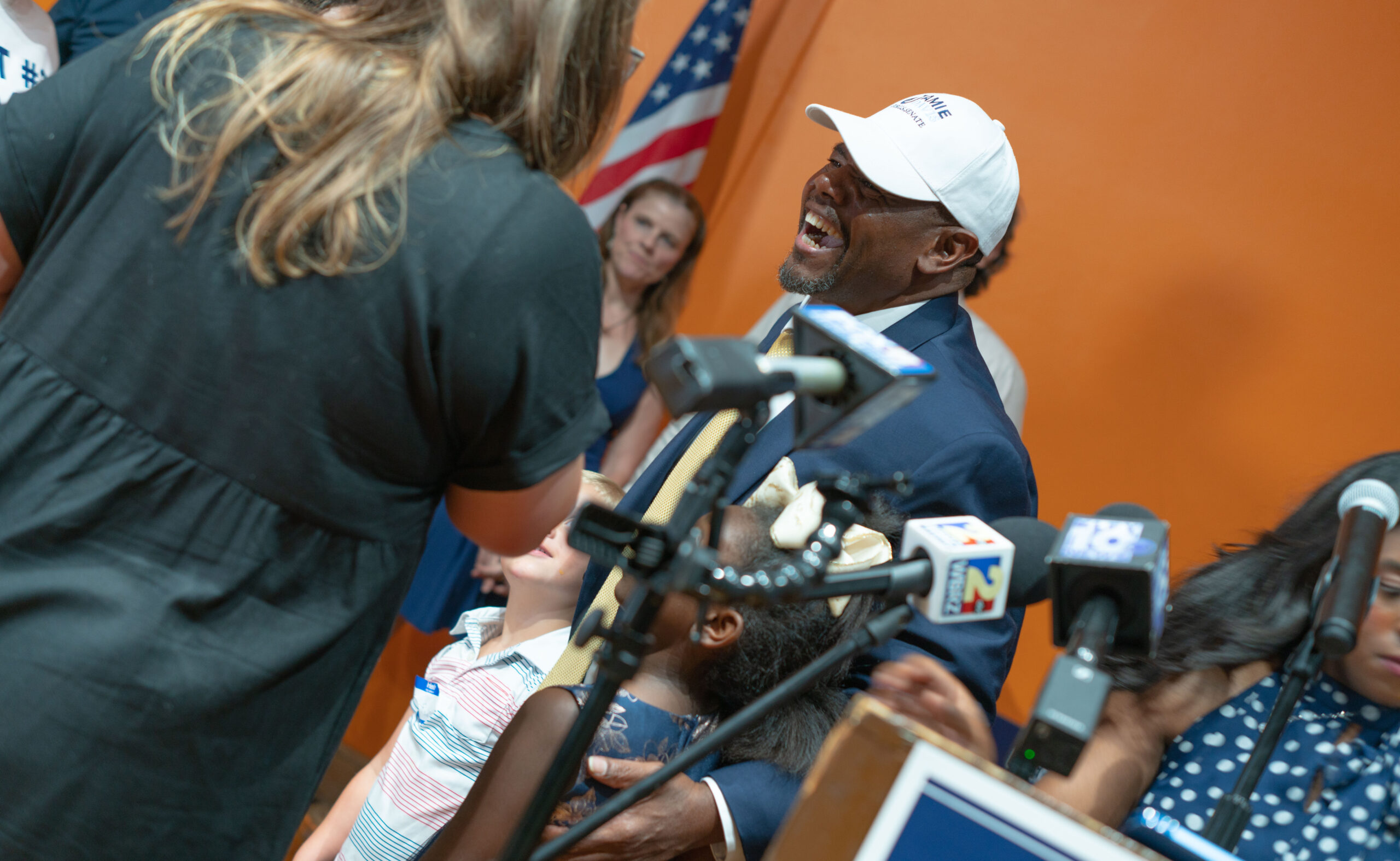
For Davis, the next phase of the campaign will require turning a dominant Democratic win into a statewide argument that can reach independents, disaffected voters, rural voters, Black voters, working-class white voters, and Democrats who have grown accustomed to watching Louisiana Senate races end badly.
In his victory speech, Davis leaned directly into the argument that helped carry him through the runoff: that he is not a polished, consultant-built candidate, and that Louisiana Democrats need something different if they want a different outcome.
Before moving into his prepared remarks, Davis spent several minutes thanking his wife, family, campaign team, volunteers, and early supporters, including members of Indivisible Baton Rouge, who he credited with helping give his campaign early visibility when few people knew who he was.
Davis also made clear that the personal sacrifice behind the campaign was not abstract.
“When you miss time away from home, you can’t get it back,” Davis said, reflecting on the long nights, travel, and time away from his family.
He also made a sharper point about Democratic politics, arguing that his campaign model was not a liability but a path forward.
“If you send a suit, you’re going to get the results that suits bring you, and that’s a loss,” Davis said.
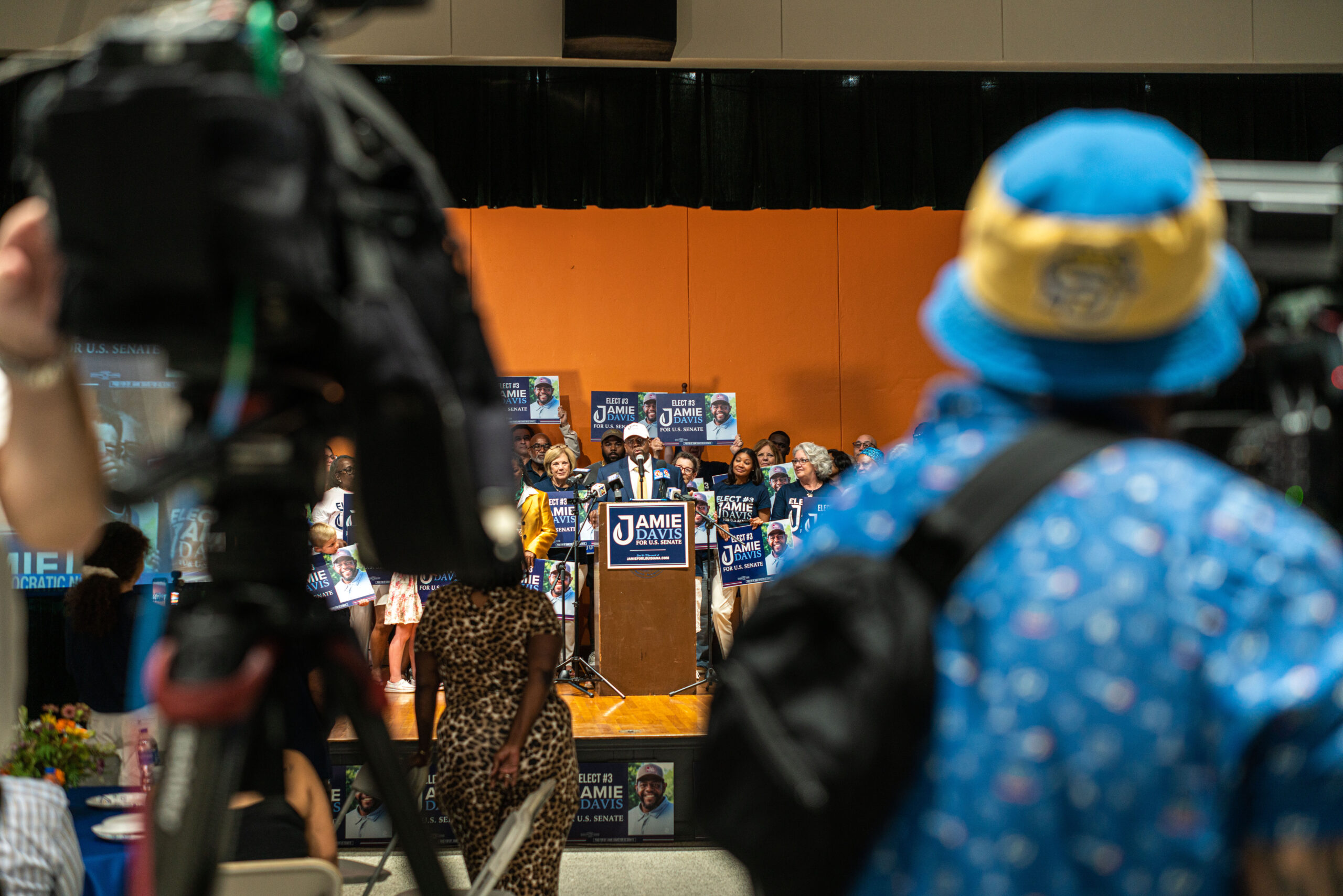
That line captured much of the political contrast Davis has tried to draw throughout the race. Both Crockett and Nick Albares, who earlier this week endorsed Davis, entered the 2026 Senate race with a resumes that, on paper, looked more traditionally aligned with what party leaders often seek in a statewide candidate. But both campaigns – to varying degrees – struggled to build visible momentum, and Davis’ grassroots presence, farmer identity, and blunt style proved far more effective with Democratic voters.
Davis framed Saturday’s victory as both a political win and a historic moment. In his prepared remarks, he invoked P.B.S. Pinchback, the iconic Reconstruction-era Louisiana political figure who was elected to the U.S. Senate but was never seated.
“For the first time since Reconstruction, Louisiana voters have nominated a Black man to compete for the United States Senate,” Davis said. “That’s not Black history, nor Democratic history. That’s Louisiana’s history.”
Davis then quickly pivoted from history to affordability, making clear that his general election campaign will focus heavily on cost-of-living pressures.
“People can’t afford to live here,” Davis said. “Everywhere I go, I hear the same things. The opportunities in Louisiana aren’t matching up with the cost of living.”
He listed groceries, insurance, health care, utility bills, and the strain on working families as central concerns, tying those issues to the broader question of whether Louisiana remains a place where people can build stable lives.
“Folks are working harder than ever, but everything still costs more,” Davis said.
Davis also used the speech to criticize his Republican opponent without making the argument purely partisan. He said Louisiana needs a senator loyal not to a party, but to the people who live here.
That will likely be the center of his general election message: common sense, affordability, rural credibility, and a rejection of politics that Davis argues has left working families behind.
He pointed to stories he said he heard while traveling the state: a farmer in Vermilion Parish worried about USDA programs, a woman in St. James Parish pressing for better disability access to public spaces, a woman in Lafayette concerned about Social Security and health care costs, and a woman in St. Landry Parish who wanted IVF treatments covered under ACA plans.
“These are not isolated stories,” Davis said. “This is Louisiana that we live in right now.”
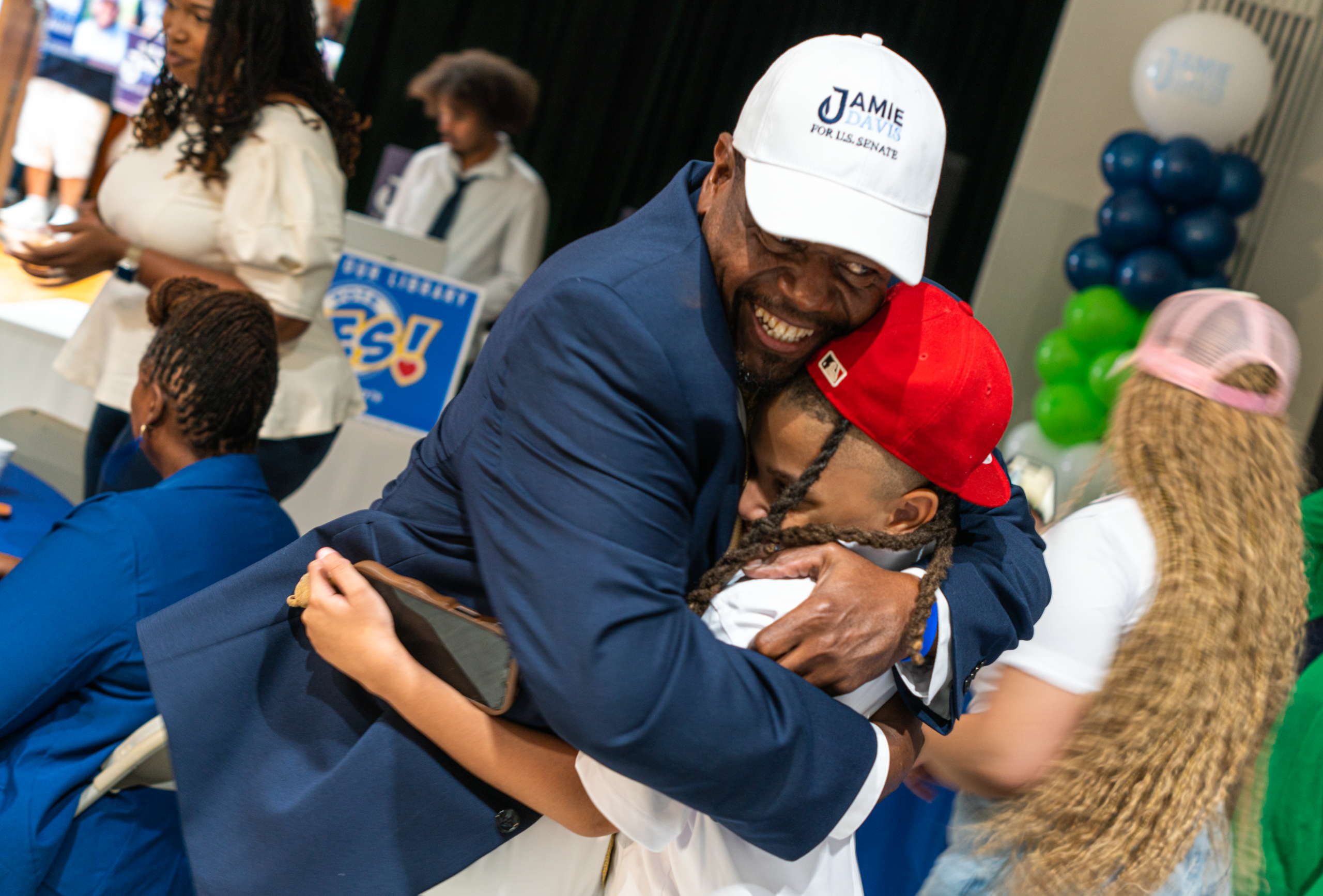
The challenge now is whether Davis can translate that message beyond the Democratic electorate. Letlow will enter the general election as the Republican nominee in a state that has shifted sharply to the right in federal races. She also comes out of a bruising Republican primary and runoff in which the GOP electorate was larger, more engaged, and better resourced.
But Davis’ runoff performance gives Democrats something they have not always had in recent statewide races: a nominee who clearly consolidated the party’s voters, won every parish, and emerged from the runoff with a defined identity.
For a Louisiana Democratic Party that has often struggled to recruit, support, and unify around viable statewide candidates, Davis’ win is a rebuke of the idea that voters were waiting for the most conventional candidate in the race. They were not.
They chose the farmer from Tensas Parish.
They chose the candidate who said he did not fit the mold.
They chose Davis overwhelmingly.
“Our campaign has just turned into a movement,” Davis said Saturday night. “United we win. Now let’s go finish what we started.”
The November election will test whether that movement can grow fast enough, broad enough, and disciplined enough to compete in a state where Republicans still hold the structural advantage.
But Saturday night gave Davis something real to build on: a landslide Democratic mandate, a sharpened message, and a clear opponent.
Now the race begins again.