











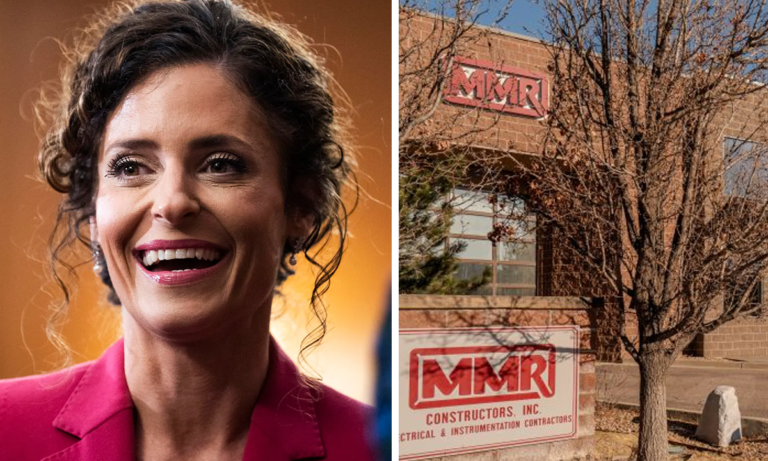
A Baton Rouge construction company gave $100,000 to a super PAC supporting U.S. Rep. Julia Letlow’s Senate campaign while it was performing work under a federal contract with NASA, according to a new complaint filed with the Federal Election Commission.
The Campaign Legal Center alleges MMR Constructors, Inc. violated federal campaign finance law when it contributed $100,000 to Hope in Action PAC on March 31, 2026. Federal law prohibits federal contractors from making political contributions while they are negotiating or performing federal contracts, and the FEC explicitly says that prohibition includes contributions to super PACs.
According to the complaint, federal spending records show MMR had a NASA contract running from Dec. 15, 2025, through April 17, 2026. That would place the company’s six-figure political contribution more than two weeks before the federal contract ended.
Hope in Action has played a significant role in the outside spending operation supporting Letlow, the Republican nominee for U.S. Senate. FEC records show the super PAC has spent $74,130 directly supporting Letlow this election cycle and contributed more than $2.86 million to Accountability Project, Inc., another super PAC that has spent more than $9.5 million supporting her candidacy, according to the complaint.
The complaint, filed Wednesday, asks the FEC to investigate MMR for allegedly violating the federal contractor contribution ban. Campaign Legal Center described the contribution as an example of precisely the kind of relationship that law was designed to prevent.
A contribution federal contractors are prohibited from making
The prohibition at the center of the complaint is relatively straightforward.
Federal government contractors are prohibited from making contributions or expenditures to political parties, committees or federal candidates while covered by a federal contract. The FEC separately makes clear that super PACs, despite generally being allowed to accept unlimited corporate contributions, cannot accept contributions from federal contractors.
Campaign Legal Center argues MMR fell squarely within that prohibition when it made its March 31 contribution.
Federal spending records cited in the complaint identify MMR Constructors as the recipient of NASA contract 80NSSC26P0076 for work associated with a High Pressure Industrial Water facility. Current records cited by Campaign Legal Center list the contract period as Dec. 15 through April 17.
An earlier public listing of the award showed a March 15 potential completion date and an approximately $321,000 value, while more recent federal-spending data reflects an April 17 completion date and roughly $352,000 award value. That indicates the award was modified after it was initially issued, although the precise modification history was not immediately available.
That distinction matters because federal law applies the contractor contribution prohibition through the completion of contract performance. Campaign Legal Center’s allegation rests on the current federal record showing MMR remained within that period when it made the March 31 contribution.
If that April 17 completion date accurately reflects MMR’s period of contract performance, the March 31 contribution falls directly inside the period in which federal contractors are prohibited from making political contributions.
The FEC has enforced this rule before
The federal contractor prohibition is neither new nor merely theoretical.
The FEC has previously penalized companies for making large contributions to super PACs while performing federal work.
In 2017, Suffolk Construction Company agreed to pay a $34,000 civil penalty after the FEC found reason to believe it violated the same federal contractor prohibition by making two $100,000 contributions to Priorities USA Action. The commission ultimately found no reason to believe the super PAC had knowingly solicited the prohibited contributions.
In 2019, Ring Power Corporation paid a $9,500 civil penalty after contributing $50,000 to New Republican PAC while it was a federal contractor. Ring Power acknowledged making the contribution and said it had believed the contribution was permissible before later obtaining a refund. The FEC nevertheless found reason to believe the company violated federal law.
Those cases are particularly relevant to the MMR complaint because they establish that giving the money to an independent super PAC rather than directly to a candidate does not remove the federal contractor prohibition. They are also significant because they were enforced during Republican President Donald Trump‘s first term in office.
Campaign Legal Center argues the MMR contribution also illustrates the broader reason the prohibition exists.
MMR Constructors is headquartered in Letlow’s congressional district. Letlow has represented Louisiana’s 5th Congressional District since 2021 and is now the Republican nominee seeking to represent the entire state in the U.S. Senate.
In unusually pointed language, the complaint calls the contribution the “quintessential example of pay-to-play corruption,” arguing that a federal contractor financially backing the Senate candidacy of its sitting congressional representative creates precisely the appearance of access and influence the contractor ban is intended to prevent.
The filing points to a 2015 federal appeals court decision unanimously upholding the contractor contribution ban, in which the court warned about the danger of political money flowing through the same channels as government contracts.
The complaint does not need to establish an actual exchange of government action for political money for the contractor prohibition to apply. The alleged violation is the contribution itself: Campaign Legal Center contends MMR was a federal contractor on March 31 and was therefore legally prohibited from giving the $100,000.
Millions in outside spending supporting Letlow
MMR’s money did not go directly to Letlow’s campaign. It went to Hope in Action PAC, an independent expenditure-only committee registered with the FEC since December 2022.
But the committee has played a substantial role in the network of outside spending supporting Letlow.
Hope in Action has reported $74,130 in independent expenditures supporting Letlow during the current election cycle. It has also contributed $2,863,500 to Accountability Project, Inc., according to federal campaign finance records.
Accountability Project, in turn, has spent more than $9.5 million in independent expenditures supporting Letlow’s Senate candidacy, according to records cited in the complaint.
MMR Group, the parent company of MMR Constructors, previously contributed another $50,000 to Hope in Action in October 2023. Campaign Legal Center does not allege that the earlier contribution violated the federal contractor prohibition.
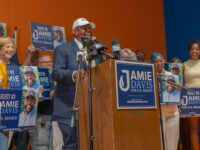
Letlow became the Republican nominee for U.S. Senate after she and state Treasurer John Fleming advanced past incumbent Sen. Bill Cassidy in Louisiana’s May 16 Republican primary. Letlow then defeated Fleming in the June 27 runoff. She will face Democratic nominee Jamie Davis in the November general election.
Who sought the $100,000?
Federal law does not only prohibit contractors from making political contributions. It also prohibits knowingly soliciting such a contribution from a federal contractor.
Campaign Legal Center’s complaint is directed at MMR Constructors and does not accuse Hope in Action, Letlow or her campaign of illegally soliciting MMR’s money.
How the contribution originated, however, remains an unanswered question.
The Bayou Progressive contacted MMR Constructors, Hope in Action PAC and Letlow’s Senate campaign and congressional office seeking responses to the complaint and additional information about the contribution.
MMR was asked whether it disputes that it remained a federal contractor on March 31, who authorized the $100,000 contribution, whether anyone associated with Hope in Action, Letlow or related political organizations solicited the money, and whether MMR has sought or received a refund.
The Bayou Progressive also contacted MMR legal counsel Friday morning. Rodi Rispone was unavailable, but the publication spoke with MMR’s deputy counsel, who said they would relay the request for comment to Rispone. The publication informed MMR that the story was scheduled for publication by 1 p.m. Friday. No response was received before publication.
Hope in Action was asked whether it solicited the contribution, whether it knew MMR was performing under a federal contract when the money was accepted and whether it intended to return the $100,000. The Bayou Progressive also left a voicemail Friday morning for Jodee Bruyninckx, the PAC’s treasurer. No response was received before publication.
Letlow’s campaign was asked whether Letlow, her campaign or anyone acting on their behalf solicited, requested, discussed or facilitated MMR’s contribution; whether the campaign was aware of the contribution or MMR’s federal contractor status; and whether Letlow or her congressional office had communicated with MMR regarding federal contracts or the company’s NASA work.
The request was also provided to Letlow’s congressional office. Neither the campaign nor congressional office provided an on-the-record response before publication.
The Bayou Progressive will update this story if any of the parties respond.
The FEC will ultimately decide whether there is reason to believe MMR violated federal law and whether to proceed with an investigation.
But the allegation now before the commission is not especially complicated: federal contractors are prohibited from making political contributions while performing federal contracts, and Campaign Legal Center says MMR Constructors gave $100,000 to a political committee helping elect its sitting member of Congress to the U.S. Senate while its NASA contract was still active.
Read the full complaint below: