For Omari Ho-Sang, the political challenge facing North Louisiana is not simply convincing more people to vote in November. It is building the kind of organizing infrastructure that can reach people long before an election, develop local leaders and continue holding public officials accountable after the votes are counted.
That work will be at the center of All Streets All People’s first Boots on the Ground Convening this weekend in Shreveport, a gathering that will combine political education, traditional community organizing training and get-out-the-vote planning as Louisiana heads toward a consequential fall election cycle.
ASAP’s public programming begins Friday, Aug. 28, with a day of training and field work, followed Saturday by a Community Congress and mass meeting. An opening “Libations & Liberation” social gathering is scheduled for Thursday evening at SPEAC Studios. ASAP describes the two-day convening as an “operational hinge” between its organizing work and the Nov. 3 and Dec. 12 elections — and pointedly says the gathering is intended to be a deployment rather than simply another political conference.
But Ho-Sang, ASAP’s founder, said the larger project is rooted in an organizing philosophy the organization has been developing for more than a decade.
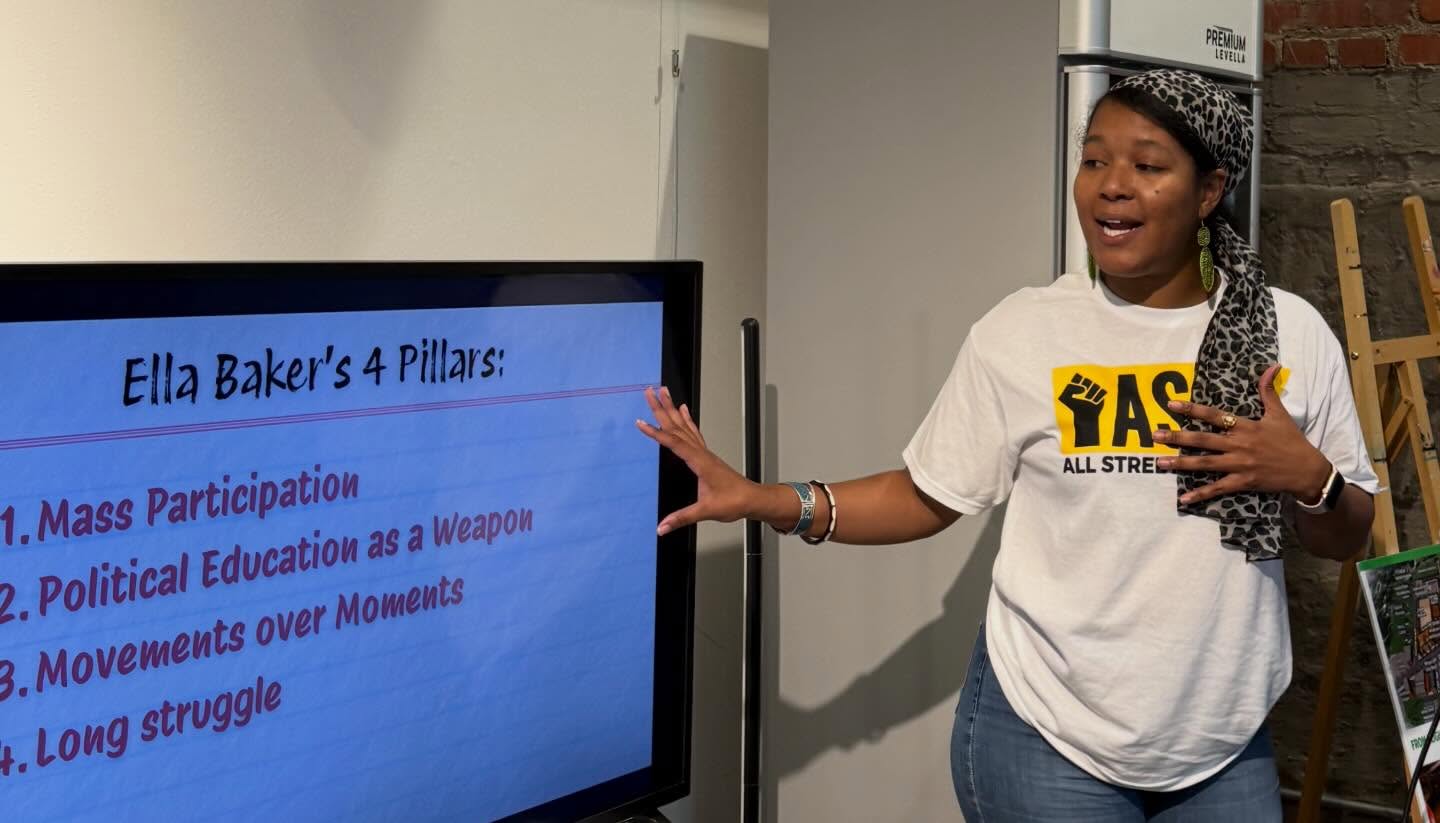
ASAP began as an idea in Birmingham around 2012, growing out of a youth program that gave students space to discuss issues including zero-tolerance school discipline, the school-to-prison pipeline and bullying. After seeing what happened when young people were given room to identify issues and build programs around them, Ho-Sang began thinking about how the same model might work in a broader community.
The organization came into its own after Ho-Sang moved to Shreveport and, in 2016, residents were grappling with an increase in violent crime. Rather than beginning with police or punishment, Ho-Sang said organizers looked at the ages of many victims and perpetrators — often under 29 — and asked what conditions might be producing the violence.
Their response was a citizen-run job training program for young people between 13 and 29. Its first year drew roughly 30 participants. By the second year, Ho-Sang said more than 300 people applied.
“What that showed us as an organization is that everyday people can come together, investigate not just the symptoms of an issue, but the root cause of an issue, and develop a solution to that issue,” Ho-Sang told The Bayou Progressive. “And so that is when ASAP became more than just a name or a community service organization. It became a theory of change.”
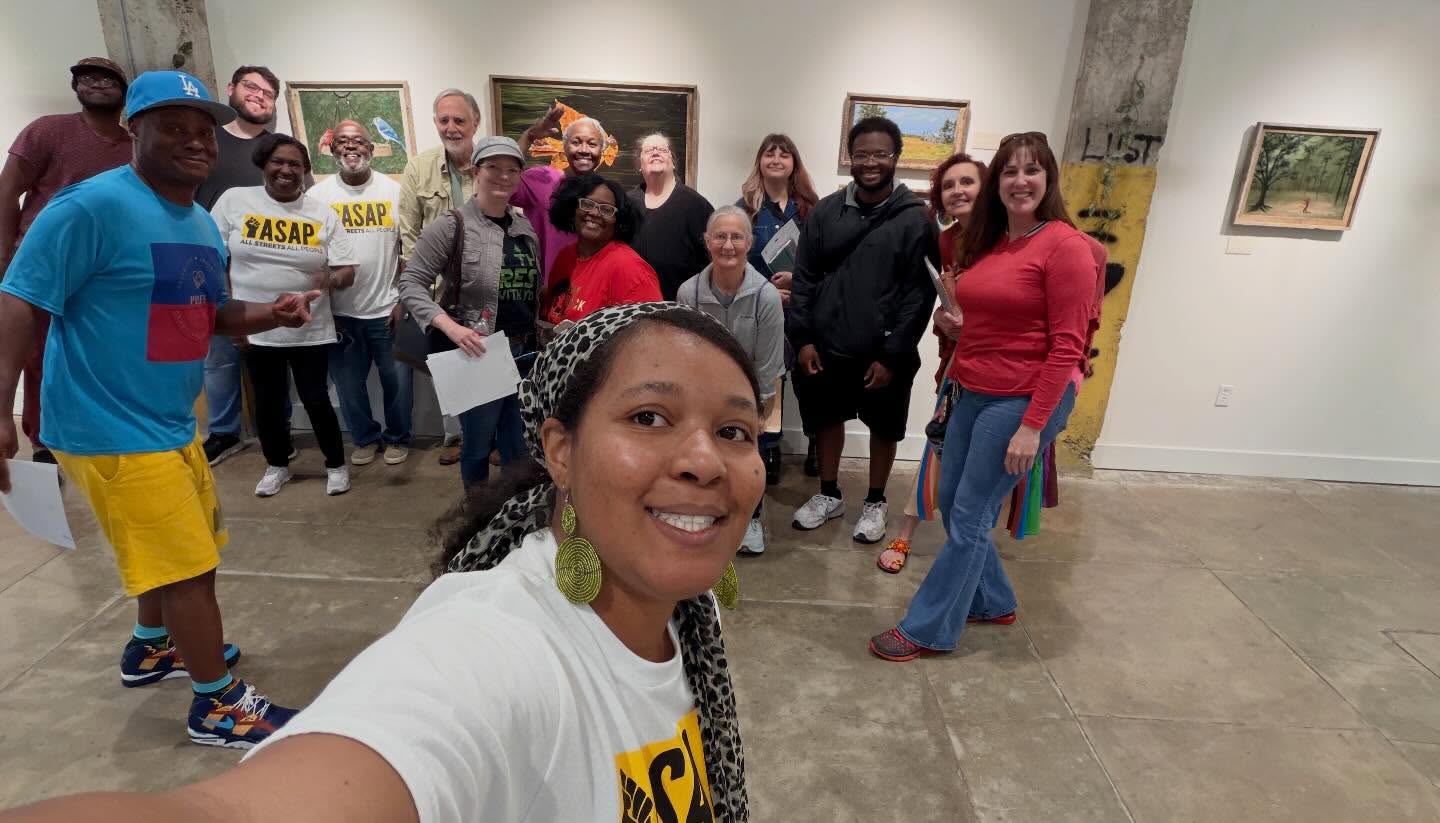
Today, ASAP describes its mission as recruiting, training and activating everyday people to understand their own power and participate in long-term systems change. Its programs include the Ella Jo Baker Movement School and Boots on the Ground, an organizing initiative connecting political education, community organizing, mutual aid and voter engagement.
Ho-Sang said the gap ASAP is attempting to fill is less glamorous than protests, rallies or campaign events.
“I deeply believe that the simple solution to a complex problem is organizing and base building,” she said. “The process of organizing is building relationships, having one-on-one conversations, making a hard ask or getting someone that you’re talking to to make a commitment, no matter how small, and moving people up a ladder of engagement into their leadership.”
“That is a process that is not sexy. It’s not glamorous. It’s not out front,” Ho-Sang added. “But it is an everyday process that we believe will help us to build the critical mass to move and pressure systems so that we can start seeing changes in our community.”
That philosophy will shape the training offered Friday.
Participants will choose among three tracks: political education, organizing and get-out-the-vote (GOTV) strategy. The organizing track will focus on one-on-one conversations, recruiting, making direct asks, developing leaders and mapping where power actually sits around a particular issue. The GOTV track will focus on questions familiar to campaigns — identifying turnout goals, determining how many voters organizers need to contact and deciding which communities require concentrated attention — while also including poll worker training.
The political education track will use Black August as a framework for discussing movement history, discipline and political analysis.
The goal, Ho-Sang said, is for attendees to leave with more than inspiration.
ASAP is attempting to create three interconnected levels of leadership across the 24 parishes. The group’s focus area stretches across much of northern Louisiana, from Caddo and Bossier parishes through Ouachita, the Delta and rural communities along the state’s northern half.
At the top are “pod partners” — larger organizations that can bring resources and expertise into the coalition. Ho-Sang named organizations including the Vera Institute of Justice, Step Up Louisiana, Liberty and Dignity Coalition and 10,000 Women Louisiana among those involved or being developed as partners. Below them, ASAP wants parish-level leaders who can then develop precinct teams focused much more narrowly on blocks, neighborhoods and individual relationships.
“We get really macro with it, and we forget that it’s really that one-on-one, consistent, repetitive conversation and relationship on that small little block area,” Ho-Sang said.
For ASAP, that structure is an answer to what Ho-Sang sees as a persistent resource gap between North and South Louisiana.
“I’ve noticed organizing here since 2013 that there is a gap and a disparity in resources that make its way to North Louisiana,” she said. “We don’t have New Orleans. We don’t have the state capital up north. And so I want to close that gap, and I want people to understand that in order to change the political calculus of this state, we have to pay attention to what’s happening in North Louisiana.”
Ho-Sang pointed to U.S. House Speaker Mike Johnson and State Senator Jay Morris – who gained recent notoriety as the author of the legislation that redrew Louisiana’s congressional maps earlier in the year – as examples of political leaders produced by the region.
“It is incumbent upon us to focus on what is producing and to really change the direction of what’s being produced,” she said.
That means challenging what Ho-Sang described as a tendency to treat political outcomes in parts of North Louisiana as predetermined — whether the assumption is that voters will not turn out, certain candidates cannot be beaten or major developments such as hyperscale data centers will move forward regardless of local opposition.
ASAP is betting that deeper community organizing can change those assumptions.
Its Boots on the Ground strategy combines electoral work with issue campaigns and mutual aid, including food and water distribution, transportation assistance and other efforts designed to meet immediate needs. ASAP says the broader goal is to build a 24-parish network capable of developing “durable, multiracial, working-class power” rather than assembling a volunteer operation only when an election approaches.
Ho-Sang said that distinction is important because asking people to engage politically while ignoring the circumstances consuming their daily lives can itself become disconnected from reality.
“Sometimes it’s tone-deaf to ask someone to go out and vote, and they can’t put food on their table or their lights are off,” she said. “So how do we also close that gap?”
One of the most tangible products of the weekend will be what ASAP calls the People’s Mandate.
During Saturday’s Community Congress, participants will break into issue caucuses, debate priorities and vote on a set of demands intended to provide a common agenda for the organization’s work. Ho-Sang said the final product will include both a broader list of priorities and a smaller group of issues ranked by urgency, accessibility and the likelihood that organizers can make progress on them.
The process has also incorporated outreach beyond those attending the convening. Ho-Sang said ASAP has called more than 8,000 people across North Louisiana to ask about their concerns.
Once ratified, she said, the mandate can become both an organizing tool and a way of evaluating elected officials.
“We can’t just start to organize and then stop organizing once the election is over,” Ho-Sang said. “Honestly, we should even ramp up our organizing and our accountability work to make sure those that are elected are held accountable for the things that they said during election season.”
That puts the convening squarely in the middle of Louisiana’s fall political calendar without making any individual campaign its sole focus.
Voters will return to the polls Nov. 3 for the U.S. Senate general election, Louisiana’s newly rescheduled open congressional primaries and other state and local contests. Congressional races requiring a runoff will continue Dec. 12. Early voting for the Nov. 3 election begins Oct. 20.
ASAP itself is a nonpartisan 501(c)(3) organization and does not endorse candidates. Instead, Ho-Sang said its definition of a political “win” is increasing the number of locally rooted leaders doing the work, increasing voter participation and making sure those voters understand what — and who — they are voting on.
Another measure is whether the organization can help communities develop infrastructure where little currently exists.
“There are a lot of communities in North Louisiana that don’t have any community infrastructure or organization,” Ho-Sang said. “That doesn’t necessarily mean ASAP is going to be in all 24 of these parishes, but it does mean that we’ll help to identify leaders, whether they want to start their own organizations or initiatives.”
For Ho-Sang, elections fit within that work but do not define it.
“Elections are an opportunity to leverage our power, but they are not the end,” she said. “They are a means to the end.”
The final portion of Saturday’s convening will include a mass meeting featuring remarks from Kristen Clarke, the former assistant attorney general who became the first woman and first Black woman confirmed by the Senate to lead the U.S. Department of Justice’s Civil Rights Division, along with a fireside conversation featuring Kevin Richardson, one of the five men wrongfully convicted and later exonerated in the 1989 Central Park jogger case.
Ho-Sang ultimately hopes the gathering can push back against something less tangible but potentially just as consequential as low turnout: political resignation.
Louisiana’s conservative political dominance, she argued, should not automatically be confused with an electorate incapable of producing different outcomes.
“They want us to believe that there is no way out of this,” Ho-Sang said.
She pointed to years of organizing investment in another Deep South state, Georgia, as evidence that political conditions can change when institutions invest in canvassers, phone bankers, community organizations and organizers who are consistently talking to voters.
But her argument is also smaller and more immediate than turning Louisiana into Georgia.
“You might not be running a whole campaign, but you can talk to five people,” Ho-Sang said. “You can give five people a ride to the polls. You can have something at your church or your mosque or your synagogue.”
“There are things that every individual can do to move people where we need for people to move,” she added. “But we won’t win unless people move.”