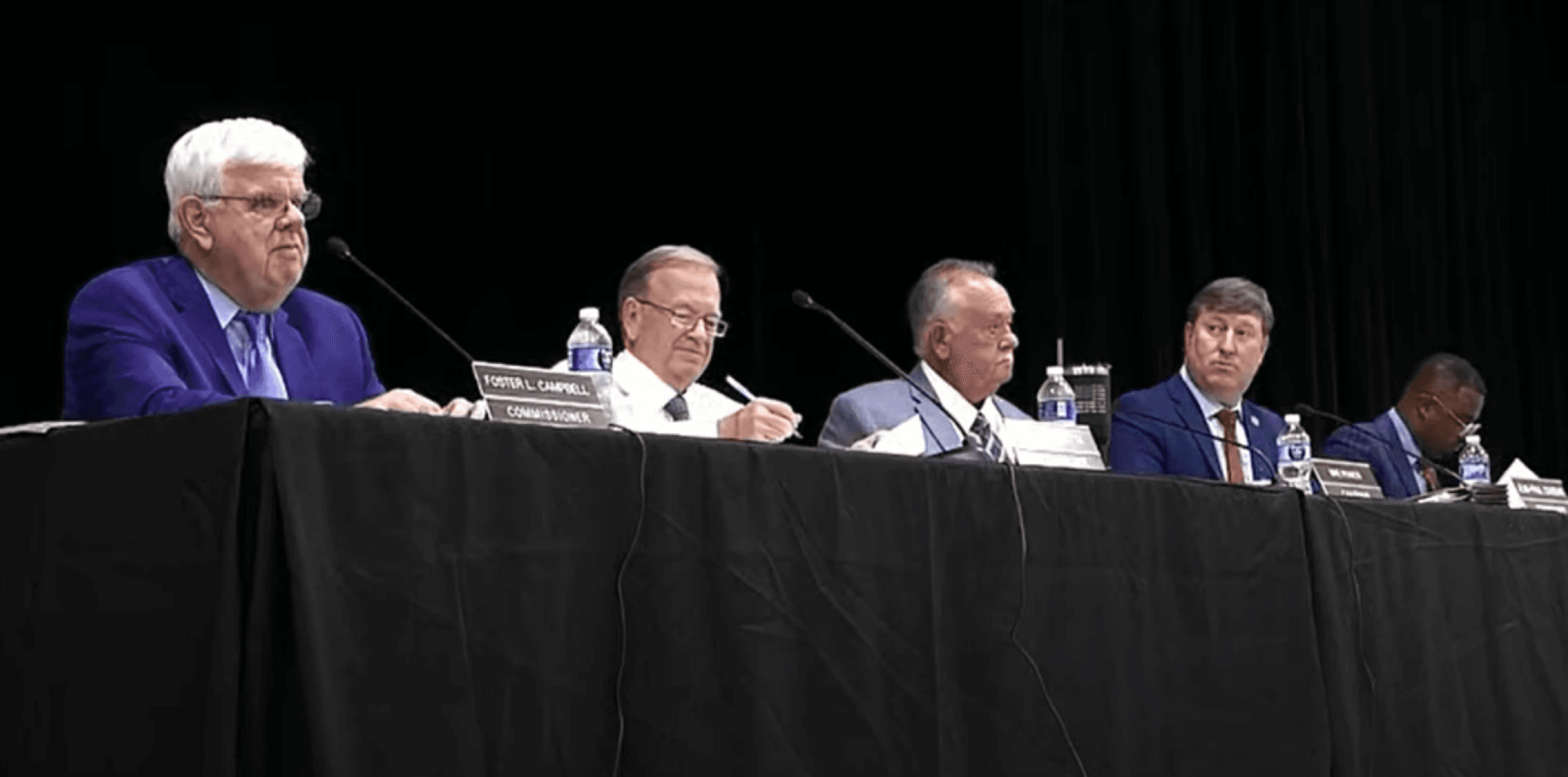
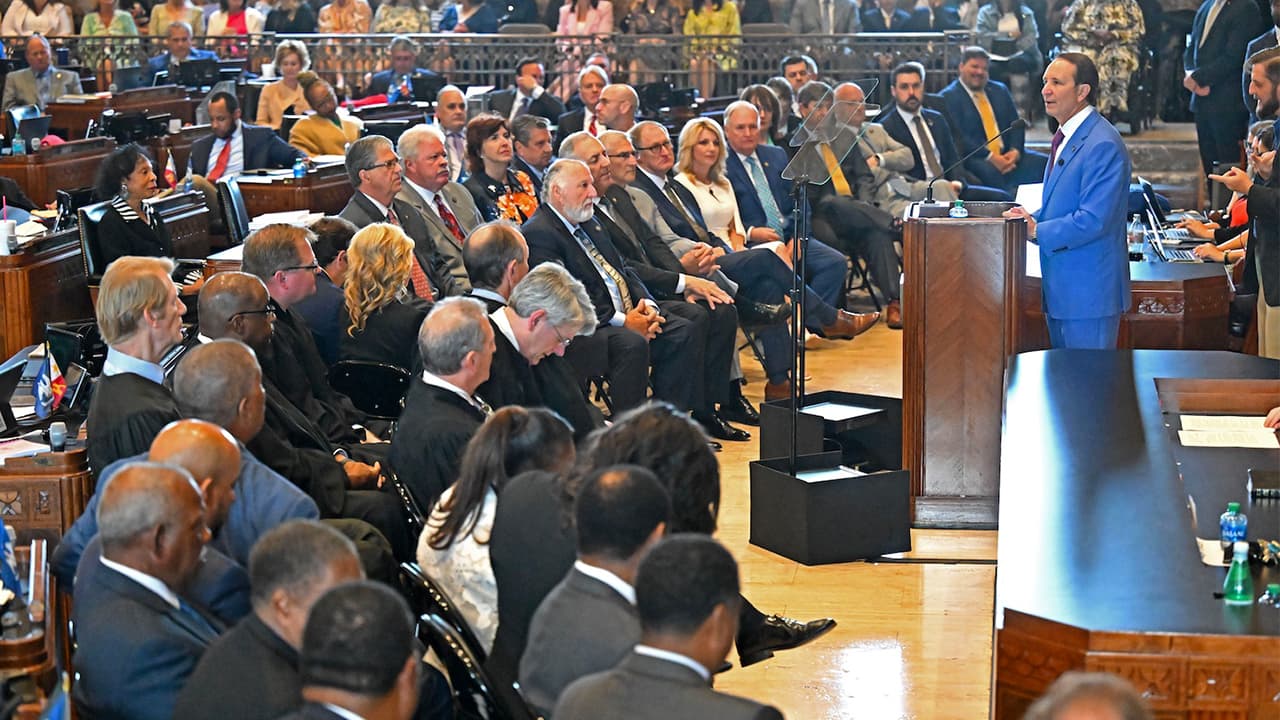
Sen. Royce Duplessis was the only senator to vote against Gov. Jeff Landry’s plan to cut $168 million from the state’s public school funding formula to fund teacher and support staff stipends.
Louisiana lawmakers have approved Gov. Jeff Landry’s plan to cut $168 million from the state’s public school funding formula and redirect the money toward temporary stipends for teachers and school support staff.
The vote gives Landry the political approval he wanted.
It also exposes a deeper problem for Louisiana Democrats.
The proposal was never complicated. Landry asked lawmakers to approve a reduction to the Minimum Foundation Program, or MFP, the formula Louisiana uses to fund public school systems. The money would then be used to provide $2,000 stipends for classroom teachers and $1,000 stipends for eligible support staff.
That gave lawmakers an easy talking point if they voted yes: they supported teacher pay.
But the harder truth was also obvious: the plan paid for those stipends by cutting public school funding.
In the Senate, 37 of 39 members voted for the reduction. The only no vote came from Sen. Royce Duplessis (D-New Orleans). Sen. Katrina Jackson-Andrews (D-Monroe) abstained.
That means Duplessis was the only senator willing to vote against Landry’s proposal outright.
In the House, 76 members voted yes, eight voted no, one abstained and 20 did not vote. The no votes came from Reps. Roy Daryl Adams, Wilford Carter, Kyle Green, Edmond Jordan, Mandie Landry, Delisha Boyd Lyons, Dustin Miller and Neil Riser.
The House opposition was small. The Senate opposition was nearly nonexistent.
That vote count is hard to defend given what lawmakers knew before they cast their ballots.
By the time the vote closed, school boards, administrators, superintendents, teacher organizations and education advocates had already raised alarms about the proposal. A Baton Rouge judge had already temporarily blocked implementation of Landry’s executive order. Plaintiffs had already challenged the plan as an unconstitutional attempt to bypass the normal public process for changing school funding.
Everyone knew what this was.
Landry set a simple political trap: label the plan as teacher pay, dare lawmakers to oppose it, then accuse anyone who voted no of standing between educators and their money.
It was not subtle. It did not require a decoder ring. It was the kind of trap that works only when lawmakers are more afraid of a Republican attack line than they are committed to opposing bad policy.
Most Democrats walked into it anyway.
Duplessis laid out the reason for his no vote in a video statement before the vote closed. He said Landry’s plan would take $168 million from the MFP, which he described as “the money that funds public education K through 12,” including support services and operational costs.
He pointed to the opposition from public school boards, administrators and education leaders, including in Orleans Parish, where he said local officials warned the proposal could hit the district’s budget by roughly $10 million in operational costs.
Duplessis also cited the Louisiana Federation of Teachers’ opposition to the method of funding the stipends, saying teachers deserve the pay raise but “they don’t want it done in this manner.”
His clearest line was also the simplest: “You’re taking public education money from one side of the hallway, if you will, to put it on the other side of the hallway.”
That is the problem with Landry’s plan in one sentence.
It does not create a new investment in public education. It shifts money around inside the same system, lets the state claim credit for helping teachers, then leaves school districts to absorb the operational damage.
Duplessis said the plan would cut the very environment teachers need in order to thrive.
That should not have been a lonely argument inside the Democratic caucus.
Louisiana teachers and support staff deserve better pay. That point should not be in dispute. The state has spent years underpaying educators while asking them to do more with less, and the loss of the stipends would amount to a real pay cut for workers who already deserve more.
But supporting teacher pay does not require supporting a cut to school funding.
Democrats could have made that argument clearly. They could have demanded that Landry call a special session. They could have pushed for the state to fund the stipends directly. They could have forced the governor to explain why the only money he could find for educators had to come from the same public school systems responsible for classrooms, transportation, student services, facilities, technology and support staff.
Instead, most chose the path of least resistance.
The result is that Landry now gets to say lawmakers backed his plan. He gets to say he fought for teacher stipends. He gets to say opponents were trying to block money from educators. And he gets to do all of that after shifting the cost onto local school systems.
That is the political victory Democrats helped hand him.
This is not just about one vote. It speaks to the larger weakness of a Democratic caucus that too often seems unwilling to challenge Republican framing, even when that framing is paper-thin.
Many of these lawmakers represent safe Democratic districts. They are not facing serious Republican threats in general elections. Their political risk is not that conservative voters will suddenly punish them for opposing Jeff Landry. Their risk is that Landry, Republican leaders or conservative media might say something mean about their vote.
That is not a good enough reason to fold on public education.
The core issue here was never whether teachers should receive stipends. They should. The issue was whether lawmakers would allow Landry to fund those stipends by cutting the MFP and dressing it up as a pro-teacher move.
Duplessis said no.
Almost every other senator said yes.
That matters because public education is supposed to be one of the clearest dividing lines in Louisiana politics. Democrats campaign on defending schools, supporting teachers and protecting working families. Those promises mean less when the first hard vote comes along and most of the caucus accepts the governor’s framing without much visible fight.
The court fight is still unresolved. A temporary restraining order remains in place, and a hearing is scheduled for Monday. The legal questions include whether Landry exceeded his authority, whether the plan infringes on BESE’s constitutional role in developing the MFP, and whether the Legislature can approve such a major funding shift through a post-session electronic ballot without the normal deliberative process.
But the political verdict is already clearer.
Landry created a bad choice and dared lawmakers to take the easy way out.
Most did.
And if Democratic lawmakers cannot bring themselves to oppose a public school funding cut when teachers, school boards and education advocates are warning against it, voters have every right to ask what they are actually willing to fight for.