
















Gov. Jeff Landry has signed Louisiana’s newest congressional map into law, locking in another dramatic rewrite of the state’s U.S. House districts after years of litigation, court orders, legislative reversals and voter confusion.
Under the newly signed law, Louisiana Republicans have likely drawn themselves a 5-1 congressional map unless courts intervene quickly.
That intervention is expected to be requested. More litigation is not just possible; it is the most predictable part of this entire process. Democrats and voting rights advocates argue the map dilutes Black voting strength and dresses racial gerrymandering up as partisan gerrymandering. Republicans, including SB 121 sponsor Sen. Jay Morris, have argued the opposite: that the map was drawn around party performance, not race. Morris told lawmakers he “purposely put more Democrats into District 2” to make the remaining districts perform better for Republicans.
But for many Democrats, voting rights advocates and civic leaders, the legal argument and the political reality are moving on different tracks. They may believe the map and the process are plainly wrong. They may believe the Legislature invited another round of litigation. They may even believe the map is illegal. But after the U.S. Supreme Court struck down Louisiana’s previous map with two majority-Black districts, and after years of courts narrowing the available paths for voting rights plaintiffs, there is a growing sense that SB 121 may still be the map voters see in November.
What Has Changed?
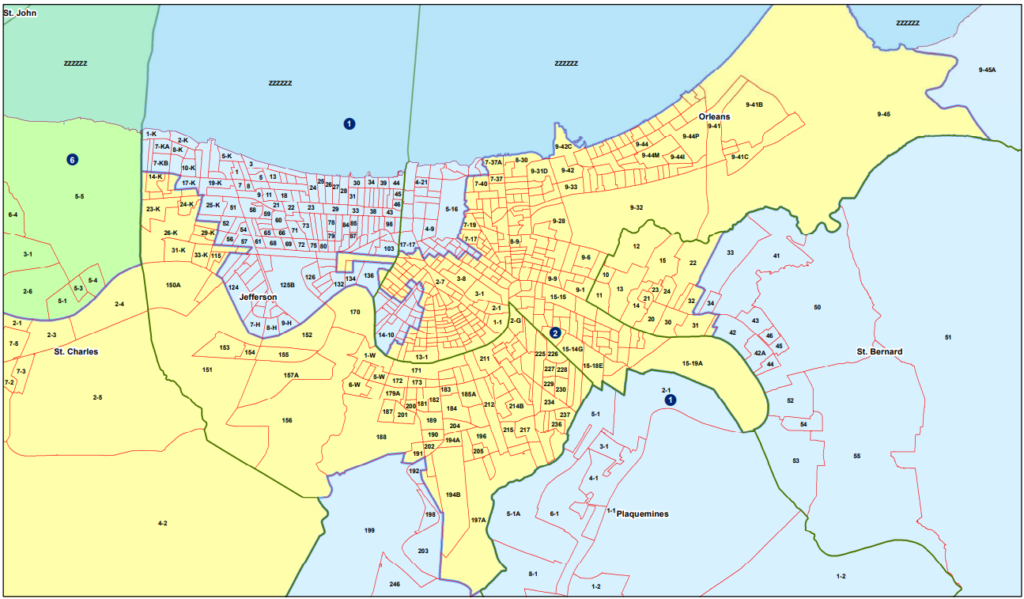
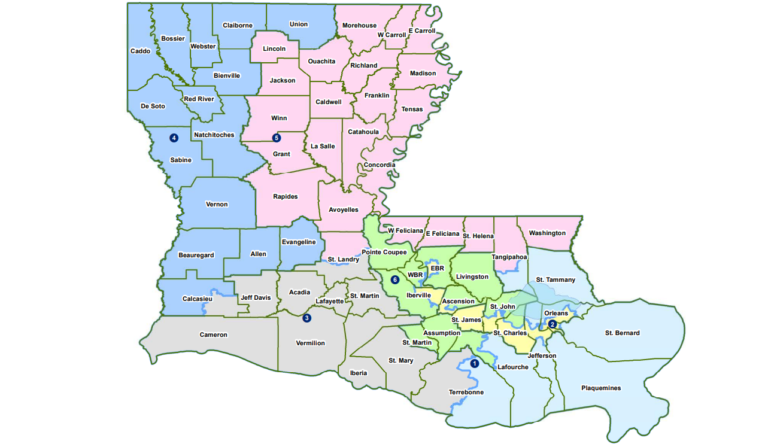
The new map keeps Louisiana’s 2nd Congressional District as the state’s lone majority-Black district. That district remains anchored in New Orleans but now also takes in parts of East Baton Rouge Parish, along with portions of Ascension, Iberville, Jefferson, Orleans, St. Bernard, St. Charles, St. John the Baptist and West Baton Rouge parishes, plus all of St. James Parish.
The map is designed to help Republicans pick up a seat and likely gives the GOP a 5-1 advantage in Louisiana’s congressional delegation. It eliminates the second majority-Black district created in 2024, the Baton Rouge-based district represented by Congressman Cleo Fields.
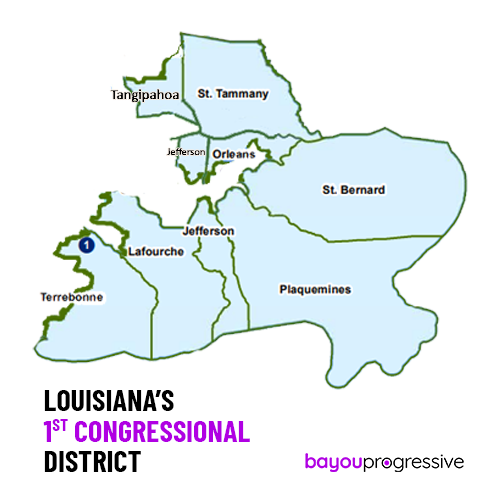
The new 1st District remains a southeast Louisiana district built around St. Tammany and Plaquemines, with pieces of Jefferson, Lafourche, Orleans, St. Bernard, Tangipahoa and Terrebonne parishes. That district continues to function as a heavily Republican seat centered around the Northshore and surrounding coastal parishes.
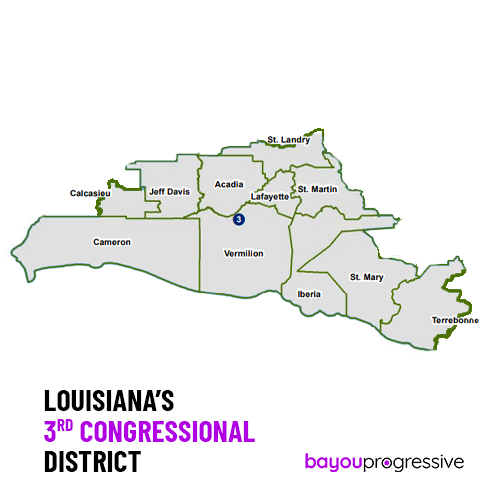
The 3rd District remains largely Acadiana and southwest Louisiana, including Acadia, Cameron, Iberia, Jefferson Davis, Lafayette, St. Mary and Vermilion parishes, along with portions of Calcasieu, St. Landry, St. Martin and Terrebonne parishes.
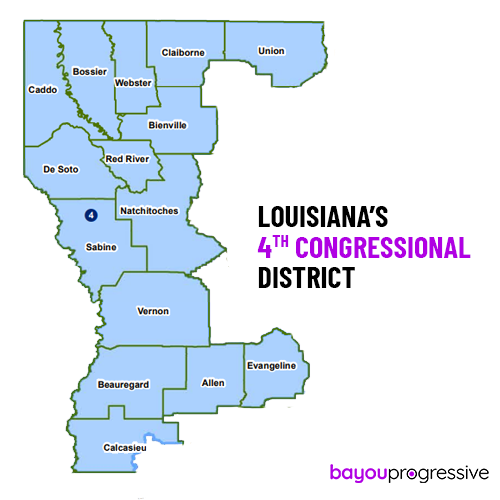
The 4th District remains northwestern Louisiana-centered, including Allen, Beauregard, Bienville, Bossier, Caddo, Claiborne, De Soto, Evangeline, Natchitoches, Red River, Sabine, Union, Vernon and Webster parishes, along with part of Calcasieu Parish.
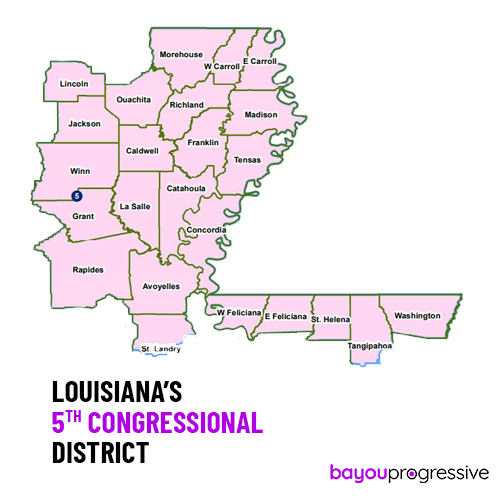
The 5th District is a sprawling north, central and northeastern Louisiana district. It includes Avoyelles, Caldwell, Catahoula, Concordia, East Carroll, East Feliciana, Franklin, Grant, Jackson, La Salle, Lincoln, Madison, Morehouse, Ouachita, Rapides, Richland, St. Helena, Tensas, Washington, West Carroll, West Feliciana and Winn parishes, along with portions of St. Landry and Tangipahoa parishes.
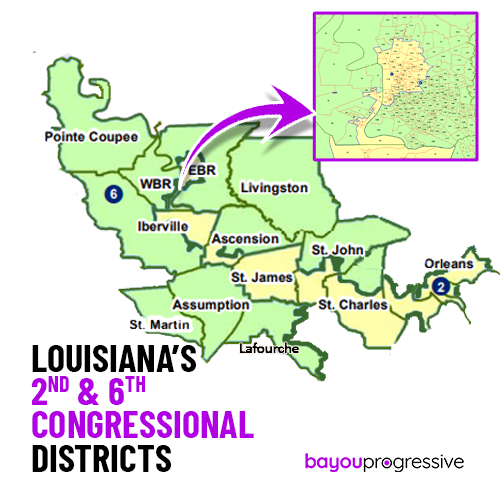
The new 6th District is where much of the political damage lands for Democrats. It includes parts of Ascension, East Baton Rouge, Iberville, Lafourche, St. Charles, St. John the Baptist, St. Martin and West Baton Rouge parishes, along with all of Assumption, Livingston and Pointe Coupee parishes. The new map redraws Fields’ district by clustering it around predominantly white communities in the Baton Rouge area and southern Louisiana, while moving part of Baton Rouge into the New Orleans-based 2nd District.
That is the basic architecture of the new map: District 2 absorbs enough Black voters to remain the state’s lone majority-Black seat, while the rest of the state is divided in a way that gives Republicans a strong chance to win five of six congressional districts.
Republicans are not hiding the partisan purpose. They are denying a racial one. That distinction matters legally, but it lands differently in a state where Black voters are disproportionately Democratic and where previous litigation centered on whether Louisiana’s congressional lines diluted Black voting power. Democratic lawmakers criticized the map as an effort to disenfranchise Black voters, while Republicans argued the lines were drawn solely based on partisanship, not race.
That is the needle Republicans are trying to thread: claim the Constitution allows aggressive partisan gerrymandering, while insisting the map does not violate the Constitution’s limits on racial gerrymandering or the Voting Rights Act’s protections against vote dilution.
What’s Next?
Democrats and civil rights groups are expected to challenge that framing. More lawsuits are expected, and the ACLU of Louisiana suggested it could sue, calling the map a “racial gerrymander hiding behind the thin veneer of partisanship.” And that litigation is likely from both sides, including conservative plaintiffs who object to the map preserving even one majority-Black district and members of the Louisiana Legislative Black Caucus exploring litigation from the opposite direction.
That means Louisiana may now face lawsuits arguing completely opposite theories: one side saying the map still relies too much on race because it keeps a majority-Black district, and another side saying the map illegally dilutes Black voting strength by eliminating the second one.
And that, more than anything, captures the absurdity of where Louisiana’s redistricting fight has landed.
A lawsuit could eventually succeed. A court could decide SB 121 violates federal law or the Constitution. A future map could look different. But the practical question for 2026 is narrower and more urgent: will any court actually block this map before voters go to the polls in November?
Right now, many Democrats and civic leaders are not betting on it.
They see a federal judiciary that has grown increasingly hostile to expansive Voting Rights Act claims. They see a Supreme Court that already struck down Louisiana’s previous two-majority-Black-district map. They see a compressed election calendar. And they see a Republican Legislature and governor who moved with remarkable speed once they had the opening.
That does not make SB 121 legally bulletproof. It does mean the political system is now moving as if it will be the law of the land in November.
For Louisiana voters, the immediate takeaway is simple: the congressional map has changed again, the lawsuits are coming, and the election calendar has shifted. But unless a court steps in quickly, the districts Landry just signed into law are the districts that will shape Louisiana’s 2026 congressional elections.