













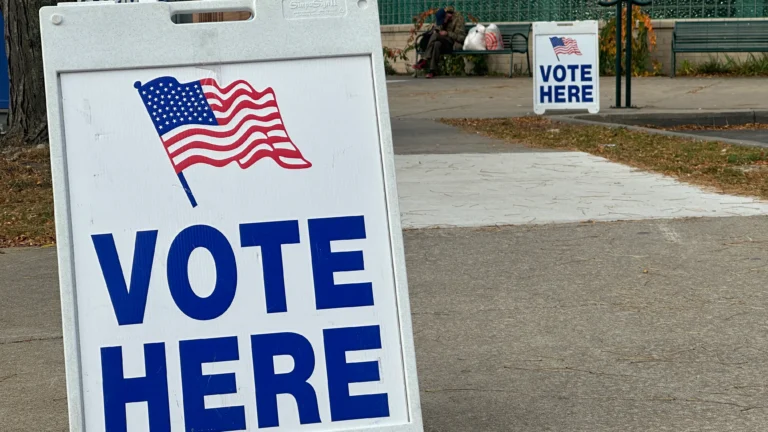
Louisiana Gov. Jeff Landry has suspended the state’s May 16 U.S. House primaries days before early voting was set to begin, throwing the congressional elections into chaos after absentee and mail-in ballots had already gone out and some voters had already cast ballots.
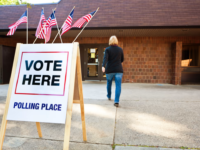
The order applies only to Louisiana’s U.S. House races. Other contests scheduled for May 16, including statewide and local races, are set to continue. But according to Secretary of State Nancy Landry, the congressional races will still appear on ballots — and votes cast in those races “will not be counted.”
That is the central fact in this story. Louisiana is not simply delaying an election before it begins. The state is telling voters that congressional races may remain on their ballots, but any votes they cast in those races will be discarded.
Early voting was scheduled to begin Saturday, May 2. The primary was scheduled for May 16. The suspension came one day after the U.S. Supreme Court struck down Louisiana’s current congressional map in Louisiana v. Callais, a 6-3 decision that invalidated the state’s second majority-Black congressional district and narrowed how Section 2 of the Voting Rights Act can be used in redistricting cases.
Landry and Attorney General Liz Murrill said Thursday that the state had no choice because the Supreme Court’s decision automatically ended a stay that had allowed Louisiana to use the current map.
“Yesterday’s historic Supreme Court victory for Louisiana has an immediate consequence for the State,” Landry and Murrill said in a joint statement. “The Supreme Court previously stayed an injunction against the State’s enforcement of the current Congressional map. By the Court’s order, however, that stay automatically terminated with yesterday’s decision. Accordingly, the State is currently enjoined from carrying out congressional elections under the current map. We are working together with the Legislature and the Secretary of State’s office to develop a path forward.”
That is the state’s legal position. But the practical effect is not ambiguous: Louisiana has stopped voters from participating in U.S. House elections that were already functionally underway.
The governor’s office said the executive order followed a certification from the Secretary of State that an electoral emergency exists under Louisiana law. The governor’s official release says the suspended elections are the closed party primaries for U.S. Representative, previously set for May 16, and the second primaries, previously set for June 27.
The law cited by state officials is meant to address election emergencies. The emergency being claimed here is not that voters cannot safely cast ballots. It is not a hurricane, a collapsed voting system, a public safety crisis or a failure of election infrastructure. The “emergency” is that Republicans received a favorable Supreme Court ruling days before voting began and now want time to redraw the map before voters choose congressional nominees.
That distinction matters.
U.S. Rep. Cleo Fields, whose 6th Congressional District is directly threatened by the ruling, said halting the election would disenfranchise voters who already participated.
“I am aware of the Governor’s efforts to halt the upcoming primaries,” Fields said in a statement to Louisiana First News. “This is an unwise stance for Louisiana to take. Interrupting the will of the voters would be contrary to established precedent — including Purcell — and would invalidate votes already cast. Louisianans who have already submitted their ballots deserve to have their voices heard. Halting this election would be nothing short of disenfranchising the very constituents we are sworn to serve.”
Fields’ reference to Purcell points to the long-standing principle that courts should avoid changing election rules too close to an election because late changes risk voter confusion and disruption. Louisiana is now attempting a far more dramatic late change than shifting a deadline or polling place rule. It is stopping congressional primaries days before early voting and telling voters that any congressional votes already cast will not count.
The Supreme Court’s Callais ruling struck down SB 8, the map Louisiana adopted after a lower court found the state’s previous map likely violated the Voting Rights Act. SB 8 created a second majority-Black district, stretching from parts of the Baton Rouge region through Lafayette and up toward Shreveport. The Supreme Court’s conservative majority held that Louisiana did not need to create that district to comply with Section 2 of the Voting Rights Act.
That ruling gave Louisiana Republicans the opportunity to redraw the map again. Landry’s order gives them the time.
The likely target is Fields’ district. If Republican lawmakers dismantle or weaken the 6th District, Louisiana could return to a congressional map with five Republican-leaning seats and only one majority-Black district, the New Orleans-based 2nd District represented by Congressman Troy Carter.
Landry framed the suspension as necessary to protect election integrity.
“The best way to end race-based discrimination is to stop making decisions based on race,” Landry said in the governor’s official announcement. “Allowing elections to proceed under an unconstitutional map would undermine the integrity of our system and violate the rights of our voters.”
But that framing leaves out the voters already caught in the middle. The state allowed the election process to move forward under this map. Candidates qualified. Ballots were prepared. Ballots were mailed. Voters began returning them. Then, after the Court ruling, the state moved to stop the congressional primaries and refuse to count congressional votes.
A government cannot protect voter integrity by inviting voters to cast ballots it has already decided to throw away.
Louisiana Democratic Party Executive Director Dadrius Lanus criticized the governor’s reversal, saying Republicans should “put Louisiana first and hold the Governor accountable.”
“First, he said he’ll let the legislature decide but now he’s calling for no primaries 3 days before early voting starts,” Lanus said. “Waste of taxpayer money again!”
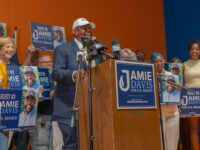
The political outrage was already visible Thursday night in Monroe, where Democratic Senate, congressional and Public Service Commission candidates gathered at the Harvey H. Benoit Community Center for the latest stop of the “To The People, For The People” Democratic Roadshow.
Melissa Flournoy, board chair of 10,000 Women Louisiana, said the roadshow would continue because “voters have a right to free and fair elections, regardless of what Jeff Landry has to say.”
Nick Albares, a Democratic candidate for U.S. Senate, called the Supreme Court ruling and Landry’s response “an anti-democratic power move” aimed at disenfranchising voters and taking away Black representation.
“This election that’s happening on May 16, it’s not just happening on May 16. It’s already happening,” Albares said. “People have submitted ballots, mail-in, early voting starts May 2. This is voter suppression.”
Gary Crockett, another Democratic Senate candidate, urged voters not to stop at outrage.
“I see a lot of speeches. I hear a lot of rhetoric, but my question is this, what are you going to do about it?” Crockett said, calling on voters to organize, bring neighbors and family to the polls, and rebuild Democratic power.
Jamie Davis, the Louisiana Democratic Party-endorsed Senate candidate, warned that the ruling could ripple far beyond Louisiana.
“This is not just Louisiana,” Davis said. “It can look like this over the whole United States.”
Congressional candidates were even more directly affected.
Conrad Cable, a Democrat running in Louisiana’s 4th Congressional District against Speaker Mike Johnson, opened his remarks by saying the moment was bigger than any one campaign.
“Today was a tough day, not just for our candidates, not just for you as the voters, but for our democracy,” Cable said. He called the suspension “an absolute authoritarian power grab” and said candidates had stepped forward under the guarantee of a May 16 election.
Lindseay “Rubia” Garcia, a Democratic candidate in the 5th Congressional District, told the Monroe audience that she had already filed a federal lawsuit seeking a preliminary injunction to protect the election.
“It’s not about what I would do,” Garcia said. “It’s about what I already did this morning.”
Jessee Fleenor, another 5th District candidate, warned that the ruling could produce “the biggest drop in minority representation” in the country and questioned what would stop Republican lawmakers from targeting Carter’s district next.
Southern University political science professor Albert Samuels summarized the contradiction in comments to Louisiana First News.
“The Supreme Court basically said that gerrymandering, if it benefits white Republicans, is perfectly legal,” Samuels said. “If gerrymandering helps Black Democrats, it’s unconstitutional.”
That is the heart of the fight.
Louisiana Republicans have tolerated bizarre and self-serving district lines for decades when those lines protected incumbents and preserved Republican power. But when a map created a second district where Black voters could elect their preferred candidate, the state’s Republican leadership treated it as an emergency.
Now that legal emergency has become an election emergency.
The contrast with Georgia is notable. Republican Gov. Brian Kemp, who praised the Supreme Court’s ruling, said Georgia would not adopt new maps before the 2026 elections because voting was already underway. “Voting is already underway for the 2026 elections, but it’s clear that Callais requires Georgia to adopt new electoral maps before the 2028 election cycle,” Kemp said.
Louisiana chose the opposite path.
Rather than let voters finish an election already in progress and redraw later, Landry and Murrill are moving now. Rather than avoid confusion, the state is creating it. Rather than protect votes already cast, the state is saying congressional votes will not count.
That is not a neutral administrative consequence of the Supreme Court’s ruling. It is a political choice layered on top of a legal one.
The Court’s decision did not require Louisiana to leave congressional races on the ballot while discarding votes. It did not require the state to create a last-minute election emergency days before early voting. It did not require the state to rush into a mid-election redraw before voters could participate under the rules in place when the election began.
State officials may argue the current map cannot be used. But that does not erase the basic democratic problem: Louisiana let voters begin participating in an election and is now telling them the congressional part of that election will not count.
That is disenfranchisement.
The next fight will likely move quickly through the courts, where Fields, candidates and voting rights advocates are expected to challenge the suspension and the handling of ballots already cast. The Legislature is also expected to move toward a new congressional map, with Fields’ district at the center of the fight.
For now, voters are left with the immediate damage: confusion, uncertainty and the knowledge that the state may place congressional races in front of them while refusing to count their choices.