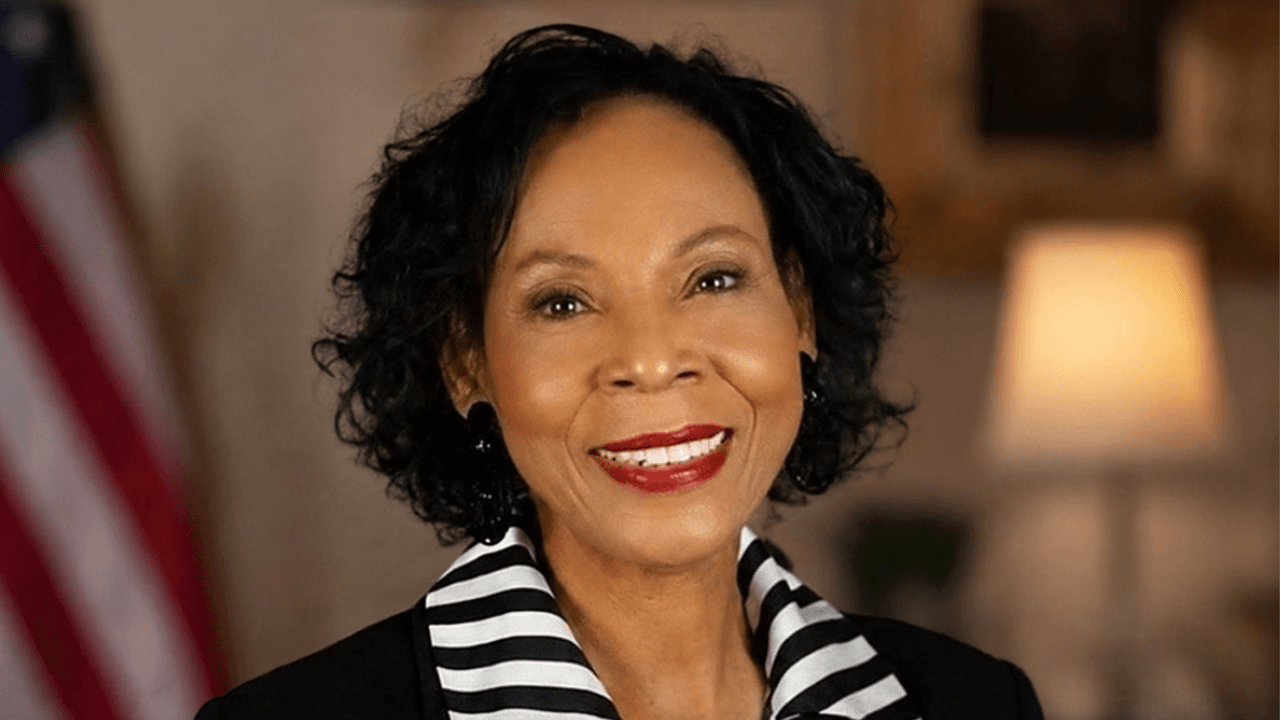
Democratic state Rep. Patricia “Pat” Moore emerged from a crowded nine-candidate field Tuesday to finish first in Louisiana’s 5th Congressional District election, securing an unexpected place in the December 12 runoff against Republican state Rep. Gabe Firment and presenting Louisiana Democrats with a political opportunity complicated by divisions within their own party.
Moore, a Monroe legislator whose opposition to abortion rights placed her at odds with much of the Democratic Party’s activist base, received 40,789 votes, or approximately 18%, according to unofficial election results. Firment, a conservative Republican from Grant Parish, finished second with 39,131 votes, or 17%. The two candidates were separated by just 1,658 votes.
Their advancement came at the expense of several better-funded Republican candidates, including Gov. Jeff Landry‘s preferred candidate, Misti Cordell, and state Rep. Michael Echols, who led the field in fundraising.
But Moore’s victory also produced an unusual situation for Louisiana Democrats: the party’s own endorsed candidate, Antonio Wilson, finished sixth with 27,364 votes, or 12%, after an internal endorsement controversy that had previously seen party leaders publicly back Moore before reversing course.
As election results came in Tuesday, Democrats who had supported Wilson found themselves confronting the prospect of rallying behind a candidate whose positions on abortion and other social issues had been a source of considerable friction within the party.
By the end of the night, however, conversations among Democratic officials and activists increasingly reflected a willingness to set aside those differences in pursuit of a congressional seat that few had expected the party to seriously contest.
The development comes alongside another unexpected Democratic showing in Louisiana’s newly configured 6th Congressional District, where former Baton Rouge Metro Council member Chauna Banks finished first and advanced to a runoff against Republican state Sen. Blake Miguez. Banks, like Moore, also defeated her party’s preferred choice, Lindsay “Rubia” Garcia.
Together, the results place two Black Democratic women in competitive congressional runoff contests following a contentious redistricting process that eliminated one of Louisiana’s two majority-Black congressional districts.
An endorsement controversy comes full circle
Moore’s advancement brings renewed attention to one of the more confusing episodes in the Louisiana Democratic Party’s 2026 election cycle.
In August, the Democratic State Central Committee initially announced that it had endorsed Moore for the 5th District seat, choosing the sitting legislator over Wilson, a Tallulah businessman, and Bunkie attorney Dan McKay.
But party officials subsequently reversed the endorsement, explaining that an error had occurred in determining whether Moore received the majority required under party rules.
State Democratic Party Chairman Randal Gaines explained the reversal in October, saying party officials initially believed Moore had secured the necessary majority before realizing that several committee members had voted against endorsing any candidate.
While Moore received the most votes, she had not won an outright majority. Party officials subsequently conducted another vote, this time between Moore and Wilson, with Wilson emerging as the endorsed candidate.
The process produced confusion and frustration among some committee members, who complained that instructions had not been sufficiently clear. It also exposed ideological disagreements within the party over the type of candidate Democrats should support in a district with a substantial Republican advantage.
Wilson, who also secured support from the Young Democrats of Louisiana, was particularly popular among younger activists and party members seeking candidates more closely aligned with the national Democratic platform.
Moore represented a different tradition within Louisiana Democratic politics: a socially conservative Black Democrat with an established record in local government and the state Legislature, accustomed to working across party lines.
The endorsement controversy was not merely procedural. For some Democrats, Moore’s record on reproductive rights and LGBTQ issues raised fundamental questions about whether she should receive the party’s institutional backing.
Moore, for her part, questioned the significance of the endorsement after the reversal.
In remarks reported by KNOE, Moore emphasized that the congressional election would ultimately be decided by voters rather than party committee members.
Tuesday’s results vindicated her argument in at least one respect: Moore finished more than 13,000 votes ahead of Wilson and advanced to the runoff without the state party’s official endorsement.
Abortion remains a dividing line
The disagreements surrounding Moore’s candidacy are rooted partly in her record as a state legislator.
Moore has consistently identified as pro-life and opposed legislation creating exceptions to Louisiana’s abortion ban for pregnancies resulting from rape or incest. She has also supported legislation restricting transgender participation in school sports.
Those positions place her outside the mainstream of the national Democratic Party and have generated opposition among Louisiana progressives, particularly younger activists who view reproductive freedom and LGBTQ protections as foundational political commitments.
Moore has publicly explained that her views on abortion are shaped by her personal history. She was conceived after her mother, then 14, was raped, and has described that experience as central to her opposition to abortion exceptions for rape and incest.
At the same time, Moore has criticized Republicans for what she considers an inconsistent commitment to protecting children and families, arguing that opposition to abortion should be accompanied by support for health care, nutrition assistance and other social programs.
That combination of positions has made her a complicated figure within a Democratic Party whose statewide coalition includes both progressive voters and more socially conservative constituencies.
Those tensions remained evident on election night, when some Democrats continued expressing frustration over Moore’s abortion position even as her path to the runoff became clear.
Progressive activists warned that the issue could dampen enthusiasm among voters who would otherwise support a Democratic nominee, particularly after a primary in which the party’s official backing had gone to a candidate more closely identified with its activist wing.
But other Democrats increasingly viewed Moore’s advancement through a different political lens.
Her socially conservative record, they argued, could provide an opening to voters who might reject a more conventionally progressive Democrat, particularly in the heavily Republican portions of North and Central Louisiana that make up much of the district.
The competing arguments reflect a longstanding tension in Louisiana Democratic politics: whether the party’s path back to statewide and congressional competitiveness depends primarily on mobilizing its existing base or building broader coalitions that include voters who disagree with the national party on social issues.
The Katrina Jackson comparison
For some Democratic officials, the argument for Moore’s potential crossover appeal is familiar.
State Sen. Katrina Jackson, another Black Democratic legislator from Monroe, has long occupied a similar space within Louisiana politics. A staunch opponent of abortion rights who has championed some of the state’s most restrictive abortion legislation, Jackson has frequently broken with national Democrats on reproductive rights while maintaining support within her predominantly Democratic legislative constituency.
Her conservative social positions have made her controversial among progressive Democrats, but they have also made her a figure of interest to party strategists seeking candidates who might appeal beyond the traditional Democratic electorate.
Earlier in 2026, Jackson’s name circulated among Democratic leaders as a possible candidate for either the U.S. Senate or the 5th Congressional District, with some viewing her political profile as potentially useful in reaching socially conservative voters.
Moore’s emergence presents a similar strategic question.
Like Jackson, she has cultivated relationships across ideological and partisan lines while retaining a Democratic identity rooted in support for public services, community investment and policies intended to assist lower-income families.
There are important differences between the two legislators, and their political appeal cannot simply be treated as interchangeable. But the comparison helps explain why some party leaders believe Moore’s positions, while unpopular with segments of the Democratic base, could carry advantages in a general-election contest.
Whether those positions actually translate into votes from Republicans or independents remains an open question. Her November showing demonstrates that she can attract support in a crowded field, but the December runoff will present a substantially different electorate and a direct choice between two candidates.
Republicans still hold a substantial numerical advantage
Moore’s first-place finish was significant, but the broader election results illustrate the challenges awaiting her campaign.
The six Republican candidates collectively received 143,717 votes, approximately 63% of ballots cast in the district. Moore, Wilson and McKay, the three Democrats, combined for 84,200 votes, or roughly 37%.
The Republican field was particularly crowded with experienced and well-funded candidates competing for overlapping constituencies.
Cordell, a member of the Louisiana Board of Regents endorsed by Landry, finished third with 33,366 votes, or approximately 15%. Echols followed with 32,902 votes, or 14%, despite raising approximately $3.9 million and spending more than $2 million on his campaign.
Republican state Sen. Stewart Cathey Jr. received 28,160 votes, or approximately 12%, while two additional Republican candidates accounted for the remaining GOP vote.
Firment, who represents House District 22, advanced despite competing against Republicans with considerably larger campaign budgets.
First elected to the Legislature in 2019, Firment chairs the House Insurance Committee and has built a record around conservative social policies and insurance-related legislation. In 2023, he sponsored legislation banning gender-affirming medical care for transgender minors, which lawmakers enacted over the veto of then-Gov. John Bel Edwards.
Moore, who represents House District 17, was also first elected to the Legislature in 2019 after previously serving 12 years on the Ouachita Parish Police Jury.
The two candidates therefore enter the runoff with established legislative records, although their political priorities and approaches to governing differ substantially.
The Republican vote advantage in Tuesday’s results does not establish how the December electorate will behave, but it does underscore the considerable ground Democrats would need to gain in a head-to-head contest.
Two runoff opportunities, one larger political question
The 5th District runoff is unfolding against the backdrop of Louisiana’s latest congressional redistricting battle.
Following the U.S. Supreme Court’s decision in Louisiana v. Callais, the Republican-controlled Legislature adopted a new congressional map that eliminated the majority-Black 6th District represented by Democrat Cleo Fields, reshaping the state’s congressional landscape in ways favorable to Republicans.
The 5th District, which had been represented by Republican Julia Letlow, remained Republican-leaning under the new boundaries. Letlow’s decision to pursue the U.S. Senate seat created an open congressional contest.
The 6th District, meanwhile, became substantially more Republican after lawmakers dismantled the configuration that had enabled Fields to win in 2024.
Yet Tuesday’s results produced Democratic first-place finishes in both districts, with Banks advancing in the 6th and Moore in the 5th.
Both women have substantial experience in public office. Banks previously represented a district on the East Baton Rouge Metro Council, while Moore remains a sitting member of the Louisiana House after more than a decade of service in parish government.
Their advancement is particularly notable given the racial representation questions that have dominated Louisiana’s congressional redistricting disputes for years.
Neither runoff result guarantees a Democratic victory, and the combined Republican vote in both districts demonstrates why the contests remain difficult for Democrats. But their advancement provides the party with two additional opportunities to compete for congressional representation beyond the state’s heavily Democratic 2nd District.
For Louisiana Democrats, that development is already influencing discussions about political strategy and party unity.
A test of Democratic unity
Moore’s immediate challenge extends beyond Firment.
After months of internal disagreement over the party endorsement and her record on social issues, she must now seek support from the same Democratic activists and organizations that opposed her candidacy during the November election.
The combined votes received by Wilson and McKay exceeded Moore’s own total. Whether their supporters consolidate behind her, and whether she can attract additional voters beyond the Democratic electorate, will be important questions in the runoff.
By Tuesday night, however, a growing sentiment among Democratic leaders was that the opportunity to contest two Republican-leaning congressional districts outweighed the divisions that had characterized parts of the primary campaign.
For some, Moore’s positions on abortion remain a serious obstacle to enthusiasm. For others, those same positions are part of the reason she warrants consideration as a potential crossover candidate.
The next five weeks will provide an opportunity to test both arguments.
The December 12 contest will also determine whether Republicans retain the congressional seat Letlow is vacating as she moves to the U.S. Senate.
Moore’s advancement does not resolve the broader ideological disagreements within the Louisiana Democratic Party. But it has shifted the immediate political calculation from which Democrat the party should endorse to whether its competing factions can unite behind the Democrat voters placed in the runoff.
And after an election night that produced two unexpected Democratic congressional opportunities, that question has taken on greater significance than party leaders might have anticipated just days earlier.