
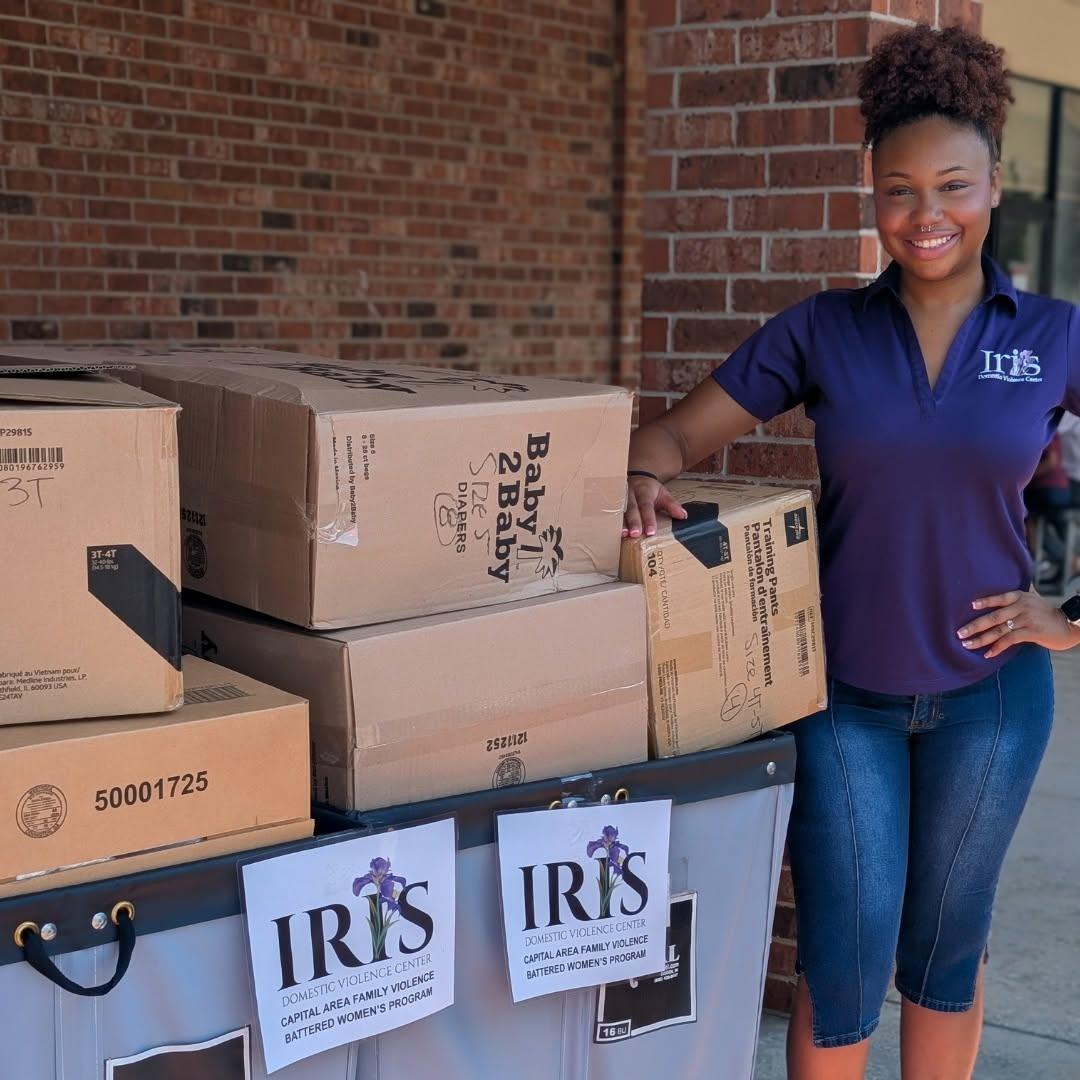
When Patti Joy Freeman took over as executive director of Iris Domestic Violence Center in July 2022, she brought nearly three decades of law enforcement experience, including years spent investigating violent crimes against children and domestic violence.
She understood firsthand what happens when people are trapped in abusive relationships, particularly when they lack the financial resources, transportation or family support necessary to leave. She also understood that helping someone escape an abusive situation is often only the beginning of a much longer process.
Over the past four years, Freeman has worked to transform Iris from an organization primarily associated with emergency shelter into a comprehensive resource center for survivors and their families. Today, its 47,000-square-foot facility offers emergency shelter, extended transitional housing, legal representation, counseling, children’s programming and a host of other services intended to help survivors rebuild their lives.
But as Iris has expanded its services, its financial support from the City-Parish government has moved in the opposite direction.
Under Mayor-President Sid Edwards‘ proposed 2027 budget, the organization would receive no local funding through the outside-agency allocation that has supported its operations for years.
For an organization whose origins date to 1979, when state and local officials helped establish one of the area’s first shelters for battered women, the proposed elimination marks a potentially significant turning point in its relationship with local government.
Freeman says Iris is financially stable and will continue operating. But she acknowledges that the loss of $155,750 in City-Parish funding could force the organization to reconsider staffing levels and reduce resources available to people seeking help.
“It won’t break us,” Freeman told The Bayou Progressive in an interview. “It will diminish programs and resources.”
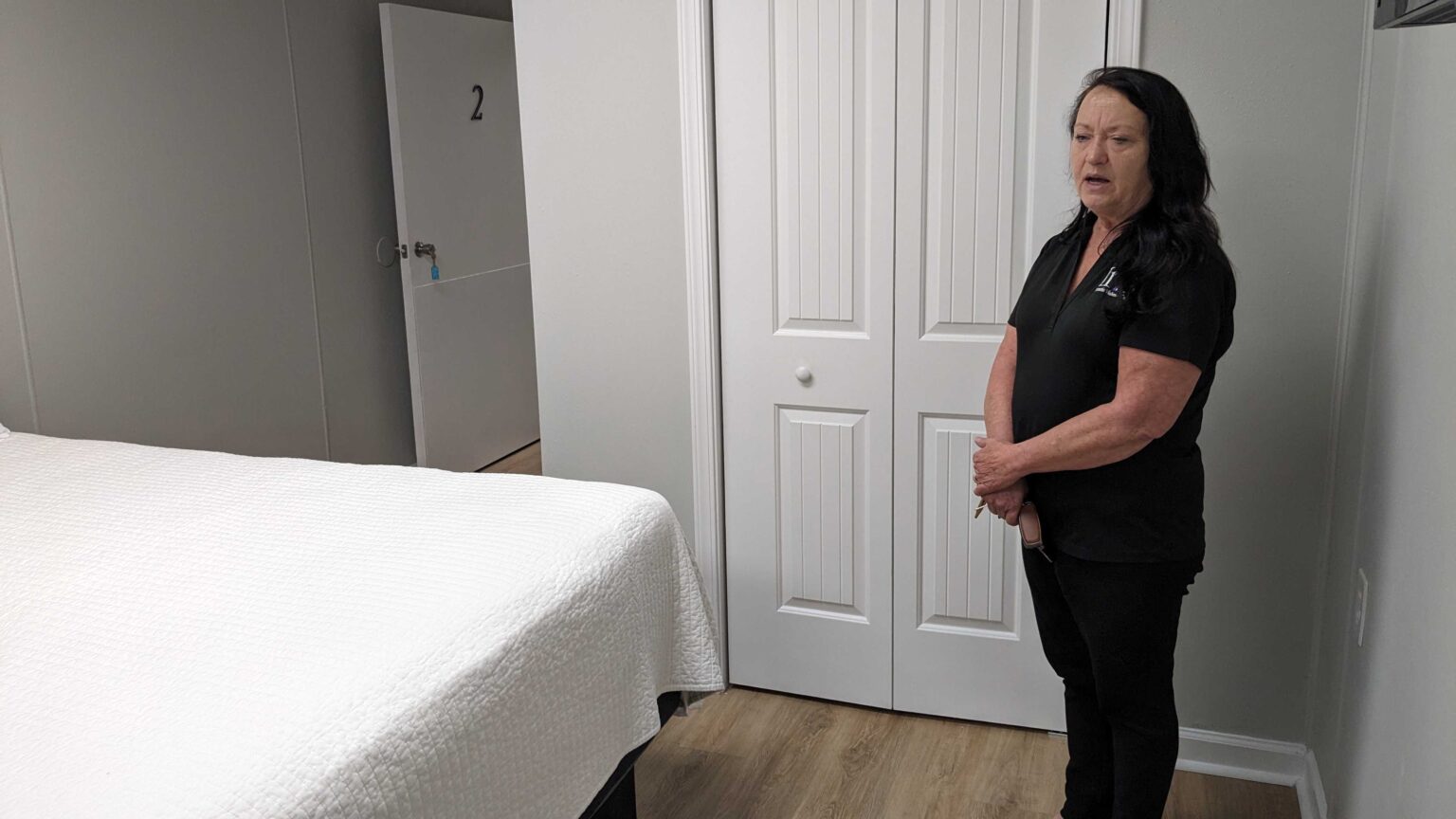
More than a place to escape
Iris began as the Battered Women’s Program in 1979, responding to what Freeman describes as a recognition by state officials that women experiencing domestic violence had few reliable places to turn for assistance.
Nearly five decades later, the organization’s services bear little resemblance to the limited emergency shelter model of its early years.
Iris now operates a facility capable of housing approximately 175 people, including an emergency shelter wing and transitional housing that allows families to remain in a supportive environment for an additional six to 12 months.
That extended housing is particularly important, Freeman explained, because the relatively short stays typically offered by emergency shelters often aren’t enough for survivors to establish the financial independence and stability necessary to avoid returning to abusive relationships.
The organization also assists eligible clients with applications for federal rapid rehousing programs, which can help families transition into permanent housing.
Its legal department provides free assistance with protective orders and works with partner organizations to connect survivors with representation involving divorce, child custody and property disputes.
For children exposed to violence, Iris has developed specialized programming that includes counseling, tutoring, recreational activities, educational resources and age-appropriate spaces within its facility.
The organization also operates a pet-friendly shelter, recognizing that some survivors delay leaving abusive situations because they have nowhere safe to take their animals.
Other services include transportation to work, school, medical appointments and court appearances; employment assistance; emergency financial support; medical care through community partnerships; and assistance replacing identification and other documents that may be left behind when someone flees.
The organization serves women, men and children, including victims of sexual assault and human trafficking.
Freeman estimates that Iris serves approximately 4,500 to 5,000 people annually across its regional service area, with roughly 80% to 85% of clients coming from East Baton Rouge Parish.
Much of the organization’s recent growth, she said, has been driven by identifying the obstacles that prevent survivors from leaving violent environments or rebuilding their lives afterward.
Financial dependence is one of the greatest.
“A lot of it is the financial ability to independently move and not be dependent upon the abuser,” Freeman explained.
Someone escaping abuse may need transportation, temporary housing, childcare, legal assistance and employment support simultaneously. Addressing only one of those needs can leave the others as barriers to long-term safety.
Freeman said Iris has expanded substantially since she became executive director, including partnerships that allow it to provide services beyond what its own staff and resources could otherwise support.
Her goal has been to create an organization where survivors can find multiple forms of assistance in one place rather than having to navigate several disconnected systems while already experiencing a crisis.
A longstanding source of funding disappears
The City-Parish’s relationship with Iris predates the current administration and the federal pandemic assistance that has supported some of its more recent allocations.
Freeman said she reviewed historical financial records after learning about the proposed reduction, finding documentation of City-Parish funding dating back to at least 2010.
That year, Iris received approximately $252,770 in local support, according to her review. She said funding remained relatively consistent for much of the following decade, before beginning to decline in recent years.
By 2025, the organization was receiving approximately $193,670. The 2026 budget included $155,750.
The proposed 2027 allocation is zero.
Freeman believes a significant change occurred when Iris was moved from recurring outside-agency support in the General Fund into an account financed by interest earned on federal American Rescue Plan Act funding.
Those federal resources were temporary. While the City-Parish received approximately $165.4 million through the pandemic relief program, the underlying federal funding was required to be spent by the end of 2026. Interest earned on that money was available for broader local uses, including support for outside agencies.
The proposed 2027 budget substantially reduces appropriations from that interest account as the funding arrangement winds down.
But Freeman said she does not understand why Iris, which had received local support long before the pandemic, was moved into a temporary funding arrangement without an apparent plan to sustain its appropriation afterward.
“I don’t recall being told we would be brought to zero,” she said.
Freeman acknowledged that she may not have fully understood the implications of the funding change when it occurred. She was careful not to attribute a particular motive to the administration or claim that the move was intended to eliminate Iris’s funding.
Still, she questioned why an organization providing longstanding services to local residents would lose its support because of the expiration of a funding source that had only recently been used to finance its allocation.
The proposed budget establishes the organization’s 2025 and 2026 appropriations through the ARPA interest account. The circumstances surrounding its earlier transition from the General Fund have not been independently established.
Learning about the cut from a reporter
Freeman said she first learned of the proposed elimination not through direct communication from the Mayor-President’s Office, but from a reporter who contacted her to ask whether she was aware of the decision.
She described being shocked by the news.
Before the previous budget cycle, Freeman recalled attending a meeting with administration officials where she was asked to justify Iris’s funding request and was warned that its allocation could be reduced.
She arrived prepared with information about the organization’s growth, services and financial needs. She also hoped to secure additional assistance for capital improvements, including replacing a deteriorating roof, and for expanding specialized childcare services.
Instead, the organization’s allocation was reduced.
Freeman said she searched her correspondence and could not locate any comparable communication before the 2027 proposal was released, although she acknowledged the possibility that she had overlooked something.
Her concern extends beyond the loss of a particular allocation.
She believes officials making funding decisions should understand the operations and services of the organizations affected, particularly when those organizations provide resources to people experiencing violence or other emergencies.
“I don’t want to be unfair, and jump to conclusions about anyone’s decisions,” she said. “But I do want them to understand the importance of what we do.”
What $155,750 means to Iris
Although Iris operates with multiple funding sources, Freeman said City-Parish support plays a meaningful role in its daily operations.
The organization employs approximately 30 people, and some portion of the compensation for roughly 10 employees is supported by local government funding.
The allocation also helps support services including shelter operations, counseling, legal advocacy and transportation.
The loss would not necessarily mean eliminating 10 positions. Freeman did not identify specific jobs that would be cut, and the City-Parish allocation represents only a portion of the salaries involved.
But the funding is significant enough that she believes some operational adjustments may become necessary if it is not restored.
When asked what Iris would cut, Freeman admitted that she had not yet completed that assessment.
“I haven’t dared to look at it yet,” she said.
She acknowledged that staffing reductions could become necessary but said she had not determined where to make changes.
The challenge is particularly difficult for a facility that operates around the clock, including a 24-hour crisis line and services that must remain available every day of the year.
The organization also relies on partnerships with other local nonprofits to help meet basic needs. One of those partners, the Greater Baton Rouge Food Bank, faces the elimination of its own City-Parish allocation under the proposed budget.
Freeman said the Food Bank helps Iris provide meals to shelter residents, demonstrating how funding decisions involving separate organizations can affect a broader network of community services.
The Food Bank confirmed in written comments to The Bayou Progressive that it has seen increasing demand for assistance across its 11-parish service area, including East Baton Rouge, where it works with 71 partner food pantries.
Its original 2026 City-Parish budget allocation was $100,000, although the organization said it received $50,000. It did not identify specific service reductions associated with the proposed elimination of its funding.
For Iris, the immediate uncertainty is how to maintain the level of service it has spent years developing without one of its longstanding sources of local support.
“Our whole mission over the last four and a half years is about removing barriers,” Freeman said, explaining her concern that a reduction in resources could force the organization to reverse some of that progress.
Public safety beyond the police department
The proposed funding loss also raises a question about how the City-Parish defines and finances public safety.
Edwards has repeatedly identified public safety as one of his administration’s leading priorities. His proposed 2027 budget dedicates approximately $199.6 million, or 57.9% of the General Fund, to that function.
Those appropriations include police and fire protection, correctional facilities, juvenile services and related obligations.
Yet organizations such as Iris also operate within the broader public safety system, providing assistance to victims of crimes and helping prevent survivors from returning to dangerous environments.
Freeman’s understanding of that relationship is shaped by her experience in law enforcement.
Before retiring in 2022, she spent nearly 30 years with the East Baton Rouge Parish Sheriff’s Office, including investigating crimes involving children and working on domestic violence cases.
She later helped develop specialized domestic violence enforcement efforts and continues to provide training and education to law enforcement and community organizations.
That experience also informs Iris’s focus on children who have witnessed violence.
Freeman believes that providing those children with counseling, stable environments and positive experiences can help address the long-term effects of growing up in abusive households.
She also emphasized that Iris provides services regardless of whether a survivor chooses to report the abuse to police.
For some survivors, formal involvement with the criminal justice system may be one part of the process. Others seek help without making a report.
Either way, the need for shelter, legal assistance, safety planning and other services can remain.
That makes organizations such as Iris an important part of the community’s response to domestic violence, even when their work falls outside traditional government departments.
The question facing local officials is how that role should factor into the administration’s spending priorities, particularly when resources are constrained.
A broader reduction in community funding
Iris is among several organizations facing the elimination of local appropriations under Edwards’ proposed budget.
Combined outside-agency funding through the General Fund and ARPA interest accounts would decline from approximately $3.73 million in the original 2026 budget to $1.68 million in 2027, a reduction of nearly 55%.
Other affected organizations include the Greater Baton Rouge Food Bank, Big Buddy Program, Baton Rouge Children’s Advocacy Center and several cultural institutions.
The administration has attributed much of the reduction to the expiration of temporary pandemic-related funding while emphasizing the need to preserve financial stability following workforce reductions, changing revenue patterns and rising personnel costs.
The proposed budget would increase overall City-Parish appropriations by approximately 1.79% and General Fund appropriations by 3.72%.
Those figures provide context for the administration’s decisions, but they do not establish how individual outside-agency allocations were evaluated or what considerations informed the decision to preserve funding for certain organizations while eliminating it for others.
The Bayou Progressive sought comment from the Mayor-President’s Office regarding the criteria used to determine outside-agency funding, the potential effects on services and whether the administration would reconsider some allocations before adoption. No response had been received by publication.
Hoping for a different outcome
The proposed budget remains subject to review and amendment by the Metropolitan Council, which is conducting hearings before a scheduled December 8 adoption vote.
Freeman plans to participate in that process.
She said Iris has invited city officials to visit its facility and see the breadth of its operations, including the emergency shelter, transitional housing and specialized programs for children.
Her hope is that a closer understanding of the organization and the people it serves will help inform the final funding decision.
Freeman repeatedly emphasized that she respects the administration and does not want the disagreement over funding to become personal.
She recognizes the difficulty of balancing a public budget and says she must make similar decisions when preparing Iris’s own spending plan.
But she also believes those decisions should be grounded in an understanding of what affected programs provide and who depends on them.
For an organization that has spent nearly half a century responding to domestic violence in Baton Rouge, the immediate question is whether the City-Parish will continue supporting that work or leave Iris to replace the allocation through other means.
Freeman is determined to continue making the case.
“We are not finished,” she said. “Iris and I – and I am not afraid to beg.”
This article is the first installment of Inside the Budget, The Bayou Progressive’s series examining Mayor-President Sid Edwards’ proposed 2027 budget for the City of Baton Rouge and East Baton Rouge Parish. Financial figures are drawn from the proposed annual operating budget and interviews conducted by The Bayou Progressive. The proposed budget remains subject to amendment and final approval by the Metropolitan Council.