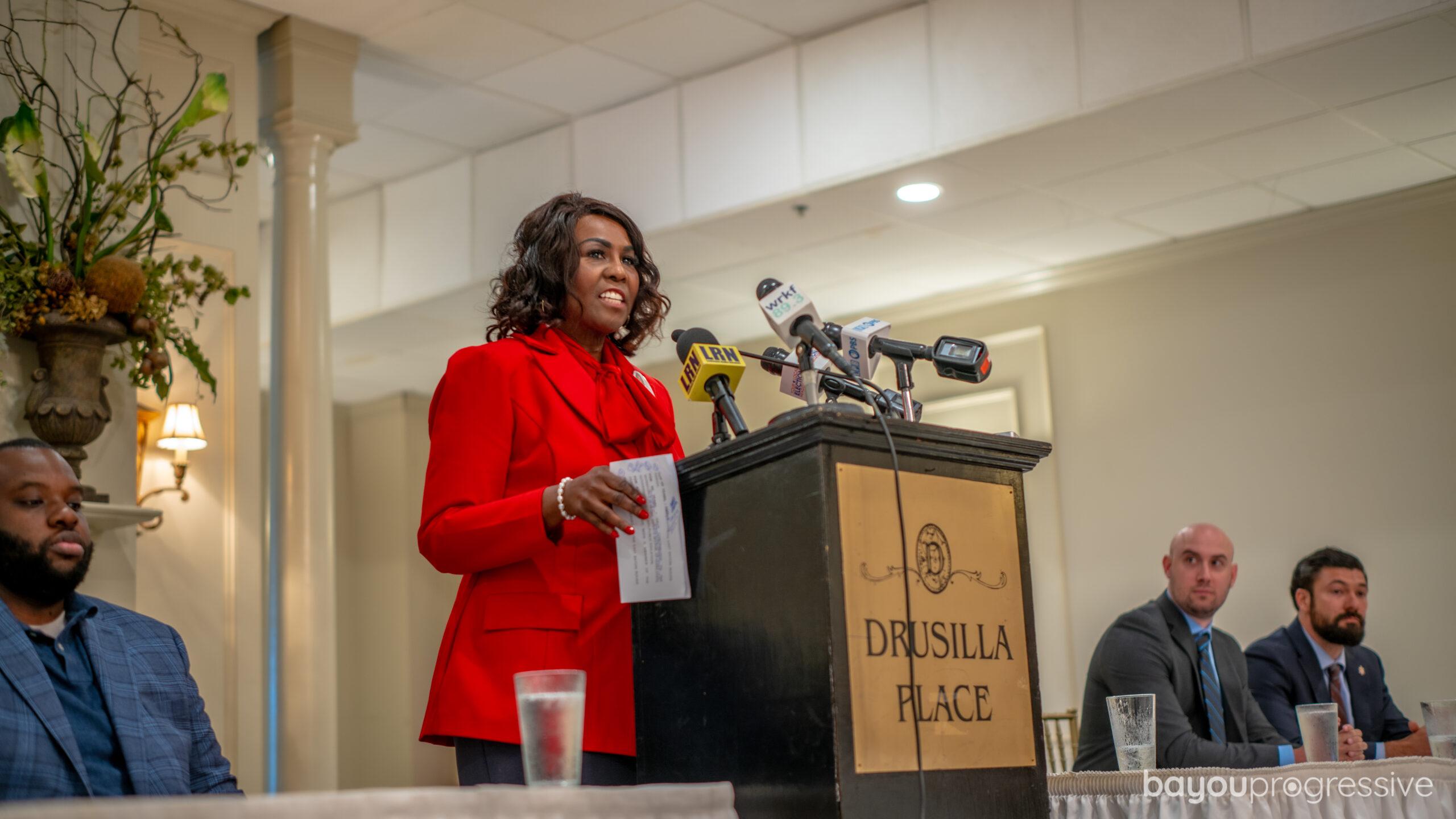
As East Baton Rouge Parish voters prepare to decide who will represent District 3 on the parish school board, challenger Thomasina Joseph believes one of the district’s biggest problems isn’t simply what happens inside its classrooms. It’s the growing disconnect between public schools and the communities they’re supposed to serve.
“We keep trying to build the village without the villagers,” Joseph said during a recent interview with The Bayou Progressive, arguing that parents and neighborhood residents have been increasingly left out of decisions affecting their children’s education.
The first-time candidate, a former EBR Schools employee, community organizer and mother of three Scotlandville Magnet High School graduates, is challenging incumbent Carla Powell in the December 12 runoff election. Powell, who is completing her first four-year term, led the November 3 primary with 46.2% of the vote, compared to Joseph’s 27.8%. Neither secured the majority necessary to win outright.
The contest comes as the school system confronts questions about declining enrollment in traditional public schools, the expanding role of charter operators and the influence of political organizations that have invested heavily in this year’s school board elections.
For Joseph, those debates are connected by a common concern: whether the families most affected by education policy have a meaningful say in the decisions being made.
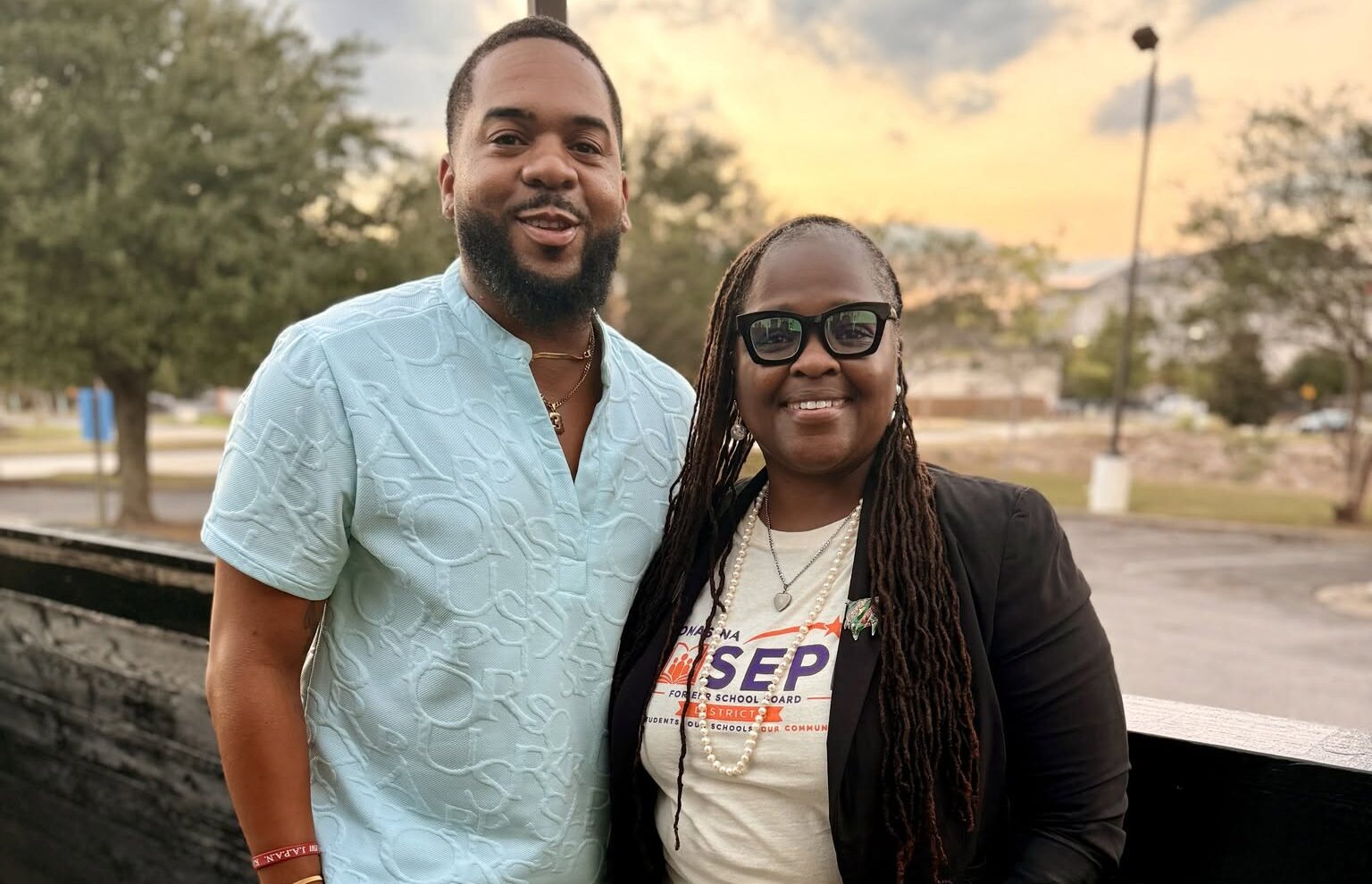
Rebuilding the connection between schools and neighborhoods
Joseph traces her involvement in community advocacy back more than two decades, beginning with her experiences as a parent and the example of her grandfather, who helped organize residents and encourage political participation.
As her children moved through the public school system, she said she became increasingly aware of gaps in the support available to parents, including something as basic as understanding how to monitor grades or access homework assistance.
“We just automatically assume because you’re a parent, you know what’s going to be happening in your child’s educational journey, and a lot of times that’s not the case,” she said.
She believes schools have also made it unnecessarily difficult for parents and community volunteers to participate in school activities, placing additional responsibilities on teachers and counselors who are already stretched thin.
That concern extends to the district’s approach to neighborhood schools.
Joseph questioned the practice of transporting students across Baton Rouge to attend specialized academic programs when similar opportunities could potentially be developed closer to home. She argued that long bus rides and the geographic separation of classmates weaken the neighborhood relationships that once helped define public education.
“We can’t keep copying and pasting a program and putting it at a school and then putting it on the other side of town and say we want strong community schools,” she said.
She described children boarding buses as early as 5:30 in the morning and not returning home until 6 p.m., questioning whether that arrangement serves students or their families.
Her argument is about more than convenience. She believes schools should be institutions that help anchor communities, particularly in neighborhoods that have experienced decades of economic disinvestment.
Joseph also questioned whether the district has placed too much emphasis on specialized programs without first ensuring students have mastered foundational academic skills.
“If they can’t do those three basics, any specialized program or pathway, the students feel defeatist in that because they can’t do the basics,” she said, referring to reading, mathematics and critical thinking.
Rather than continuing to distribute programs across the parish, she wants the district to assess what students in individual communities need and strengthen the schools already serving those neighborhoods.

A place for charter schools, but with stronger oversight
Although Joseph has emphasized the importance of traditional neighborhood schools, she does not believe charter schools should be excluded from the district’s educational landscape.
“I believe they play an important part because some charter schools offer things that our traditional schools do not, and every parent should have a choice for their child to be able to thrive in a school that best fits them,” she said.
Her concerns center instead on whether charter operators face sufficient accountability for academic outcomes, financial management, teacher recruitment and their relationships with the communities they serve.
Charter schools are publicly funded but independently operated, a distinction that has placed them at the center of a broader debate over the future of education in Louisiana. Advocates argue that the model provides families with additional choices and allows schools greater flexibility to innovate. Critics have raised questions about financial transparency, public oversight and the effect of charter expansion on traditional district-operated schools.
Those questions have particular significance in East Baton Rouge, where enrollment patterns have shifted substantially over the past decade.
According to the district’s 2026 proposed budget, enrollment in traditional district-operated schools declined approximately 15% over the preceding decade, while enrollment in district-authorized Type I charter schools increased 142%.
Because public education funding is closely tied to enrollment, those changes also affect the district’s finances, staffing and ability to maintain its existing campuses.
Joseph said charter schools should face closer scrutiny of student performance, particularly the academic growth students demonstrate from one grade level to the next. She also wants greater examination of how operators spend public money and whether parents believe their schools are meeting students’ needs.
Asked whether families and taxpayers currently have enough visibility into charter-school operations, she responded, “No, they don’t.”
She argued that many parents are unfamiliar with the differences in how charter schools and traditional public schools are governed and evaluated.
But when pressed on whether she would prefer more charter schools, fewer charter schools or roughly the same balance four years from now, Joseph declined to identify a specific target.
“It depends on performance and what expectations are for our school system,” she said, emphasizing that both charter and traditional schools should be judged by their results and their engagement with families.
Her position reflects support for maintaining multiple educational options while strengthening oversight. However, she did not outline specific new enforcement mechanisms or changes to the district’s charter authorization policies.
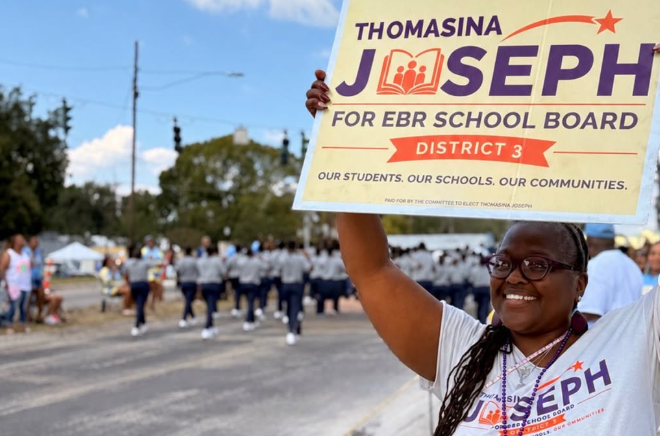
Outside money and the politics of school board elections
The question of who influences school board decisions has become particularly contentious during this election cycle.
An October investigation by The Bayou Progressive found that former New York City Mayor Michael Bloomberg and City Fund Action contributed a combined $750,000 to Red Stick Leaders for Students, an independent-expenditure political committee affiliated with the Baton Rouge Alliance for Students.
The investigation documented a network of campaign contributions, endorsements and independent expenditures involving national education-reform organizations and local business interests seeking to influence the composition of the next school board.
District 3 has been a particularly revealing example of those political relationships.
Powell benefited from support by several education-reform organizations during her successful 2022 campaign. Four years later, some of those same organizations backed Eugene “Rico” Williams III, who finished third in the November primary.
Education Reform Now Advocacy, an organization connected to the Democrats for Education Reform network, reported spending $18,500 supporting Williams and another $6,000 opposing Powell through October 14.
Powell previously told The Bayou Progressive that her relationship with the organizations deteriorated after disagreements over school board decisions, particularly the contentious 2024 superintendent selection process. Democrats for Education Reform Louisiana executive director Terrence Lockett offered a different explanation, saying Powell’s positions no longer aligned with the organization’s education priorities.
Joseph had little patience for the scale of spending involved.
“Insane, absolutely insane,” she responded when asked about the money flowing into school board campaigns.
She questioned why organizations were investing substantial resources in electing individual board members when schools themselves have programs in need of financial support.
She was particularly critical of the idea that organizations could help elect school board members and subsequently work to remove them because of disagreements over policy.
“If you’re going to be put out of office or taken out of a seat, then the people community that put you there, and not you know some outside organization should be the same people that take you out,” she said.
Joseph said none of the organizations involved in the spending had approached her directly beyond introductory emails and questionnaires. She said she declined to complete some of those questionnaires because she disagreed with their wording or framing.
Asked whether she would publicly disclose meetings with outside education advocacy organizations concerning pending board policies or charter authorizations, she answered yes.
She also argued that school board members should communicate more proactively with constituents about upcoming decisions, explaining what proposals are under consideration and giving families opportunities to weigh in before votes are cast.
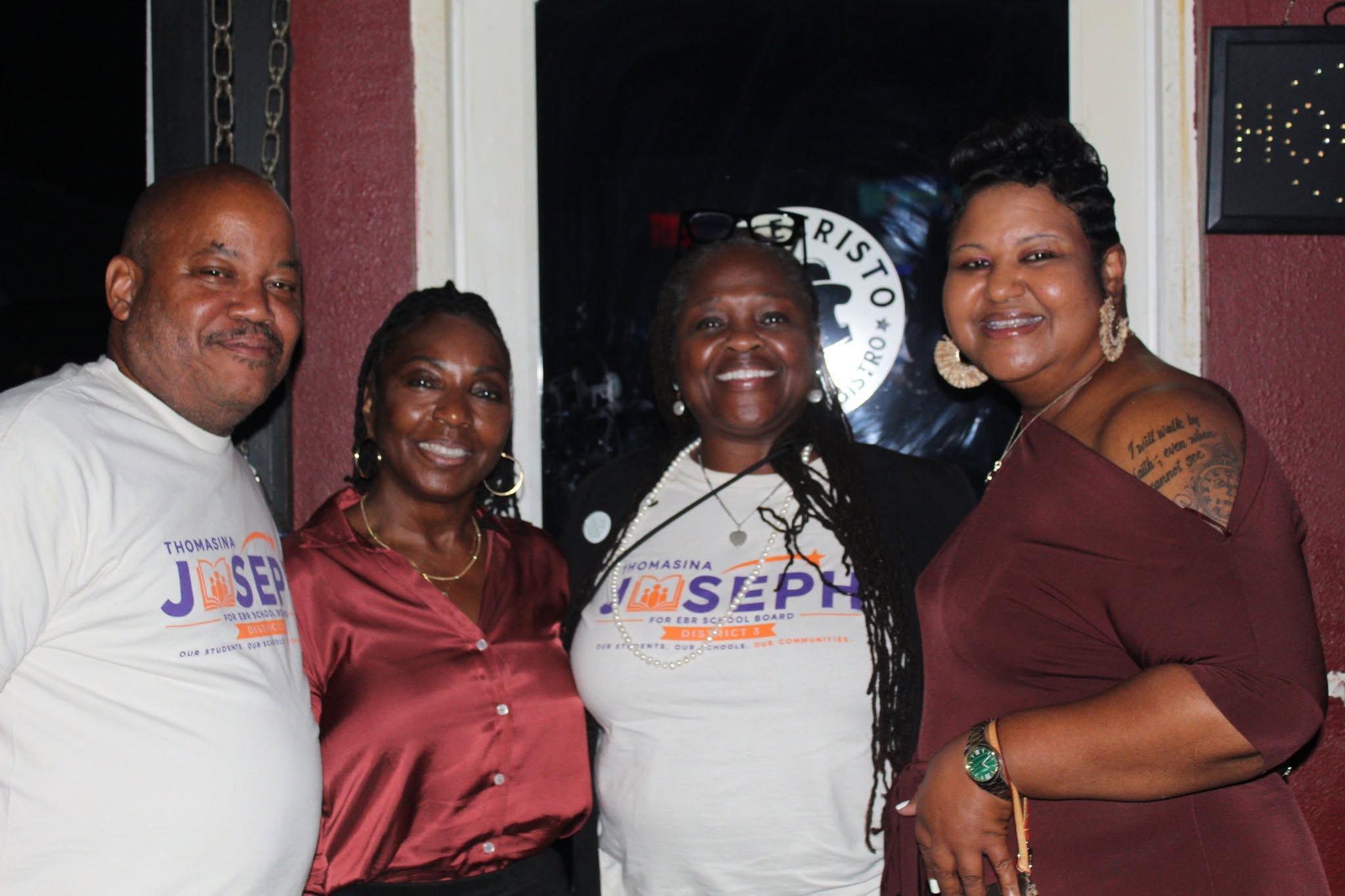
Making the case against Carla Powell
Despite her criticism of outside organizations that have opposed Powell, Joseph is asking those same District 3 voters to replace the incumbent.
Her argument, however, is centered less on Powell’s specific policy positions than on her relationship with constituents.
Asked to rate Powell’s first four years on the board on a scale of one to ten, Joseph gave her a “5 or 6.”
She said residents she encountered while canvassing complained that they had difficulty reaching their school board representative or receiving responses to their concerns. Some, she claimed, were unfamiliar with Powell altogether.
Powell, an educator with more than two decades of experience who has served as both vice president and president of the school board, has emphasized her experience and unfinished work as reasons voters should return her to office.
Joseph, meanwhile, argues that her years of community involvement have prepared her to serve without first needing an elected title.
“I’m literally doing the work without a title,” she said. “I don’t need a title, but people know that I am out doing the work, so I am accessible.”
Her governing priorities include improving parental involvement, supporting teacher recruitment and retention, strengthening foundational academic instruction and ensuring district spending aligns with students’ needs.
Still, when asked to identify the first two or three specific actions she would pursue if elected, Joseph spoke broadly about budgeting, student success and equitable support across the parish rather than identifying particular board proposals or policy changes.
For voters, that leaves a central question heading into December: whether Joseph’s emphasis on accessibility and community engagement offers the change they want, or whether Powell’s experience and existing record warrant another term.
Joseph sees the distinction primarily in the relationships she has built with residents and families.
“What I bring is connectivity to resources and actual engagement within the community,” she said.
The District 3 runoff will be held Saturday, December 12. Early voting begins November 28 and continues through December 5, excluding Sunday, November 29.