The U.S. Department of Justice plans to deploy federal election monitors to East Baton Rouge, Orleans and Lafayette parishes on Tuesday, placing federal personnel at voting locations in three of Louisiana’s largest population centers as part of a nationwide monitoring operation that has drawn scrutiny from voting rights organizations.
The Louisiana Secretary of State’s Office confirmed the three parishes Monday, just hours before voters head to the polls for a consequential midterm election that includes a closely watched U.S. Senate contest between Democrat Jamie Davis and Republican Julia Letlow, along with competitive congressional races across the state.
The deployment is part of a substantially expanded Justice Department operation expected to involve approximately 900 to 1,000 monitors across all 50 states. While federal election monitoring has been a longstanding component of voting rights enforcement, the Trump administration’s decision to draw personnel from federal law enforcement agencies has prompted a legal challenge from the NAACP and questions about what role those employees will play at polling places.
In a statement provided Monday to WDSU, the Louisiana Secretary of State’s Office emphasized that federal monitoring is not unprecedented and said state officials would continue administering elections under Louisiana law.
“This is nothing new and has been done in Louisiana in the past,” the office said, adding that federal officials had assured the state they would not interfere with voting.
The statement also made clear that any federal personnel entering Louisiana polling locations would be expected to respect applicable election laws and voters’ rights.
A familiar program, but a different approach
The Justice Department has monitored elections for decades, traditionally using attorneys and professional staff from its Civil Rights Division to assess whether state and local governments are complying with federal voting laws.
That work has included identifying racial discrimination, barriers to voting for people with disabilities, and other violations of federal protections. Federal monitors are generally tasked with observing election procedures and documenting possible violations rather than supervising the voting process themselves.
But the Trump administration’s monitoring plans have drawn attention for both their scale and the personnel being deployed.
According to court disclosures obtained through litigation brought by the NAACP, the Justice Department intends to include employees from the Federal Bureau of Prisons, Drug Enforcement Administration and Bureau of Alcohol, Tobacco, Firearms and Explosives in its monitoring operation.
The department has said FBI and Immigration and Customs Enforcement personnel will not participate. It has also maintained that monitors will not carry firearms, make arrests or exercise law enforcement authority while monitoring elections.
Those assurances have not resolved concerns from civil rights organizations, which argue that bringing personnel from federal law enforcement agencies into polling environments represents a significant departure from the program’s traditional voting rights mission.
The NAACP filed an emergency court request seeking to prohibit federal law enforcement agents from serving as election monitors, arguing that their presence could intimidate voters, particularly in communities with longstanding histories of discriminatory voting practices.
“The law is clear – law enforcement agents can have an intimidating effect on voters, especially Black voters,” NAACP General Counsel Kristen Clarke said in a statement Monday.
The Justice Department disputes that its monitoring plans amount to voter intimidation and says personnel are instructed not to interfere with voters or election officials.
Federal judge questions deployment plans
The controversy reached a federal courtroom Monday as U.S. District Judge Reggie Walton considered the NAACP’s emergency request to restrict the use of federal law enforcement personnel on Election Day.
During the hearing, Justice Department attorney Kathryn Barragan indicated that the government would not object to an injunction requiring reasonable efforts to prevent sworn law enforcement officers from serving as monitors.
The statement represented a shift in the department’s legal position after earlier disclosures raised questions about whether personnel with law enforcement credentials could be among those deployed.
Walton also pressed government attorneys to explain why the monitoring program had expanded and how the department selected the jurisdictions receiving monitors. The judge questioned whether political considerations could have influenced those decisions.
The hearing concluded with the court seeking additional information from federal officials before ruling on the emergency request. The litigation remains a central point of contention as the country prepares to vote Tuesday.
What federal monitors can — and cannot — do
The distinction between federal election monitors and federally authorized election observers is important.
Justice Department monitors are generally federal employees assigned to assess compliance with voting rights laws. They do not automatically have authority to enter restricted areas of polling places, direct election workers, question voters or otherwise interfere with election operations.
A separate federal observer program, authorized under the Voting Rights Act, permits specially designated observers to enter certain polling locations when required by a federal court order or applicable settlement.
According to the Brennan Center for Justice’s analysis of federal monitoring authority, St. Landry Parish is one of only three jurisdictions nationwide currently subject to federal observer authorization under that separate program.
None of the three Louisiana parishes identified for Tuesday’s monitoring deployment falls within that group.
The distinction means that federal personnel assigned to East Baton Rouge, Orleans and Lafayette parishes remain subject to the applicable limits on access to polling locations. Their presence does not give them authority to take over election administration or override state election officials.
The Justice Department says any potential violations identified by its monitors will be documented and reviewed by the department after Election Day.
Questions remain ahead of Tuesday’s vote
The announcement comes as Louisiana voters prepare to decide a slate of state and federal contests, including the Senate race between Davis and Letlow and elections in the state’s recently redrawn congressional districts.
The department has not publicly identified the specific polling places it intends to monitor within the three Louisiana parishes, how many personnel will be assigned to each parish, or whether any of those assigned to Louisiana will come from federal law enforcement agencies.
The selection of East Baton Rouge, Orleans and Lafayette also raises questions about the department’s criteria for choosing monitoring locations. All three parishes include substantial urban voting populations, but the Justice Department has not publicly provided a parish-specific explanation for its selections.
For now, the Secretary of State’s Office says Louisiana election officials will remain responsible for conducting Tuesday’s election and expects federal personnel to comply with state law.
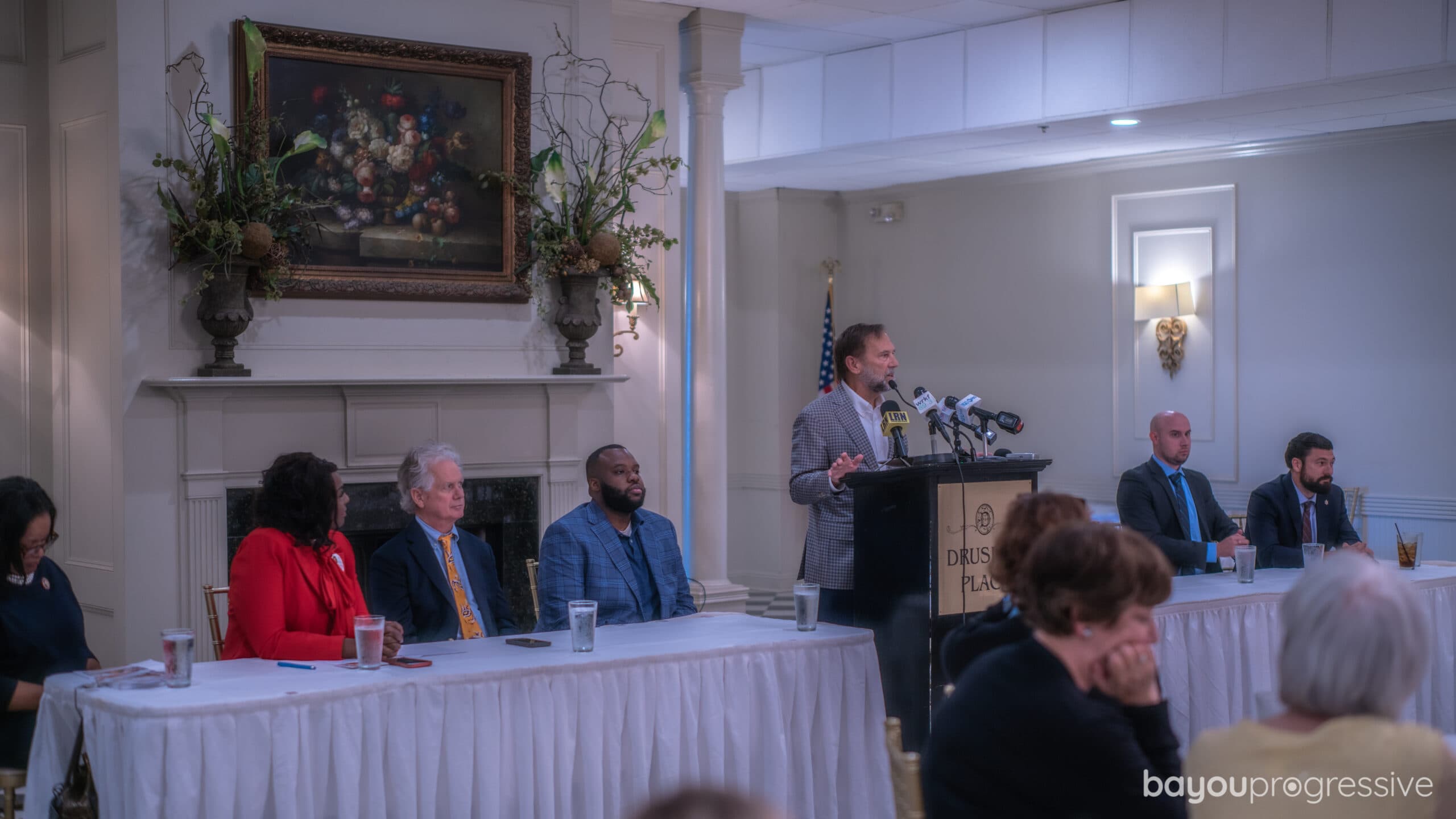
Mike McClanahan, president of the Louisiana State Conference of the NAACP, said Monday evening that the organization is preparing for potential problems at polling places but intends to maintain its election protection efforts regardless of the federal deployment.
“We know that all kind of games will be played. What I’ve told our members is that if you see something, say something. [We’re] working. Election monitors or not, we will be at the polls,” McClanahan told The Bayou Progressive in a telephone interview.
His comments reflect the concern among voting rights advocates that federal monitoring alone cannot substitute for independent efforts to identify and document potential interference with voters.
The presence of federal monitors does not change voting eligibility requirements or the procedures Louisiana voters must follow to cast their ballots.
Voters who encounter intimidation, interference or other problems at the polls can contact the nonpartisan Election Protection hotline at 866-OUR-VOTE (866-687-8683).