Chauna Banks wasn’t entirely sure she was going to run for Congress until the final hours of qualifying.
The former East Baton Rouge Metro Council member had spent much of the year organizing a Black Business Expo and was preparing to return her attention to small business and nonprofit work after more than a decade in elected office. A congressional campaign wasn’t part of some long-developed political strategy. In fact, Banks admits that when she first considered the possibility, she couldn’t see a viable path to victory.
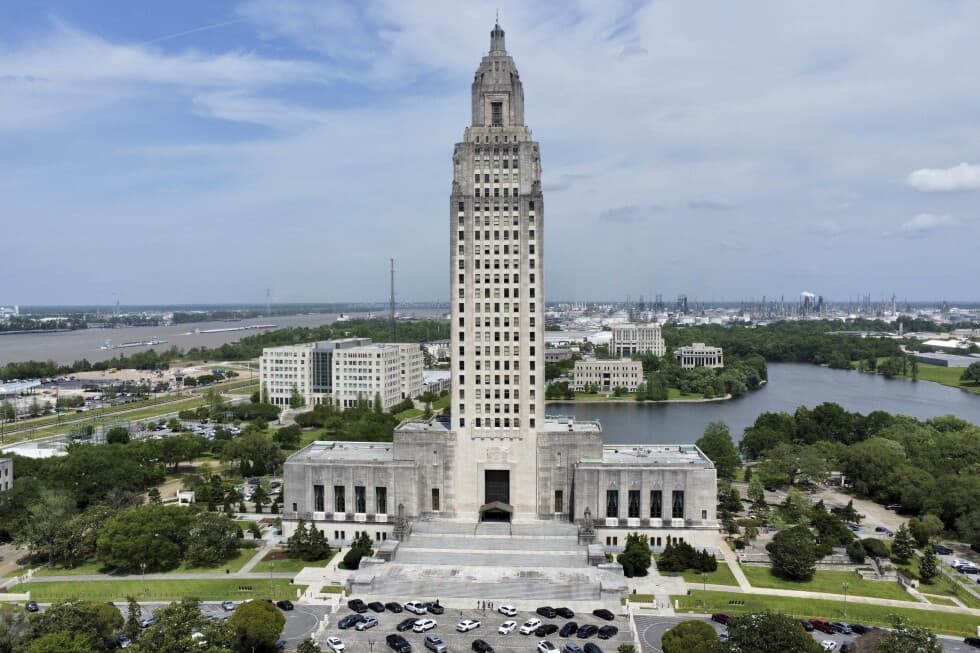
But after learning that Congressman Cleo Fields would not seek reelection in Louisiana’s newly redrawn 6th Congressional District, Banks began reconsidering. She spent the three-day qualifying period praying about the decision before finally leaving work early on August 7 and heading to the Secretary of State’s office.
She got lost trying to find the building. Then it started pouring rain.
Banks recalled asking God for a sign, deciding that if the rain stopped, she’d take it as confirmation that she was supposed to run. The rain stopped, she qualified, and then the reality of what she’d just done began to set in.
“I got back in my car, and I had a nervous breakdown,” Banks recalled during a Friday interview with The Bayou Progressive. “I was just like, what have you done?”
Less than three months later, Banks is one of ten candidates seeking to represent a congressional district that looks dramatically different from the one Fields won in 2024. She’s one of three Democrats in the race, the only Black Democrat, and the only one of the three who has previously held elected office. She’s also running a campaign that, by her own account, has spent less than $5,000, relying heavily on personal connections, community appearances and a governing record she believes speaks for itself.
Her approach is unconventional, but it hasn’t necessarily left her without support. A September poll commissioned by the Greater Baton Rouge Economic Foundation placed Banks at 13.2 percent, statistically tied with Republican Rick Edmonds for first place and ahead of every other Democrat in the race. More than a third of likely voters were undecided.
It is an unusual political position for an equally unusual campaign: a former elected official with an established record of public service, some demonstrated voter support, and significant questions about whether she has the resources or electoral coalition necessary to turn that support into a congressional victory.
A political identity forged in North Baton Rouge
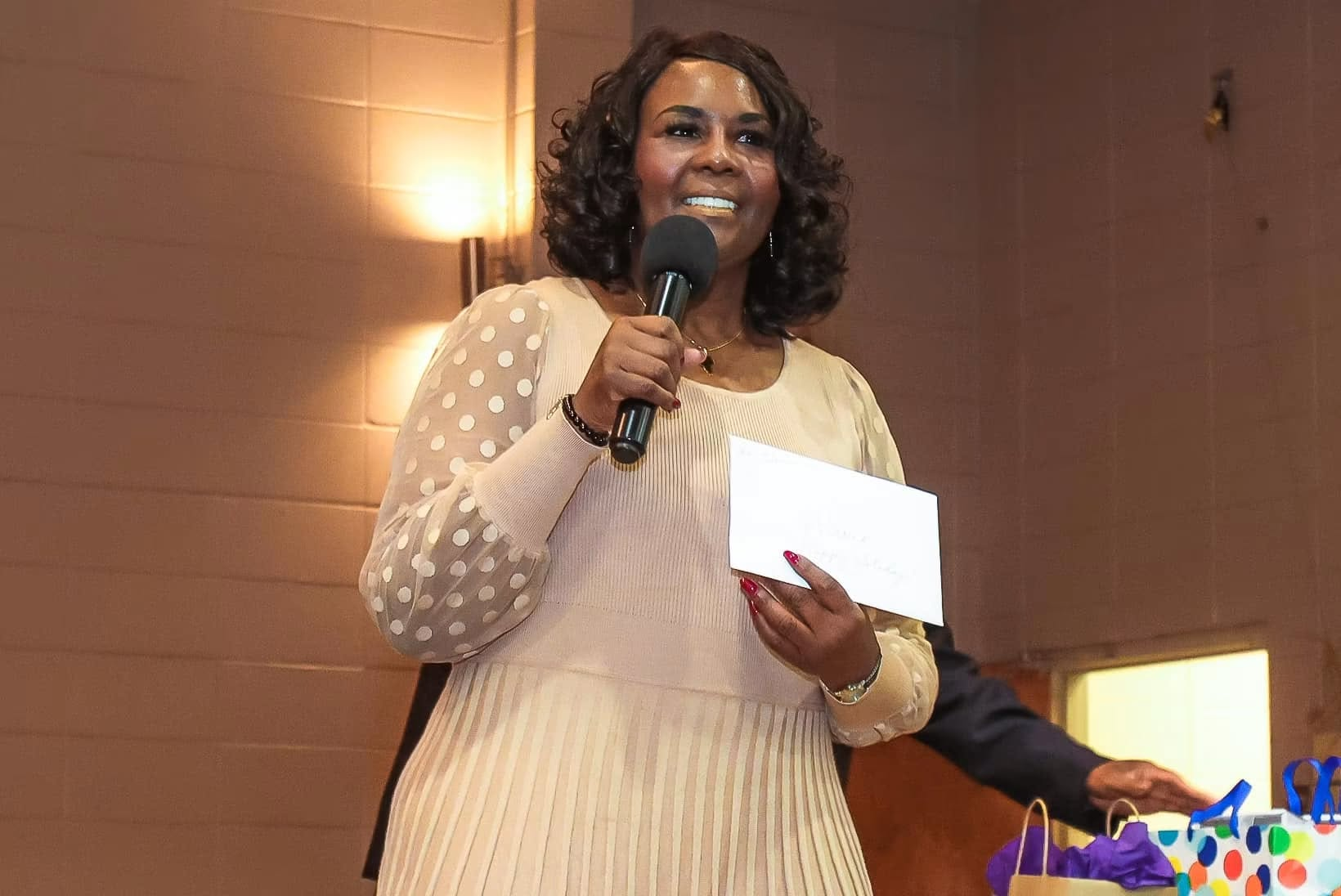
To understand Banks’ approach to politics, she argues, voters first need to understand the communities where she grew up and spent much of her public career.
Banks represented Metro Council District 2 from 2013 through 2024, serving communities in North Baton Rouge that have experienced decades of disinvestment, environmental concerns and controversial government decisions. Her political identity, she explained, was shaped by watching institutions make decisions that fundamentally altered those communities, often without providing comparable investments to replace what had been lost.
She pointed to interstate construction that disrupted Scotlandville’s commercial corridors, the expansion of Baton Rouge Metropolitan Airport that displaced established Black neighborhoods, and changes to Scotlandville High School that she believes weakened the community’s generational connection to one of its most important institutions.
For Banks, these weren’t simply decisions she learned about during her years in government. They were changes she witnessed growing up in Scotlandville, where her family had deep connections to the local schools and surrounding neighborhoods.
That history shaped some of the most consequential fights of her Metro Council career.
Among the accomplishments she highlighted was her involvement in relocating residents of University Place, a neighborhood near Southern University whose homeowners had spent years complaining about odors and other conditions associated with the North Wastewater Treatment Plant. After years of disputes and litigation, the Metro Council approved a $6 million buyout and relocation plan in January 2013, with property acquisitions continuing into the following year.
Banks described helping advance that effort as one of the earliest priorities of her council tenure, framing it as an example of government finally responding to people who had spent years unsuccessfully seeking relief.
She also recalled her opposition to relocating the Baton Rouge Zoo from Greenwood Park to the southern part of the parish. Banks became one of the most visible opponents of the proposed move, arguing that removing the attraction would further undermine economic opportunity in North Baton Rouge. Following an extended public dispute, BREC’s Board of Commissioners voted unanimously in March 2018 to keep the zoo in its existing location, where significant renovations and improvements have since taken place.
Other fights included efforts to address deteriorating conditions at the Elmgrove Garden Apartments and opposition to locating a proposed tire-shredding facility near the airport and parish prison. Banks helped challenge the originally proposed location of the tire facility, arguing that North Baton Rouge had already absorbed more than its share of projects that other communities would resist.
She sees those battles as evidence of a governing philosophy that places the needs of constituents ahead of maintaining comfortable relationships with political institutions.
“You cannot run over my community. You cannot run over my constituencies,” Banks said, describing the attitude she brought to City Hall.
That experience, she believes, is directly transferable to Congress. The institutions may be larger, the jurisdictions more complicated, and the political stakes considerably higher, but Banks insists the fundamental responsibility remains the same: identify a community’s needs, bring the appropriate people to the table, and fight until government responds.
There is, however, a significant complication.
Much of the North Baton Rouge constituency that shaped Banks’ political career is no longer included in the congressional district she’s asking voters to send her to Washington to represent.
A campaign built on relationships instead of money
The redrawing of Louisiana’s congressional districts earlier this year dramatically changed the political prospects of the 6th District. Under the boundaries used in 2024, Kamala Harris would have carried the district with approximately 57 percent of the vote. Under the new boundaries, Donald Trump would have carried it by roughly 64 percent to 34 percent.
The change transformed a Democratic-leaning district into one that national election forecasters now rate solidly Republican. It also changed the political geography Banks must navigate, expanding her campaign well beyond the communities and voters most familiar with her work on the Metro Council.
Banks acknowledges that she didn’t study the district’s electoral numbers before deciding to run. Her decision, she said, came from a personal sense of calling rather than a political calculation, particularly after Fields announced he would not seek another term.
Since entering the race, she’s tried to compensate for the late start by visiting communities across the district’s 11 parishes, drawing on relationships developed over decades of public service, education and community involvement.
Some of her most encouraging experiences, she said, have come from places she initially expected to be less receptive, including predominantly Republican communities in Livingston Parish.
Banks described white Republican voters recognizing her by name, greeting her warmly and, in some cases, promising their support. She’s also leaned heavily into churches, sometimes attending four services in a single Sunday, and relationships with former Southern University classmates who now live throughout the region.
It’s an approach built around a central assumption: voters care more about whether someone understands their problems and can produce results than which political party that person belongs to.
But turning those relationships into votes is a different challenge, especially in a race where several opponents have considerably more resources.
The Federal Election Commission currently shows no financial summary for Banks’ congressional committee, and she told The Bayou Progressive that her campaign had spent less than $5,000. By comparison, Republican Blake Miguez has reported approximately $7.75 million in campaign receipts through the most recent reporting period, while other major Republican candidates have raised hundreds of thousands of dollars.
Banks doesn’t dispute the importance of reaching voters, but she seems considerably less concerned about her financial disadvantage than conventional campaign strategists might be. She says she’d welcome more donations, particularly if she advances to the December runoff, but doesn’t envision building a particularly large paid campaign staff.
Instead, she’s counting on personal outreach, name recognition, and a message she believes crosses traditional partisan divisions.
Her argument for winning starts with consolidating Democratic support, then attracting women, independents and some Republican voters who may be frustrated with the direction of national politics. Still, the district’s Republican registration advantage and recent voting patterns present substantial electoral challenges.
And Banks acknowledges that the more difficult challenge may not be advancing to a runoff, but bringing voters back for a second election on December 12.
“People coming back a second time is what frightens me,” Banks admitted.
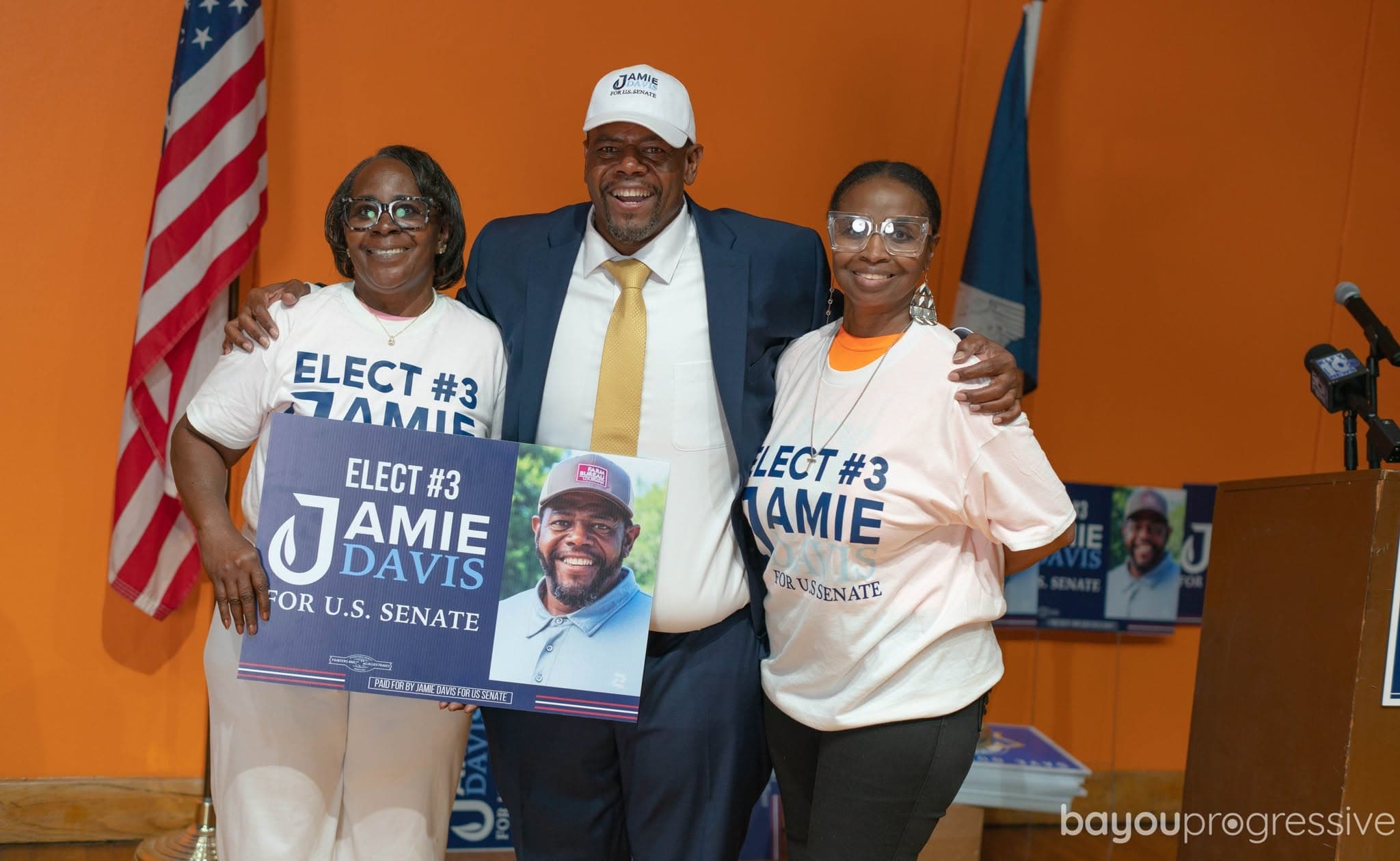
She worries that voters motivated primarily by the high-profile U.S. Senate contest could lose interest after November, regardless of whether Democrat Jamie Davis wins or loses. A December election without the Senate race at the top of the ballot could leave the congressional candidates competing for a substantially smaller electorate.
And if Banks does advance, she’d have just over five weeks to assemble a majority in a district where Republican voters have demonstrated a decisive electoral advantage.
Bipartisanship doesn’t mean avoiding a fight
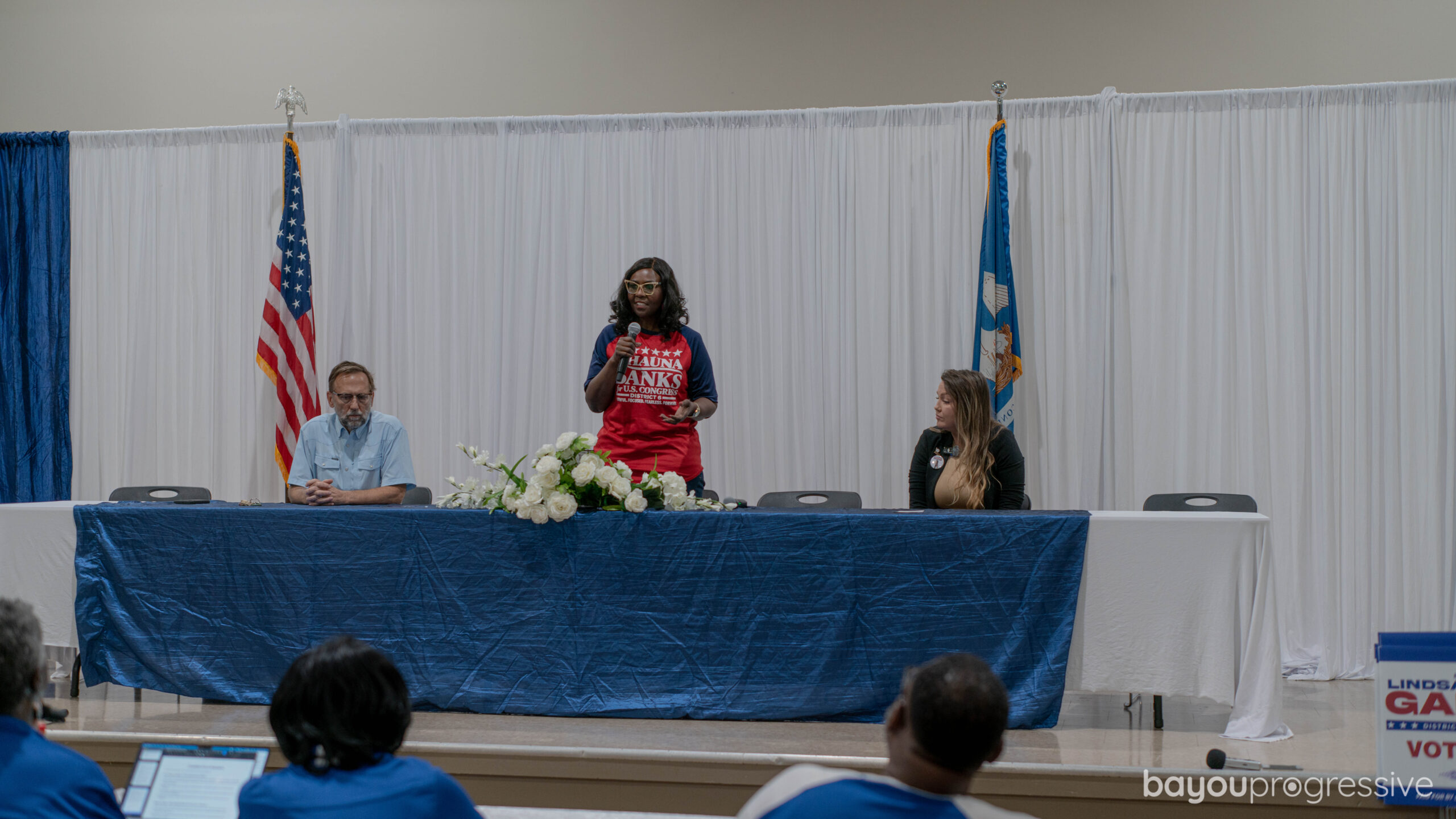
Banks has made unity, cooperation and practical leadership central themes of her campaign, a message that might initially appear out of step with a Democratic electorate increasingly frustrated with President Donald Trump and congressional Republicans.
But when asked whether Democrats have become too reluctant to confront Republicans, Banks offered an answer that was considerably more confrontational than her campaign’s emphasis on bipartisanship might suggest.
She agreed that Democrats have allowed Republicans to exercise political power aggressively, but argued that the party’s failures extend well beyond its dealings with Republicans. Banks believes too many Democratic leaders have become comfortable with a political culture that rewards endorsements, personal connections and institutional loyalty without demanding enough concrete results for constituents.
She was particularly critical of the reliance on political endorsement ballots in Black communities, arguing that voters should be encouraged to independently evaluate candidates and demand specific commitments rather than simply following established political organizations.
The problem, in Banks’ view, isn’t necessarily that Democrats have failed to fight Republicans loudly enough. It’s that they have too often failed to exercise their own leverage on behalf of the people who elected them.
She argues that meaningful compromise should produce something tangible for constituents, whether through legislation, budget decisions or government investment, rather than simply allowing elected officials to claim they worked across the aisle.
That distinction helps explain the apparent contradiction in her politics. Banks isn’t especially interested in partisan confrontation for its own sake, but she also doesn’t view cooperation as an obligation when it comes at the expense of the communities she represents.
Her willingness to criticize the political establishment extends to the Democratic candidates competing against her.
Asked what distinguishes her from Pat Forbes and Lindsay “Rubia” Garcia, Banks argued that her combination of elected experience and work across local, state and federal programs gives her a more comprehensive understanding of government than Forbes’ decades-long career in state administration.
Her criticism of Garcia was sharper. Banks questioned Garcia’s political consistency and relatively recent affiliation with the Democratic Party, contrasting it with her own 47 years as a Democrat. Garcia, who previously had no party affiliation, joined the Democratic Party ahead of her congressional candidacy earlier this year. Garcia has described herself as a longtime independent who recognized the political realities of running for office in 2026.
It was an especially pointed criticism from a candidate whose broader argument is that public servants should be judged by their accomplishments rather than partisan identity. But it also reflects how Banks views political experience: not simply as time spent in government, but as the accumulation of convictions, institutional relationships and lessons learned over a lifetime.
What she would do in Washington
On national policy, Banks’ priorities are more recognizably aligned with the Democratic Party’s progressive wing than her rhetoric about bipartisanship might initially suggest.
Asked what Democrats should do if they regain control of the House, Banks emphasized ending the war with Iran, reversing the Trump administration’s tariffs, and restoring programs that have been weakened or eliminated under the administration.
She was particularly forceful in defending diversity, equity and inclusion initiatives, arguing that government and corporate efforts to abandon such programs ignore the enduring economic consequences of racial discrimination.
Drawing on her experience organizing the Black Business Expo, Banks said she had encountered reluctance from major corporations to support initiatives explicitly centered on Black entrepreneurship. She described that shift as a disturbing retreat from the recognition that equal opportunity sometimes requires addressing longstanding inequalities.
At the same time, Banks argued that a Democratic Congress should evaluate existing policies on their merits rather than automatically reversing everything enacted under Trump.
Her answer was less direct when asked whether a new Democratic majority should aggressively investigate the Trump administration or use congressional subpoena powers. Rather than outlining an oversight agenda, she returned to the economic and policy priorities she believes most directly affect families.
It reflects a recurring feature of her political outlook: Banks is much more comfortable discussing what government should accomplish for communities than engaging in the institutional and partisan battles that often determine what Congress can actually deliver.
And that is perhaps both the strongest argument for her candidacy and its greatest uncertainty.
Banks can point to a long career of public service, to communities where she fought against decisions she considered unjust, and to relationships that reach across racial, generational and political boundaries. She also enters the final days of the election with an extraordinarily small campaign operation and a path to victory that would require persuading a substantial number of voters who have consistently supported Republicans.
Her confidence remains undiminished.
“I am walking history,” Banks declared near the end of the interview, describing the range of experiences she believes distinguishes her from the rest of the field.
For Banks, that history is more than a résumé. It’s the foundation of her belief that she can represent people whose communities and circumstances differ considerably from her own, and that the same persistence she brought to City Hall can produce results in Washington.
Whether voters see that experience as sufficient reason to send her to Congress is the question that remains unanswered. Her challenge now is to demonstrate that a lifetime of relationships and a record of local victories can translate into something far more difficult: a winning coalition in a district whose political boundaries were redrawn to make a Democratic victory considerably less likely.