Democratic candidates in Louisiana’s open 5th Congressional District race have reported relatively modest fundraising totals heading into the final weeks before Election Day, while one of the party’s three candidates, Dan McKay, appears to have missed the October 15 federal campaign finance reporting deadline all together.
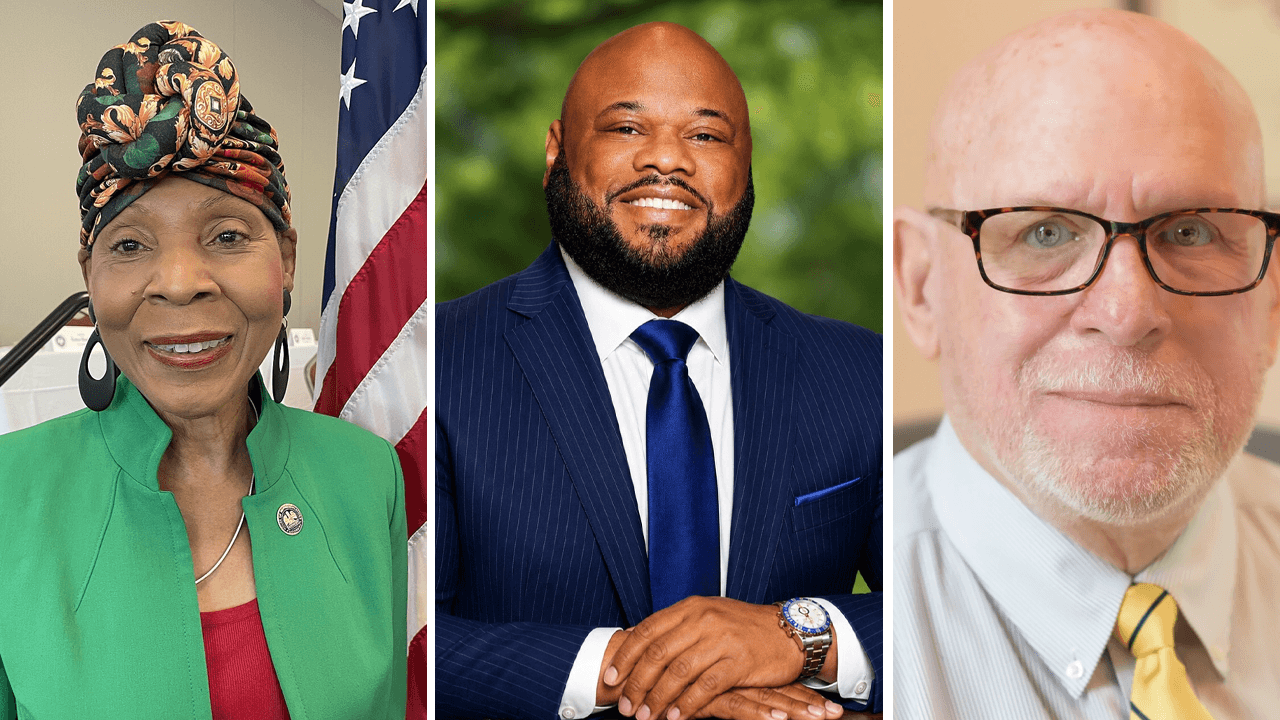
Newly filed Federal Election Commission records show Antonio Wilson and State Representative Patricia “Pat” Moore (District 17) reporting approximately $32,400 and $10,800 in individual contributions, respectively, through September 30. Both campaigns also relied on personal loans from the candidates to supplement their fundraising.
Meanwhile, updated reports from Republican candidates Michael Echols and Misti Cordell show substantially larger campaign operations, including hundreds of thousands of dollars in available cash heading into October.
The disclosures provide a clearer picture of the financial differences among candidates competing to replace Republican U.S. Rep. Julia Letlow, who is the Republican nominee for U.S. Senate, running against Democrat Jamie Davis.
Wilson and Moore Report Limited Fundraising
Wilson, a Tallulah businessman, reported $32,424 in individual contributions between July 1 and September 30, according to his October 15 FEC filing.
His campaign also received $22,919 in personal loans from Wilson, bringing its cumulative receipts to $55,344.
After spending approximately $22,058 during the reporting period, Wilson entered October with $33,286 in cash on hand and $22,919 in outstanding debt.
The campaign received no contributions from political action committees or party organizations. Approximately $28,370 of its individual contributions came through smaller donations.
Moore, meanwhile, reported $22,129 in total receipts through September 30, including $10,802 in individual contributions and $11,327 in candidate loans.
Her campaign spent approximately $9,328 and entered October with $12,800 in cash on hand, along with $11,327 in outstanding debt.
While Wilson reported approximately three times as much in individual contributions as Moore, both campaigns face significant financial limitations compared with the larger operations on the Republican side of the race.
McKay Misses Reporting Deadline
The third Democrat in the race, Dan McKay, had not submitted his October quarterly financial disclosure by the October 15 deadline, based on available records on the FEC website.
Federal law requires congressional campaign committees to report their fundraising and expenditures quarterly, with the latest report covering financial activity through September 30.
McKay’s most recent available disclosure covers activity through July 18, leaving his campaign’s finances during the subsequent two and a half months unaccounted for in the public record.
According to that earlier filing, McKay had reported approximately $90,000 in cumulative receipts, including $48,486 in individual contributions and $39,238 in personal loans.
The campaign had also reported approximately $109,075 in spending, exceeding its total receipts, and listed a negative cash balance of $19,056 as of July 18. It reported $39,238 in outstanding debt from candidate loans.
Without the required third-quarter filing, voters cannot determine whether McKay’s campaign has increased its fundraising, reduced its debt, or improved its financial position since July.
Additionally, under the FEC’s Administrative Fine Program, campaign committees that miss reporting deadlines can face civil monetary penalties based on their financial activity, the length of the delay, and any prior violations. The October quarterly report is considered election-sensitive, making timely disclosure particularly important ahead of November’s election.
Republicans Maintain Substantial Financial Advantages
The financial picture is considerably different for two of the Republican candidates competing for the open seat.
Echols, a state representative from Monroe, reported approximately $3.17 million in cumulative receipts through September 30, according to his latest FEC disclosure.
However, $2.43 million of that total came from loans Echols made to his own campaign, while approximately $579,000 came from campaign contributions.
Echols also reported $972,833 in cash on hand at the end of September, after spending approximately $2.19 million during the election cycle. His campaign still owed approximately $1.58 million in outstanding candidate loans.
Cordell, another Republican candidate, reported approximately $632,600 in cumulative receipts through September, including substantial candidate loans. She entered October with approximately $174,800 in cash on hand.
Both Republican campaigns therefore reported considerably greater spending capacity than either Wilson or Moore, although their total receipts also reflect significant personal financial investments.
For comparison, Wilson and Moore reported a combined $46,086 in cash on hand at the end of September, while Echols alone reported nearly $973,000.
An Open Seat With a Crowded Field
The fundraising disclosures come as nine candidates compete for Louisiana’s 5th Congressional District seat in the November 3 election.
Louisiana’s open-primary system places candidates from all parties on the same ballot. If no candidate receives a majority of votes, the top two finishers will advance to a December 12 runoff.
For the three Democrats, that means competing not only against a field of Republican candidates but also against one another in a district where the financial resources available to individual campaigns vary considerably.
The latest filings show Wilson and Moore operating campaigns funded by relatively small amounts of donor contributions and personal loans. McKay’s failure to submit his third-quarter report by the federal deadline leaves the public without a current accounting of his campaign’s finances.
With early voting approaching, the disclosures underscore the substantial financial differences among candidates seeking to represent northeastern and central Louisiana in Congress.