The resignation comes after a public split between the group’s co-founders, a dispute over a $100,000 donation, and growing questions about whether the statewide recall campaign has the structure needed to survive.
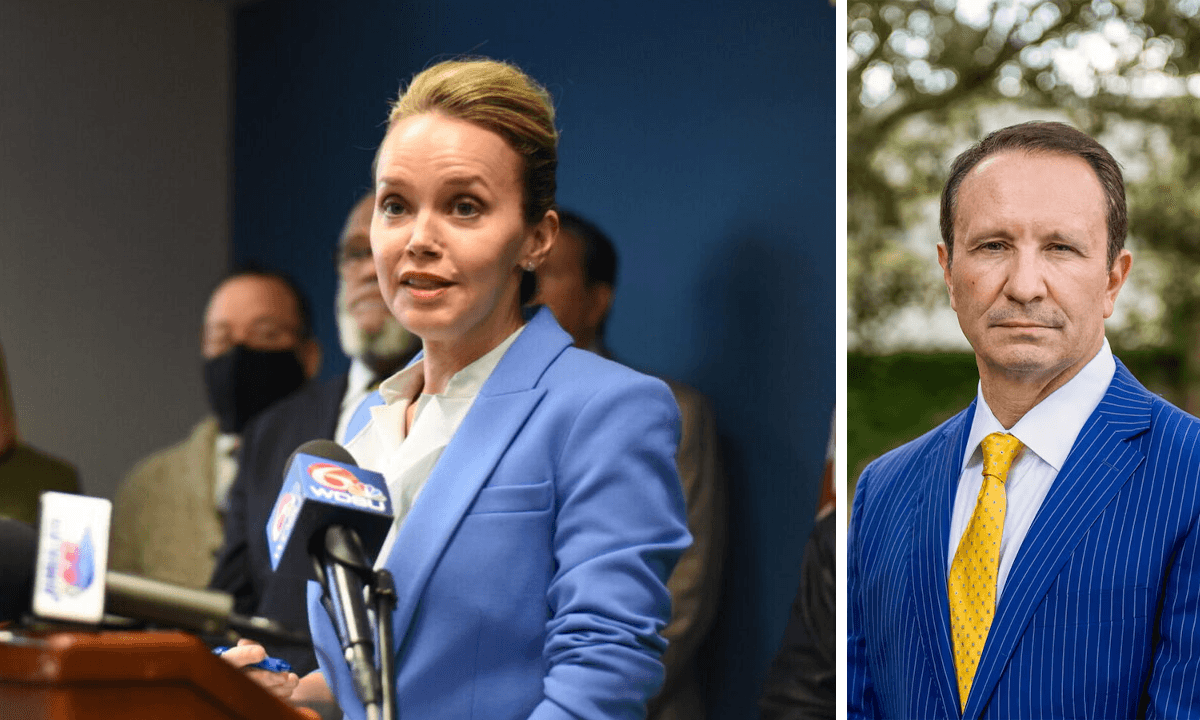
Louisiana Deserves Better, the grassroots organization leading recall efforts against Gov. Jeff Landry, Attorney General Liz Murrill, and East Baton Rouge Mayor-President Sid Edwards, is facing its most serious public crisis yet after one of its co-founders announced she is stepping away from the campaign.
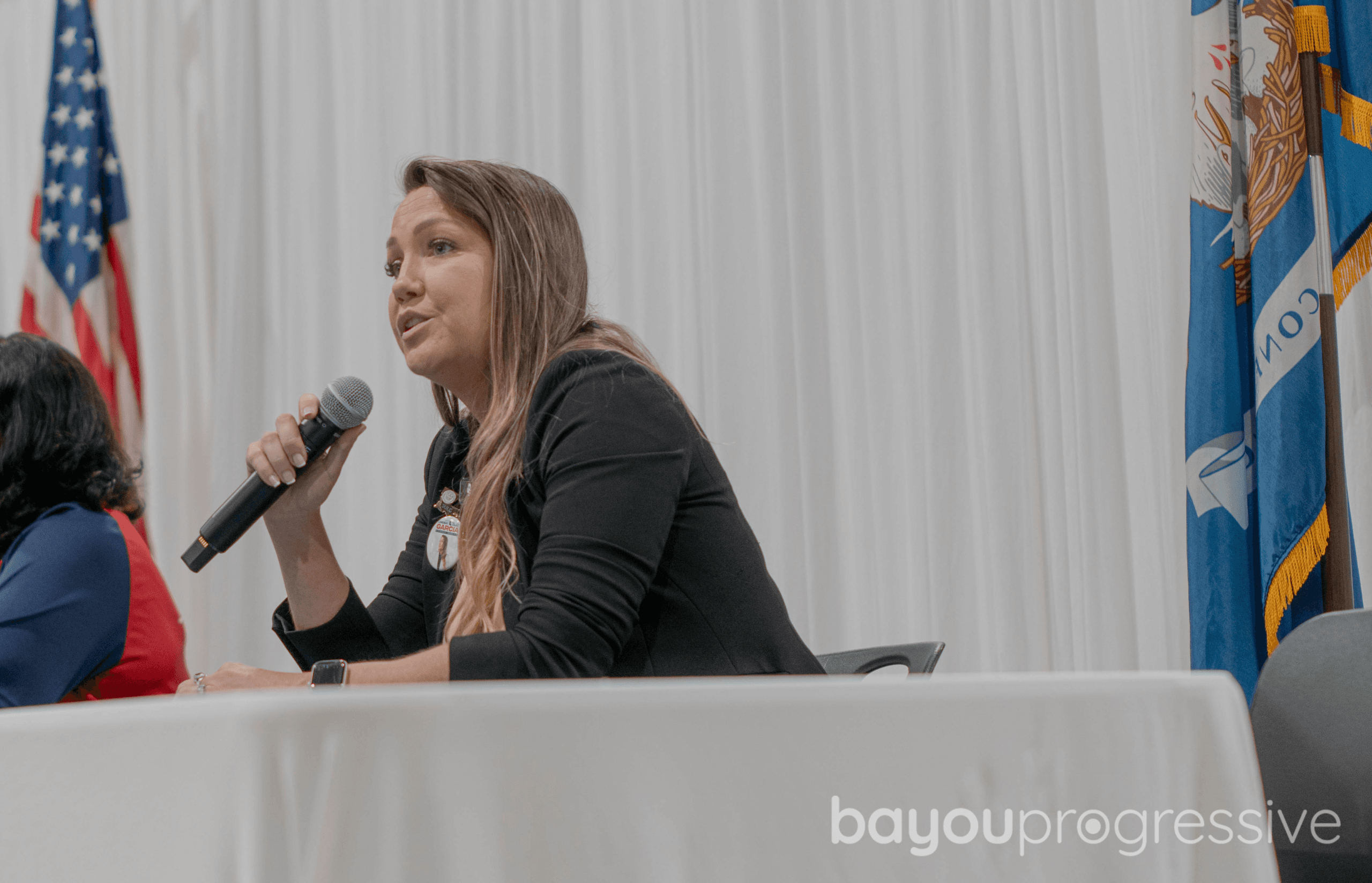
Katilyn Patricia Collins, who helped launch Louisiana Deserves Better with Marian Gbaiwon, wrote on Wednesday in a public Facebook post that she was “officially stepping away from the recall effort” and from Louisiana Deserves Better as co-chair.
“I am incredibly proud of what I have accomplished through creating Louisiana Deserves Better,” Collins wrote, saying she and her administration team organized, vetted, and trained “more than 140 leaders and over 2,000 volunteers,” resulting in “more than 300 petition signing locations across Louisiana.”
But Collins said she could no longer continue in leadership after mounting internal conflict.
“Unfortunately, due to unforeseen conflicts, I can no longer sacrifice my safety, time, or resources to stand beside someone I no longer respect or trust,” Collins wrote. “This decision was not made lightly, but it is the right one for me.”
Collins emphasized that her resignation should not be read as a call to abandon the recall campaign.
“I want to be clear: this movement is not dead,” she wrote. “If you believe in the recall effort, I encourage you to continue supporting it and signing the petition. My decision is about my personal involvement and should not discourage anyone who believes in the cause.”
Her departure came shortly after a public dispute between Collins and Gbaiwon over Louisiana Deserves Better volunteer Leila Habib.
Gbaiwon issued what she described as an “Official Statement Regarding Louisiana Deserves Better Volunteer Leila Habib,” saying she would not remove or condemn Habib based on “outside allegations, social media narratives, or the number of people repeating the same claim.”
“I have personally observed Leila consistently volunteer her time, support our mission, help fellow volunteers, share information, and contribute to the growth of Louisiana Deserves Better,” Gbaiwon wrote. “Based on those firsthand observations, I have not found evidence that she has acted against the interests of this organization.”
Gbaiwon wrote that leadership decisions within Louisiana Deserves Better would be based on “facts, documented actions” and her own observations inside the organization, not rumors, personal disagreements, or outside pressure.
Collins responded sharply, saying Gbaiwon’s statement ignored concerns she had repeatedly raised.
“As Co-Chair/Founder of Louisiana Deserves Better I want to apologize to Every Leader Leila has Harassed and attacked online,” Collins wrote. “I have made it very Clear to Marian I will NOT WORK with Leila on Several Occasions.”
Collins said she had tried to avoid bringing internal issues to the internet but was “embarrassed and frustrated” by the handling of recent disputes.
“Louisiana Deserves Better is Bigger then One person,” she wrote.
The Bayou Progressive has not independently verified the underlying allegations involving Habib.
The leadership rupture also comes during an already turbulent week for Louisiana Deserves Better.
Days earlier, Gbaiwon publicly accused the Greater New Orleans Housing Alliance, which she said had been acting as a fiscal sponsor for the recall effort, of blocking access to $110,000 in major funding, including a $100,000 individual donation. Gbaiwon said the group had started paying immediate campaign expenses out of pocket based on the expectation that the money would become available.
In a story published Wednesday, NOLA.com reported that recall organizers “lost out” on the $100,000 donation after a breakdown with GNOHA. According to that report, GNOHA President Andreanecia Morris said the donor kept the money after the recall organizers rejected guidance that would have required the group to create a political action committee and establish a 501(c)(4) organization.
“We were ready to help inside the rules, but their refusal to work together meant we were at a standstill,” Morris told NOLA.com.
Gbaiwon has framed the dispute differently, arguing in a social media post that GNOHA’s proposed contract would have stripped the group of independence and siphoned control away from the grassroots organizers.
The Bayou Progressive has not independently reviewed the fiscal sponsorship agreement, donor records, grant terms, banking documents, payment requests, or other records that would establish who legally controlled the money or how it could be spent. Because of that, this outlet is not characterizing the dispute as theft or misappropriation.
But the public dispute has exposed a larger problem: Louisiana Deserves Better has not clearly answered basic questions about its legal structure, financial controls, compliance process, decision-making authority, or signature-count progress.
A source close to the conversations between GNOHA and Louisiana Deserves Better told The Bayou Progressive that the central disagreement was not simply whether money should be handed over to the organizers, but whether the recall effort would accept the legal and organizational structure necessary to receive, track, and spend major funding.
According to that source, GNOHA’s position was that the money could not simply flow through informal channels or be controlled unilaterally by the organizers. The source said the dispute centered on whether Louisiana Deserves Better would move into a more formal structure involving a 501(c)(4), a political action committee, clearer control over disbursements, and compliance systems for fundraising, spending, payroll, accounting, and campaign finance reporting.
The same source said concerns had been raised about informal fundraising channels, including whether money raised before a formal PAC structure was in place was being properly tracked and whether the group had adequate systems for compliance.
The fallout is also beginning to affect the campaign’s local organizing network.
On Wednesday, the Lafayette Democratic Parish Executive Committee announced that it was no longer affiliated with recall efforts organized by Louisiana Deserves Better.
“The Lafayette DPEC is committed to working with organizations who align with our values,” the committee wrote in a public Facebook post. “Because of that commitment, our committee is no longer affiliated with the recall efforts organized by Louisiana Deserves Better.”
The committee said recurring signing events at Carencro LCG and Lagniappe Records had been canceled effective immediately and would be removed from Louisiana Deserves Better’s website.
The announcement marks a notable loss of public-facing local support for the recall effort in Acadiana. Recall campaigns depend heavily on trusted signing locations, local organizers, and community partners who can help voters navigate the strict petition process. The loss of recurring events does not end the campaign’s presence in Lafayette Parish, but it does show that the recent turmoil is no longer confined to internal leadership disputes.
Louisiana Deserves Better now sits at the center of three recall efforts: one against East Baton Rouge Mayor-President Sid Edwards, and statewide petitions against Landry and Murrill.
The Edwards recall was already in motion before the Landry petition became the group’s defining statewide fight. But after Landry’s decision to cancel and reorder Louisiana’s congressional election process in the middle of an election cycle, the recall campaign against him quickly became the highest-profile piece of the broader Louisiana Deserves Better effort.
The Landry recall began May 4, giving organizers until Oct. 31 – Halloween – to submit the signatures required under Louisiana law.
That deadline is not a political talking point. It is the clock governing the entire campaign.
Under Louisiana law, recall organizers must gather signatures from at least 20 percent of registered voters in the jurisdiction of the office being recalled – statewide for Landry and Murrill, parish-wide for Edwards. The petitions must be submitted within 180 days, and each recall petition is limited to one public officer.
Louisiana Deserves Better’s own website says the Landry and Murrill statewide recalls require more than 600,000 valid signatures. The Edwards recall, focused on East Baton Rouge Parish, requires 50,000 signatures.
The organization has promoted signing locations across Louisiana and has drawn real grassroots energy from voters angry with Landry, Murrill, Edwards, or some combination of the three. NOLA.com reported Wednesday that organizers said more than 340 signing locations had been established statewide. Collins, in her resignation post, credited the effort with building a network of more than 140 leaders, more than 2,000 volunteers, and more than 300 petition signing locations.
But the organization still has not publicly released a detailed signature count for the Landry recall, even with the Halloween deadline approaching.
The same is true of the campaign’s finances.
NOLA.com reported that Louisiana Deserves Better lacks federal tax-exempt status, and that the Louisiana Board of Ethics requires individuals or PACs that receive or spend $5,000 or more on recall-related activity to register and file finance disclosure reports. Failure to comply can result in fines and other civil penalties.
That makes the unresolved questions around the organization’s structure more than an internal management problem. They go directly to whether the recall effort is prepared to handle money, volunteers, petitions, documents, legal deadlines, and public scrutiny at the scale required.
Louisiana Deserves Better began with a clear argument: Louisiana’s elected officials should be accountable to the people. The organization has asked voters to sign petitions, volunteers to donate time, donors to contribute money, and public figures to lend credibility.
Collins’ departure, the GNOHA money dispute, and Lafayette DPEC’s decision to cut ties now leave the campaign facing immediate questions about leadership, legal structure, fundraising, compliance, and whether it can maintain the public trust needed to complete a statewide recall effort before the Oct. 31 deadline.