









At the first stop of a new Democratic roadshow in Lafayette on Sunday, the candidates onstage did not spend much time debating where the party should stand. On most of the major questions — voting rights, abortion, health care, immigration, public education — they were broadly aligned.
What the forum did reveal was something more subtle, and for primary voters probably more important: how each candidate is trying to make the case that they are the right messenger for a Louisiana Democratic electorate that sounds increasingly less interested in slogans than in seriousness.
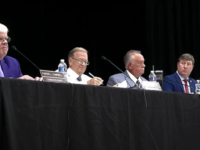
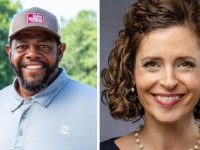
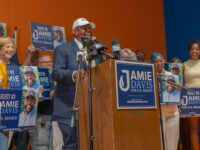
The event, part of the “To the People, For the People” 2026 Democratic Roadshow, brought together Senate candidates Nick Albares and Jamie Davis and 3rd District candidates Tia LeBrun, John Day and Caleb Walker. Senate candidate Gary Crockett did not appear. Before the candidates ever took the stage, local organizers addressed the crowd about immigration enforcement in Acadiana, detention expansion in Louisiana and local opposition to criminalizing homelessness — a reminder that the room was not approaching the afternoon as a detached civic exercise, but as part of a larger political fight already underway.
That context shaped the event. So did the audience. When the questioning turned to AIPAC, petrochemical expansion, abortion, church-state separation, ICE, charter schools, special-needs education and data centers, what emerged was not just a portrait of the candidates, but of the kind of Democratic electorate now showing up to hear them: skeptical, restless and plainly uninterested in placeholders.
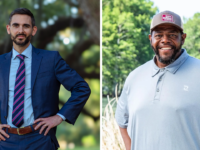
In the Senate portion, Albares and Davis shared far more common ground than conflict. Both backed the John Lewis Voting Rights Advancement Act and denounced the SAVE Act as voter suppression. Both supported an expanded federal role in health care, defended abortion rights and rejected the cruelty of the current Republican approach to immigration.
But the two men were clearly trying to tell different stories about why they should be the nominee.
Albares, who invoked his work in the Barack Obama and John Bel Edwards administrations, presented himself as a candidate of policy fluency and governing competence. His answers were structured, expansive and heavy on programmatic detail. He described his political philosophy in concise moral terms — “Every person is important” — and then used that premise to build out a case for Medicare for All, universal child care, paid family leave, a higher minimum wage and tighter checks on corruption in government.
Davis, a farmer from Tensas Parish, was making a different argument. He spoke less like a policy technician than a candidate trying to persuade the room that Louisiana Democrats will not regain their footing by sounding interchangeable with Democrats elsewhere. His pitch rested on biography, rural credibility and cultural reach. “How do you talk to rural community?” he asked. “You go find a Democratic candidate from the rural community.” That same instinct ran through his answers on affordability and monopoly power, where he cast concentrated corporate control as a direct threat to working people trying to make a living.
That was the real split in the Senate exchange: not over ideological direction, but over what kind of messenger Louisiana Democrats need. Albares was arguing for experience, command of policy and institutional readiness. Davis was arguing for reach, instinct and a political vocabulary that can travel beyond the party’s usual terrain.
The 3rd District candidates offered a wider range of styles.
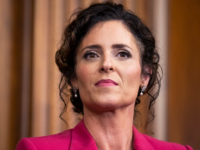
LeBrun’s performance was the most anchored in the practical burdens of life in south Louisiana. She opened with a definition of accountability — “you show up, you listen, really, listen to people and deliver what it is your constituents need” — and spent the rest of the forum largely keeping faith with that frame. Her answers returned again and again to insurance costs, coastal erosion, wage stagnation, education access and the question of whether Louisiana is becoming unaffordable for the very people who call it home. On disaster policy, she defended FEMA as essential and dismissed the idea that states like Louisiana should simply be handed more responsibility with fewer federal guarantees. “We are 50th in everything,” she said. “I don’t want Jeff Landry to have a block grant to handle my rescue.”
She was also among the more specific candidates when the discussion turned to artificial intelligence, arguing that people should have “proprietary rights over their voice and their likeness” and that Louisiana should not quietly become the host for infrastructure that benefits others while drawing on the state’s land and resources.
Day, by contrast, approached the forum with the clearest appetite for confrontation. He framed the stakes in ideological terms from the outset and seemed comfortable matching the anger in the room. At one point, he said plainly that his “critical issues are Donald J. Trump and Clay Higgins,” then went on to call for Trump’s impeachment, the reversal of Project 2025 and a more direct politics of opposition. On immigration, he was equally unambiguous: “We absolutely need to abolish ICE. Period.” His was the least cautious voice onstage and the one most willing to speak in the language of political emergency.
Walker, a veteran and student leader, leaned heavily on biography, service and a broader appeal to unity. He introduced himself through his military background, his work and education, and his desire to “bring community back to where it should be.” His strongest emphasis was education, particularly the treatment of teachers, students and younger people trying to find a foothold. But where LeBrun and Day often met questions with fully formed ideological or policy arguments, Walker’s answers more often stayed in general terms, stressing community, fairness and opportunity over sharper issue definition.
The audience questions were, in some ways, the most revealing part of the afternoon. One younger attendee, speaking for a group of disillusioned voters under 30, said many of them no longer believed voting would change anything and pressed the candidates on AIPAC, Citizens United and the continued concentration of chemical and petrochemical plants along Louisiana’s coast. The responses differed in tone, but several candidates converged on the same underlying critique: that Louisiana has spent too long accepting environmental risk and political humiliation as the price of economic development. LeBrun said there should be “no expansion” of carbon capture projects “until science has had a chance to catch up.” Davis put the same instinct more bluntly: “I’m a farmer, and ain’t let nobody come and take my land.”
Another audience member pushed the candidates on abortion from a direction Democrats often struggle to address directly, asking how they respond to people who understand the issue primarily in moral, not legal or medical, terms. The answers exposed differences in rhetoric more than substance. Albares drew a line between personal belief and public power, saying such views “should not be imposed on others by politicians making government decisions.” Davis answered with the kind of plain-spoken individual-liberty argument that often comes more naturally to him: “A woman has the right to do whatever she wants with her body.”
Public education produced perhaps the clearest consensus of the day. Candidates in both races defended traditional public schools and criticized the diversion of public money into charter and voucher systems, especially where those systems leave the highest-need students behind. In one of the more effective answers of the afternoon, Davis turned Republican “pro-life” rhetoric back on itself, arguing that if the state is going to force a woman to carry a pregnancy, then it must also be willing to support her “all the way down to the point to where there’s going to be child care, to health care, to every bit of it.”
If there was a shared mood in the room, it was that the candidates were being measured not just against each other, but against the scale of the moment. The voters asking questions did not sound especially interested in being comforted. They wanted to know who would oppose ICE without hedging, who would defend bodily autonomy without flinching, who understood what data centers and petrochemical buildout mean in a state like Louisiana, and who saw public education as something more than a line in a stump speech.
That is what made the event more than a standard campaign stop. It did not produce a dramatic ideological rupture among the candidates. There was little of that to be found. What it did produce was a sharper sense of how each is attempting to answer the deeper question facing Louisiana Democrats: not merely what the party stands for, but what kind of candidate can carry those commitments in a state where faith in politics is thin, the opposition is radicalized and the voters still showing up are demanding something sturdier than performance.