















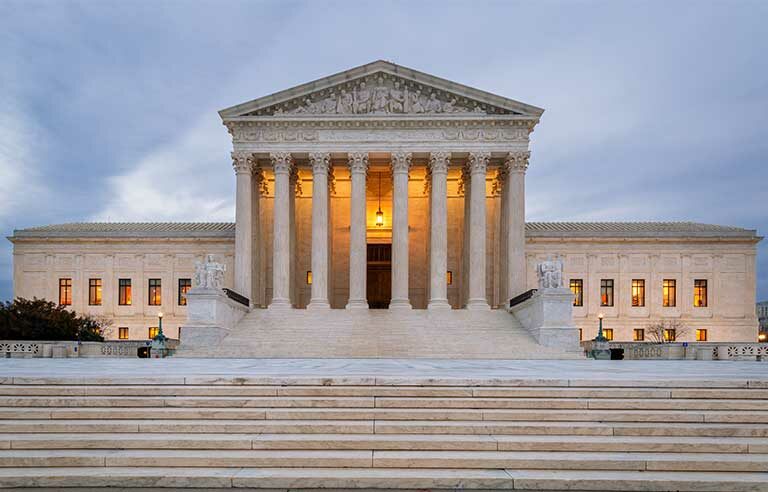
The U.S. Supreme Court on Friday handed Chevron and the oil industry a major win in one of Louisiana’s most important environmental cases, wiping away the legal footing beneath a $745 million coastal damage verdict and moving a key part of the fight into federal court, where oil companies generally believe they have better odds. The ruling does not end Louisiana’s coastal lawsuits outright. But it absolutely weakens one of the biggest efforts in the state to force Big Oil to pay for the damage it helped cause.
The case comes out of Plaquemines Parish, where jurors had found that Texaco, later acquired by Chevron, violated Louisiana’s coastal laws by failing to restore wetlands damaged by dredging canals, drilling wells, and dumping wastewater into fragile marshes. The broader litigation has been one of the few serious attempts in Louisiana to make the oil and gas industry answer, in dollars, for the erosion and destruction that has left the state more exposed to hurricanes, flooding, and long-term land loss.
What the Supreme Court decided was procedural, but don’t let that word soften what happened. The justices unanimously held that Chevron had shown enough of a connection between the coastal damage claims and its World War II fuel work for the federal government to remove the case from state court into federal court. In plain English, the Court accepted Chevron’s argument that because some of the challenged oil production was tied to wartime aviation fuel production, the company gets to fight this case on friendlier turf.
Justice Clarence Thomas, writing for the Court, said the lawsuit “relates to” Chevron’s federal wartime duties because the challenged oil production was closely connected to its refining of aviation gasoline for the military. The Court leaned heavily on a broad reading of that phrase, saying the connection did not have to be direct or specifically ordered by the government. It only had to be close enough not to be “tenuous, remote, or peripheral.” That is a big deal because it gives corporate defendants more room to drag state environmental cases into federal court whenever they can plausibly tie their conduct to federal work.
And that is the real story here. This is not just about one old wartime contract. It is about the Supreme Court giving oil companies a wider procedural escape hatch in a state where local communities have spent years trying to hold them accountable for wrecking the coast. The Court vacated the Fifth Circuit’s earlier ruling and sent the case back for further proceedings, but the immediate effect is obvious: Chevron got what it wanted. Louisiana lost ground.
The underlying lawsuits matter because they are rooted in decades of damage. The decision itself recounts that Louisiana enacted the State and Local Coastal Resources Management Act in 1978, with a permitting program that took effect in 1980, and that Plaquemines Parish and other parishes filed 42 lawsuits in 2013 alleging oil and gas companies operated without permits or illegally commenced activities that were not protected by the law’s pre-1980 exemption. The Court also notes the parishes’ claims that Chevron’s wartime activities included vertical drilling, dredging canals instead of building roads, and using earthen pits in ways that contributed to contamination and land loss.
That matters for the environmental movement because these cases have never just been about the past. They are about whether Louisiana communities have any meaningful tool left to challenge an industry that has profited off the state while helping leave it physically weaker. In a place like south Louisiana, coastal destruction is not abstract. It means disappearing land, weaker storm protection, more flood vulnerability, and communities being left to bear the cost while industry lawyers argue over jurisdiction.
And while this case is about coastal land loss, not Cancer Alley directly, nobody in Louisiana’s environmental justice movement should miss the warning. The same system that has long made it hard to stop petrochemical expansion along the Mississippi River corridor is the system this ruling strengthens: one where powerful companies use procedural defenses, friendly venues, and decades-old government relationships to avoid facing full accountability where the damage was actually done.
That is why this lands as more than a courtroom loss. For people fighting in Cancer Alley, for communities living next to plants, pipelines, and legacy pollution, and for anyone hoping Louisiana might finally force industry to pay something back, this decision says the road just got steeper. If the coastal lawsuits were one of the clearest shots Louisiana had at making Big Oil answer for the destruction it helped cause, the Supreme Court just made that shot a lot harder to land.
There is still a fight ahead. And the Chevron case is not dead. But this ruling was not some neutral housekeeping matter. It was a win for Chevron, a win for Big Oil, and a setback for Louisiana communities trying to prove that the companies that helped break this state should help pay to fix it.
Read the case below: