








For a party that has spent years struggling to build credible federal campaigns in Louisiana, the first-quarter fundraising reports offered something Democrats do not always get in this state: signs of life.
Several Democratic candidates posted respectable numbers in reports covering Jan. 1 through March 31, enough to show that there is still donor interest, still some organizational muscle and still at least a handful of campaigns trying to do more than merely occupy ballot space. But if the filings offered Democrats a little encouragement, they also delivered a much harsher reminder. In Louisiana federal politics, Republicans are still operating with a level of financial dominance that can make even a solid Democratic quarter look small on arrival.
That tension is clearest in the U.S. Senate race, where the Republican primary is being fought with real money and the Democratic primary is being fought with far less.
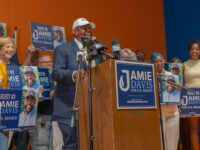
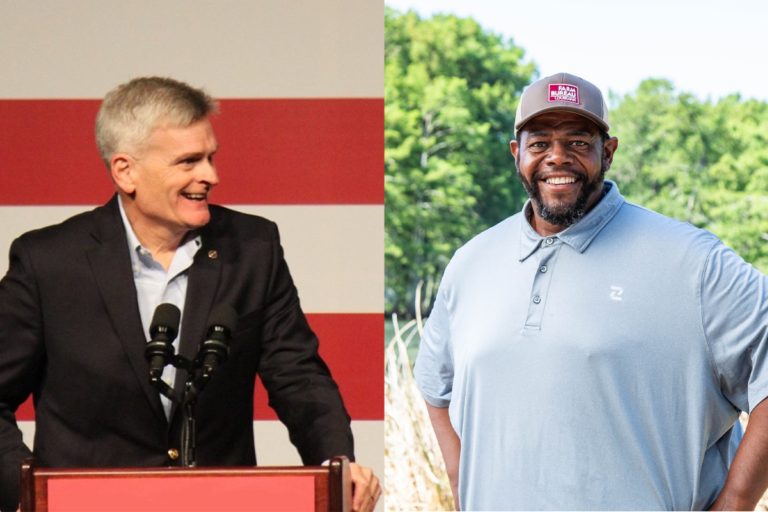
On the Democratic side, Jamie Davis posted the strongest quarter, raising about $309,100 and ending March with roughly $141,821 cash on hand. Nick Albares reported raising $70,920.59 and finishing the quarter with $54,036.50 on hand. Those are not eye-popping statewide numbers, but in Louisiana they are not meaningless. They suggest actual outreach, actual effort and at least some ability to build a donor base in a state where Democratic statewide hopefuls often struggle to get traction at all.
On the Republican side, the scale is entirely different.
Bill Cassidy and allied groups brought in $2.5 million during the first quarter, according to figures released this week. Of that, Cassidy for Senate raised $770,000, while three associated groups tied to his candidacy raised another $1.8 million. Cassidy entered April with $7.2 million cash on hand. Julia Letlow and allied committees raised $1.9 million during the same period, including $660,000 through Letlow for Louisiana and another $1.3 million through the Letlow Victory Fund and Hope in Action PAC. Letlow ended the quarter with $2.7 million cash on hand. John Fleming raised just $45,000 in the first quarter and reported $2.1 million cash on hand.
Those Fleming numbers matter, because they tell a more complicated story than the topline cash figure suggests.
Fleming’s cash-on-hand total was padded by candidate loans. According to the latest reporting on the race, he loaned his campaign $2 million on Dec. 23, repaid himself $1.87 million on Jan. 5, then loaned the campaign another $2 million on March 25. Without that late infusion, his campaign would have been sitting on very little cash. Letlow’s campaign has attacked the practice as a way to artificially juice end-of-quarter numbers. Fleming has said he is simply moving the money to invest it elsewhere and then re-loaning it to the campaign. Whatever explanation one prefers, the underlying fact is hard to miss: Fleming’s reported $2.1 million cash-on-hand figure is far more a reflection of personal wealth than fundraising strength.
The same pattern runs through the congressional races.
A few Democratic House candidates posted numbers that, on their own terms, are respectable. Matthew Gromlich raised $87,424.24 in the 4th District and ended the quarter with $24,535.68 cash on hand. Lauren Jewett raised $38,307.88 in the 1st and closed with $23,707.45 on hand. In the open 5th District, Dan McKay raised $44,173.54, while Lindsay “Rubia” Garcia raised $22,875.33 and Tania Nyman raised $10,754.73. In the 3rd District, John Day reported $5,050 and Tia LeBrun reported $5,873.
Those numbers are enough to suggest some Democratic candidates are at least building real campaigns, especially given how recently several of them entered their races. But they are not the kind of numbers that erase the reality of the map. In more than one case, the totals were also propped up by candidate money, underscoring how often Democratic hopefuls in Louisiana still have to finance viability themselves before anyone else will. That is not unusual in politics. It is, however, a sign of how thin the party’s bench and donor infrastructure remain outside its safest turf.
Meanwhile, Louisiana Republicans continue to post figures that belong to a different class of campaign entirely.
Speaker Mike Johnson reported $17.55 million in receipts and $10.33 million cash on hand through March 31. Steve Scalise reported $9.32 million in receipts and $5.68 million cash on hand. In the open 5th District, Republican Blake Miguez had already posted $4.78 million in receipts and nearly $4 million cash on hand before the latest quarter was even fully reflected across all public data. That kind of money does not just buy television ads. It buys insulation. It buys staff, consultants, mail, data, digital targeting, rapid response and the ability to define a race before an underfunded opponent can even properly introduce themselves.
And that is where the deeper Democratic frustration starts to come into view.
Louisiana Democrats do not lack for anger, energy or people eager to talk about the stakes of the Trump era or Jeff Landry’s brand of hard-right governance. The state party and allied activists can still draw passionate crowds, particularly in places like New Orleans. National Democrats clearly still see the region as politically relevant enough to keep courting, with the Democratic National Committee recently using its New Orleans spring meeting to talk up the South as a place where long-term investment has been neglected. As DNC chair Ken Martin put it, “one of the reasons we’re in this place that we are is because we’ve stopped investing and building infrastructure.”
But enthusiasm is not infrastructure, and rhetoric is not a field budget.
That is the harder truth embedded in these filings. Louisiana Democrats can celebrate candidates posting decent early numbers, but campaigns do not buy television, digital ads, yard signs, door hangers or payroll on a curve. Vendors do not offer a discount because one side is under-resourced. Staff are not cheaper because a district is uphill. A candidate can generate authentic excitement and still get buried if that excitement never hardens into the kind of fundraising operation needed to compete over time.
That disconnect becomes even more glaring when national Democratic stars can tap donor networks across the South for marquee races elsewhere. Roy Cooper, whose Senate campaign in North Carolina announced this week that it raised more than $13.8 million in the first quarter alone, is rumored to have raised as much as $1 million at a recent New Orleans fundraiser. That means the Louisiana Democratic money exists, Democratic passion exists, and donor urgency certainly exists when the race is seen as important enough. The question Louisiana keeps forcing back into view is why so little of that urgency gets translated into building a durable Democratic bench at home.
And the map only makes the imbalance worse.
Cook Political Report rates Louisiana’s Senate race Solid Republican. It also rates the 1st, 3rd, 4th and 5th congressional districts Solid Republican, while the 2nd and 6th remain the state’s only reliably Democratic federal seats. That means most Louisiana Democrats are not just trying to raise money in competitive races. They are trying to raise money in districts where the partisan fundamentals are already stacked against them before the first voter sees a single mail piece or digital ad.
So yes, there is a real story in these filings for Democrats. It is not that the party is suddenly on the verge of a federal breakthrough. It is that some candidates are still finding enough support to put together serious opening quarters in a state that has not exactly been kind to Democratic ambition. That matters. It shows there are still people willing to invest in a message, even when the odds are long.
But the more important story is the one Louisiana Democrats have been living with for years. Respectable fundraising is not the same thing as competitiveness. Not here. Not against this Republican machine. In Louisiana, Democrats can show discipline, energy and even flashes of promise and still find themselves badly outgunned by a GOP that has the money, the map and the muscle to keep most federal races from ever becoming true contests.
That is what these first-quarter numbers really show. Democrats still have a pulse. Republicans still control the bloodstream.