

















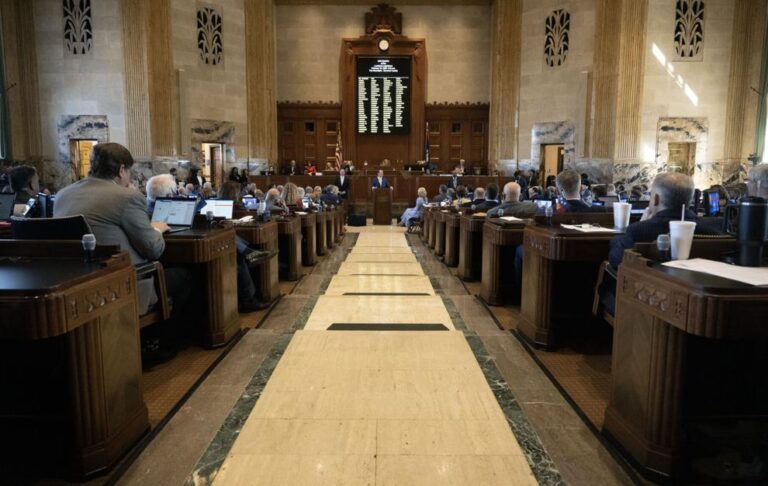
When the Louisiana Legislature gavels in at noon on Monday, March 9, lawmakers will face a crowded slate of prefiled bills that signal where the real policy fights are likely to emerge this spring.
With constitutional limits this year preventing the creation of new taxes or increases to existing ones, the focus shifts to other levers of state power: wage policy, child welfare oversight, criminal code expansion, education governance, retirement systems, and regulatory authority over energy and land use.
Here’s what stands out.
Minimum Wage Policy — A Direct Challenge to Louisiana’s Low-Wage Status Quo
Two House bills take direct aim at Louisiana’s continued reliance on the federal minimum wage of $7.25.
HB 209 (Rep. Delisha Boyd) would establish a state minimum wage phased in over time:
• $10/hour beginning January 1, 2027
• $12/hour beginning January 1, 2029
• $14/hour beginning January 1, 2031
The bill includes enforcement provisions and civil remedies for violations, signaling that it is designed to function as more than symbolic messaging.
HB 353 (Rep. Tammy Phelps) proposes a more aggressive approach:
• $12/hour beginning January 1, 2027
• $15/hour beginning January 1, 2029
• Indexing to inflation beginning in 2031
• Automatic alignment if the federal minimum wage increases
Both bills would give Louisiana its own wage floor rather than deferring entirely to federal policy.
In a legislature where business groups have historically resisted wage mandates, the central question is not whether these proposals are ambitious — it’s whether leadership allows them meaningful hearings. If they do move, they will force a clear debate about whether Louisiana’s economic model depends on keeping wages low.
Child Welfare and DCFS — Structural Authority and Accountability
The Department of Children and Family Services remains a pressure point after years of staffing shortages, case backlogs, and public scrutiny.
SB 265 (Sen. Regina Barrow) is one of the more substantial human services bills prefiled. The legislation touches funding streams, health infrastructure coordination, and programmatic authority that intersect with child welfare operations. While not a narrow “DCFS-only” bill, it has implications for how services are delivered and funded, particularly where public health and family services overlap.
In the wake of the state’s “One Door” restructuring that moved certain public assistance programs, structural clarity matters. Bills affecting administrative authority determine where accountability lives — and whether reforms stabilize or fragment systems further.
Additional proposals related to DCFS employee oversight and internal procedures suggest lawmakers are responding to both public concern and agency performance issues.
The tension this session may not be over whether child protection is important — it will be over how much structural reform is substantive versus cosmetic.
Criminal Justice — Expanding Definitions, Expanding Consequences
Public safety legislation remains a dominant theme.
One notable example is HB 100, prefiled by Rep. Dixon McMakin, which would create the crime of “felony speeding” for drivers traveling 30 miles per hour or more above the posted limit, carrying significant fines and potential incarceration.
Other bills adjust definitions tied to cruelty statutes, racketeering predicates, sentencing categories, and procedural standards.
Each of these changes may seem technical in isolation. Taken together, they represent continued expansion of Louisiana’s criminal code. That expansion carries practical implications: prosecutorial leverage, court congestion, incarceration costs, and long-term consequences for defendants.
There are also proposals exploring alternative pretrial frameworks in certain parishes, suggesting lawmakers are not uniformly moving in one direction — but the dominant trend remains toward expanding criminal penalties rather than narrowing them.
Education Governance — Charter Conversions and Structural Shifts
Education policy again includes proposals affecting charter school conversion procedures.
Changes to voting thresholds and conversion processes for traditional public schools into charter schools may appear procedural. They are not.
Louisiana’s charter landscape has long blurred the line between public accountability and quasi-private governance. In some communities, charter expansion has coincided with fragmentation of school systems and demographic sorting that echoes older segregation patterns — particularly where new municipal governance structures alter district boundaries.
Any bill that lowers barriers to charter conversion or adjusts who gets to decide deserves close examination. The stakes are not just educational philosophy; they are governance, equity, and control of public funds.
This is an area where incremental statutory tweaks can produce outsized structural change.
Retirement Systems — Incremental Relief and Long-Term Liability
Several prefiled bills address retirement eligibility and cost-of-living adjustments within state systems.
HB 23 would allow a cost-of-living adjustment for eligible LASERS retirees, capped at 2% on the first $80,000 of benefits.
HB 43 would adjust retirement eligibility rules, allowing members to retire after 35 years of service regardless of age.
These measures provide targeted relief to retirees while raising familiar fiscal questions about long-term sustainability. Retirement bills often move with less ideological noise but carry significant budgetary implications.
Energy, Land Use, and Regulatory Authority
HB 7, the Louisiana Landowners Protection Act, would eliminate expropriation authority for private carbon dioxide pipelines and storage projects tied to carbon capture initiatives.
Supporters frame it as property rights protection. Critics argue it could complicate Louisiana’s positioning as a hub for carbon sequestration and industrial decarbonization.
This fight intersects economic development, environmental regulation, and landowner rights — and it will likely draw heavy lobbying from both industry and rural constituencies.
Public Health and Social Policy
Bills touching telehealth regulations, opioid treatment oversight, and perinatal bereavement care indicate continued legislative engagement with health infrastructure.
In a session constrained from large-scale new spending, many of these proposals operate through regulatory reform rather than funding expansion.
How This Session Could Shape the Next Two Years
The early filings suggest a session defined less by sweeping ideological overhauls and more by structural shifts:
• Wage floor proposals testing economic priorities
• Child welfare and administrative restructuring
• Continued expansion of criminal definitions
• Charter governance adjustments with long-term implications
• Targeted retirement adjustments
• Regulatory battles over energy infrastructure
With Democrats in a super-minority, transformative legislation faces steep odds. But the story of this session will not just be which bills pass, but which ones receive real hearings, which ones are quietly amended, and which ones leadership chooses to prioritize.