


















At noon on Monday, March 9, lawmakers will gavel in the 2026 Regular Session. They have until June 1 to pass laws, shape state policy, and decide what problems are worth solving — and which ones aren’t.
On paper, it’s a 60-day legislative session inside an 85-day window . In reality, it’s a tightly choreographed exercise in power, timing, and control.
If you want to understand what’s about to happen — and what probably won’t — here’s how the system really works.
First, Know the Boundaries
This is a “general subject matter” session. Lawmakers can file bills on most topics.
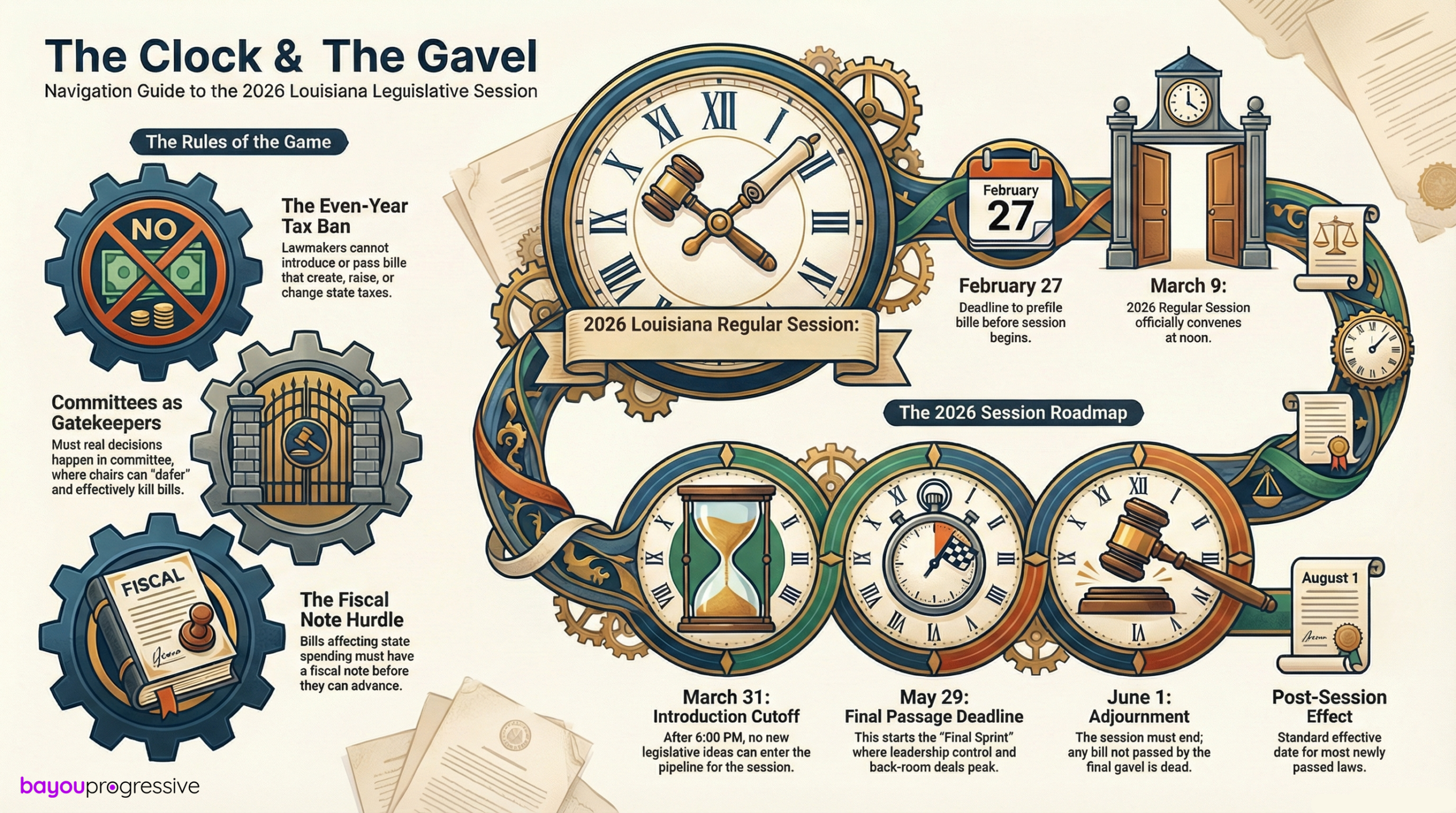
But because this is an even-numbered year, there’s a major restriction: they cannot introduce or pass bills that create a new state tax, raise an existing state tax, or change state tax exemptions, deductions, or credits.
That means no broad tax reform debates this spring. No serious restructuring of the revenue system. No big conversations about who pays and who doesn’t.
The guardrails are already up.
Most of the Real Work Happened Before March 9
By the time lawmakers walk onto the House and Senate floors on opening day, most serious legislation has already been drafted and prefiled.
The deadline to prefile bills was February 27. To see what bills have been pre-filed already, click here to see our preview of the latest session.
After that, each legislator is limited to introducing just five additional bills during session.
That rule matters. It forces rank-and-file lawmakers to prioritize — and gives leadership enormous leverage. If you want one of your five bills to move, you’d better not cross the wrong committee chair.
For certain bills, there are even stricter hurdles. Local bills require 30 days of published notice in a parish’s official journal before they can be introduced . Retirement system changes require 60 days of notice in the state’s official journal.
Miss those procedural steps, and your bill is dead before debate ever begins.
Committee Is Where Bills Go to Live — or Quietly Die
Here’s the part civics textbooks don’t emphasize enough: floor debates are mostly theater. The real decisions happen in committee.
Once introduced, a bill is assigned to a subject-matter committee. That committee can:
- Advance it
- Amend it
- Stall it
- Or “defer” it (which is usually legislative euthanasia)
If a bill affects state spending, it must have a fiscal note attached before committee consideration. If it changes a public retirement system, it needs an actuarial note.
No fiscal note. No movement.
That’s not just paperwork. Fiscal notes can slow down, reshape, or quietly kill controversial ideas — especially ones that cost money.
The March 31 Cutoff
Lawmakers have until March 31 at 6:00 PM to introduce bills.
After that, no new ideas enter the pipeline.
From that point forward, it’s all about survival. Which bills can clear committee? Which ones can get scheduled? Which ones get buried?
The Final Sprint — Where Things Get Sloppy
No bill can receive final passage after 6:00 PM on May 29 — the 82nd calendar day — unless two-thirds of both chambers agree to extend for limited purposes.
That’s when the chaos kicks in.
Late amendments.
Conference committee rewrites.
Language inserted at the last minute.
Deals cut behind closed doors.
The closer we get to that May 29 deadline, the more leverage shifts to leadership. They control calendars. They control what gets called up. They decide which bills die quietly without ever seeing a vote.
The session must adjourn no later than June 1 . When the gavel falls, anything not passed is gone.
What Happens After Passage
If the governor signs a bill — or lets it become law without signature — it typically takes effect August 1, unless the bill says otherwise.
Constitutional amendments are different. They go on the ballot and only take effect if voters approve them, becoming effective 20 days after the governor proclaims the results.
The Bottom Line
Between March 9 and June 1, lawmakers will file hundreds of bills. Most will die.
A small number will pass quietly.
A few will dominate headlines.
And some of the most consequential decisions will happen in procedural corners most voters never see — committee agendas, fiscal notes, and last-week negotiations.
The rules are structured. The deadlines are firm. But within those boundaries, power flows through relationships, leadership control, and strategic timing.
If you want to follow this session seriously, don’t just watch the floor debates.
Watch the committees. Watch the calendars. Watch who controls the clock.
That’s where Louisiana’s future actually gets written.