
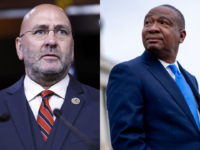

















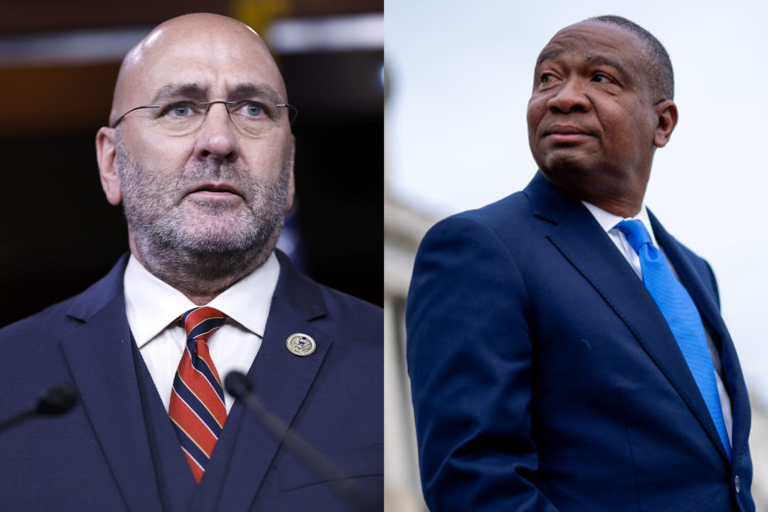
When President Donald Trump threatened this week that “a whole civilization will die tonight” if Iran did not bend to his demands, the statement was so grotesque that it demanded more than the usual partisan reflex. It demanded a moral response. In Louisiana’s congressional delegation, two members supplied one. Congressman Cleo Fields treated Trump’s rhetoric like what it was: a threat against civilians, a constitutional crisis, and a line that should not be crossed by any president pretending to operate under law. Congressman Clay Higgins treated it like a hype video.
Fields’ response was direct and sober. In his official statement, he said Trump had threatened “a whole civilization,” called it “a direct attack against Iranian civilians,” described it as “dangerous” and “wrong,” and demanded an immediate House vote on the War Powers Resolution. Whatever one thinks of U.S. policy toward Iran, that is what an adult response looks like: recognition that civilian life matters, that Congress has a role in questions of war, and that presidential bloodlust is not a substitute for policy.
View this post on Instagram
Higgins went the other direction entirely. He wrote that he would support a ceasefire only when Iranian regime men are “all dead,” their homes are “rubble,” and their dreams are “pounded into the dust of history.” Then came the closing command: “Wipe. Them. Out.” He followed that by urging Trump to hit them so hard “the Angels in Heaven nod in wonder,” alongside an image evoking holy-war iconography. That is not tough talk. That is eliminationist rhetoric dressed up as righteousness. It is the language of collective destruction, not the language of a legislator in a constitutional republic.
I’ll support a ceasefire in Iran when the Iranian terrorist regime of disgusting jihadist fanatical men are all dead, their weapons are destroyed, their homes are rubble, and their lustful dreams of world domination have been pounded into the dust of history.
Wipe. Them. Out.… pic.twitter.com/IujbHgQWBc— Rep. Clay Higgins (@RepClayHiggins) April 6, 2026
And that is exactly why Higgins’ comment deserves to be read as more than just another one of his regular eruptions. It says something ugly and revealing about the political culture that keeps rewarding this kind of behavior. Higgins represents one of the safest Republican seats in the state. He won reelection in 2024 with over 70% of the vote, and Cook rates the seat Solid Republican. In a district that secure, the political incentives are warped. A member is not punished for sounding unhinged. He is often rewarded for sounding more feral than the next guy. Safe seats do not create bad character, but they absolutely create the conditions for unrestrained character to flourish in public.
That does not make Higgins merely a district-level anomaly. It makes him an exaggerated expression of a broader strain in modern conservatism. The operative political question is no longer whether a Republican official should sound measured, prudent, or morally serious. The question, too often, is whether he can perform dominance loudly enough to satisfy a base that has been trained to mistake cruelty for clarity. In that framework, threatening mass devastation is not an embarrassment. It is branding. Higgins’ post was not a break from the ethos. It was the ethos stripped of euphemism.
There is also no way to ignore the religious imagery here. Higgins did not just call for death and rubble. He framed it in language of heavenly approval, as though devastation itself could be sanctified. That is where the indictment of a certain kind of American evangelical politics comes in. Not faith itself, and not every evangelical voter, but the militarized, apocalyptic, civilizational version of Christianity that too often shows up in right-wing politics as a moral permission structure for domination. When a congressman imagines angels nodding at the flattening of homes, the problem is no longer just foreign policy ignorance. The problem is spiritual corruption masquerading as conviction.
Fields’ response, by contrast, did not require theological gymnastics or cable-news performance. It simply began from a premise that should not be controversial: threatening civilian populations is wrong, and Congress should not stand by while a president talks like a man auditioning for the role of emperor. That contrast matters because it shows that the divide here is not merely left versus right. It is restraint versus spectacle, law versus vengeance, humanity versus dehumanization.
If there is a Louisiana-specific lesson in all this, it is not just that Higgins is extreme. We already knew that. It is that Louisiana’s political system still contains too many places where extremism carries no real cost. The same state that had to be dragged through years of litigation to produce a second majority-Black congressional district also continues to send members from heavily protected seats into Washington with every incentive to inflame and almost none to reflect. The Supreme Court cleared the way in 2024 for Louisiana to use a map with two majority-Black districts after earlier maps had diluted Black voting power. That fight was about representation, but it was also about accountability: what kinds of voices get amplified, and what kinds of politics become normalized when districts are engineered for safety instead of competition.
None of this means every Louisiana Republican would have written what Higgins wrote. It does mean that the environment around him has made space for a congressman to fantasize publicly about homes reduced to rubble and still remain a secure, viable, well-protected political figure. That should trouble anyone who still wants to believe conservatism is primarily about order, restraint, or moral seriousness. At least in Higgins’ version of it, conservatism has curdled into theatrical cruelty, and Louisiana’s political map gives him the comfort to perform it without fear.
In the end, Fields and Higgins did more than react to Trump. They illustrated two competing ideas of what public office is for. Fields used his office to warn against lawless escalation and defend civilian life. Higgins used his to celebrate destruction in language so depraved it would be disqualifying in a healthier political culture. The tale of these two congressmen is not simply a story about Iran. It is a story about what kind of politics Louisiana still tolerates, what kind it rewards, and what kind of moral rot takes hold when a politician knows his district is so safe he can say the barbaric part out loud.