


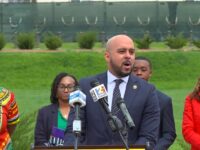










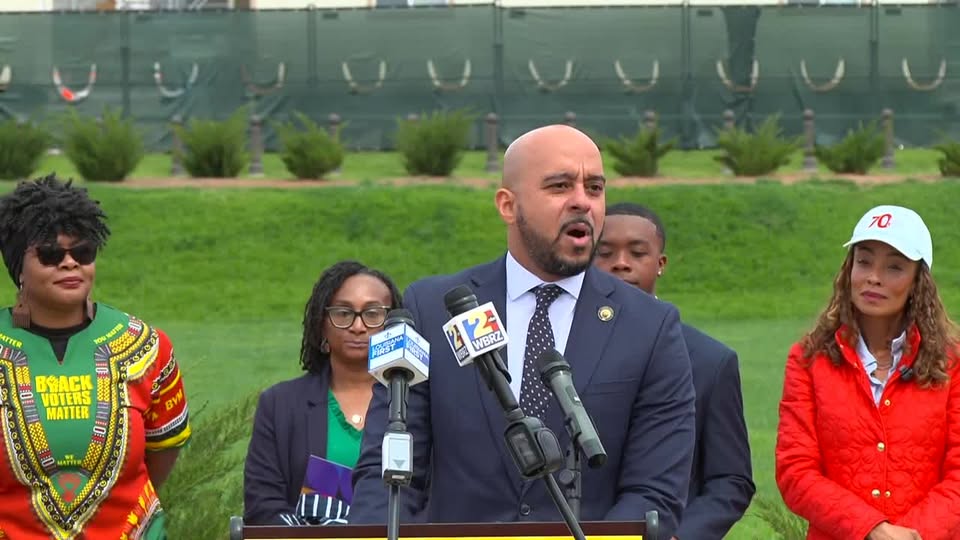
State Sen. Royce Duplessis is pitching his Louisiana Voting Rights Act as a state-level backstop at a moment when he says the federal one can no longer be taken for granted.
Duplessis’ Senate Bill 365 would create a Louisiana Voting Rights Act, prohibit voter suppression and vote dilution, and establish a Louisiana Voting Rights Commission with preclearance authority over certain election changes. The bill’s core premise is straightforward: Louisiana should not have to wait for federal courts or Washington to decide how much access to the ballot its voters deserve.
“Just look at what’s going on nationally around voting rights,” Duplessis said. “The Voting Rights Act of 1965 is in the balance.” He argued that with the Supreme Court weighing another major Louisiana voting-rights case and Republicans continuing to push measures like the SAVE Act, “we can’t wait. We cannot sit back and just say we’re going to let the Supreme Court dictate where we stand on voting rights.”
That urgency is the real story behind SB 365. Duplessis is not just filing another long-shot Democratic bill in a Republican-dominated Legislature. He is trying to build a state firewall while the federal one grows weaker.
The bill would bar the state and local governments from adopting election policies that suppress voting or dilute the voting strength of protected classes. It defines voting broadly, covering not just casting a ballot but everything required to make that vote count, from registration to ballot access to final tabulation. It also explicitly treats districting and redistricting as part of the “method of election,” meaning maps themselves are directly within the bill’s reach.
At the center of the proposal is a preclearance system modeled on the old federal regime that once applied to Louisiana before the Supreme Court gutted it in Shelby County. Under SB 365, certain covered political subdivisions would have to get approval from a state commission before making covered election changes. That includes new or modified election policies, changes to methods of election, and even changes that diminish the authority of elected officials.
“Before preclearance got struck down, what that meant was that anytime there was a change to what happens around elections in Louisiana … before change took place, it first had to get approved by the Department of Justice,” Duplessis said. “My bill would essentially set up a system similar to that.” He called the proposal “a reaffirmation of protecting people’s voting rights” and “ensuring that people have access to the ballot.”
That argument lands differently in Louisiana than it might elsewhere. The state is already central to one of the country’s most important voting-rights cases, Louisiana v. Callais, which could reshape how Section 2 of the federal Voting Rights Act is applied in redistricting cases. Duplessis said the consequences could be immediate and severe.
“If the Supreme Court uses that to destabilize Section 2,” he said, “it has direct and serious impacts,” including putting Louisiana’s newly drawn second majority-Black congressional district [6th District, represented by Rep. Cleo Fields] back in jeopardy. And it would not stop there. “It would also apply to state legislature … judicial seats, some judicial minority subdistricts. So the effects would be wide ranging.”
Duplessis also made clear that he sees the broader attack on voting rights as coming from multiple directions at once, not just courtroom fights over redistricting. He pointed to shrinking access at the precinct level, stricter identification requirements, voter-roll purges, and national Republican messaging around election “integrity” as parts of the same larger project.
Asked what kinds of practices his bill is meant to stop, Duplessis pointed to “getting rid of precincts, shortening the time that precincts are open and available, anything that stands in the way of voting.” He added that while he has no problem with basic voter identification, some of the newer proposals go much further. “All of these different ID requirements,” he said, “they really are just, they’re like a poll tax.”
That distinction matters. Duplessis did not argue that Democrats oppose voter ID outright. Instead, he said the problem is when identification rules become so burdensome that they function as intimidation or exclusion.
“What I believe … is that we do not stand in the way of reasonable standards,” he said. “But it’s the additional requirements that are being put on citizens and voters throughout the country that make it more onerous, that are really aimed at voter intimidation and keeping people away from voting.”
He said earlier versions of SB 365 considered going even further by expanding voting methods, including broader mail voting and longer polling hours. But he chose to narrow the bill.
“We decided not to go down that path and just focus on protecting where we are right now,” he said.
That narrower scope may be partly practical. Duplessis is well aware that in a Legislature where Democrats are deep in the minority, a bill about voting rights faces long odds before it is even heard. He said that reality shapes every filing decision Democrats make.
“You still have to show up every day. We still have to fight,” he said of serving in the superminority. “Even if we’re not on the winning side of the vote every time, our voice matters.”
On this issue, he expects the divide to be almost entirely partisan.
“This is purely a party line issue,” Duplessis said. And when asked what credible rationale he has heard from opponents of stronger voting-rights protections, he did not hedge: “There’s no good reason. There is no good answer.”
That bluntness gets at the larger political point beneath the bill. SB 365 is not just about one commission or one legal standard. It is about whether Louisiana intends to move toward stronger democratic protections at a time when the national trend is moving in the opposite direction.