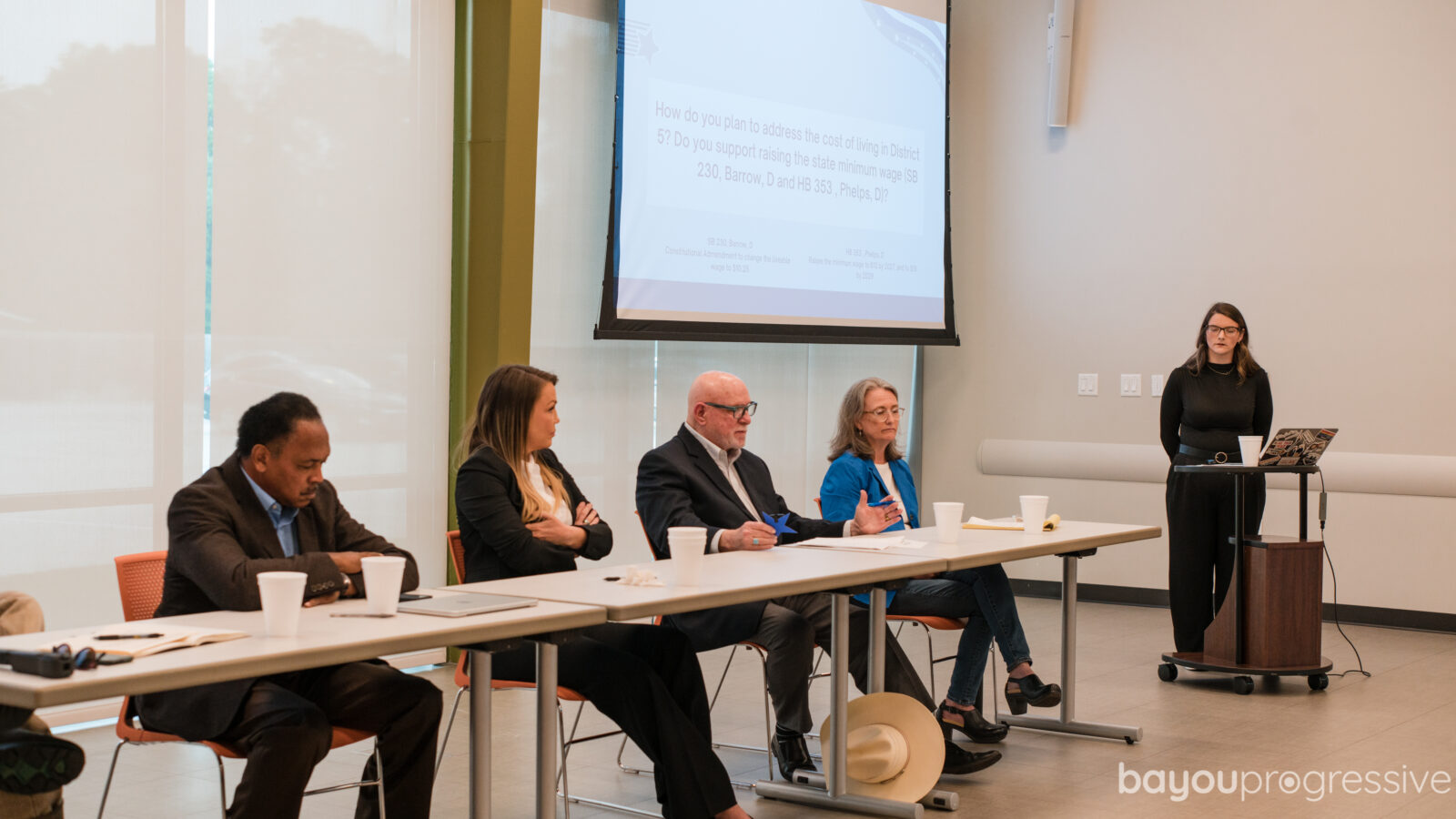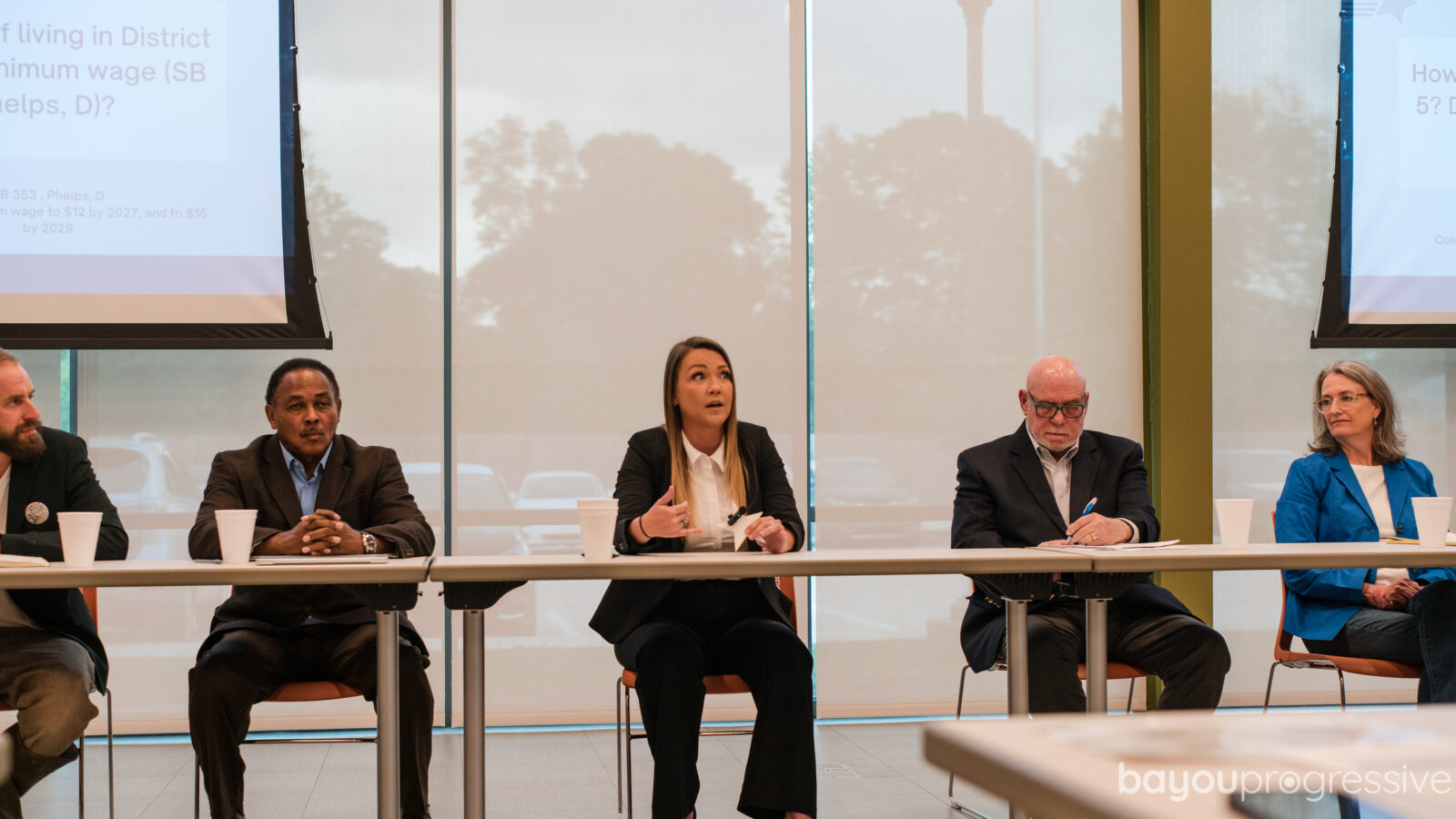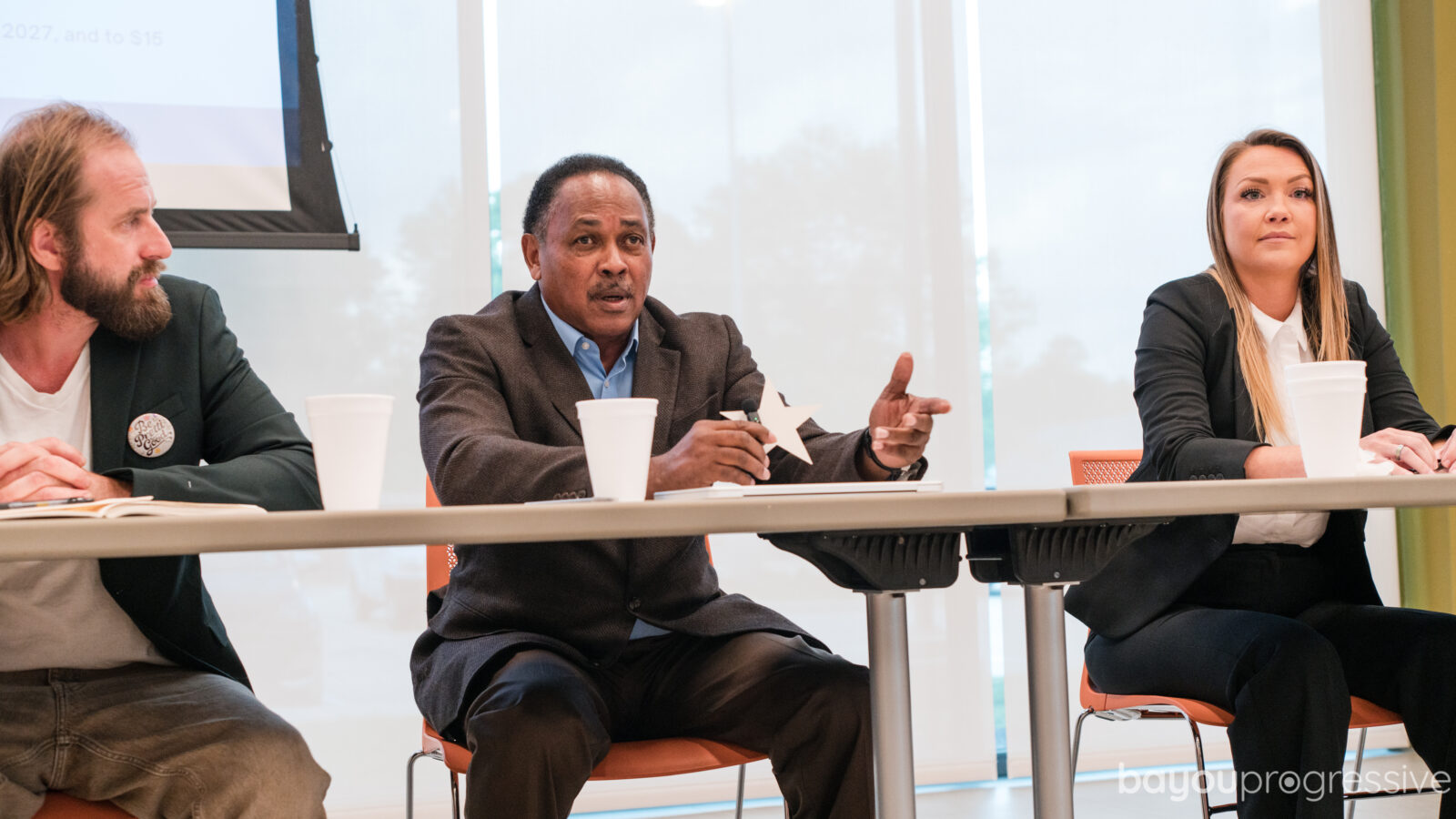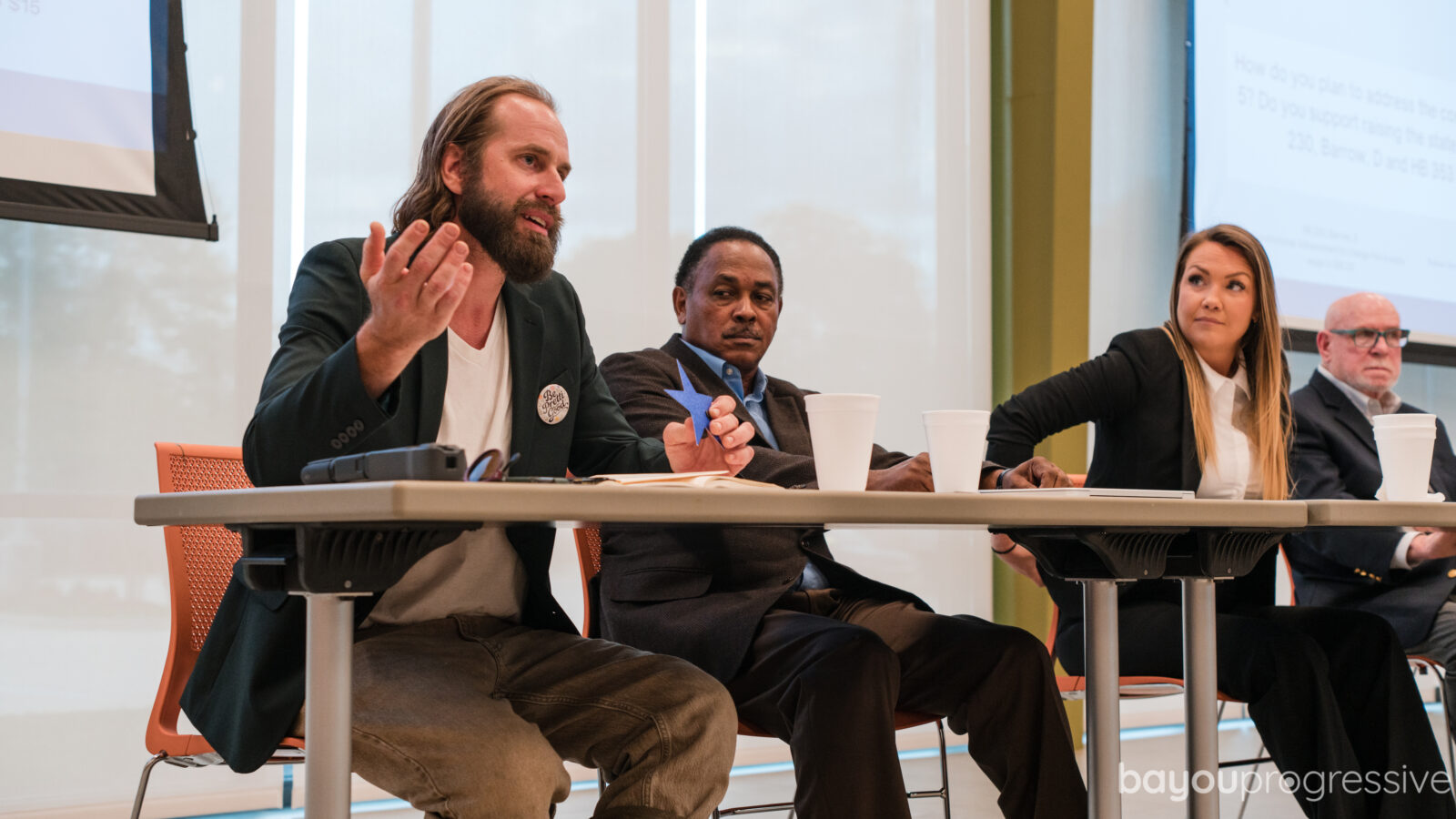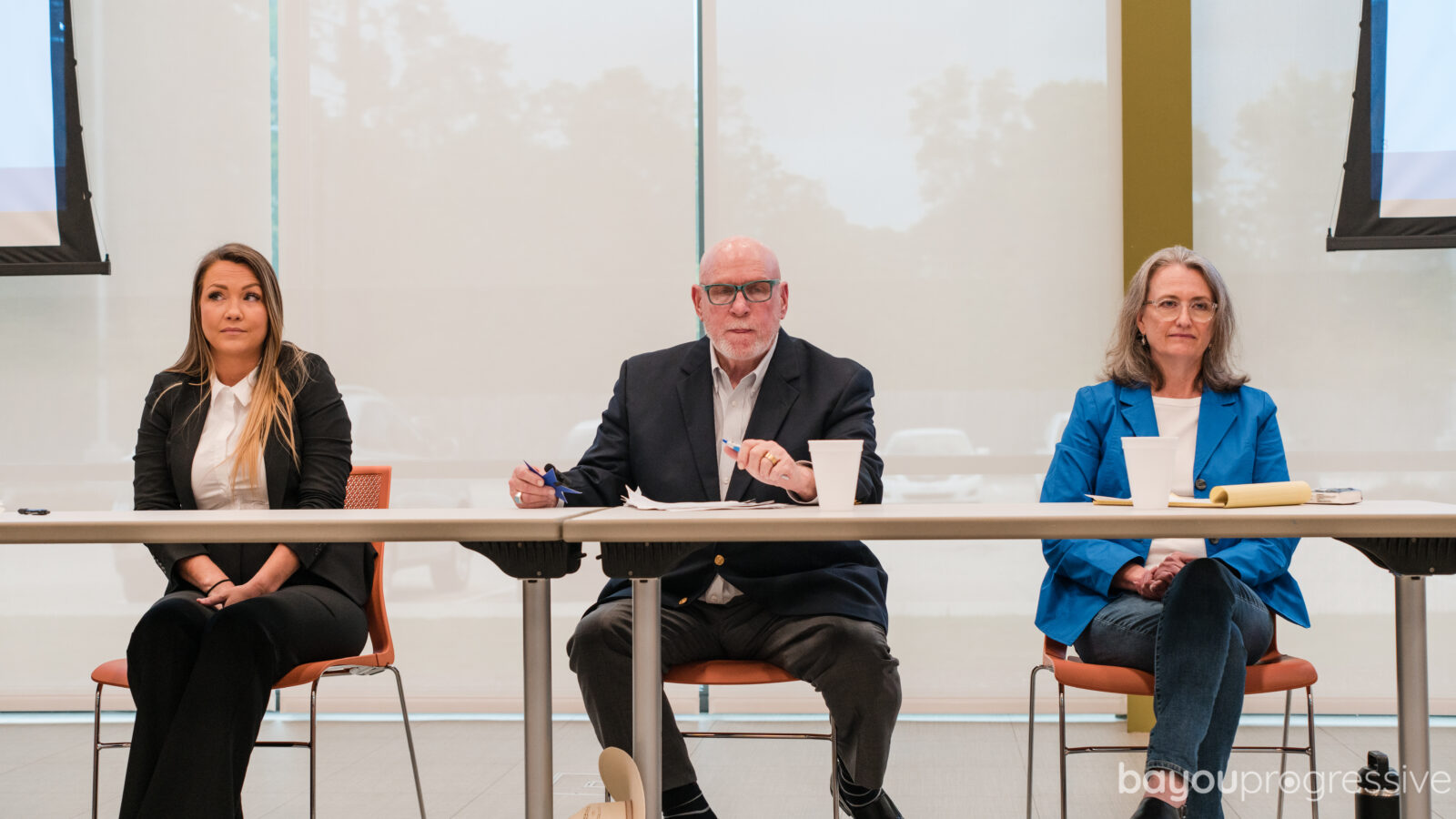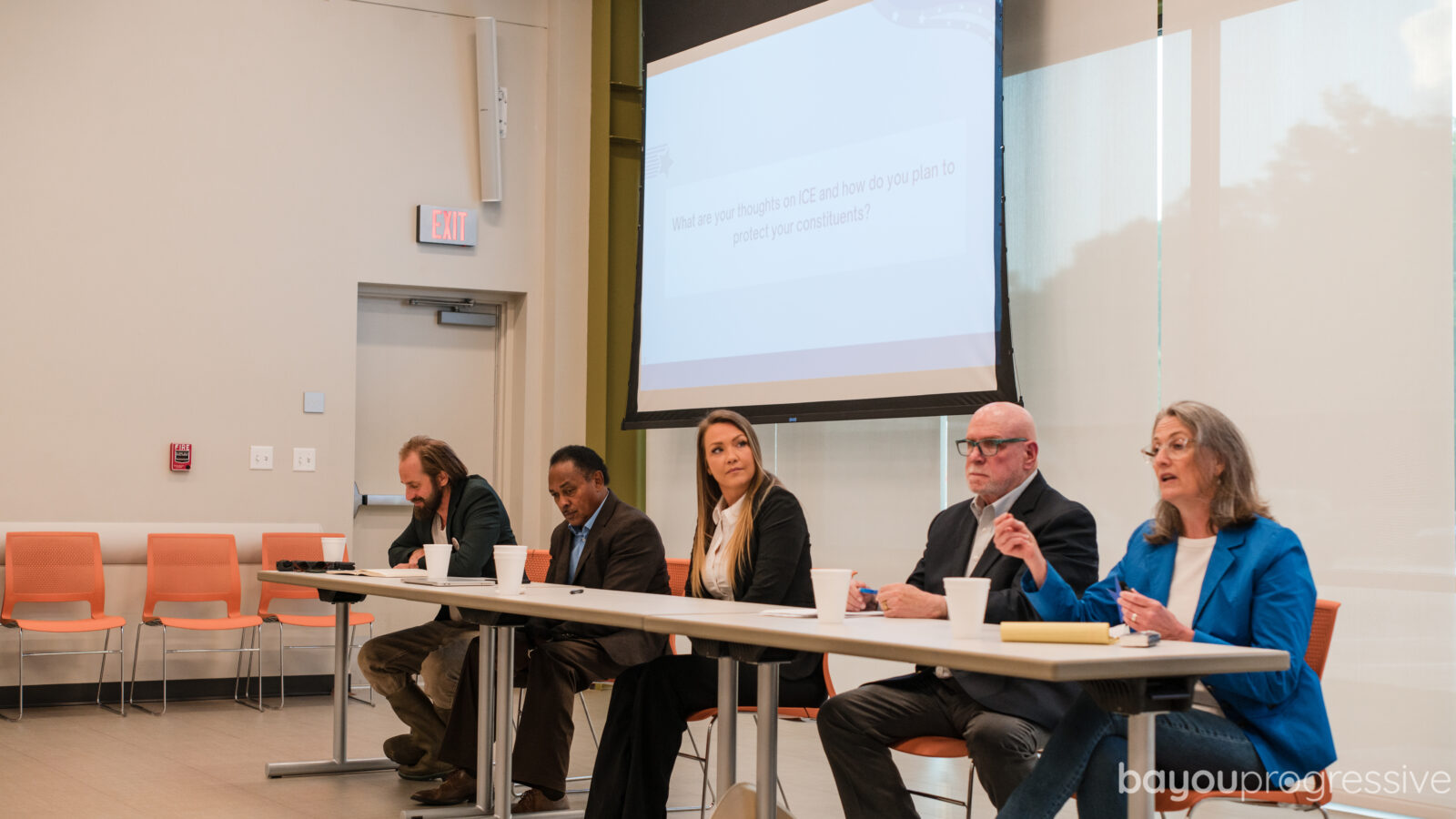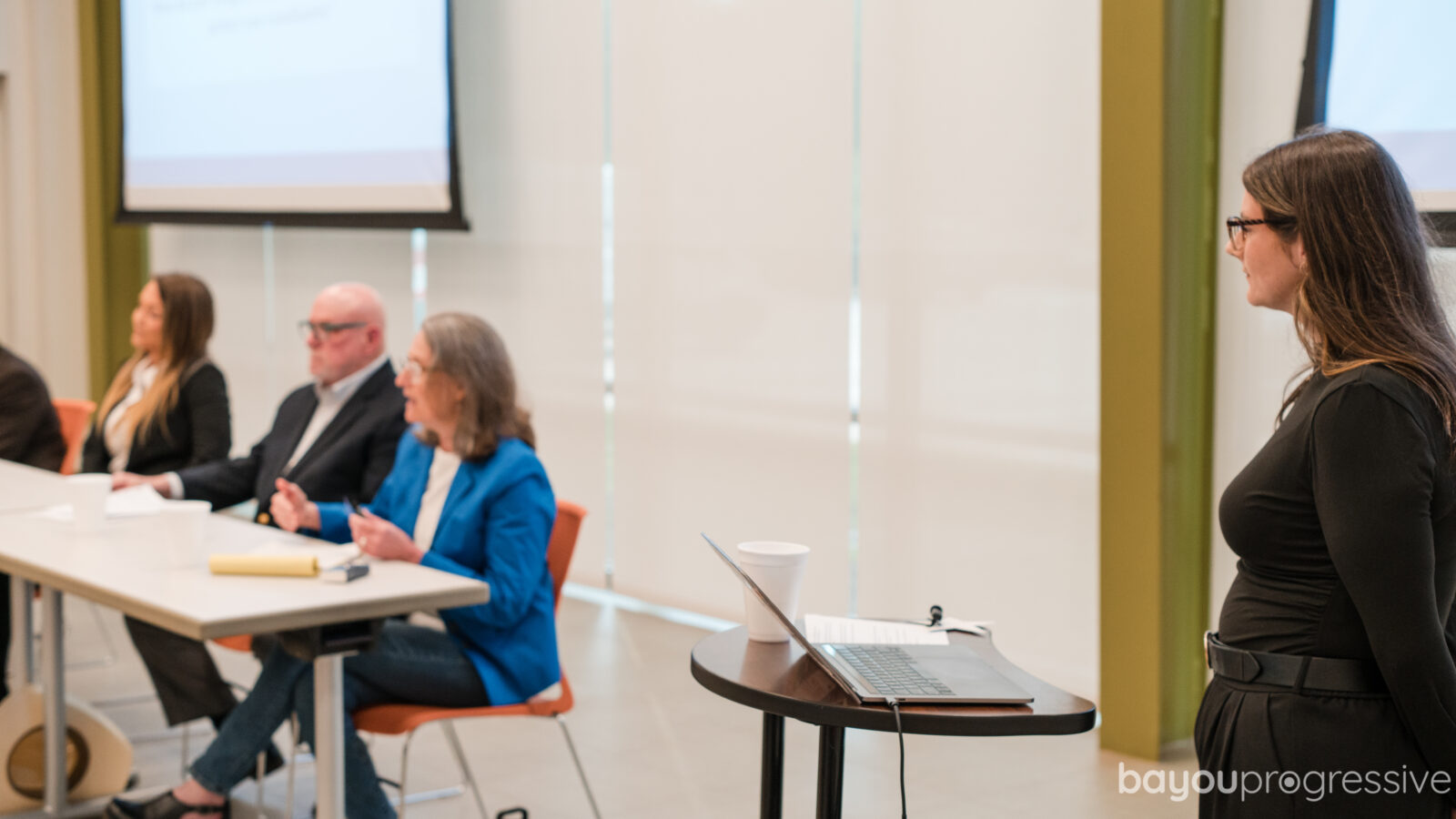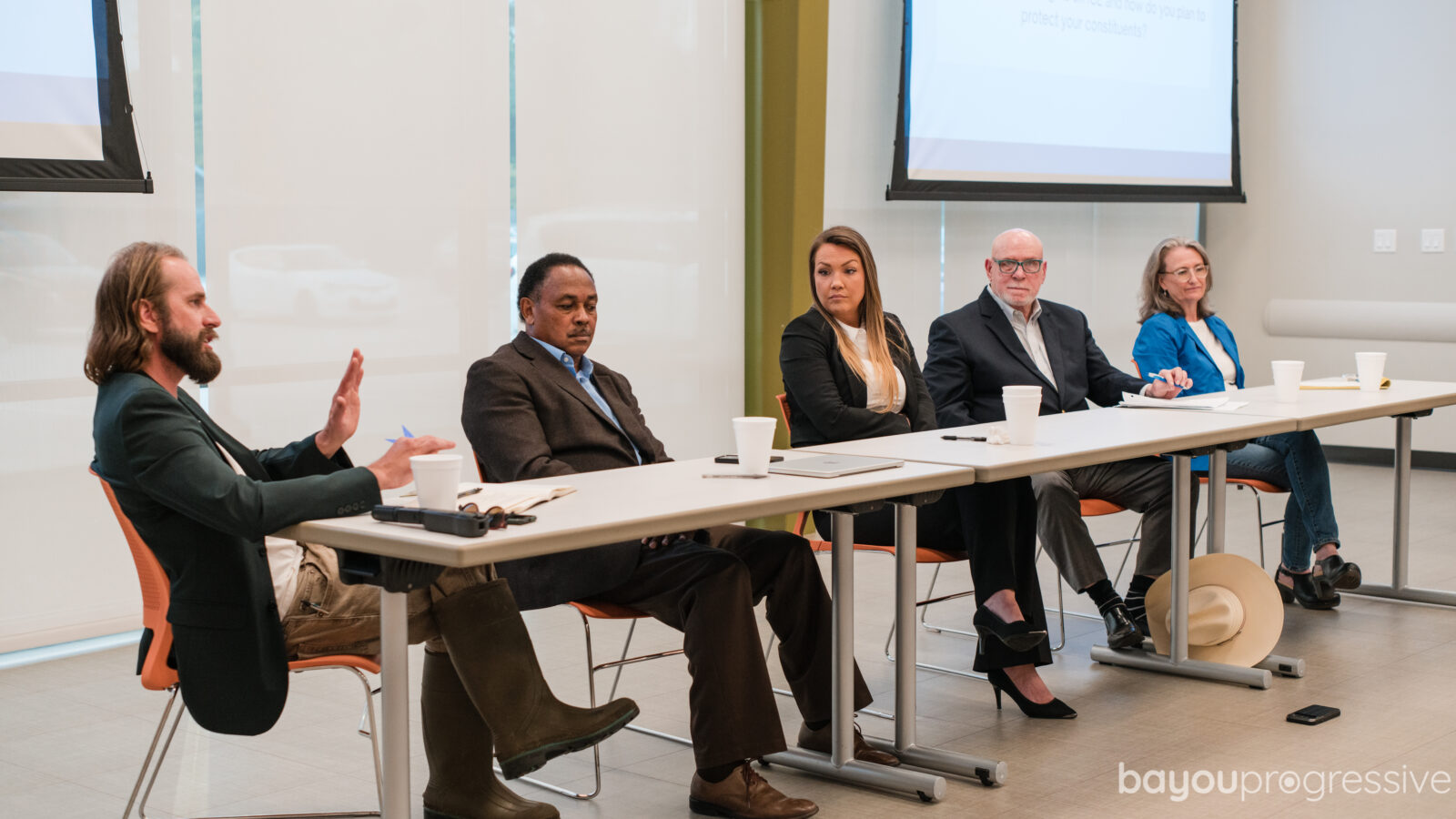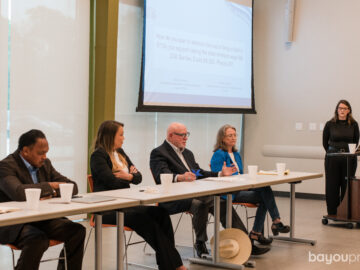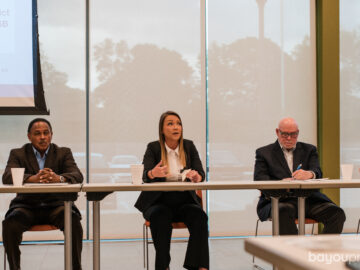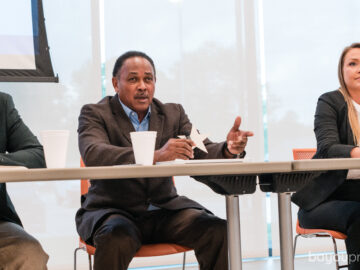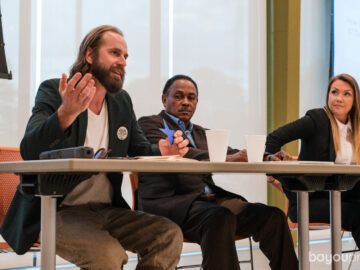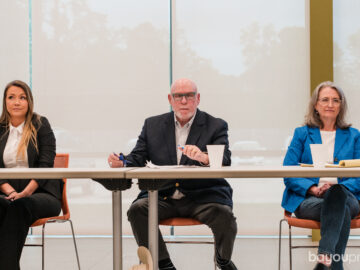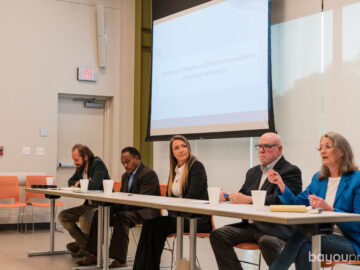

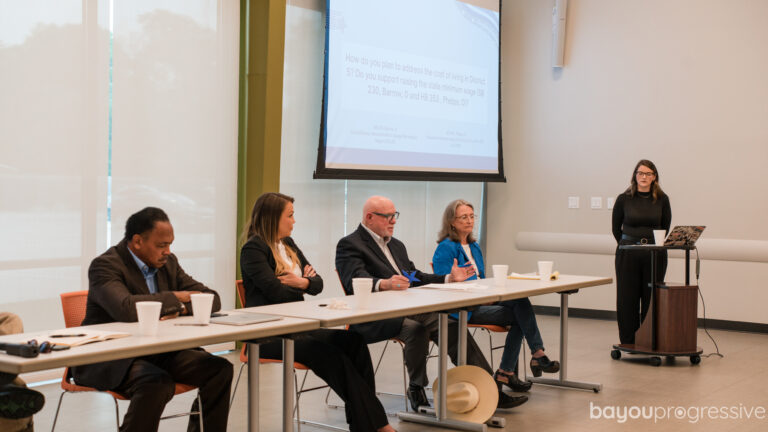
The five Democrats running in Louisiana’s 5th Congressional District offered few real policy clashes at a forum Tuesday night. Instead, the sharper divide was over style, strategy and how forcefully Democrats should confront both a radicalized Republican Party and their own party’s failures in places like rural Louisiana.
That made the Young Democrats of Livingston Parish forum less a typical primary sparring match than a window into what this race may actually be about. The 5th remains a Republican-leaning district, but it is also an open seat because U.S. Rep. Julia Letlow is leaving to run for the Senate, and the GOP’s Trump-endorsed frontrunner, state Sen. Blake Miguez, entered the race with money and establishment buzz but has since faced scrutiny tied to a resurfaced 2007 rape allegation he denies.
The forum featured Jessee Fleenor of Loranger, Larry Foy of Winnsboro, Lindsay “Rubia” Garcia of Walker, Dan McKay of Bunkie and Tania Nyman of Baton Rouge. On the biggest issues of the night — wages, abortion rights, immigration enforcement and environmental policy — the candidates mostly agreed. What stood out was how they framed the fight.
That was clear in the cost-of-living discussion, which was prompted by a question about whether the candidates supported Democratic proposals in the Louisiana Legislature, particularly Senate Bill 230 by Sen. Regina Barrow and House Bill 353. None treated the proposed $10.25 wage floor as remotely adequate. Nyman said she respected Barrow’s intent but was wary of putting such a low number into the constitution. McKay said even $15 is no longer enough and called for at least $20 an hour. Garcia framed the issue through lived experience, saying she had recently been a broke college student raising children while dealing with the same price pressures voters are facing now. Fleenor, drawing on his work in agriculture, contrasted what he pays workers with corporate profits and asked, “If Walmart is making billions of dollars in profits, what’s the excuse?”
The same pattern held on abortion rights. Every candidate opposed government interference. But some answers landed harder than others. Fleenor called for Roe v. Wade to be codified into federal law and attacked anti-abortion politics as religiously driven hypocrisy. Garcia, who spoke openly about having had an abortion, called the movement “pro-birth,” not pro-life, and linked attacks on abortion rights to a broader assault on personal autonomy. Nyman offered the forum’s most powerful testimony, recounting how a life-threatening pregnancy complication nearly killed her and warning that under the current legal climate, doctors may hesitate in ways that put women in danger. Foy, a Baptist preacher, gave perhaps the clearest answer of the night from a Southern Democrat trying to bridge faith and freedom: morally serious, explicitly religious, and firmly pro-choice.
On ICE, the field again showed broad alignment, but Garcia brought the most specific legal framework. Fleenor called for ICE to be abolished and DHS dismantled. McKay also said he would abolish ICE. Foy emphasized immediate protections, including preventing local law enforcement from cooperating in wrongful detentions. Garcia pointed to what she called the “Pretti-Good Civil Rights Act,” a proposed accountability idea that has circulated in social media discussions this year, as the kind of federal mechanism she would want to create so ICE agents could be held civilly liable for constitutional violations.
Even on carbon capture, where there was slightly more nuance, the overall drift was the same. Nyman dismissed it as a corporate ruse and used the line that probably best captured the room’s skepticism: “the best carbon capture project is trees.” Fleenor called it a “corporate smoke screen.” Garcia warned that Louisiana communities could face a disaster like the Satartia, Mississippi pipeline rupture if state leaders keep prioritizing industry over safety. McKay was the closest thing to a partial dissenter, arguing that Louisiana’s dependence on petrochemical jobs makes the transition more complicated than activists sometimes admit.
But the forum got most interesting when the audience stopped asking about policy and started asking about Democrats themselves.
Why, one attendee asked, does the party have such a persistent messaging problem with the working-class voters who once formed its backbone?
Fleenor said Democrats have spent too long talking down to rural communities and failing to show up in the places they want to win back. Foy argued national Democrats still do not have a real Southern strategy and have neglected both rural communities and Black voters in the South. Garcia gave the line that will likely travel furthest, saying Democrats are “playing chess with pigeons” — still trying to follow the rules while Republicans knock over the pieces, foul the board and strut around like they won. Nyman offered the most systemic critique, arguing Democrats keep selling “Republican light” policies as progressive politics while failing to build even basic infrastructure like precinct captains, transparent endorsements, voter education and year-round organizing. “Your good intentions do not bring democracy about,” she said. “You know what brings democracy about? Fair maps, access to the polls, educating voters.”
That was the real story of the night.
This was not a forum defined by major ideological disagreement. It was a forum about what kind of Democrat can actually compete in a district like this one. The candidates largely shared the same policy baseline. What separated them was how they diagnosed Democratic weakness — whether the problem is timidity, absence, bad messaging, thin infrastructure or all of the above.
The 5th is still a Republican-leaning seat, and Democrats would be foolish to romanticize the math. But open seats can loosen old assumptions, and scandal can scramble a race further. Tuesday night’s forum suggested the Democratic field understands that this year’s contest may offer more of an opening than usual. The harder question is whether any of them can turn that opening into a campaign strong enough to matter.