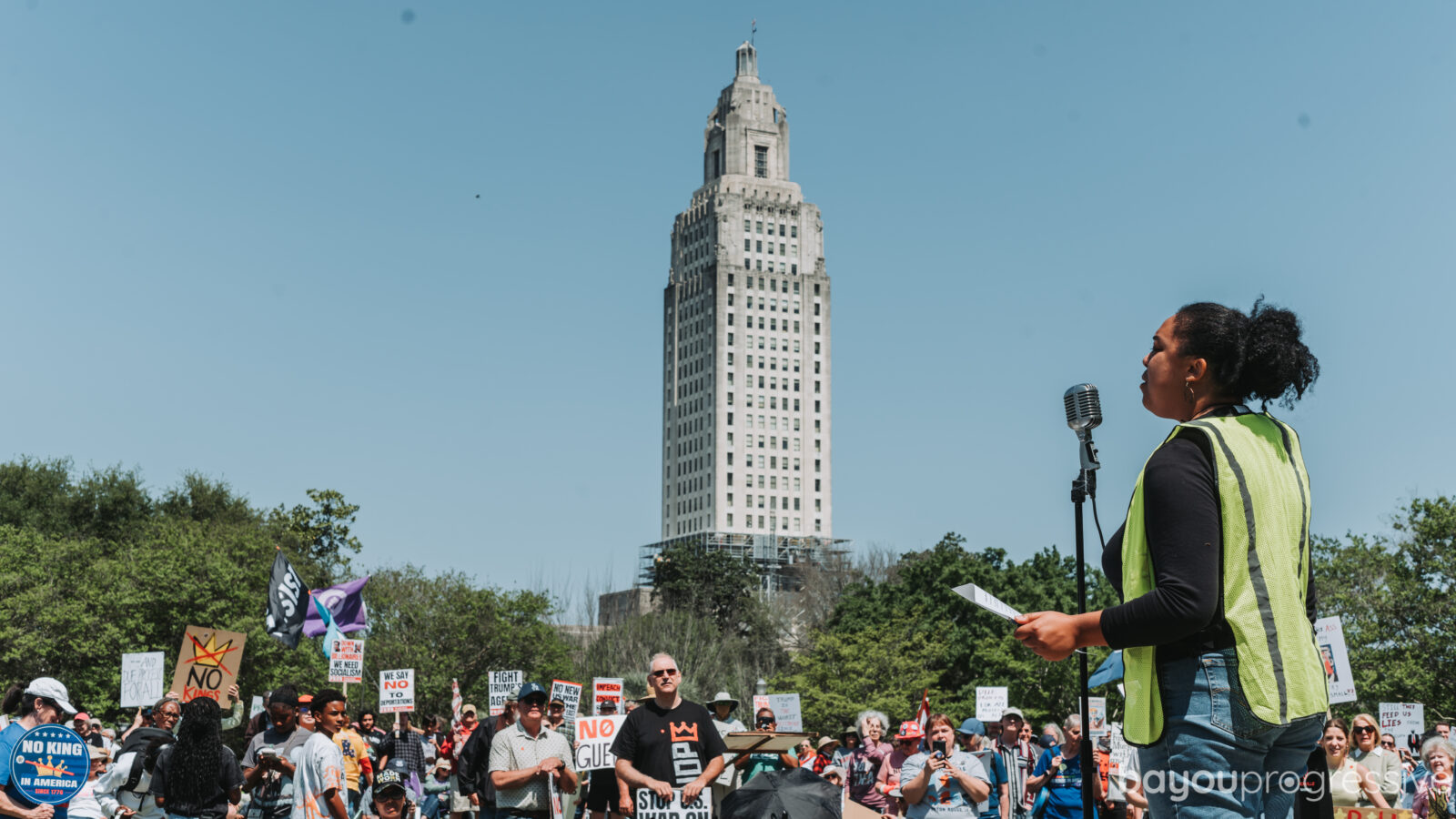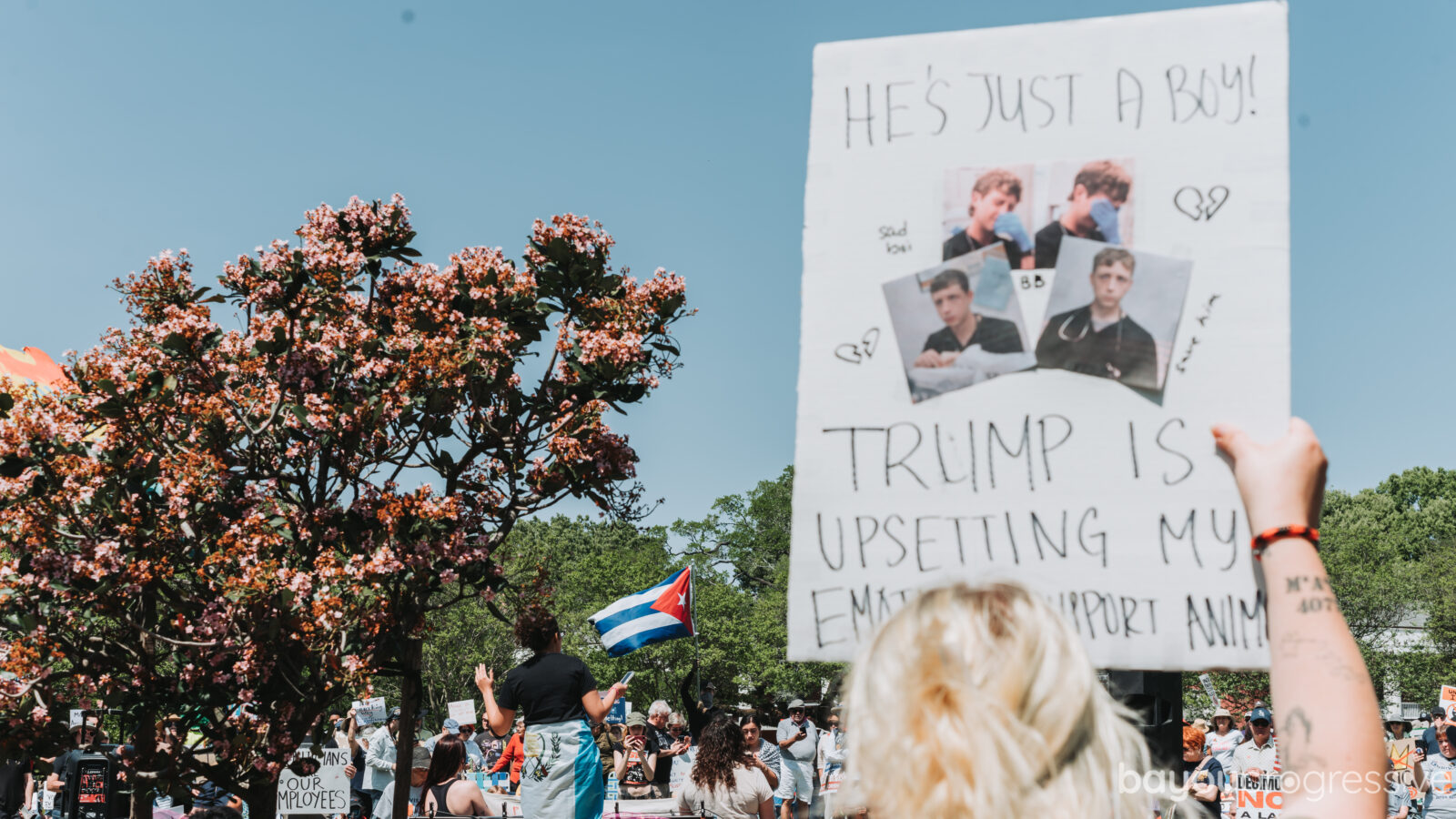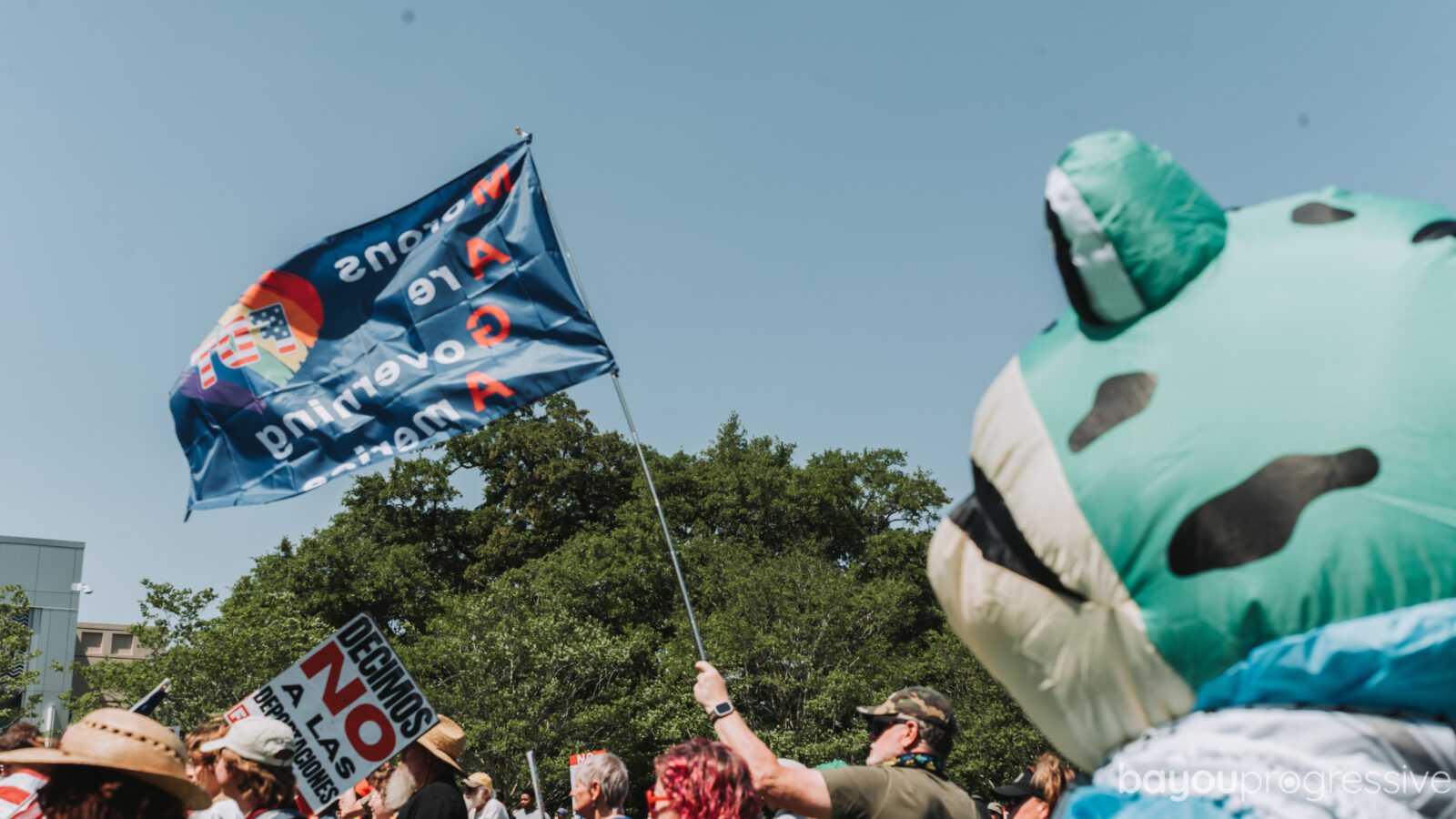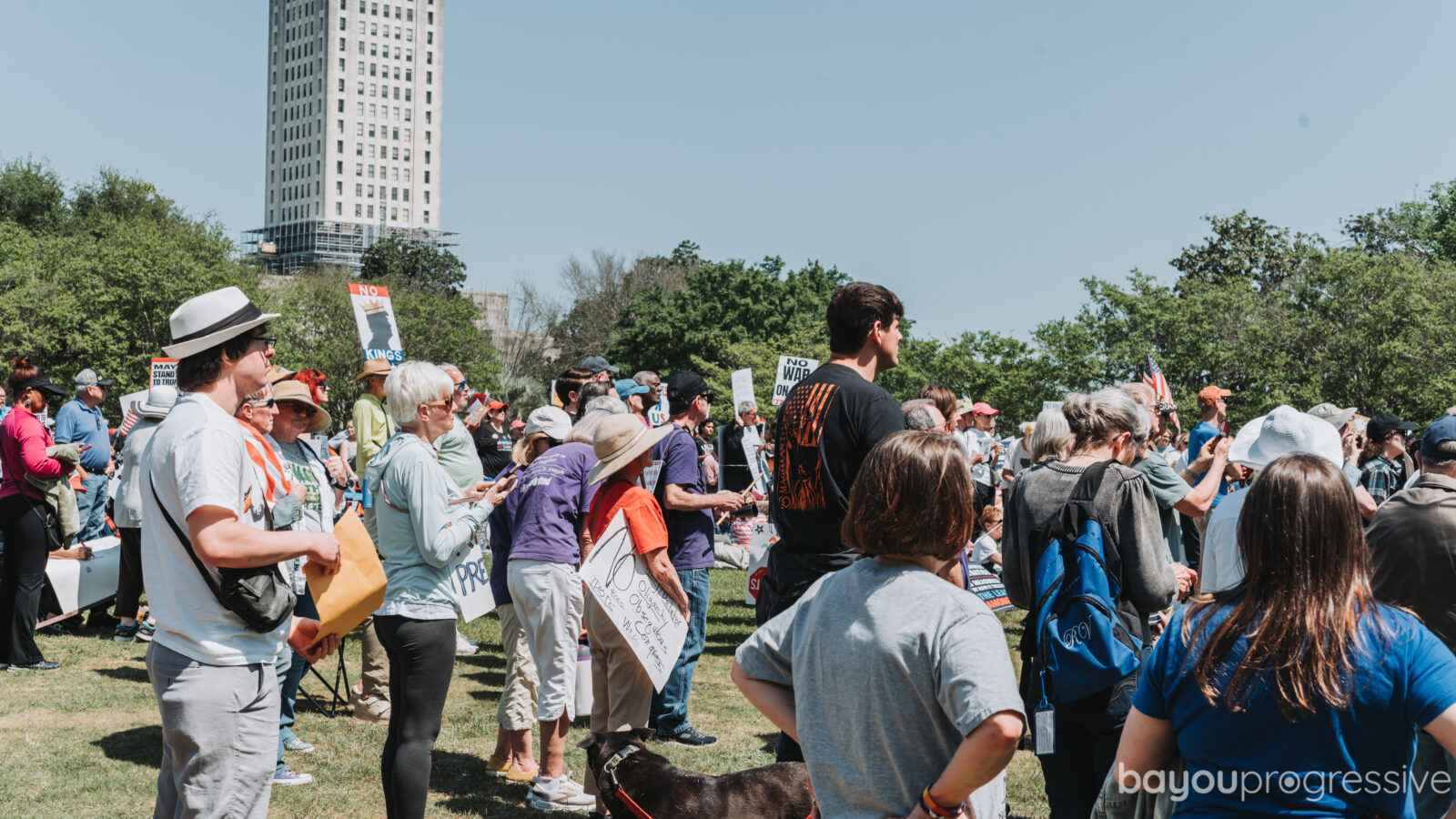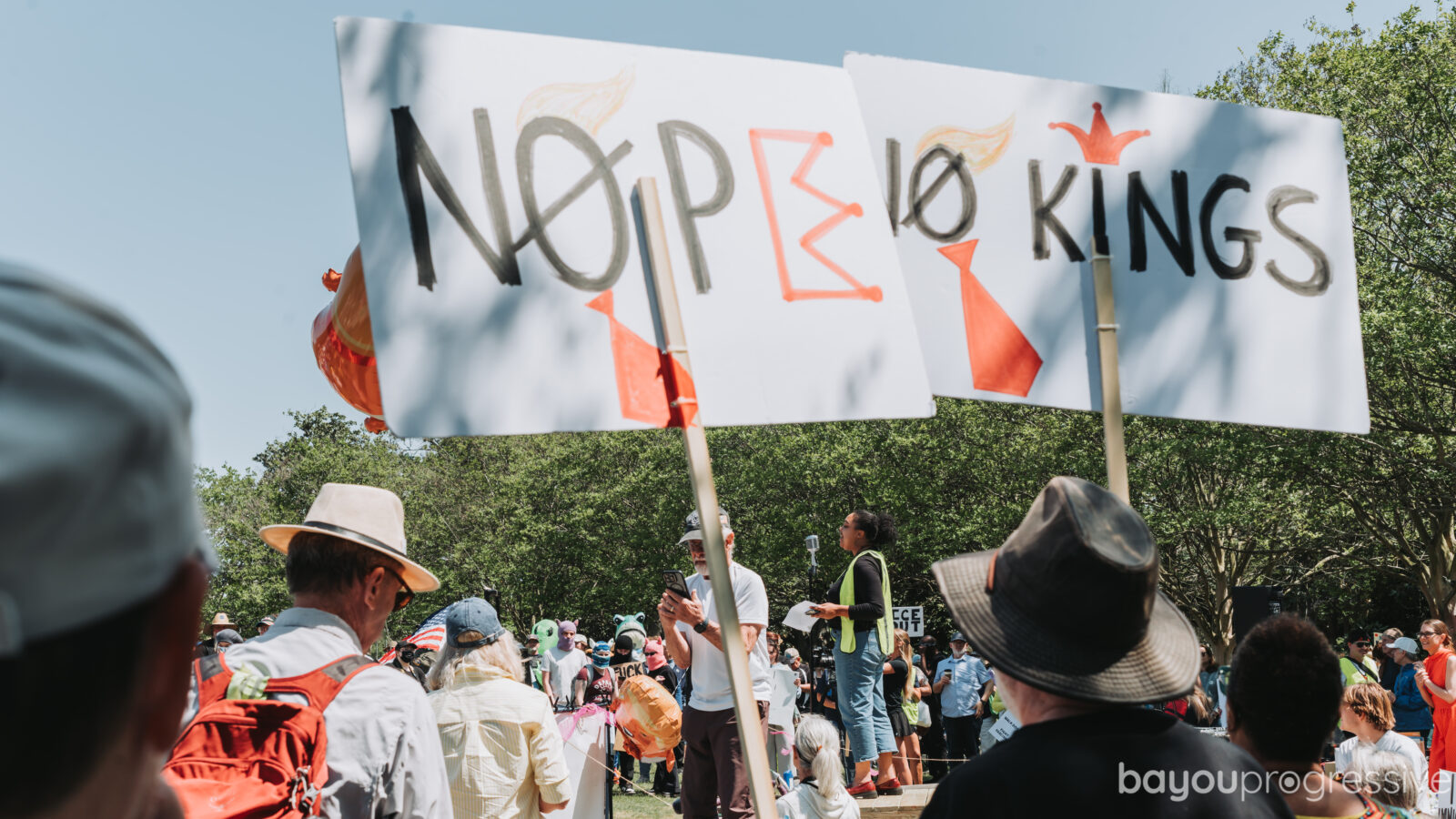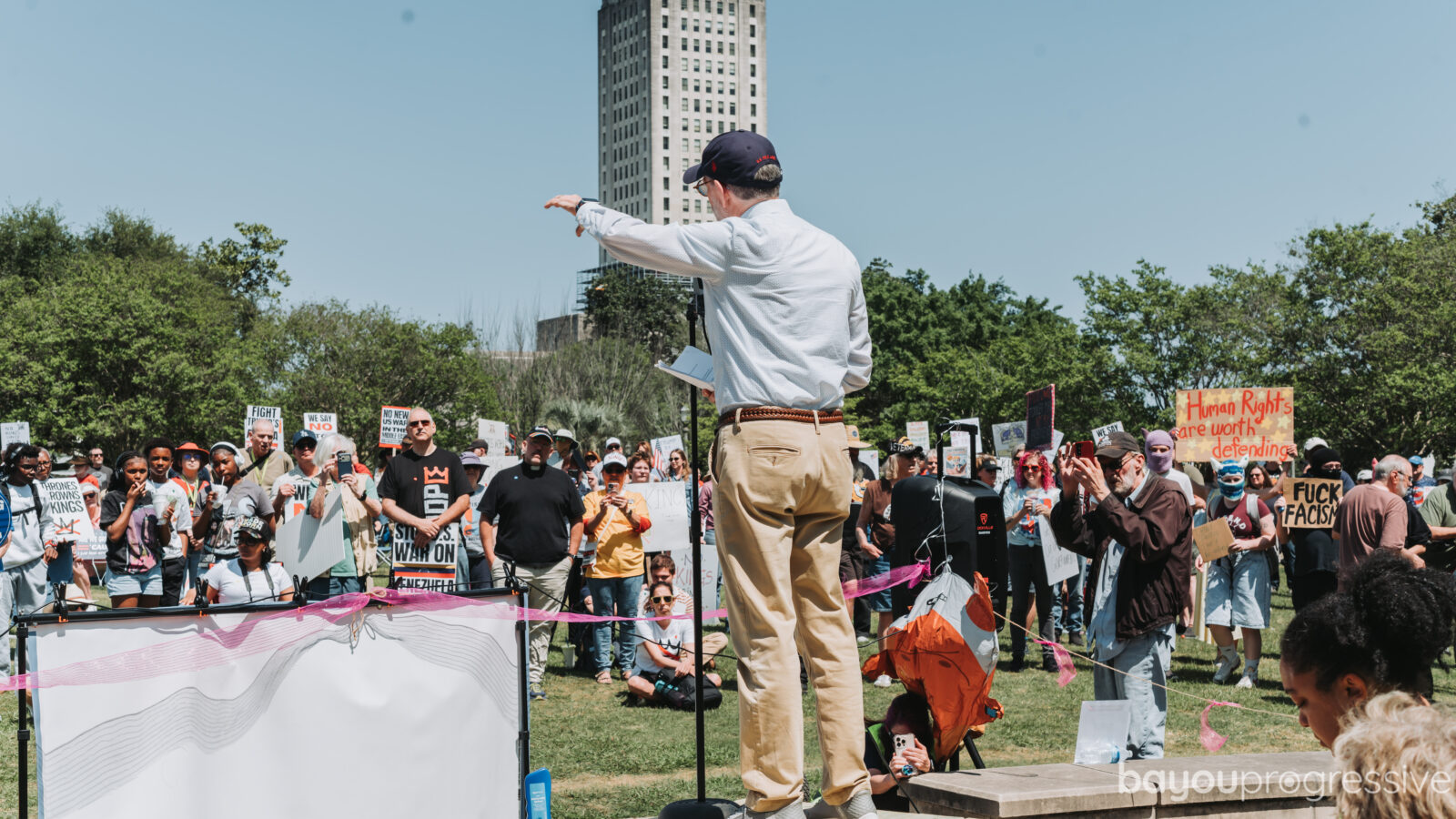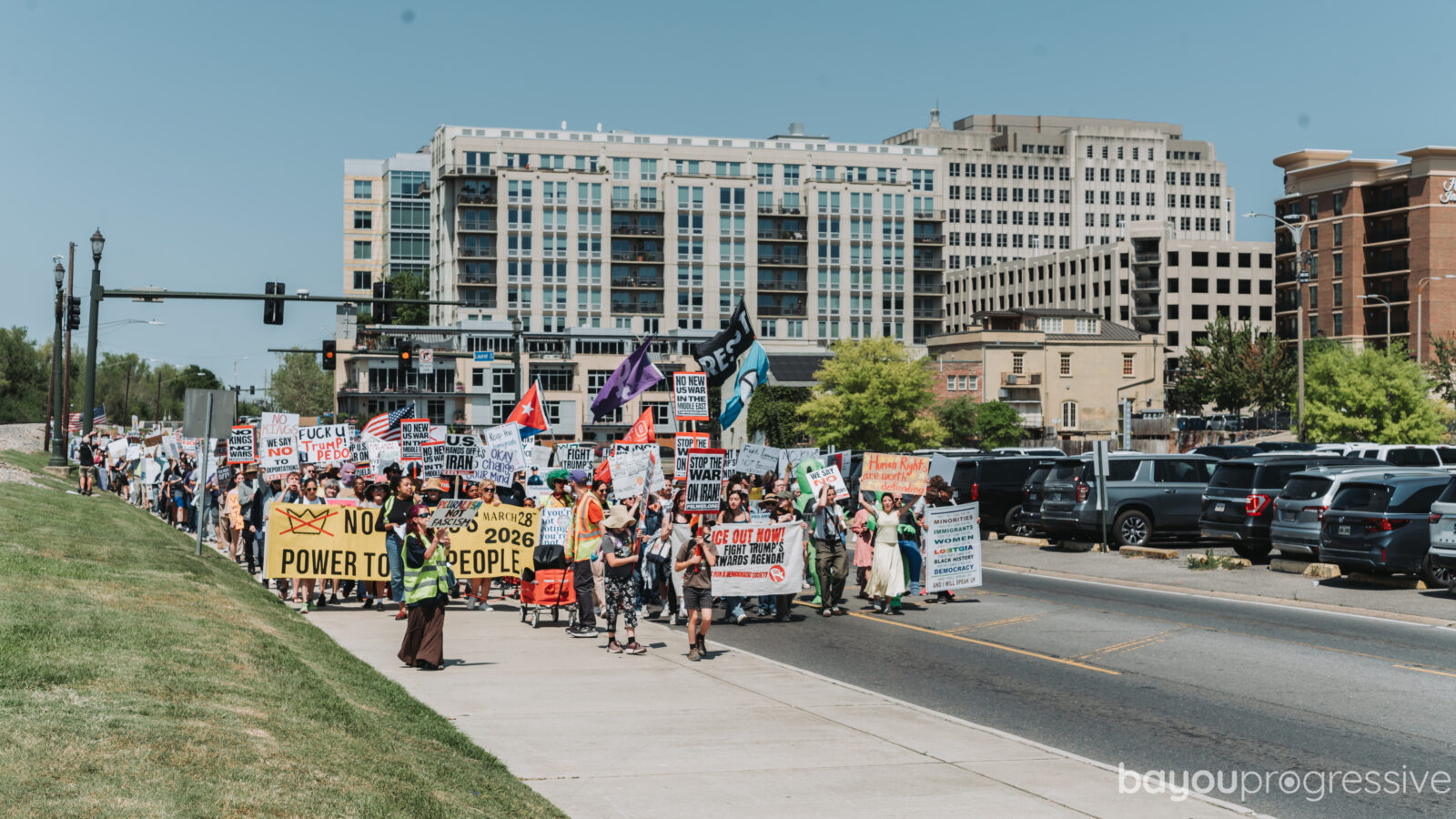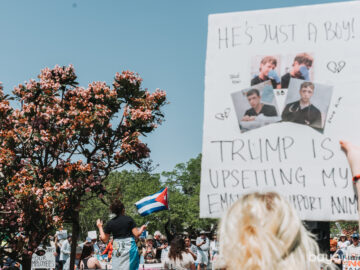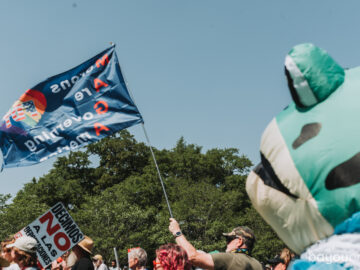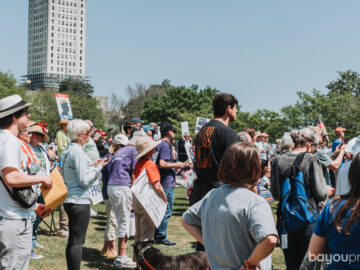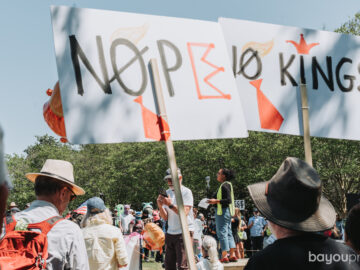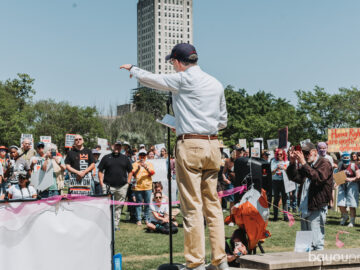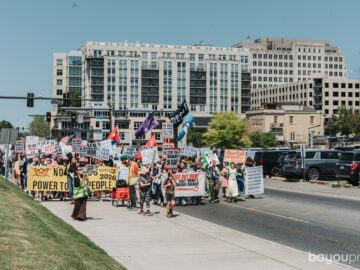
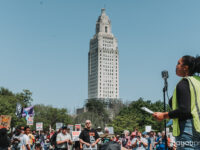




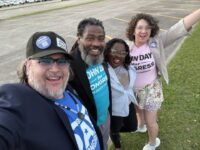


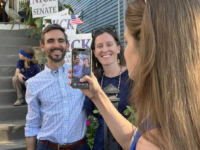







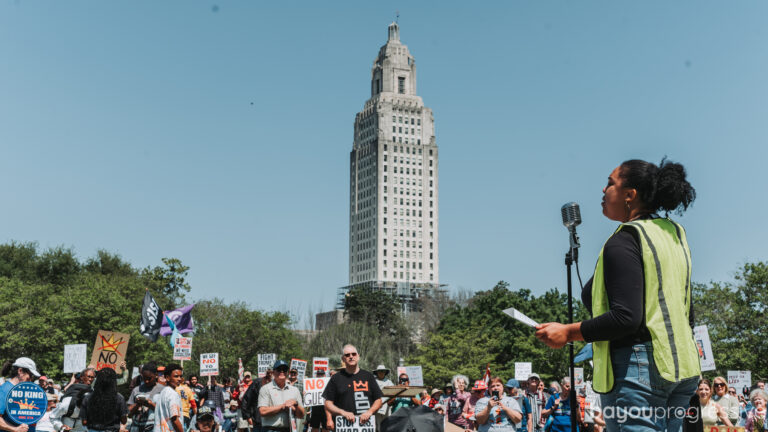
Hundreds of Baton Rouge residents turned out Saturday at A.Z. Young Park outside the State Capitol for the latest “No Kings” rally and march, part of a broader national day of action organized through the growing anti-Trump protest movement. The Baton Rouge event was organized by Indivisible Baton Rouge as part of the March 28 national mobilization, which organizers said included thousands of events across the country.
Organizers estimated that roughly 1,500 to 2,000 people attended the Baton Rouge rally, filling the park before marching down River Road, up Government Street and through downtown along 3rd Street before returning to the Capitol area.
The demonstration blended anger, anxiety and community solidarity, with speakers and attendees repeatedly stressing that protest alone would not be enough. Lisa King, a lead organizer for Indivisible Baton Rouge, said the point of the rally was not simply to gather in opposition, but to push people toward concrete political action.
“I think that everybody needs to make sure that they understand the purpose of this was to get out and vote,” King said. “Check your voter registration and get to the polls.”
She added, “We don’t want to keep protesting the rest of our lives.”
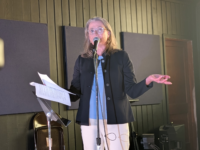
That message was echoed by Quentin Anthony Anderson, one of the rally’s speakers, who warned the crowd against mistaking turnout at a rally for actual political leverage. In one of the sharper lines of the day, he argued that elected officials are not yet afraid of protests because too often the energy never makes it to Election Day.
“They don’t believe you’ll show up,” Anderson said. “And truthfully, they have history as proof.”
That line landed because it cut to a familiar frustration in Louisiana politics: visible outrage in the streets, followed by low-turnout elections that allow the same power structure to survive with little real consequence.
Jade Woods, who served as emcee, said the rally gave people a chance to channel that frustration in a public and collective way.
“Days like today are moments where we can express that sentiment and come together and know that we’re not alone and commit to the next step in the fight,” Woods said.
She described the atmosphere as both energetic and hopeful.
“The energy here today,” Woods said, was “very high, and also joyful.” She pointed to the presence of families and people across generations as evidence that the demonstration had become more than a niche political gathering and instead felt like a broader community response.
Woods also pointed attendees toward next steps, including both issue advocacy and upcoming elections.
“The next big day of action is going to be May 1st on May Day,” she said. “There’s the vote. The primary on May 16th, people gotta show up.”
For many in the crowd, the rally’s urgency was personal. Kopila Freitag, who attended with her friend Amanda Bloomer, said she came out in solidarity with immigrants and others she believes are being targeted by the administration’s immigration policies.
“I showed up today because I was born in Nepal, but I’m still a U.S citizen, but a lot of my close friends at home in Chicago are not U.S citizens, but they’re in the process of it,” Freitag said. “I’m here for them, and I’m here for me and all the people who are racially profiled incorrectly by ICE.”
She summed up her reason for attending in simpler terms: “Resistance is power.”
Asked about the atmosphere, Freitag said “the energy was electric,” while Bloomer described the event as “very fun” and “engaging,” adding that seeing that kind of turnout in Louisiana felt especially meaningful.
The Baton Rouge event was one of multiple Louisiana demonstrations connected to Saturday’s “No Kings” actions, which were promoted nationally through Indivisible and allied groups as a rejection of authoritarian politics, attacks on immigrants, and broader threats to democratic rights. Public event listings described the local protest with the same core slogan used nationwide: “No Thrones. No Crowns. No Kings.”
In Baton Rouge, though, the central argument from the stage was less about branding than about follow-through. Protest can demonstrate public anger. It can build solidarity. It can create pressure. But rally organizers made clear that none of it matters much if the same people do not show up when ballots are being cast.
That was the real challenge hanging over the afternoon: whether a crowd big enough to wrap through downtown can become an electorate big enough to force change.