














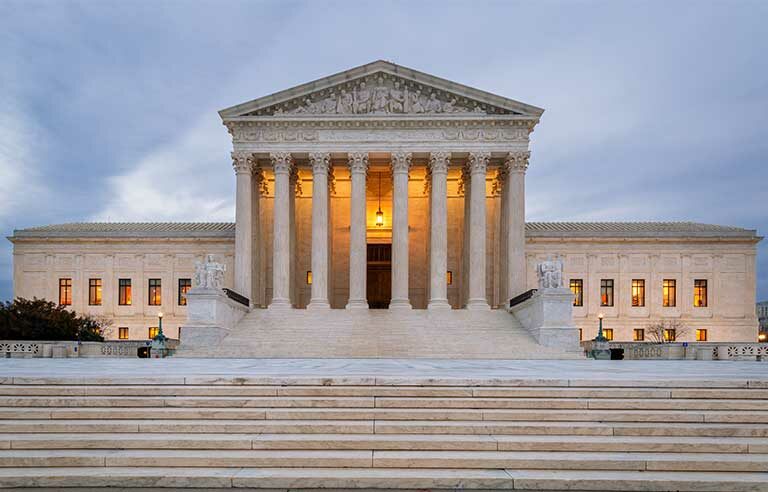
Louisiana’s 2026 congressional elections will move forward under the state’s existing six-district map after the U.S. Supreme Court declined to rule by the end of 2025 on a high-stakes challenge to the boundaries.
That delay effectively ends Republican lawmakers’ hopes of forcing another round of redistricting ahead of next year’s midterms — and preserves, at least for now, Louisiana’s two majority-Black congressional districts.
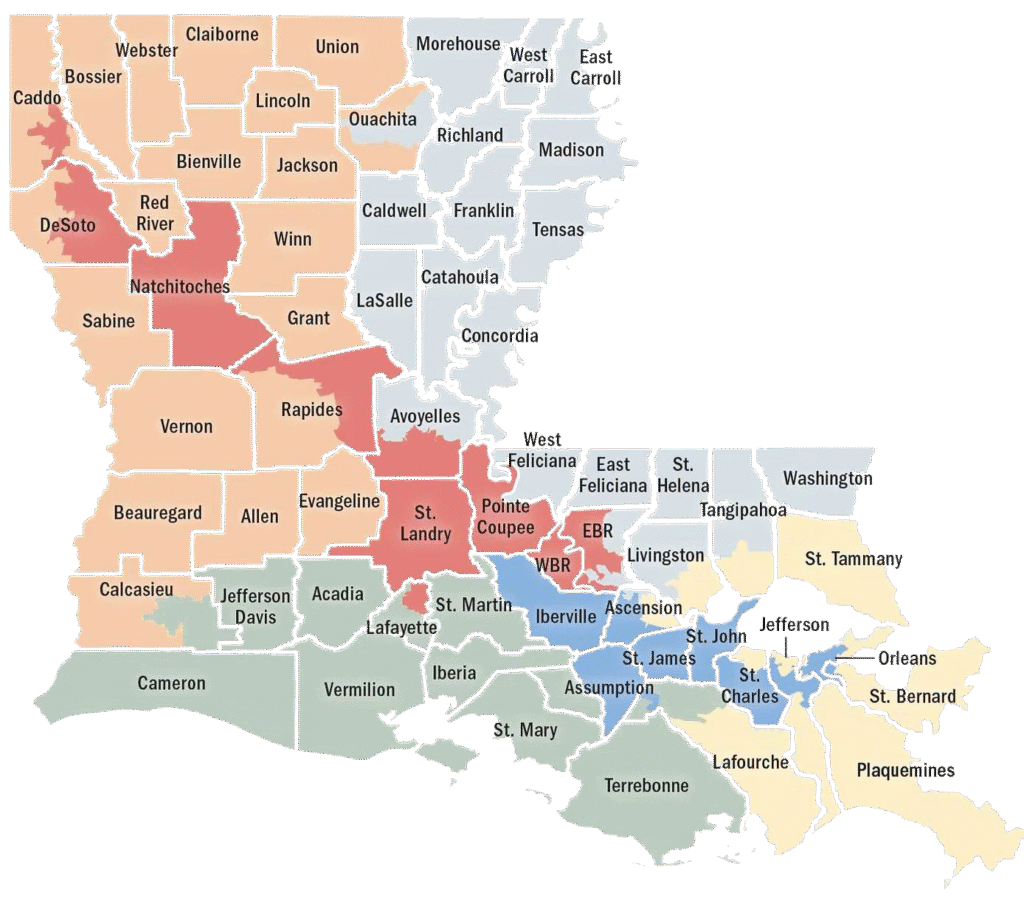
State lawmakers convened in a special session in October to push back key election deadlines by one month, a move explicitly designed to give the Legislature time to redraw congressional lines if the Court ruled before the end of the year. GOP leaders openly anticipated that a favorable ruling could allow them to revisit the map and potentially eliminate one or both majority-Black districts created in 2024.
That ruling never came.
Instead, the Supreme Court is now expected to issue a decision during its standard late-spring window, well after Louisiana’s new election calendar makes any further redistricting impossible.
State Sen. Caleb Kleinpeter, a Port Allen Republican who co-sponsored the legislation altering the 2026 election schedule, confirmed Friday that there are no plans to call another special session or attempt to redraw the map. With Louisiana shifting to a closed party primary system this year, the qualifying period for congressional candidates has been moved up to mid-February — leaving no legal or practical window for lawmakers to act after a spring ruling.
That change proved decisive. Under the new system, congressional candidates must qualify between Feb. 11 and Feb. 13. Party primaries will be held May 16, with runoffs, if needed, on June 27. The general election is scheduled for Nov. 3.
The underlying lawsuit, Louisiana v. Callais, challenges the legality of the second majority-Black congressional district Republicans were forced to draw in 2024. That map was adopted only after a federal court ruled that the Legislature’s 2022 map — which produced just one district favoring a Black candidate in a state where nearly one-third of residents are Black — violated federal law.
The case has since evolved into a broader test of Section 2 of the Voting Rights Act of 1965, which prohibits election practices that discriminate on the basis of race, color, or language minority status. Louisiana Attorney General Liz Murrill, who previously defended the 2024 map, now argues that race-conscious redistricting under Section 2 is no longer necessary and instead violates the 14th and 15th Amendments.
The Supreme Court’s handling of the case fueled Republican optimism. Justices were originally expected to rule in spring 2025, but in an unusual move, they postponed a decision to the following term and ordered a second round of oral arguments, which took place in October. The rare second argument led GOP lawmakers to believe an early ruling was likely.
That expectation drove criticism of the October special session, which cost taxpayers hundreds of thousands of dollars in legislator per diem and additional staff time. Critics argued Republican leaders would not have authorized the session without some confidence the Court was poised to act.
During the session, both Kleinpeter and Rep. Beau Beaullieu denied having any assurances. Beaullieu testified in committee that there was no official timeline from the Court and later acknowledged that the election calendar changes would be meaningless if a decision did not arrive in time.
That is now precisely what has happened.
With qualifying fast approaching and the Supreme Court unlikely to rule until late spring, Louisiana’s 2026 midterms will proceed under the current congressional map — locking in the state’s two majority-Black districts for at least one more election cycle and leaving the broader constitutional questions surrounding the Voting Rights Act unresolved until after voters cast their ballots.
For now, the legal uncertainty has given way to political clarity: the map stays, the calendar is set, and the fight over Louisiana’s congressional representation moves from the courtroom back to the campaign trail.