
















Louisianans have every right to cackle at the headline: our governor—of a state that can’t keep car insurance, homeowners insurance, or basic infrastructure from spiraling into chaos—is now a special envoy to Greenland. It reads like a deleted scene from a political satire.
But here’s the problem with treating it like a meme: it isn’t just a meme. It’s a tell.
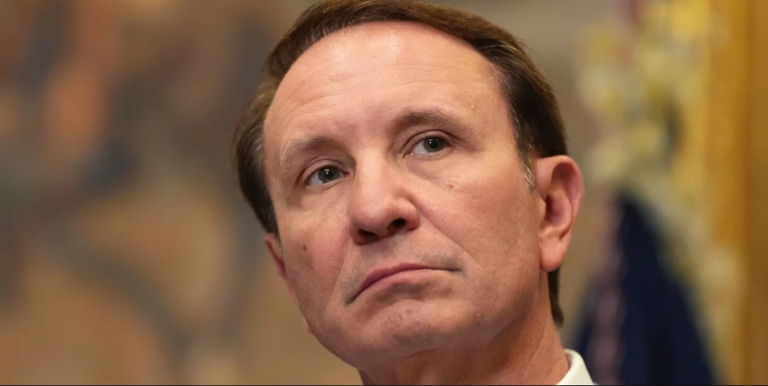
President Trump really did appoint Gov. Jeff Landry as the U.S. “special envoy to Greenland,” and Landry publicly thanked him for the “honor” of serving in a volunteer role to “make Greenland a part of the U.S.” while insisting it wouldn’t affect his day job as governor.
That combination — annexation talk plus a sitting governor volunteering to help — isn’t normal. It’s not harmless. And after what the Trump administration just did in Venezuela, it’s not theoretical.
Venezuela wasn’t a “messaging problem.” It was a proof of concept.
In the last few days, the United States carried out a military operation inside Venezuela that resulted in the capture of Nicolás Maduro and his wife and their transport to the U.S. to face charges — an action that triggered global condemnation at the United Nations and a serious domestic debate over legality and escalation.
And critically: the rhetoric coming out of the administration has not been limited to “counter-narcotics” or “law enforcement.” Reporting has described Trump saying the U.S. would “run” Venezuela and tap its oil wealth, with widespread concern — across allies and adversaries — that the operation shattered norms around sovereignty and use of force.
So when people snicker, “Trump will never actually try to take Greenland,” the honest response is: what evidence are you using? Because the evidence we do have is that the administration is willing to deploy force across borders, then argue about it later.
And Greenland isn’t some random obsession that comes and goes. Trump has repeatedly pushed the idea of U.S. control over Greenland, and Denmark and Greenland have repeatedly rejected it. Denmark’s prime minister is now openly warning that a U.S. takeover would effectively detonate NATO.
This is the bigger story: Venezuela is the precedent, Greenland is the fixation, and Landry is the helper.
Why Landry? Because loyalty is the job description.
Let’s be clear: Jeff Landry wasn’t picked because he’s a respected diplomat or a strategic Arctic thinker. He was picked because he’s useful.
Trump doesn’t need an expert in Greenlandic governance. He needs an American official who will:
-
repeat the premise (“Greenland should be ours”),
-
treat aggressive nationalism like common sense,
-
take public heat without flinching,
-
and keep marching in step no matter how weird it gets.
Landry is built for that role. He’s publicly signaling that his mission is not diplomacy with Denmark or Greenland — it’s incorporation.
And yes, it’s “volunteer.” That’s not a reassuring detail—it’s the point. This is what political loyalty looks like in a movement that rewards fealty: you don’t get paid, you get noticed. You don’t get a salary, you get a seat at the table.
The historical lesson: the most dangerous people are often the “eager assistants.”
Here’s where Louisianans need to stop thinking about Jeff Landry as a punchline and start thinking about him as a political type.
History’s worst regimes don’t run solely on the charisma of one strongman. They run on a staffing model:
-
the leader provides the mythology and permission structure;
-
the underlings provide the machinery—law, policing, propaganda, enforcement, and the endless willingness to do what “serious people” won’t.
The right-hand men and “dirty work” understudies are rarely the most brilliant people in the room. They’re often the most unburdened by shame. Ambitious. Unembarrassed. Eager to prove devotion. That’s the danger.
You can draw your own parallels — Stalin’s apparatus didn’t function without men like Beria; authoritarian movements in Europe leaned heavily on bureaucrats and party loyalists who specialized in enforcement and intimidation; dictators everywhere rely on functionaries who convert “the leader’s will” into policy, paperwork, and fear. The common trait isn’t genius. It’s willingness.
Landry’s version is contemporary American: he doesn’t need to invent the agenda — Trump supplies it. He just needs to carry it.
Louisiana has a direct stake in Landry becoming a national enforcer.
Even if you don’t care about Greenland — and most people don’t — this appointment matters for what it signals about Landry’s trajectory and Trump’s intentions.
1) Landry is accumulating national political capital by performing loyalty.
That’s how you get elevated in Trump-world: not by competence, but by devotion.
2) Landry has already shown comfort with power expansion and institutional pressure at home.
Louisiana reporting has documented how new laws and early-session changes increased the governor’s power and reshaped state governance, while Landry’s first stretch in office leaned hard into culture-war and top-down control politics.
3) He has a record of choosing the MAGA team line even when it’s reckless.
As attorney general, Landry inserted Louisiana into the 2020 election conspiracy ecosystem by joining efforts that pushed fraud claims without evidence — a preview of the “say it because the base wants it” style.
4) And he’s comfortable using state power as a political weapon.
Even early in his tenure as governor, Landry’s administration drew national scrutiny over aggressive tactics in fights involving the EPA and community groups in “Cancer Alley,” with critics arguing the state was using records laws and litigation as intimidation tools.
Put it together and the pattern is simple: Landry is not the mastermind. He’s the instrument. And instruments can do a lot of damage when someone else is playing them.
The “worst case scenario” isn’t sci-fi anymore.
If you want the nightmare version in plain English, it looks like this:
-
Trump continues normalizing cross-border force (Venezuela), then escalates to territorial threats (Greenland), and dares allies to stop him.
-
He surrounds himself with officials who will publicly validate the project and quietly execute it.
-
Governors like Landry—who can control state agencies, messaging, and local political ecosystems — become domestic pillars of a broader authoritarian-nationalist agenda.
-
And because people spent the early phase laughing at the absurdity, the resistance infrastructure shows up late, fractured, and underprepared.
That’s how “ridiculous” turns into “normalized.” That’s how you get trapped in the new reality: not because the villains were brilliant, but because the institutions and public attention span were weak and the enablers were relentless.
What Louisianans should do
No, you don’t have to treat Jeff Landry like he’s ten feet tall. You should treat him like he’s a man willing to do whatever gets him the next promotion.
So:
-
Stop dismissing the Greenland appointment as a joke — treat it as a loyalty audition for bigger roles.
-
Connect foreign expansionism to domestic power grabs. The worldview is the same: might makes right, laws are flexible, critics are enemies.
-
Build Louisiana-specific accountability. Focus on oversight, public records, legislative checks, litigation transparency, and watchdog media — because that’s where “enforcers” do their work. But most importantly, hold Landry accountable at the ballot box next November. He’s doing this because he believes in Louisiana, nothing matters and there are no consequences.
-
Name the pattern clearly: a shameless, ambitious political operator with no embarrassment about carrying someone else’s agenda is not harmless. It’s historically one of the most reliable ingredients for harm.
Laugh if you want. Just don’t let laughter become denial.
Because the scariest part of Jeff Landry’s Greenland envoy era isn’t that it’s unserious. It’s that it’s a sign he’s being invited into a political project that is serious — about power, about dominance, and increasingly, about taking what it wants.