



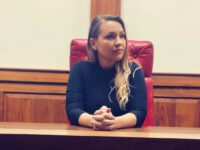









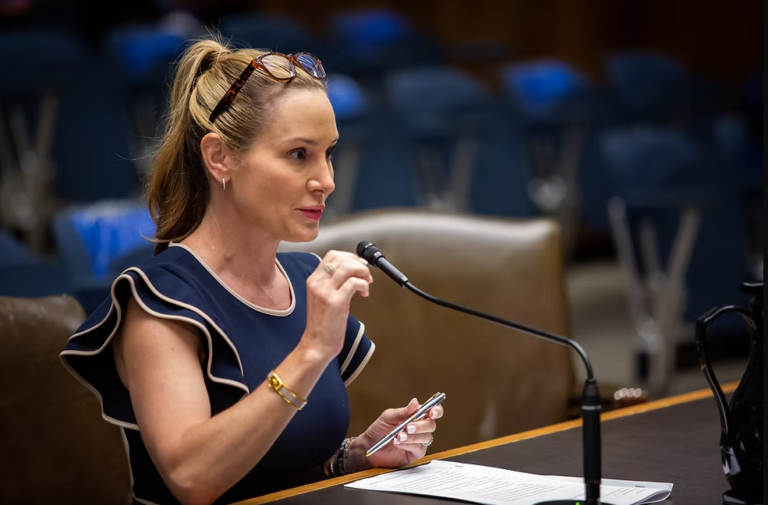
Louisiana politics picked up another unexpected shakeup this week with the resignation of Rep. Paula Davis, a Republican who has represented House District 69 since 2016 and built a reputation as one of the Legislature’s more independent-minded conservatives.
In a letter submitted to Louisiana House Speaker Phillip DeVillier, Davis announced she would step down effective January 9, 2026. The notarized resignation offered no specific explanation beyond a general desire to move on from public office.
“This decision has not come lightly, but I believe the time is right to step away from public office and embrace the next chapter of my personal and professional life,” Davis wrote.
House District 69 covers much of south Baton Rouge and the broader Capital Region. Davis, originally from Breaux Bridge, was first elected in 2015 and took office in 2016 as part of a freshman Republican class that arrived with ambitions of quickly consolidating influence in a Legislature still adjusting to divided government.
Some members of that cohort have since risen into powerful roles, including Jack McFarland, now chair of the House Appropriations Committee. Davis’ trajectory took a different path. Political insiders have long said she was increasingly sidelined during her third term by DeVillier and Jeff Landry, largely because she proved less willing than others to fall in line.
That independence surfaced early. During budget battles under former Gov. John Bel Edwards, Davis publicly recounted a private meeting with Baton Rouge businessman Lane Grigsby, who warned her he would pursue a recall if she supported a tax proposal aimed at stabilizing state finances after the Bobby Jindal administration. Davis said she dismissed the threat outright and made clear it would not dictate her votes.
That posture carried into the pivotal 2018 special session, when Davis sponsored a compromise bill renewing a portion of the state sales tax at 0.45% for seven years. The measure was essential to funding core state services but faced intense opposition from far-right conservatives. Davis sided with Democrats and moderate Republicans, drawing support from then-Speaker Taylor Barras and Edwards after bruising negotiations.
The bill nearly collapsed when Raymond Crews attempted to tack on a late amendment. Davis confronted him directly on the House floor, a moment that became emblematic of her refusal to yield even under pressure. The legislation ultimately passed both chambers.
Her role in that fight made her a target of conservative media, with talk radio host Moon Griffon branding her “Paula ‘Pelosi’ Davis.” Despite the backlash, Davis went on to win reelection twice more.
In her resignation letter, Davis pointed to a legislative record that included sponsoring more than 100 bills, over 50 of which became law. She highlighted work on business development, workforce policy, insurance reform, health care access — including IVF treatments — infrastructure, and small business resiliency. She also maintained strong social conservative credentials, voting with Louisiana Right to Life 97% of the time, according to the group’s scorecard.
Outside the Capitol, Davis’ career has spanned real estate, lobbying, communications for L’Auberge casino in Baton Rouge, and senior leadership at the state Insurance Department.
Her departure adds to an already unsettled Legislature. With Davis’ resignation, there are now five vacancies among the state’s 144 legislative seats. Primaries to fill those openings are scheduled for February 7, setting the stage for another round of turnover as lawmakers head deeper into a term already marked by consolidation of power and diminishing tolerance for internal dissent.